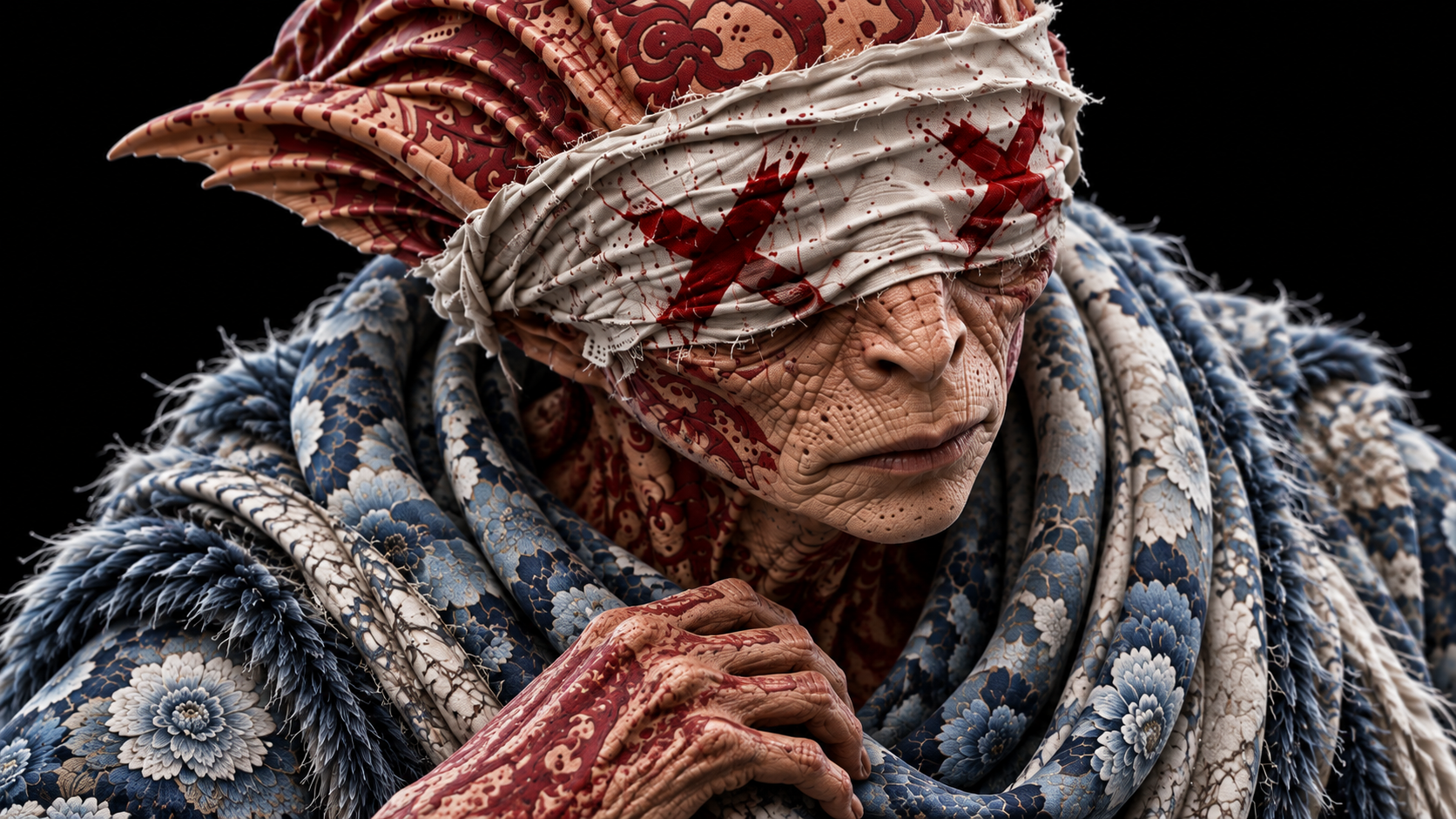
Khaerith, The Last Carrier
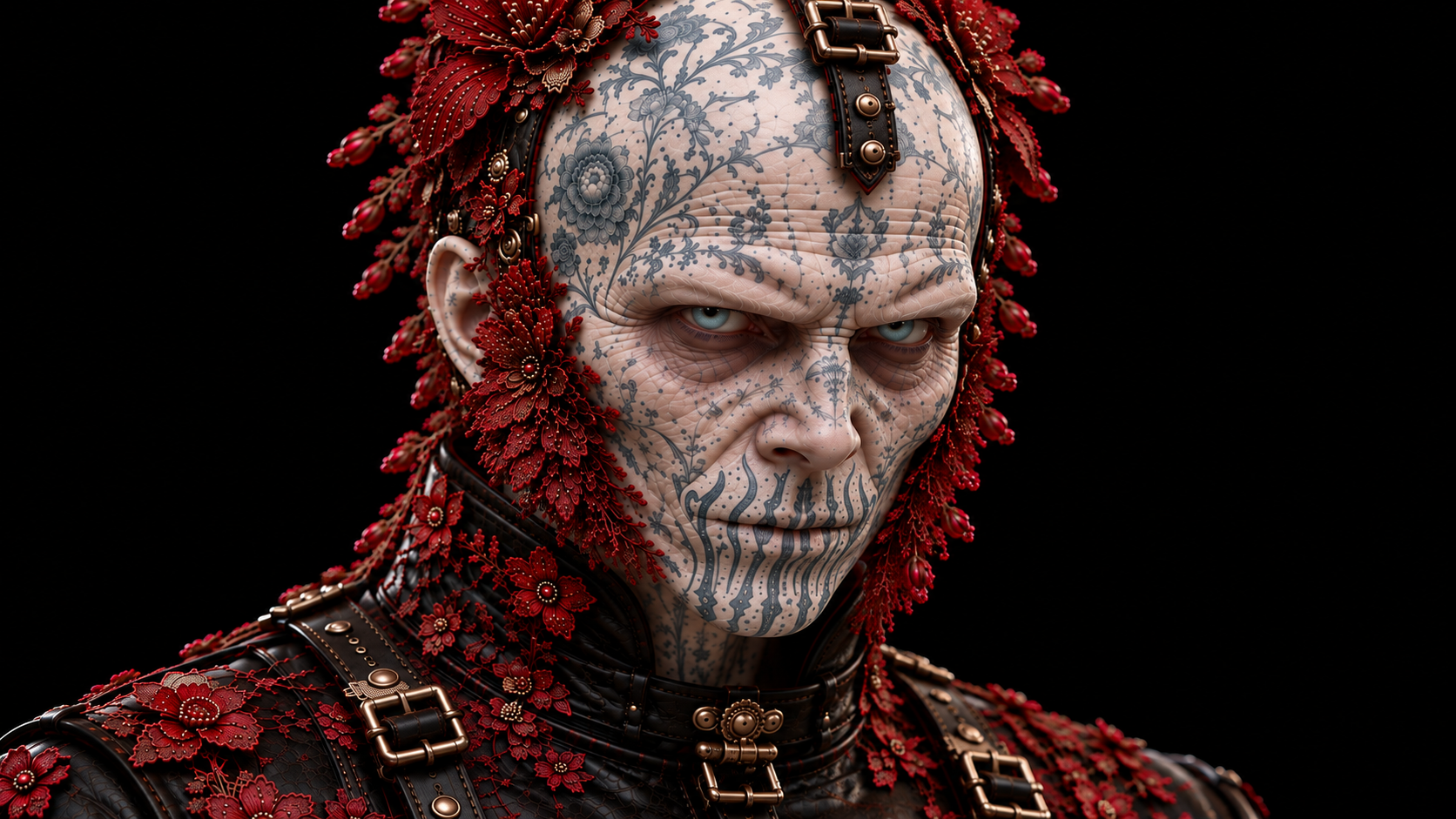
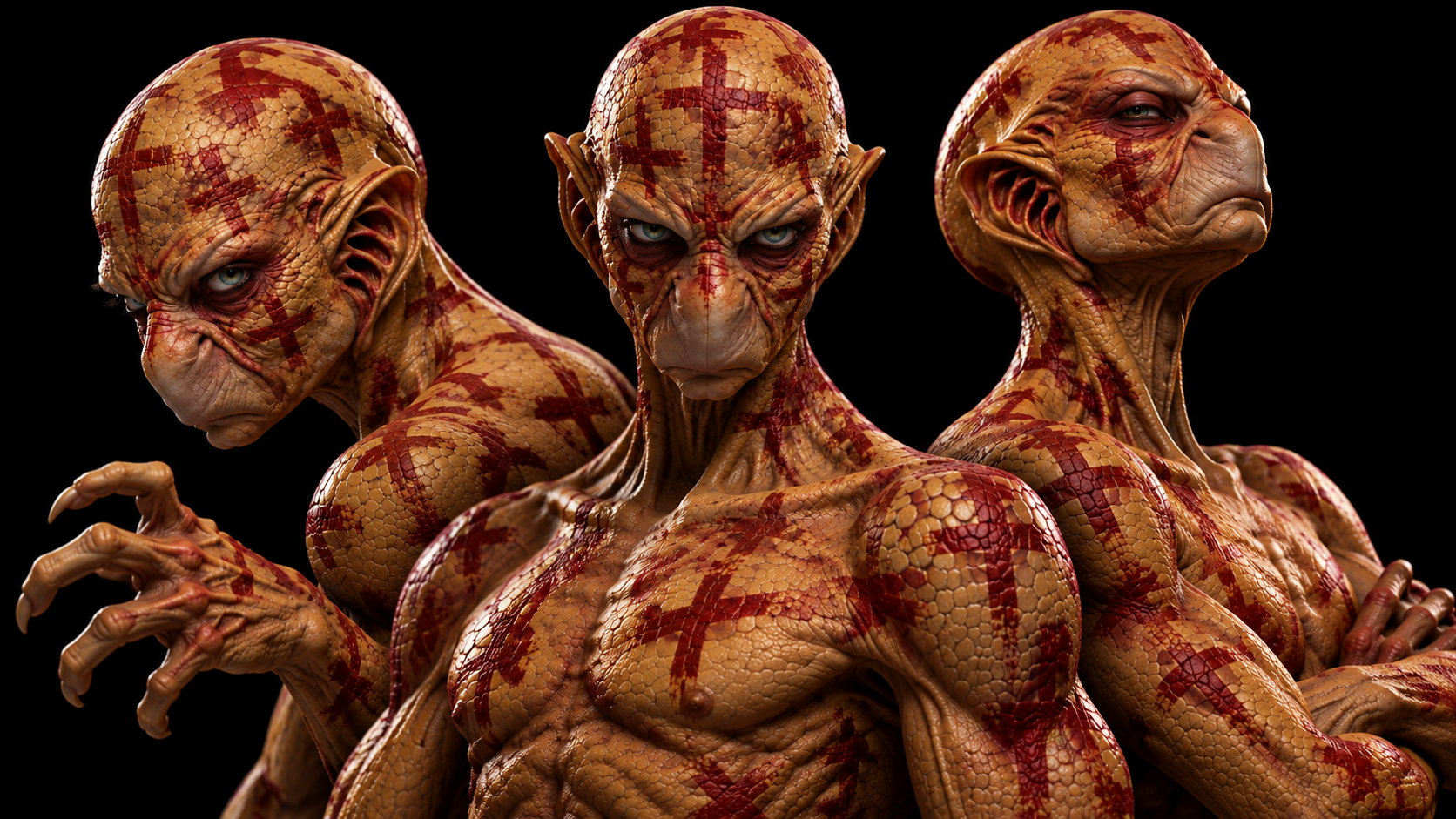
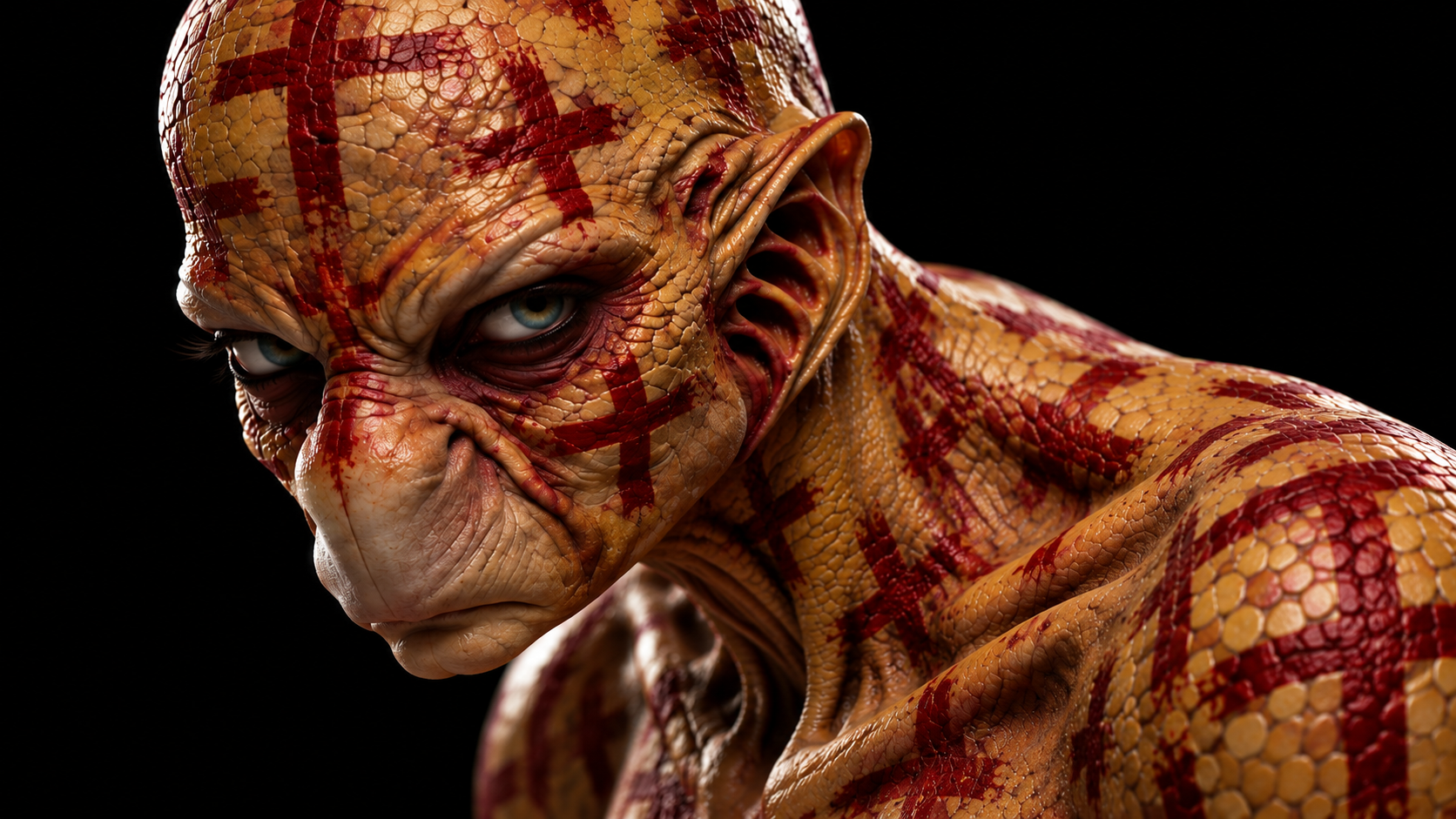
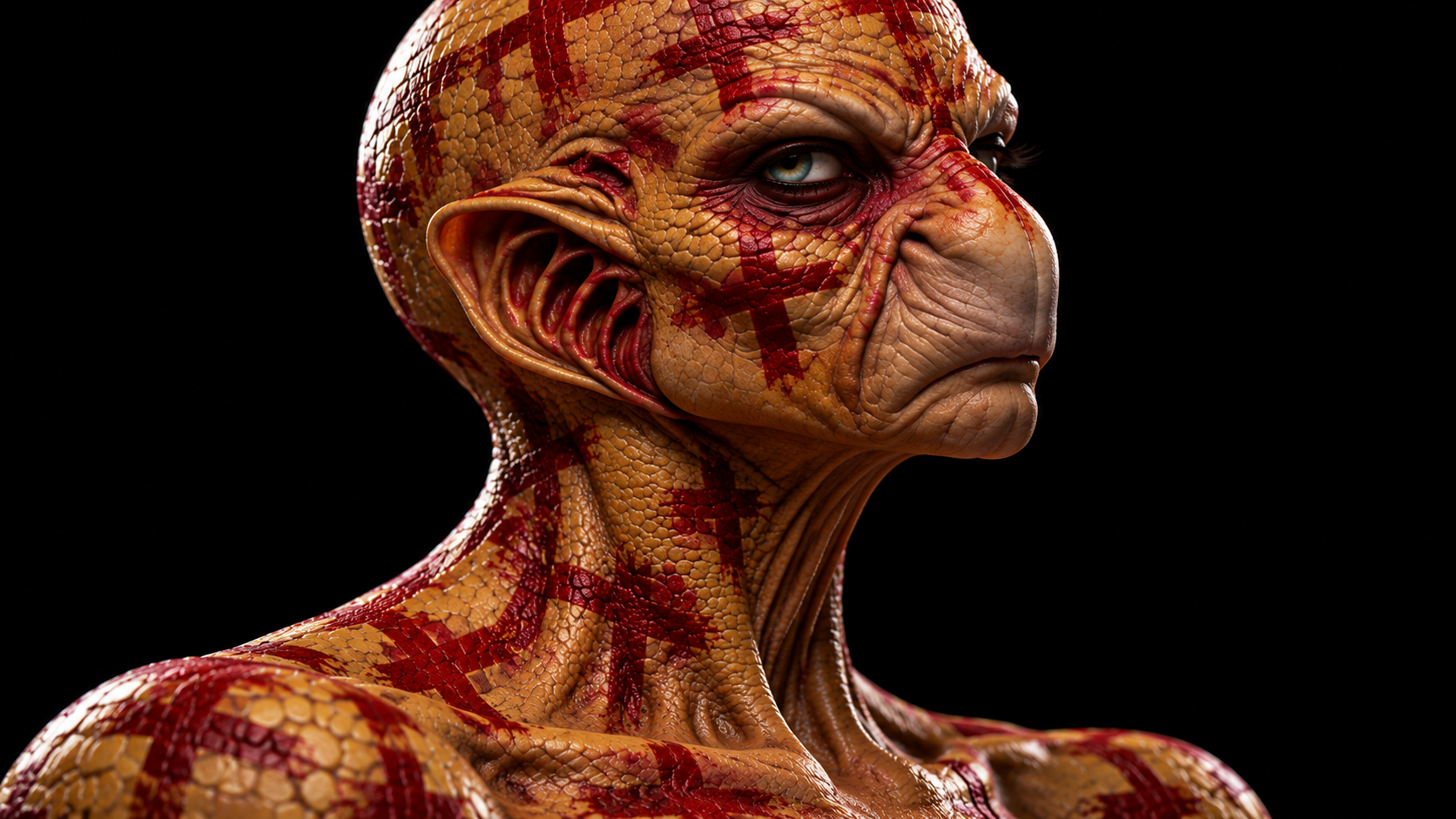
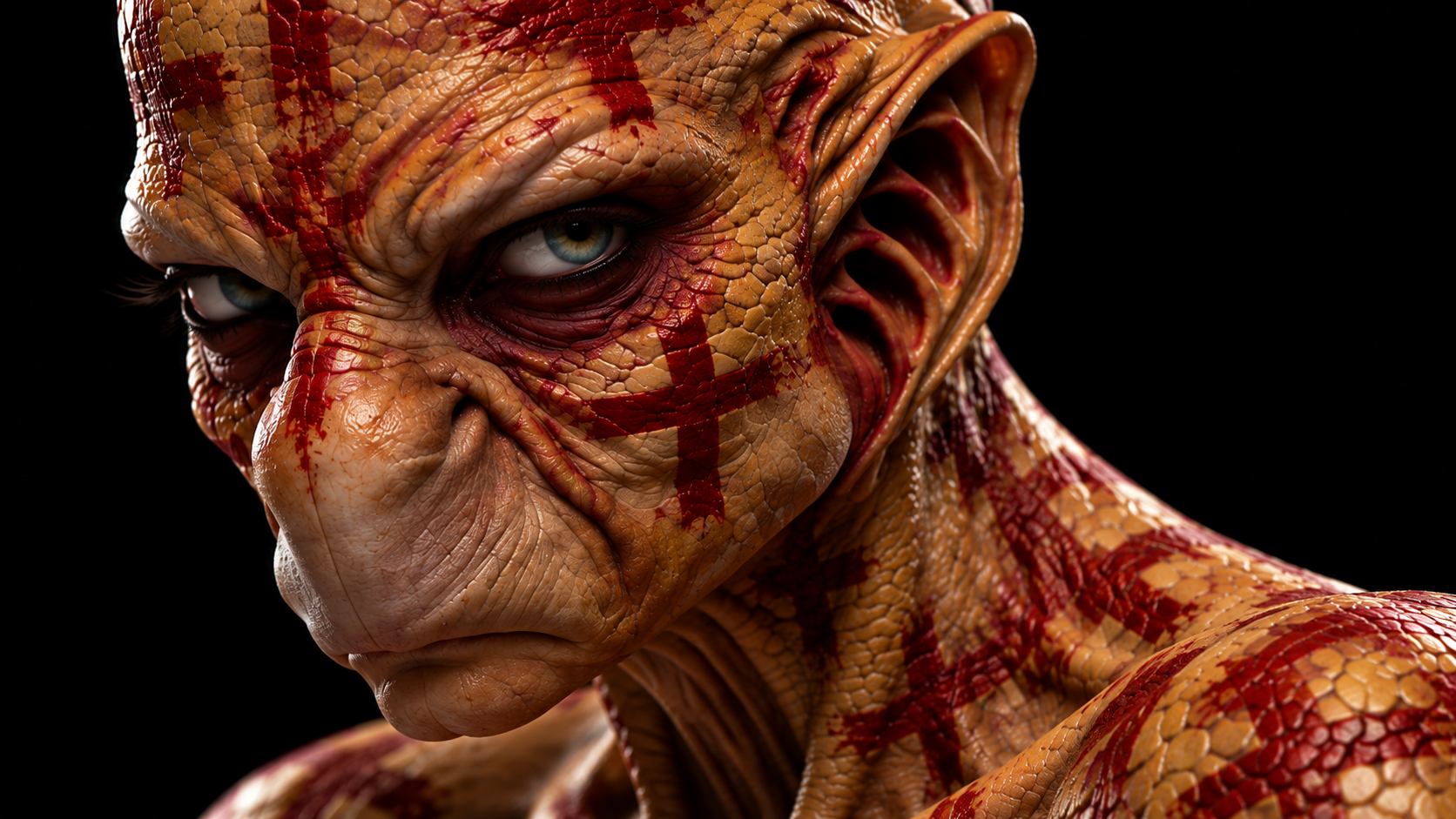
Khaerith is the last carrier of the Ulmaeth. She keeps the marks of the dead on her own skin, so that their deeds are not lost when their bodies are. When the whole of her people shed together in 1961 and lost their history, she alone did not. Everything the Ulmaeth were before that summer now survives on her, or nowhere.
She is a hundred and eighty-three. She lives in the lowest hall beneath Tesh-Amarun and does not come up the stair. She called the Reckoning that now sits at the Lid-Stone, and she has not gone to it. She has no heir. It is the central fact of her life, and she does not discuss it.
- Name
- Khaerith Vael-Ulmorn
- Called
- The Last Carrier. Ama-Khaer, which she dislikes.
- People
- Ulmaeth, of Tesh-Amarun
- Born
- 1904 F.K., in the month of Ashfall, in the lower galleries
- Age at the Reckoning
- 183
- Office
- Kharavael, carrier of the dead, since 1931
- Mother
- Ysmarr, a kiln-warden
- Father
- Unrecorded. Sael-Ennu of the Blue Hollow, by his own account.
- Marks
- The dead of twenty centuries, and the Law of the Floor
- Has shed
- Never
- Eyes
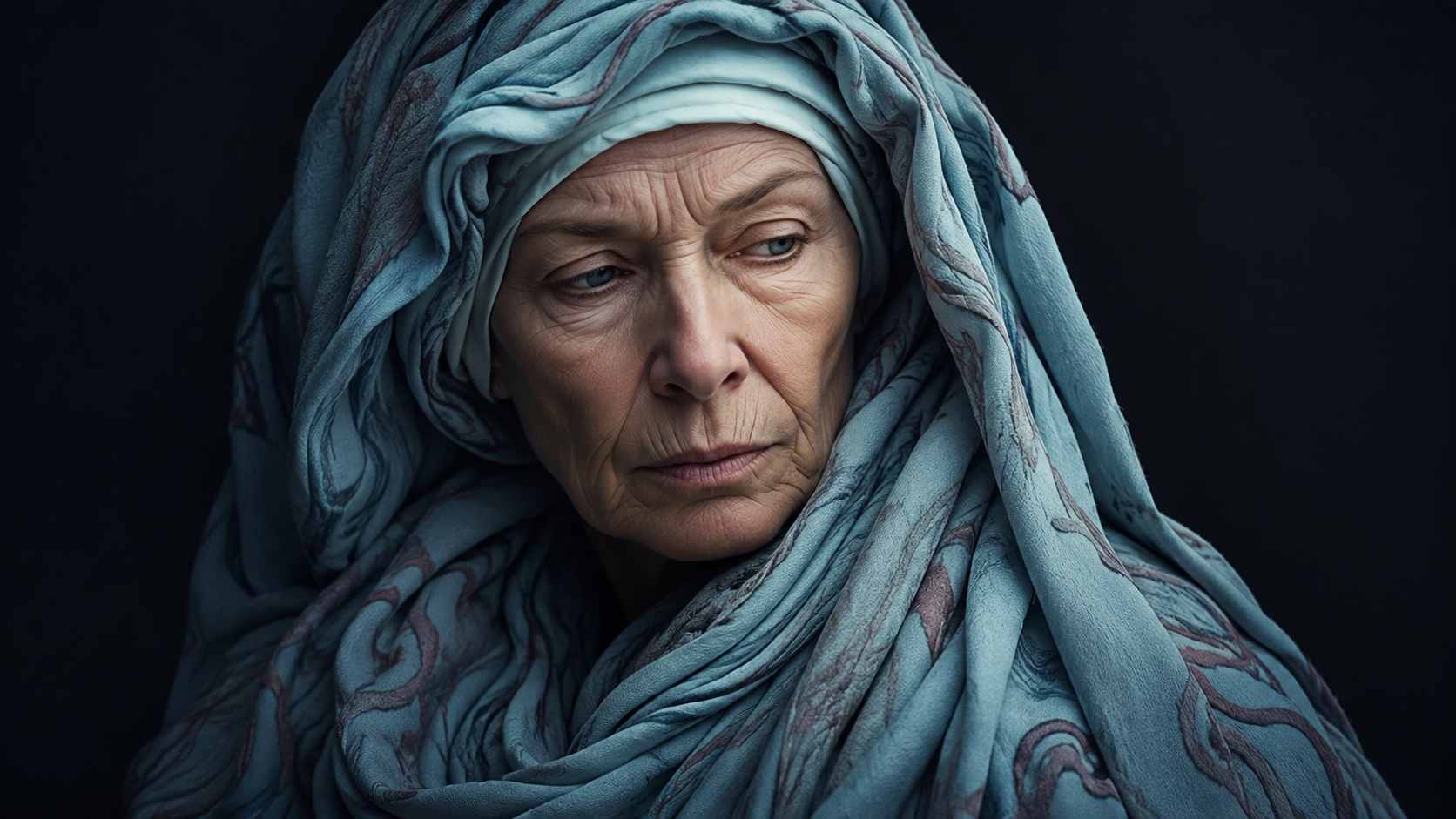
- Ishen, the grey-blue of well-water
- Seen in
- Khaerith of the Ochre Deep. She appears in no group portrait. She does not come up the stair.
The Ulmaeth And The Carriers
The Kelborn are five peoples descended from the Brine-children, who climbed out from under the Bone in the Dry Dawn. Most of them left the basin. The Weneth went west into the rain. The Kharrin went east into the red mountains. The Ulmaeth stayed. They are the yellow people of the Ulmorn, the sunken basin where the old sea used to be.
What They Keep
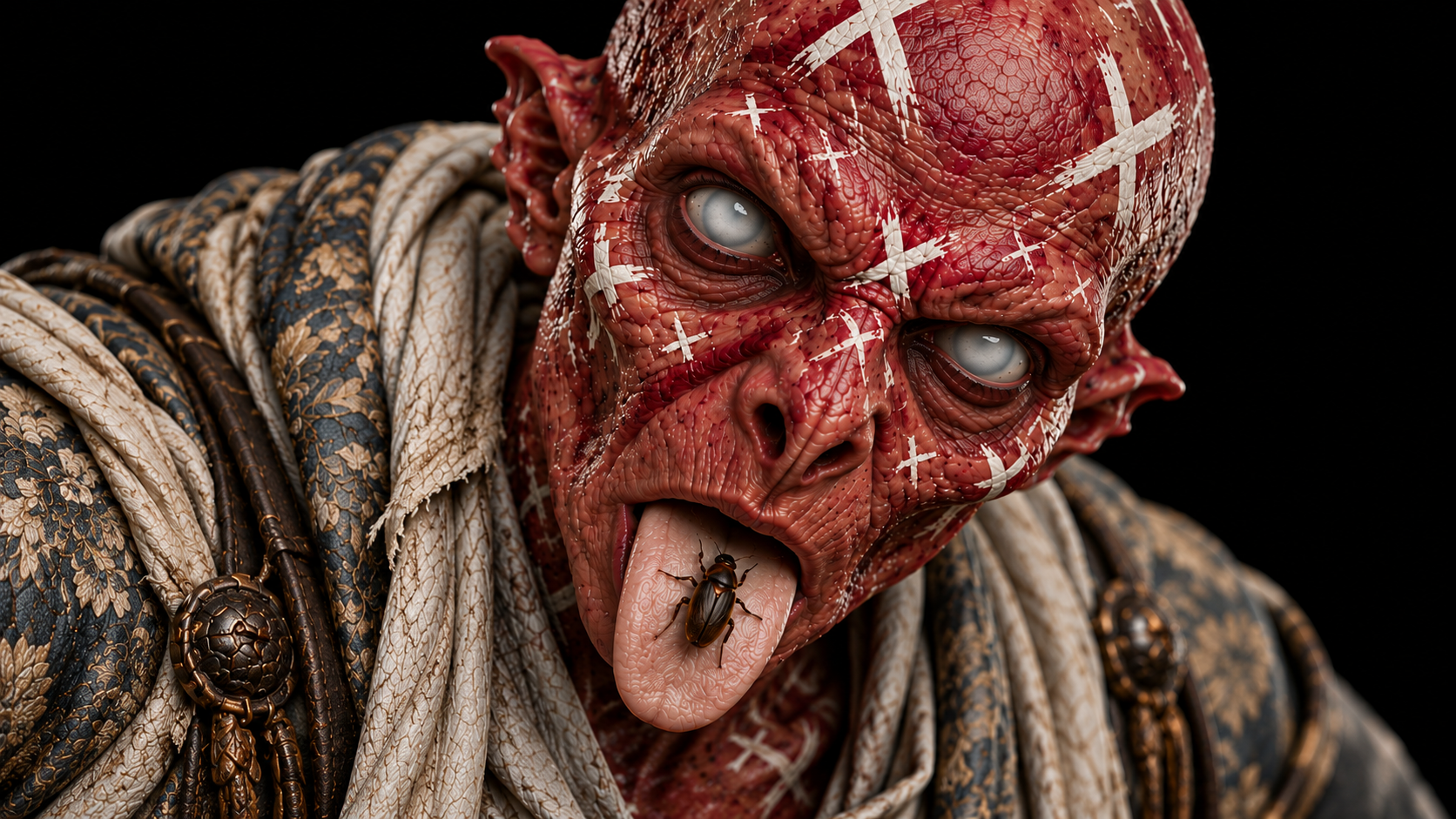
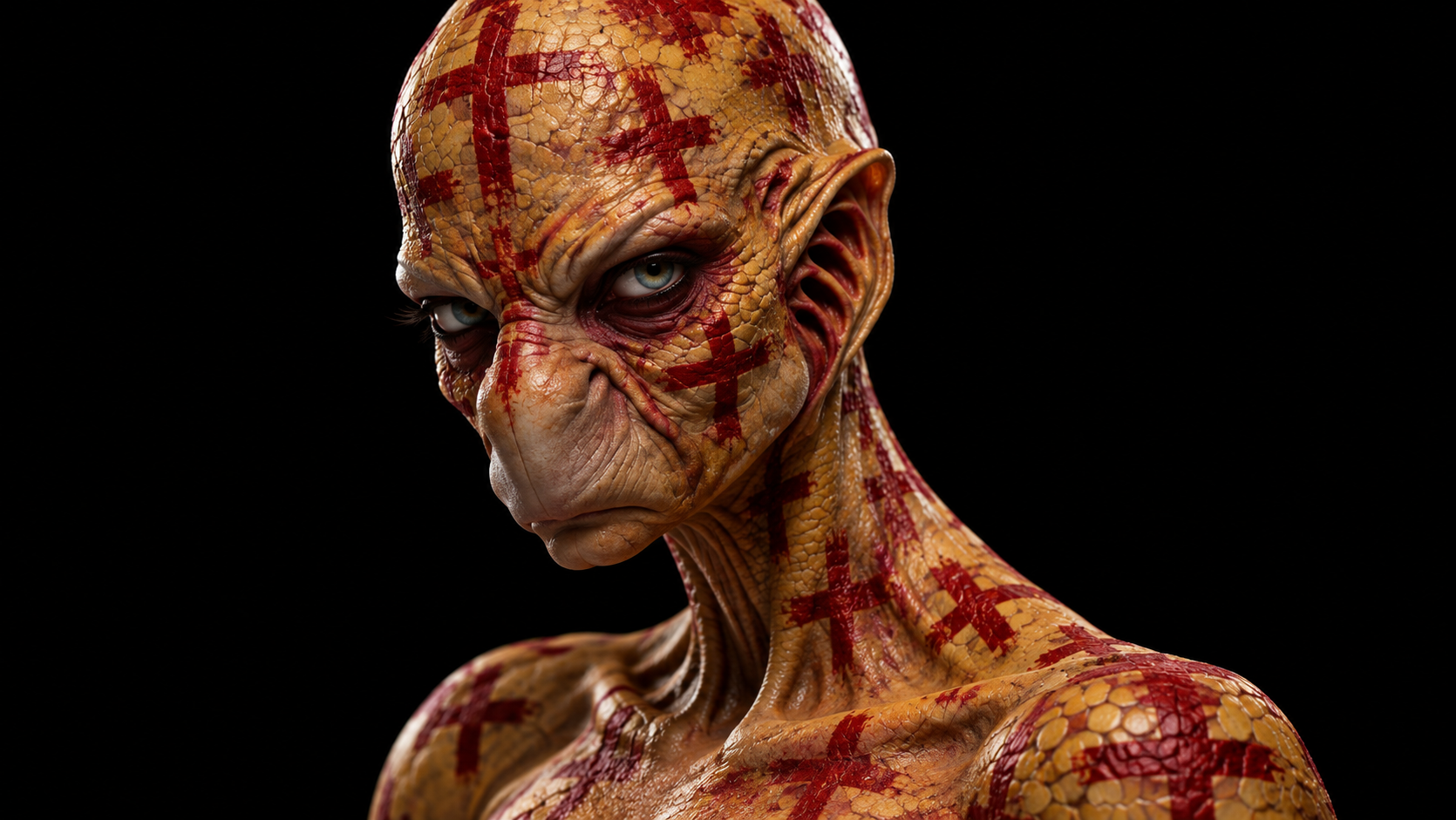
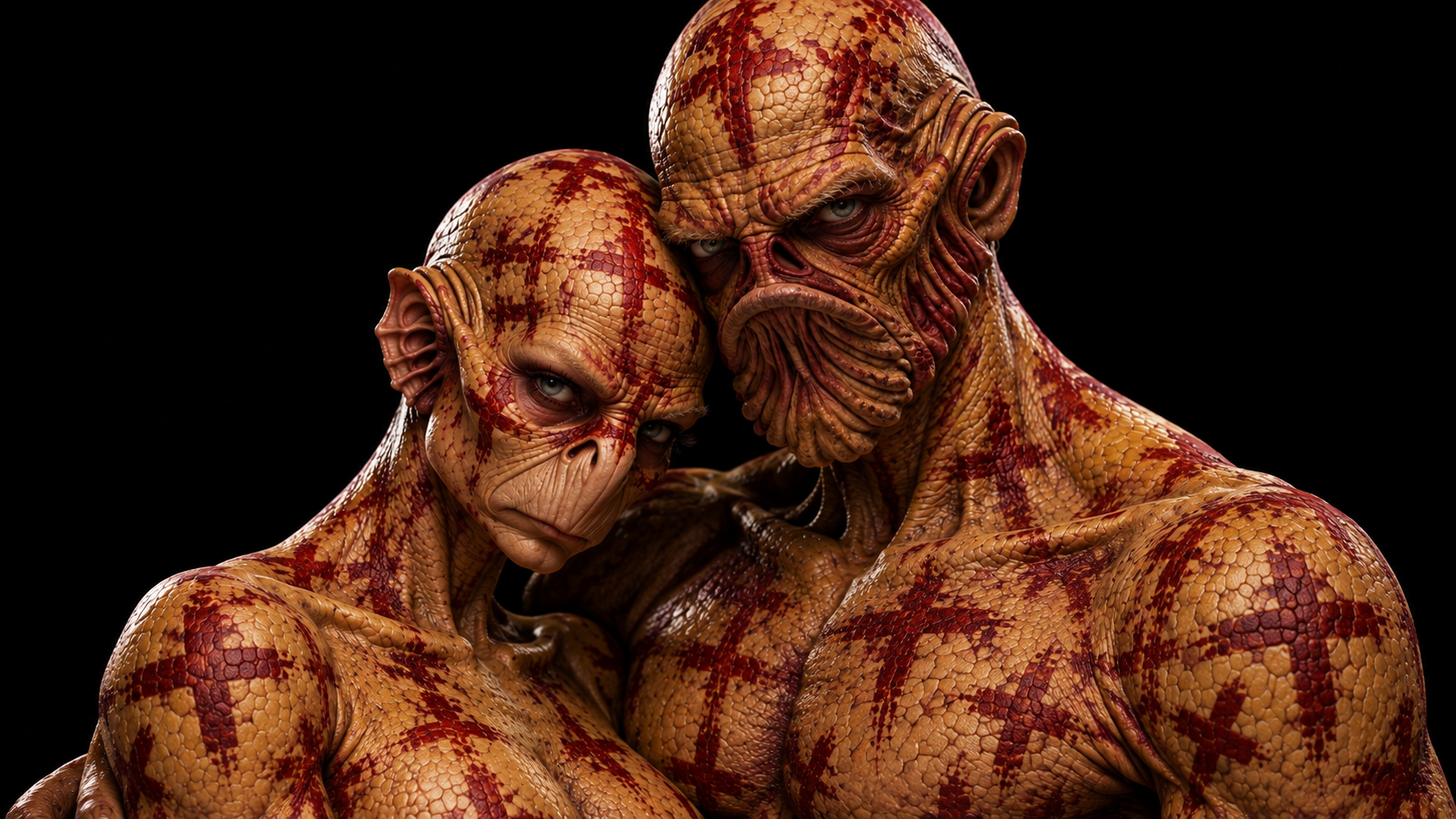
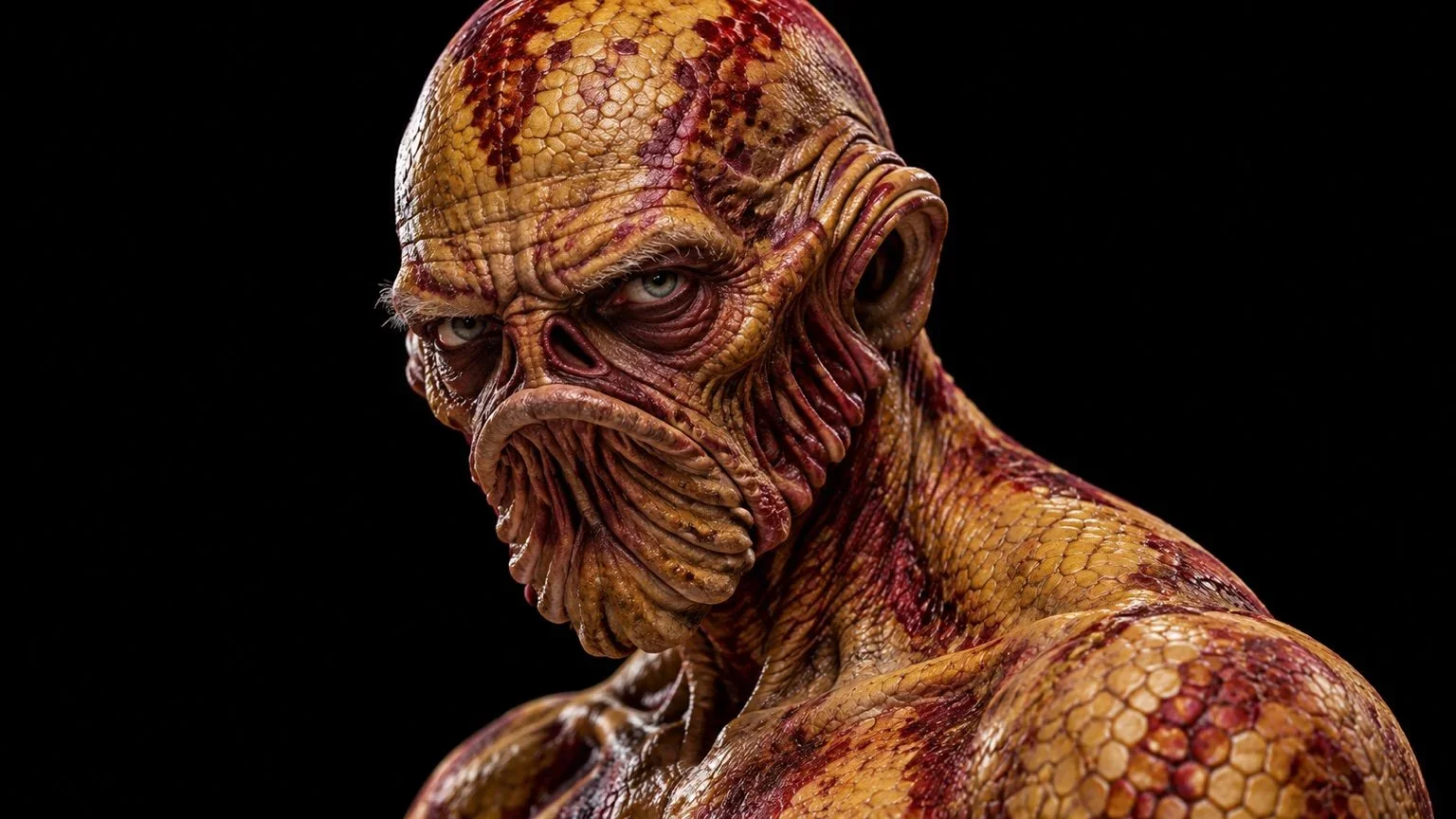
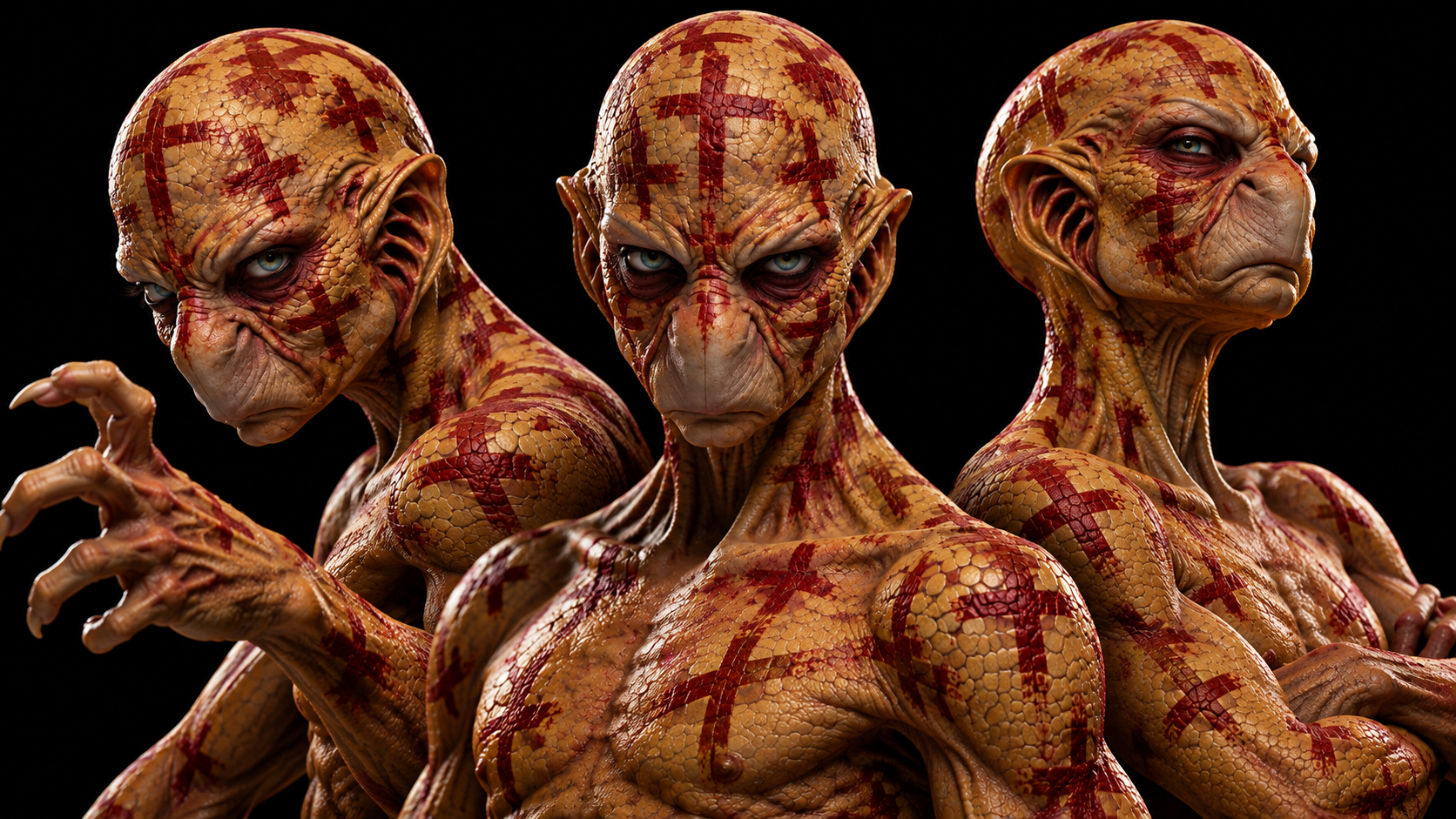
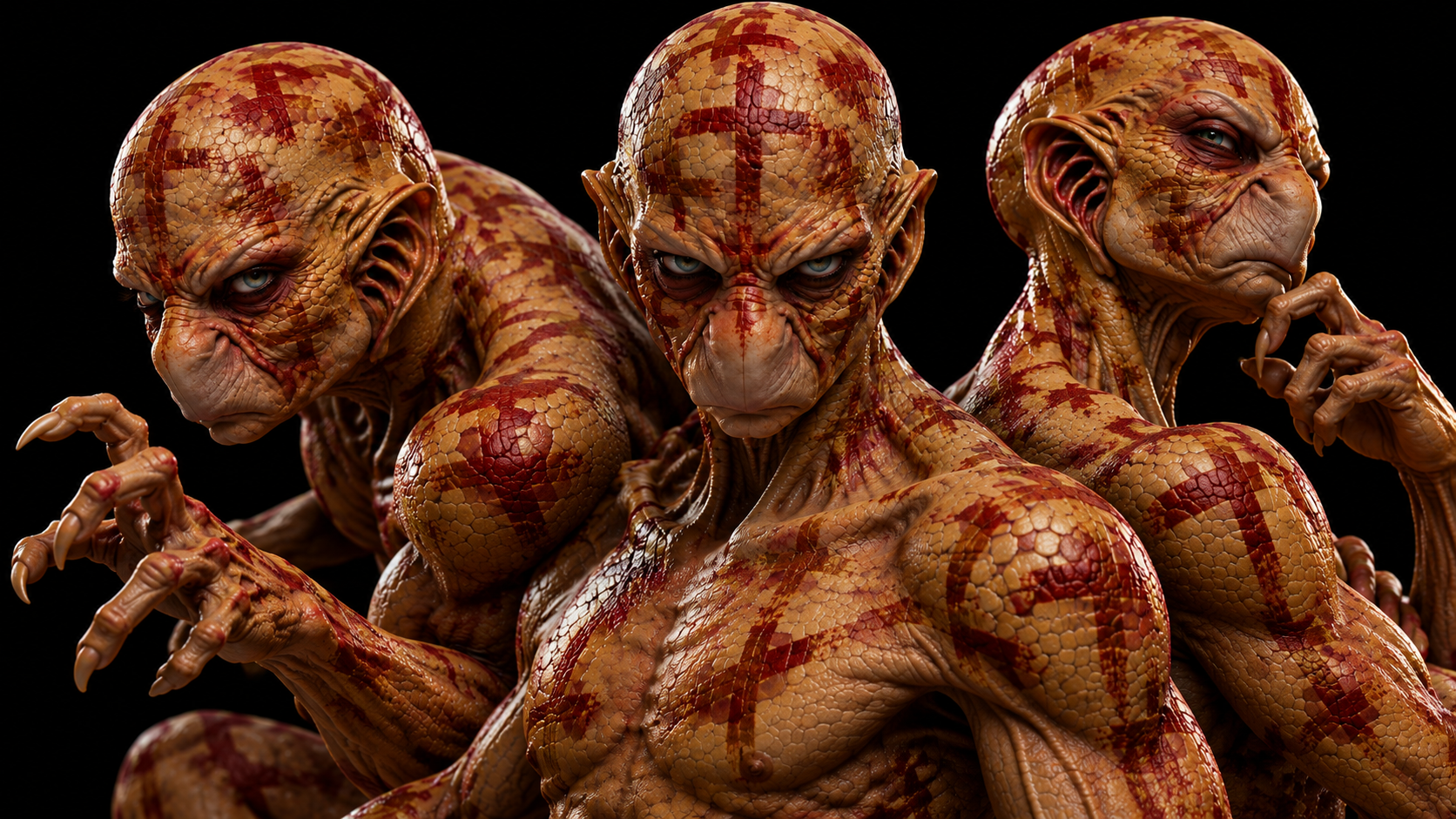
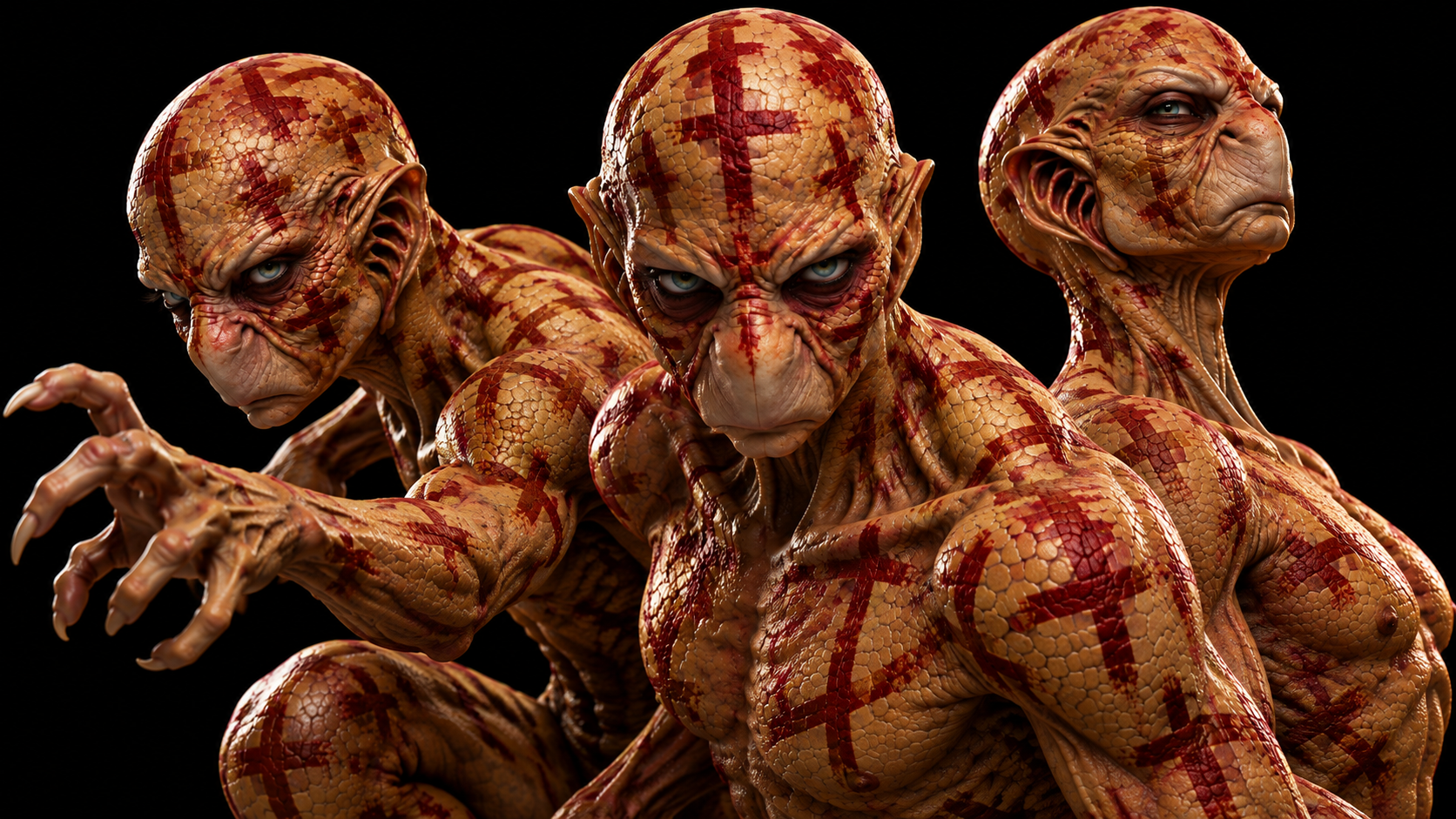
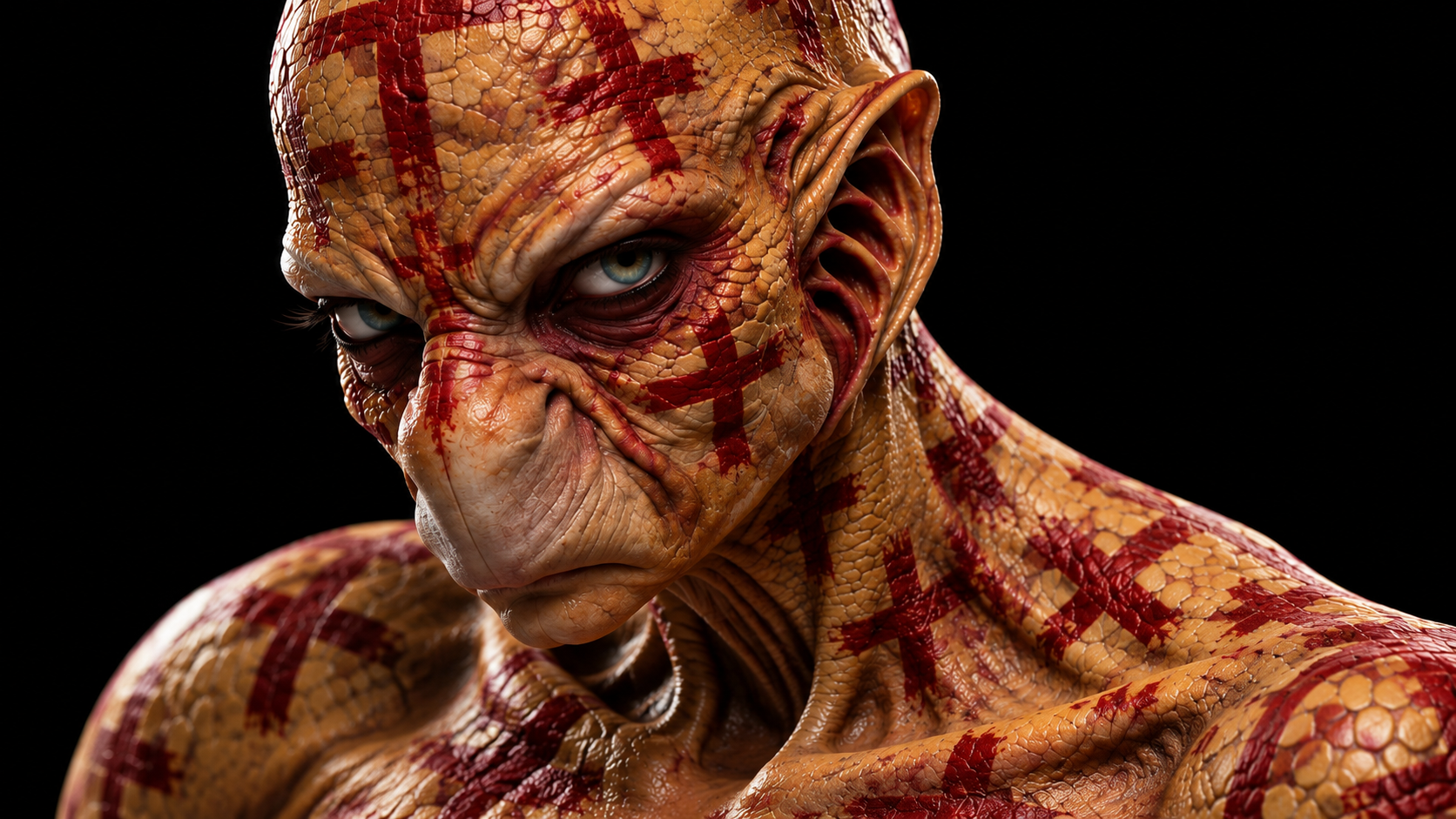
The Ulmaeth write their history on their bodies. A deed is painted on the doer's skin as a red cross by someone who saw it. The paint is kharn, red earth, roasted dark in the kilns of the Kiln-Scarp. No one marks themselves. A mark with no witness is called hollow, and it is washed off.
This began with Amar the Firstwitness, in the year from which the Ulmaeth count. She dug into the eastern cliff, found the red earth and laid a cross on her brother's brow. She said: I saw you. The Ulmaeth reckon every year from that moment.
The Moult
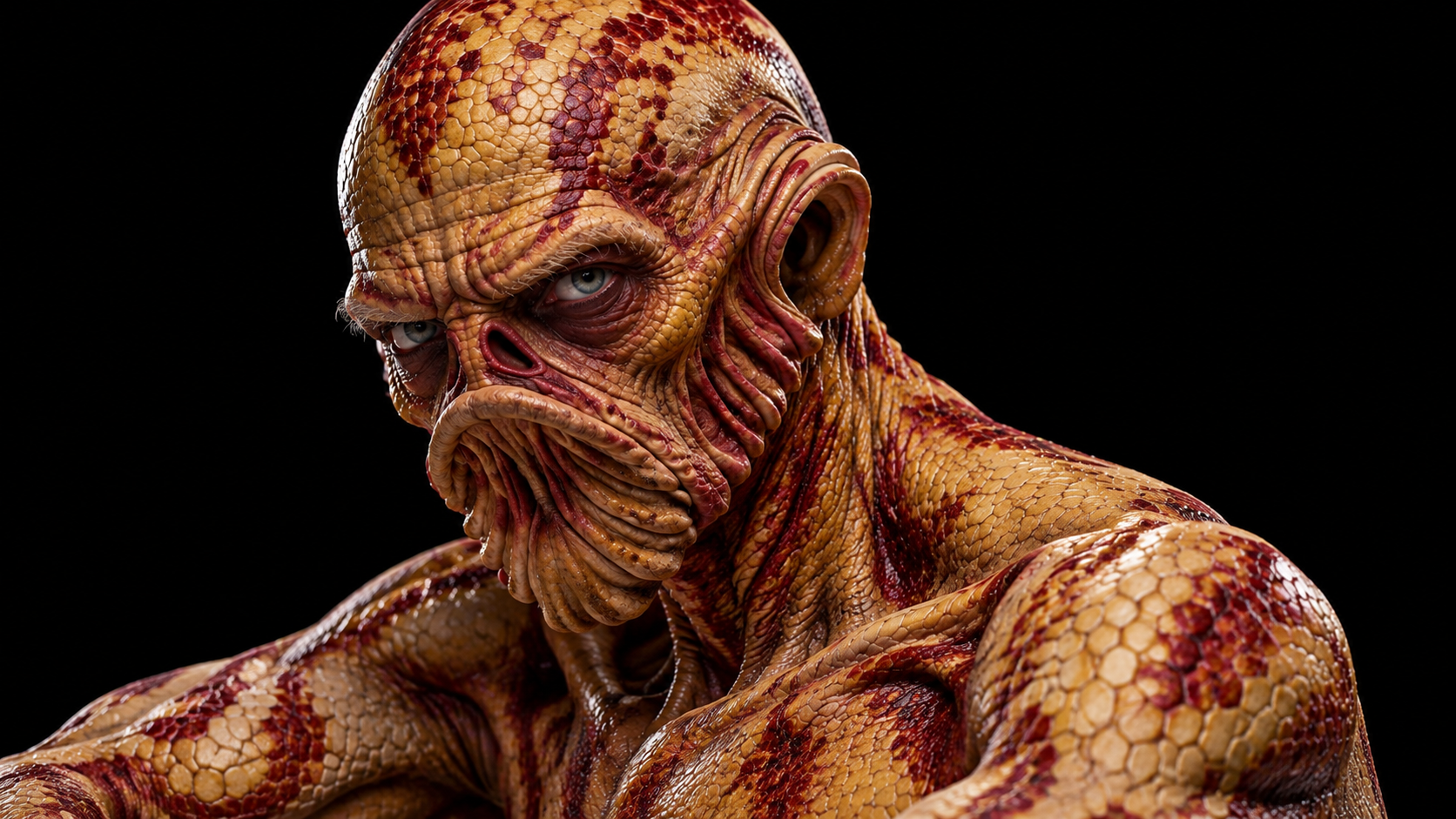
The Ulmaeth are scaled. They shed once in a long life, usually between seventy and ninety. They call it the second birth. The old skin comes away whole, and every mark painted on it goes with it.
So the record of the Ulmaeth has always been at risk. A person who sheds must have their marks laid again on the new skin by someone who remembers them. Forgetting, to the Ulmaeth, is not a failure of the mind. It is a failure of company. You lose what no one else was watching.
The Drying-Halls
Shed skins are not burned. They are stretched and hung in the drying-halls at the bottom of Tesh-Amarun, the lowest of its nine galleries, where they can be read until they crumble. The Ulmaeth call these halls the library that forgets. It is dark and cool down there. Skins hang in rows from the ceiling, moving slightly in no wind.
The Carriers
In 1340 F.K. the moult took a whole household at once, and their marks were lost because no one living remembered them all. The Elders cut the drying-halls deeper. They also made a new office, the kharavael, the mark-keeper. A carrier copies the marks of the dead onto their own skin, so that the dead are not lost when their skins crumble.
For six centuries the carriers kept the people whole. Then they grew few. The work was slow and lonely. A carrier takes on no life of their own, only the lives of others, laid one over another until there is no room left. The young preferred the kilns. When a carrier died, custom said their skin was read aloud at the kilns and then allowed to fade. Nobody took up their marks.
By the time Khaerith was born, there was one carrier left. He was an old man named Orun-Hesk. No one had taken up a dead carrier's marks for two hundred years.
Born In Ashfall
Khaerith was born in 1904 F.K., in Ashfall, the dry month, in the lower galleries of Tesh-Amarun. Her mother was Ysmarr, a kiln-warden. Her father is unrecorded.
The Open Hand
Among the Ulmaeth, a parent may choose to leave no mark of themselves on a child. It is called the open hand, tal-ennu. It is not a shame. It is considered generous. It frees the child from carrying the memory of a parent they may not want to carry.
Ysmarr declared the open hand before anyone could ask whose child she was carrying. The Red Ledger for that year says nothing about her. It has one line about a stranger: A fire-taker found among the kilns; his mark struck with ash. No one connected the two. Ysmarr made sure of it. A child marked by an ashed father could be ashed with him. A child with no father on record could not.
Khaerith grew up knowing she had a father and knowing nothing else. It is common enough among the Ulmaeth that nobody asked her about it. She did not ask either. She has said that she always knew the open hand was a gift, and that you do not open a gift by tearing it.
The Kiln
Ysmarr's kiln was on the second gallery, where the red earth is roasted. Khaerith grew up in the heat and the smell of iron. She carried water to the kiln-workers from the time she could walk. She learned to tell good kharn from bad by the colour of the smoke.
She was a quiet child, and watchful. The kiln-workers called her the little warden because she stood at the edge of everything and looked.
The Thirst
In the summer of 1913 the Weeping Stair dried. It is the seam of brine on the western cliff that never dries, and it dried for forty days. The Ulmaeth call that summer the Thirst. The old and the very young began to die in the upper galleries.
Khaerith was nine. She carried water up from the deep cisterns to the dying, every day, alone, up nine galleries and down again. She did it for the whole forty days.
When the Weeping Stair ran again, the kiln-wardens laid her first cross on her brow. It was for the water-carrying. It is still there, at the centre of her forehead. It is the only mark on her body that records something she did herself.
The Red Ledger notes that she did not weep at the marking. Children usually do, at the first cross. It also notes that this was held against her. The wardens thought a child who did not weep had not understood what had happened. Khaerith has said they were wrong. She had understood exactly. She had seen too many people die that summer to weep for a cross.
Orun-Hesk
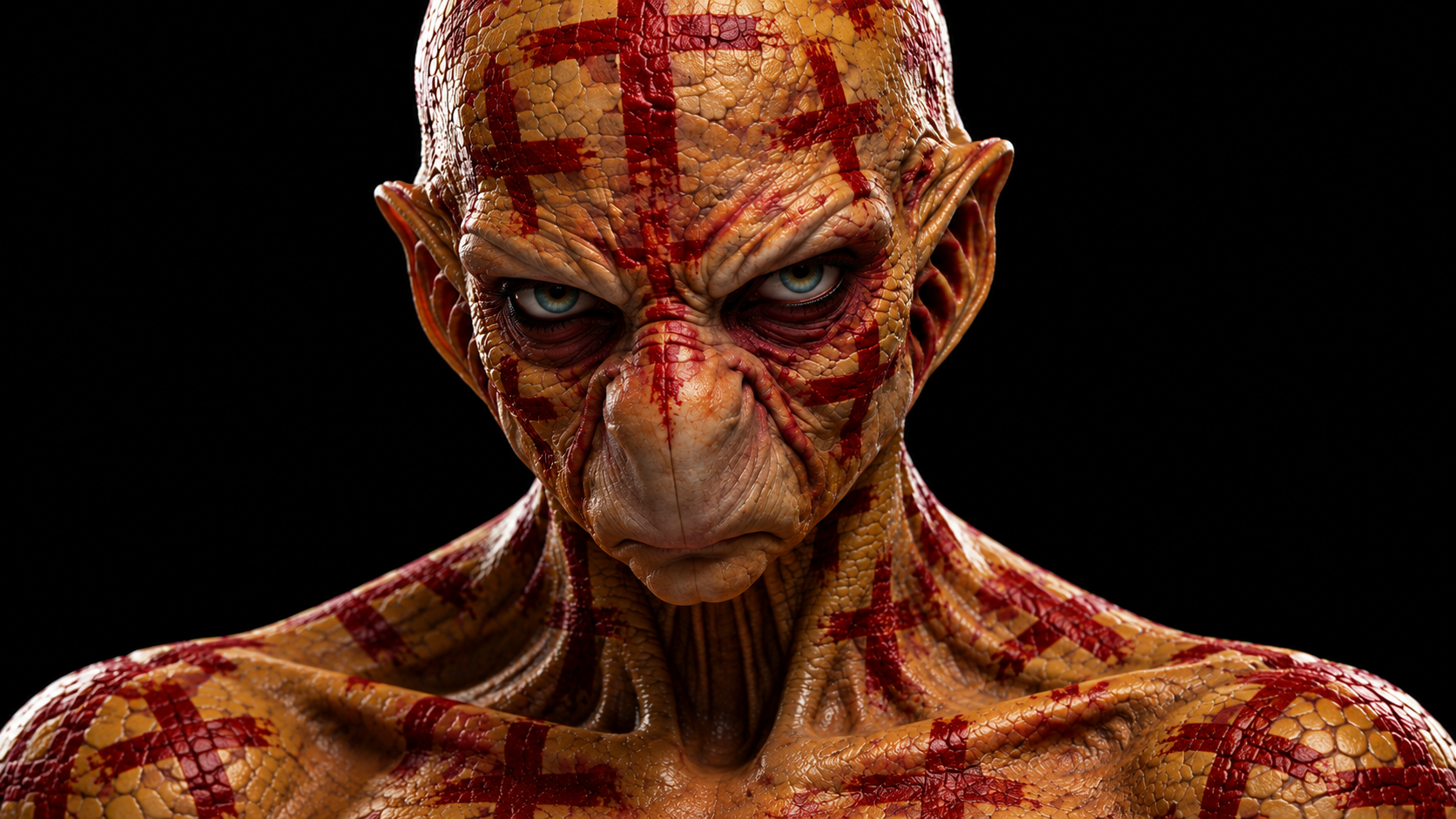
Orun-Hesk was the last carrier before her. He was very old and almost entirely red. His shoulders held the dead of the Long Remembering. His crown held marks so old they had darkened nearly to black. He lived alone in a cell off the drying-halls and came up only to eat.
Khaerith knew him because she carried water down to him. She was the only one who did. She was in her twenties and still worked her mother's kiln. In the evenings she would sit with him while he ate, and he would let her look at his arms. He told her who each cross was. She remembered all of it. She did not know yet that she was learning.
Nine Days
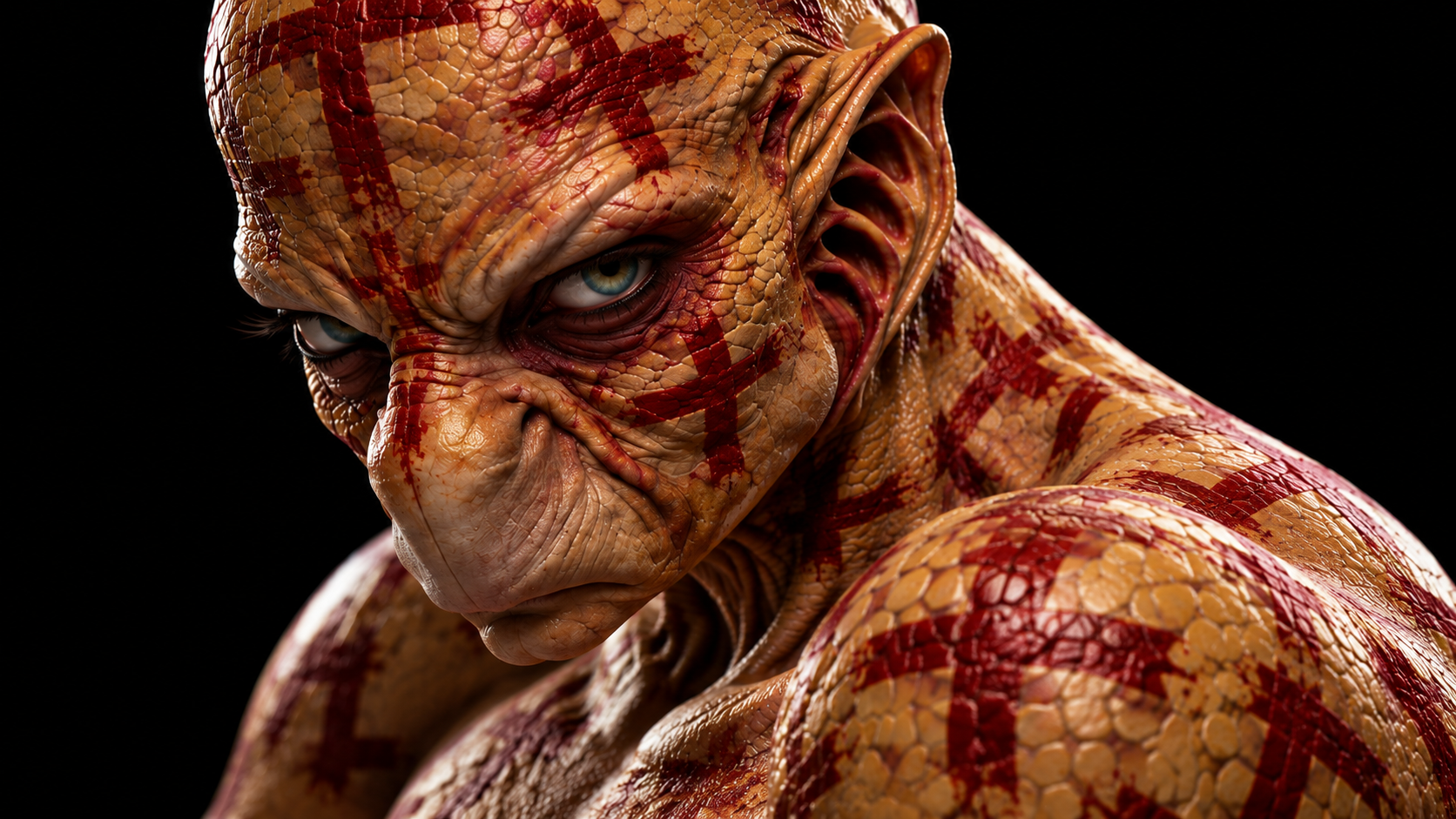
Orun-Hesk died in 1931 with no heir to his marks. By custom his skin should have been read aloud at the kilns once, and then allowed to fade with his body.
Khaerith was twenty-seven. She refused.
She went down to his cell with a reed and a pot of red earth and sat beside the body. Over nine days and nine nights she copied every cross from his shoulders onto her own. She worked by touch when the lamp went out. She did not eat much. She did not sleep much either. When she reached his crown, she found marks she had never seen him show anyone. They were the oldest in the city, the marks of Amar the Firstwitness, copied and recopied through twenty centuries of carriers. She laid them on her own scalp.
It was the first carrying in two hundred years.
The Elders
It was not wholly lawful. No one marks themselves. A carrier's work had always been witnessed by the kiln-wardens. Khaerith had done it alone in the dark, with a dead man for her only company.
The Kiln-Elders met to decide whether to strike her new marks with ash. That would have been more than a punishment. Among the Ulmaeth, to ash someone's marks is to make them never have lived.
They did not do it. The reason was practical. No one else alive could still read Orun-Hesk's oldest crosses. Khaerith had learned them in the copying. To ash her would have been to ash Amar.
So the Elders let the marks stand, and gave her the vigil. From that night she was called Vael-Ulmorn, the Watch of the Ochre Deep.
What It Cost
A carrier takes on no life of their own. Khaerith gave up her mother's kiln. She moved down into Orun-Hesk's cell. She stopped being the little warden and became the place where the dead were kept.
She was twenty-seven. People who knew her then say she had been about to marry. Nobody knows who. She has never said, and the Ledger did not record it. The man is long dead. If anyone painted a mark for it, it went with his skin.
The Shedding
In the summer of 1961 the Bone cracked. Brine from the old sea rose through the plates into the air of the basin. Within one season, every living Ulmaeth shed at once.
It did not matter how old they were. Children of twelve shed. Elders who had already shed once shed again. Every mark on every skin came away. There were not enough people to remember what the marks had said. There were not enough carriers to restore them. There was one carrier, and she was fifty-seven.
The Ulmaeth survived. Their history did not. Everyone born after that summer carries only the marks of their own life. Everyone who lived through it began again as if they had been born in 1961.
Why She Did Not Shed
Khaerith did not shed. She has never shed at all, in a hundred and eighty-three years. The sources disagree about why.
The Red Ledger calls it grace. The Kiln-Elders who keep the Ledger like to think the dead protected the one who kept them.
The Ninth Reader's book suggests she had stopped eating the salt-bread of the kilns. In the decade before the Shedding the bread had been baked with more salt than ever. The salt came up the Salt Road from the cut plates of the Bone.
Khaerith, asked, said only: "Someone had to stay dry."
Her father offers the answer the others did not know to give. Unfired Ilvenne shed rarely, perhaps twice in a whole life. Half of her blood is northern. Her skin was never going to come away easily.
She says all four answers are true. She also says none of them is the reason.
The Forty Years
After the Shedding the drying-halls were full. Every Ulmaeth's old skin hung down there at once, thousands of them, carrying the whole history of the people. They would crumble in a few decades. The Elders sealed the lower galleries with salt to slow it.
Khaerith did not leave. For forty years she walked those halls with a lamp. She read the skins before they crumbled, one by one, and laid their crosses on herself. She chose the oldest marks first, because those were the ones no one else could restore.
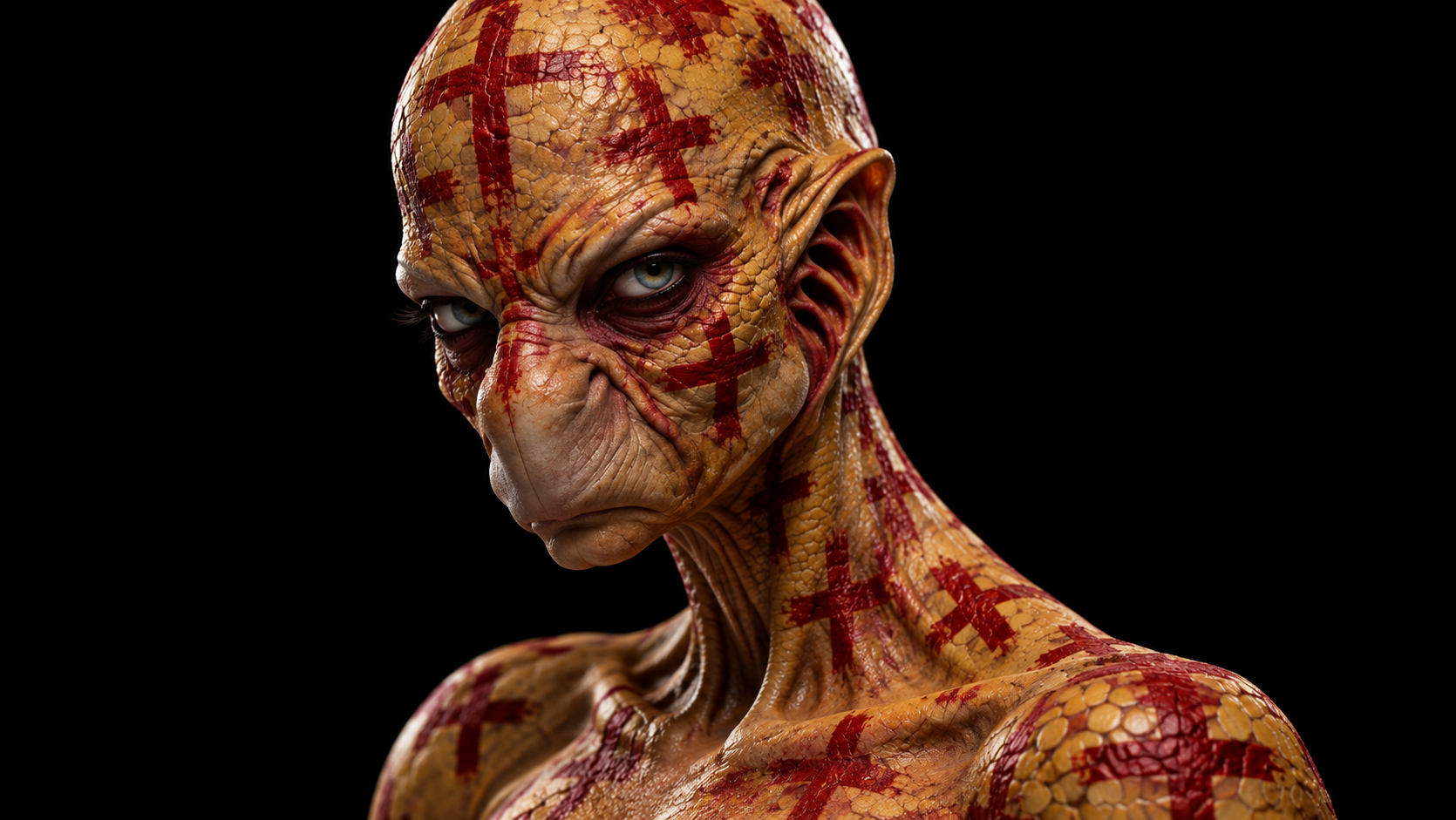
When there was no room left on her shoulders, she began on her scalp. When there was no room on her scalp, she began on her neck. Then her face. Then her throat. When a new cross had to go where an old one already was, she laid it over the top. That is why her marks look smeared at the edges. They are not smeared. They are doubled.
Around 2001 she reached the end of the halls. Every skin had been read. Most had already turned to dust. Everything the Ulmaeth had been before 1961 was now on one woman. She was ninety-seven.
The Lowest Hall
She still lives down there. The skins are gone, apart from a few blank ones that still hang from the ceiling. She walks the rows at night anyway. She knows where each one hung and whose it was.
At the far end of the lowest hall is an empty hook. The oldest skin in the city hung there. She copied its marks onto the place behind her right ear. She did not know what they said. They were written in a hand no one could read. The skin turned to dust the winter after she copied it.
She carried those marks for eighty years without knowing what they meant. They were a warning, and it had already come true.
Reading Her Body
Every cross on Khaerith is a sentence. Its shape says what kind of deed it records. Its place says whose it was. Its colour says how old it is. A trained reader can tell a carried mark from a lived one at a glance. There are very few trained readers left. Most of them learned on her.
Shape
A single cross, kharu, records a deed witnessed: a thing done and seen.
A double-barred cross, kharu-tal, records an oath sworn and kept to its end.
A cross with a broken arm, kharu-hesk, records an oath broken. The breaker is still remembered. They are not erased.
A cross laid over a cross, kharu-orun, records a carried mark: the deed of someone dead, copied onto the living.
Almost every cross on Khaerith is the last kind. In a strong light you can see the older mark showing faintly through the newer one.
Place
Her brow holds her own first mark. It is the cross for the water-carrying in 1913, at the centre of her forehead, the one she did not weep for.
Her crown holds the eldest dead. Her scalp carries the Age of Kilns, the first thirteen centuries of the Ulmaeth. At the very centre, nearly black, are the marks of Amar the Firstwitness.
Her face and cheeks hold kin. The crosses around her left eye are her mother's. Ysmarr died in 1958, three years before the Shedding. Her skin was in the drying-halls when the summer came. Khaerith carried her mother first.
Her throat holds oaths, because oaths are spoken. One of them has a broken arm. It is the only broken cross on her body. It records an oath someone else swore and broke. The story of it is told below.
Her shoulders hold the work of hands: kilns built, water carried, the dead buried, the drying-halls cut.
Behind her right ear and down the side of her neck are the oldest marks of all. They are not crosses. They are looping lines in an older hand, in two colours under the red. Some strokes are ochre. Some are pale slip, the white clay of the north. For eighty years nobody could read them. They are the Law of the Floor, seven lines written by Ilvara before the Parting, warning against cutting the Bone.
Color
Fresh kharn is a bright blood-red. Over decades it sinks into the scale and turns to rust, then to a dark wine. The palest crosses on Khaerith are the newest. The darkest are the oldest. You can read her age from her skin, from the bright red at her shoulders, where she worked last, to the near-black at her crown, where Amar is.
What The Face Does
Khaerith's expression is the first thing strangers notice. Most of them take it for contempt. It is not. It is the look the Ulmaeth give to anything that has not yet proven it will remember.
She has used that look on every reader who has ever come down to copy her. In her experience, readers want to own what she carries. She has been right about this more often than she has been wrong. She was right about Qaresse.
The Ninth Reader
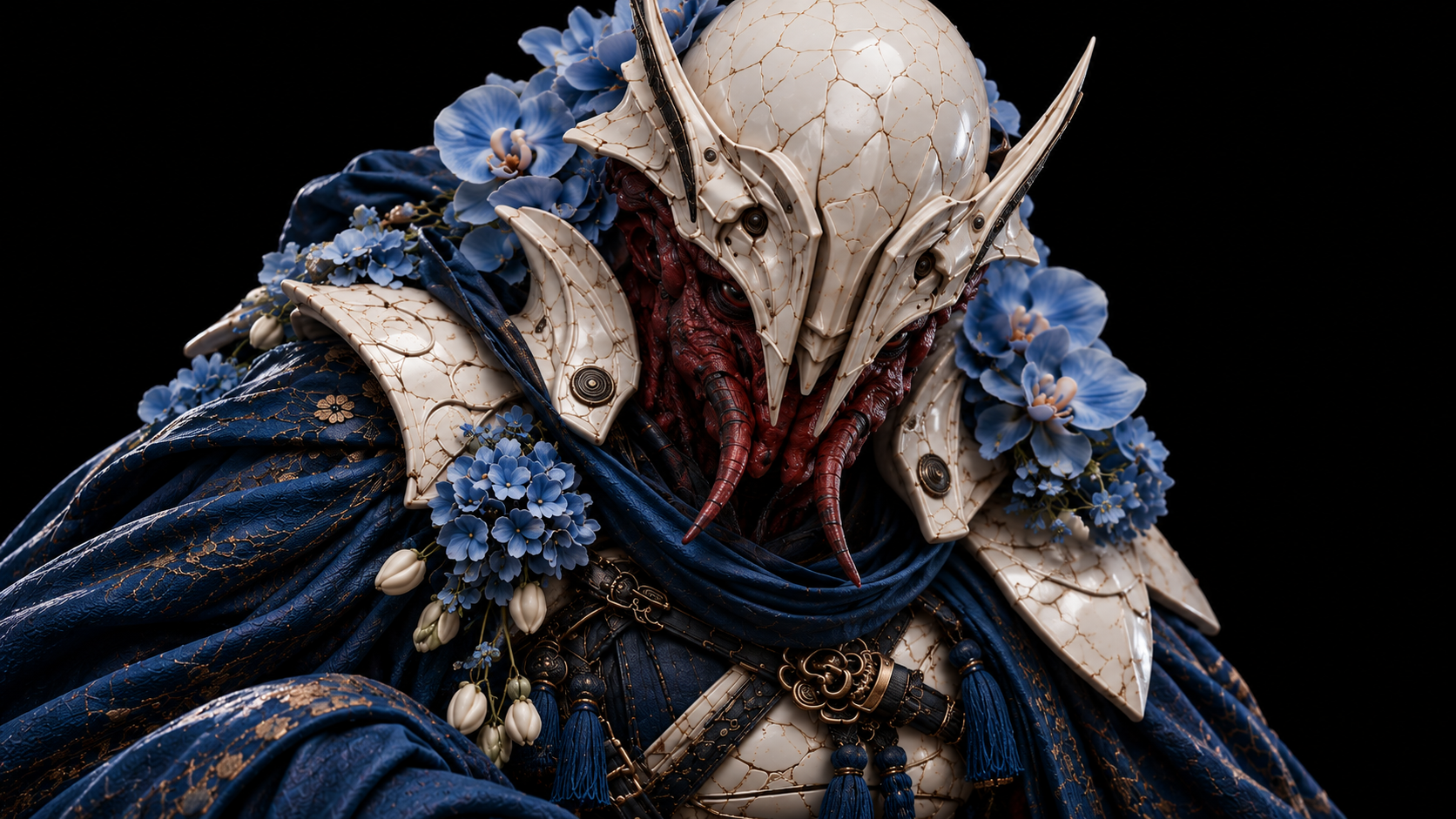
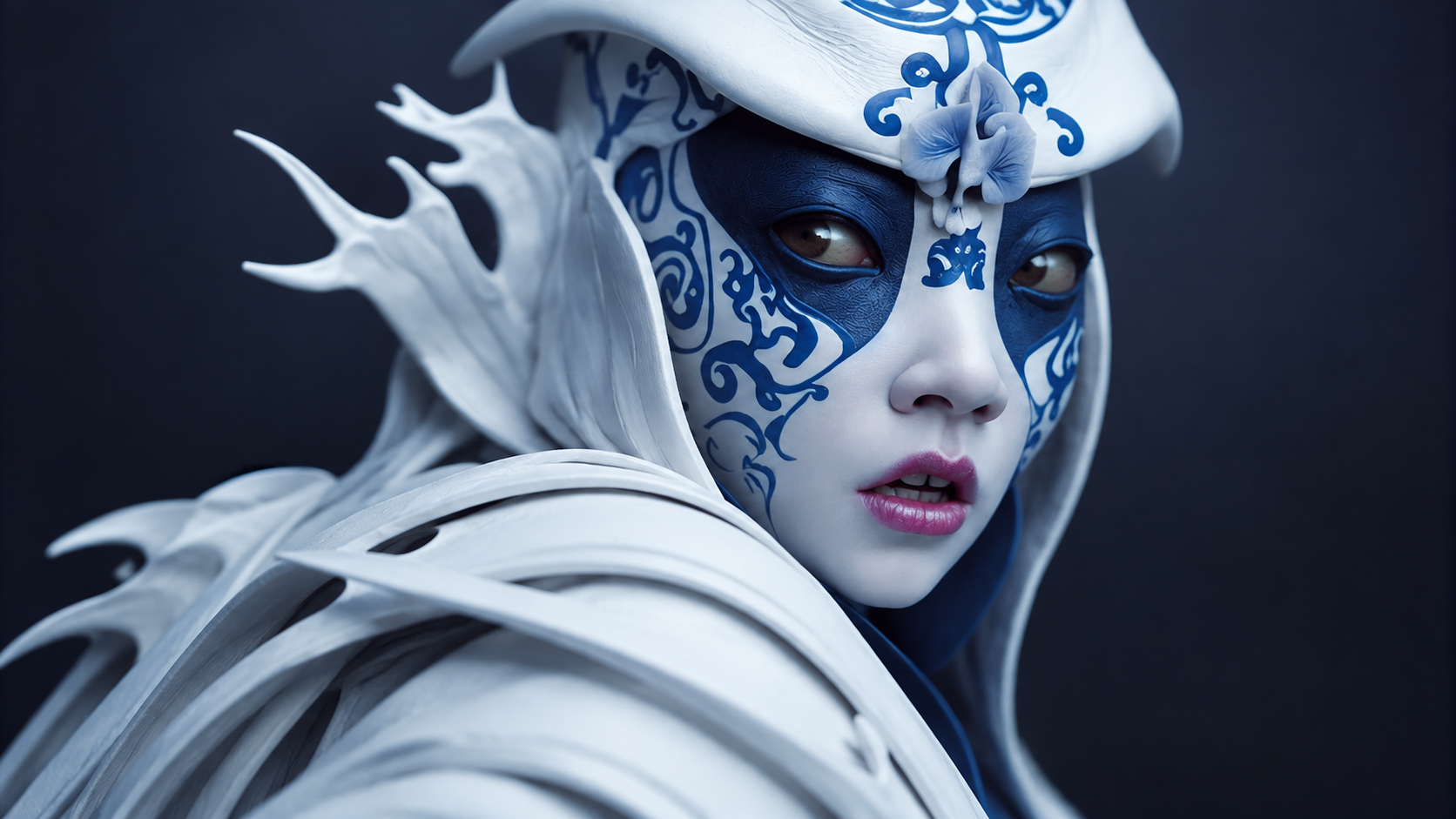
In the autumn of 2040 a fired woman came down the Tessan at noon. She was white porcelain, with cobalt patterns on her face and a porcelain orchid at her brow. No Ilvenne had come south in two hundred years. She was Qaresse, the Ninth Reader, sent by Sael-Qor to study the Ulmaeth.
She spent the winter in Tesh-Amarun. She was not allowed below the sixth gallery. She asked to see the carrier many times. Khaerith came up to see her once, early in the winter. She looked at her for a long time with the look she gives to anything that has not yet proven it will remember. Then she went back down.
The Oath
At the end of the winter, in 2041, the stair-wardens asked Qaresse to swear on the Lid-Stone that she would not copy the marks of the lower galleries. Khaerith came up the stair to witness it. She does not come up the stair. She came up for this.
Qaresse swore. Khaerith laid the oath-cross on her throat in red earth.
It would not take. Kharn does not hold on fired glaze. The red beaded and ran off her like rain off a cup. Nobody at the Lid-Stone had ever seen a body that could not be witnessed.
So Khaerith did the only thing the law allowed. She laid the cross on her own throat instead, to hold Qaresse's oath for her. A carrier carries. It was simply one more mark.
The Copying
That night Khaerith did not go back down to the lowest hall. She slept on the second gallery, beside the cold kiln that had been her mother's, so that she would be there in the morning to see the stranger go.
While she slept, Qaresse knelt beside her with paper and firelight. She copied the marks behind Khaerith's ear, the looping ones no one could read, colour and all. She worked quickly. She told the compiler later that she knew what they were the moment she saw them clearly. They were not southern crosses. They were the oldest script of her own people, written on a southern body.
Khaerith woke. She saw the paper in Qaresse's hands.
She did not call for the wardens. She did not take the paper. She said one word. It was her own name: Khaerith.
The Name
Qaresse and Khaerith are the same name. It is built from the old root khar, "to bind," with an ending that means "she who has been." In the south it became Khaerith. In the north it became Qaresse. Both mean "she who has been bound." Qaresse had not known. She has said it felt like being caught by her own reflection.
Nobody knows why Khaerith said it. Qaresse thinks she was naming what had just been taken. The Ledger says nothing. Khaerith has never explained.
The next morning Qaresse went up the Tessan and did not come back. Khaerith went down to the lowest hall. Before she slept, she broke one arm of the oath-cross on her own throat with a wet thumb. It is the only kharu-hesk on her body. It records someone else's broken promise, held for them by the one they broke it to.
What She Sent Up the Stair
Khaerith does not write. The Ulmaeth do not write. When she has something to say to the world above, she paints it, and a stair-warden carries it. For forty years that warden has been Namar.
2044: The Hide
In 2044 word came south, through a Kharrin trader, from a Weneth reader named Amarwen. It said what the marks behind Khaerith's ear meant. They were a law. The floor is a closing. Beneath it is still water. Do not cut the floor. If it is cut, the yellow will fall from their skins.
The yellow had fallen from every skin in the city in 1961. Khaerith had carried the warning through all of it without being able to read a word.
She sent back a strip of hide with a single painted cross with a second bar: a kharu-tal, an oath kept to its end. No words. Amarwen reads it as I kept it anyway. Khaerith has not said whether that is right. She has not said it is wrong either.
2045: The Flower
The next spring Qaresse came to the top of the Tessan with a blue flower from the Spoil Garden of the Blue Hollow. It was pressed flat. She asked that it be given to the carrier. She told the warden one more thing: It is from her father.
The warden carried both down. That is how Khaerith learned who her father was, at a hundred and forty-one, from a dried flower and a sentence passed on in the dark.
She painted one cross on the flower, a single kharu, a deed witnessed, and sent it back up. It meant I know. It may also have meant I saw this. Both readings are honest.
Three springs later the same flower came down again, with no message. She kept it.
2085: The Broken Cross
For forty-four years Khaerith carried Qaresse's broken oath on her own throat. In 2085 she painted a broken cross on a strip of hide and sent it east along the Ember Road.
Among the Kharrin, an oath broken and presented by the one who kept it is the oldest way to call a Reckoning. It went to Darrak, the Reckoner. In the autumn of 2087 the Reckoning of the Shedding opened at the Lid-Stone.
She has said that she did not call it to punish anyone. She called it because she was a hundred and eighty-one and had no heir, and she wanted the debt counted while there was still someone alive who could say what had been lost.
The Reckoning She Does Not Attend
She called the Reckoning. She has not gone to it. Carriers do not leave the galleries. The four peoples sit in a circle round the Lid-Stone every day arguing about her history. The one person who carries it is three hundred feet underground.
She hears everything. The stair-wardens tell her. She knows Amarwen recites the Law each morning. She knows Qaresse comes to the top of the stair every noon and asks to come down. She knows the old man in the north has asked for his ashing to be lifted.
She thinks about the people up on the Bone arguing over her history as though it were a debt. She does not think it is a debt. She thinks it is a grief. A grief is not paid. You carry it until someone helps you, and then you carry it together.
The Twelfth Night
On the twelfth night of the Reckoning she sat on the floor of the lowest hall and took out the old flower. Her cross was on it, faded. She took out her reed and her pot of red earth. She painted a second bar across the cross.
A single cross is a deed witnessed. A double-barred cross is an oath kept to its end. Namar carried it across the Bone at midnight to Darrak. Qaresse knelt beside him and looked at it by the lamp.
"It is the flower my uncle sent her," Qaresse said. Then she touched her own brow, under the orchid, where a southern cross was fired into her face before she was old enough to know what it was. "She has mended it."
Her Father
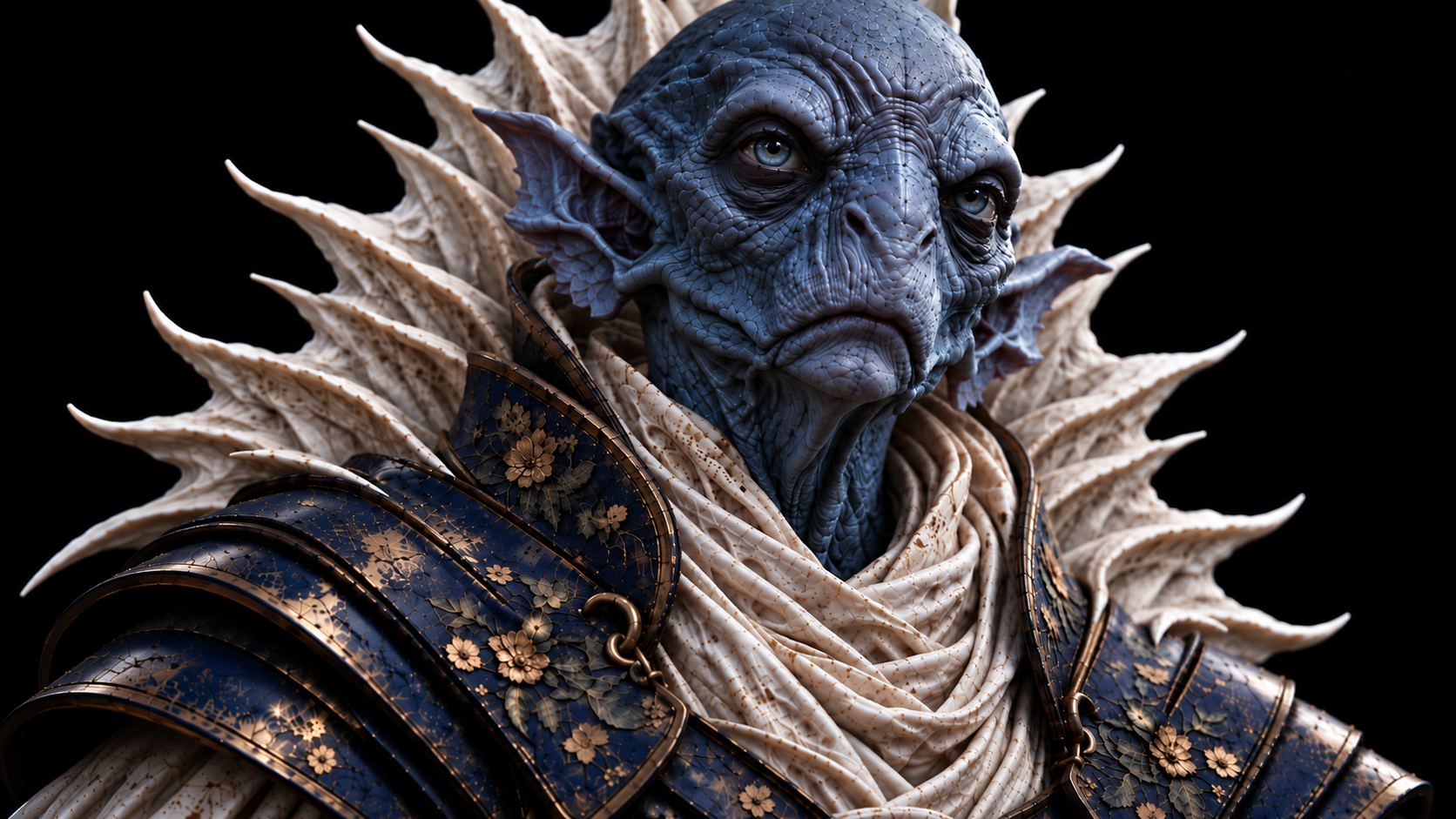
In the autumn of 1903 a blue-scaled stranger came down the Tessan at noon. He had fins at his ears. He was Sael-Ennu, an Ilvenne from the north who had refused the kiln at sixteen. He had walked across the Bone because he heard the south still painted its marks on, and could take them off again.
He worked Ysmarr's kiln through the winter. In the spring she laid a cross on his shoulder for the work. Unfired skin holds paint, so it took. He is the only northerner the Ulmaeth have ever witnessed.
Then an Elder recognised the fins. Sael-Ennu's cross was struck with ash in front of the kiln-wardens, and he was sent back up the stair. At the top of the Tessan he asked Ysmarr for one thing. He asked that the child be named for his mother. His mother's name was Qaresse. Ysmarr gave it its southern form.
Khaerith was born ten days later, in Ashfall. Her father was already on the Salt Road.
The Eyes
Khaerith's eyes are ishen, the grey-blue of well-water. The Ulmaeth believe that colour comes to those who have looked a long time at the dark. All her life she was told she had it because she lived in the drying-halls.
She knows now that it came from her father. The eldest blood of every Brine people has pale blue eyes. His are clouded white now, from a century and a half of cobalt dust. He cannot see them. She has never seen his.
The Mark On Her Shoulder
The Elder who ashed Sael-Ennu in 1904 was marked for it, as every deed is marked. It was a single cross on his shoulder: a fire-taker found and struck with ash.
That Elder shed long before 1961. His skin went to the drying-halls. Khaerith copied it, along with thousands of others, in the forty years after the Shedding. She did not know what that cross was when she laid it. She found out in 2045, when the flower came down with its sentence.
It is on her right shoulder blade. She cannot see it. She knows exactly where it is.
This is why the ashing can never be forgotten. It is not only that Khaerith remembers it. She carries it. The record of her father's ashing is painted on her own body. To lift it, she would have to strike a cross off her own skin. A carrier never does that. It would be the first mark she has ever destroyed.
The Request
In the summer of 2087 Sael-Ennu asked the Reckoning to lift his ashing, so that he could come down the Tessan once. He is two hundred and seven and blind.
The Kiln-Elders gave the only answer the law allows. Only Khaerith can say whether the ashing is still remembered. They sent no one to ask her. They said it would be cruel.
Namar, the warden, agreed it would be cruel. So she bound her eyes instead. If no warden sees him on the stair, his return is unwitnessed. In law it never happens. The ashing would stand untouched, and Khaerith would never have to choose.
The first time Namar came down to the lowest hall blindfolded, Khaerith reached up and touched the two crosses painted over her eyes. She did not say anything. Eleven nights later she mended the flower.
Namar is the only person alive who knows how Khaerith says her father's name. She has not told anyone. She says it is not hers to carry.
No Heir
Khaerith is a hundred and eighty-three. The ordinary Ulmaeth life is about a hundred and twenty. Nobody knows how long she has left. She does not discuss it.
When she dies, everything the Ulmaeth were before 1961 dies with her. So does the only copy of the Law of the Floor outside the north. Every cross on her body would have to be copied onto someone else before then. That is twenty centuries of the dead. It took her forty years to lay them. It would take someone else at least as long to take them up.
She has never asked anyone to do it.
Why She Has Not Asked
The Kiln-Elders think she is proud, or that she trusts no one. Neither is true.
A carrier has no life of their own. Khaerith gave up her mother's kiln at twenty-seven. She gave up whoever she was going to marry. She has spent a hundred and fifty-six years in the dark with the dead. There is one cross on her body for something she did herself, and she earned it at nine.
She does not want to give that to anyone. She has said the work ends with her. She means it as a kindness. It may also be the cruellest thing she has ever decided.
Vaelith
Someone has started anyway.
Vaelith is a young Ulmaeth of the upper galleries, born long after the Shedding. After the Shedding the old drying-halls were sealed with salt. Since then the skins of the new dead have been hung in a new hall, cut above the sealed ones. Nobody has been carrying them. Khaerith had no room. Their marks are few, because their lives began in 1961. Even so, there was no one to keep them.
In 2083 Vaelith went down to the new hall alone and began to copy them onto herself. Nobody gave her leave. Nobody stopped her. She carries the dead who came after the Shedding, the ones Khaerith could not hold. She still has room, so she still wears cloth over most of her body. Her crosses are bright red. None of them is old enough to darken.
She is the heir Khaerith has not chosen. She is carrying the after, while Khaerith carries the before. Between them they hold the whole of the Ulmaeth. They have never spoken.
Every evening Vaelith climbs the Tessan to ask Namar how Khaerith is. Namar always tells her the truth.
The Carrier's Question
At the Lid-Stone, the Reckoner Darrak has begun to ask the question no one else will. If Khaerith dies, who carries the before?
Vaelith could. She is the obvious answer, and Khaerith has not given her leave. There is another answer that no one at the Reckoning likes to say aloud. A carrier must hold paint. The Weneth do not mark. The fired Ilvenne cannot hold red. The Kharrin mark only debt. But an unfired Ilvenne can carry a southern cross. Sael-Ennu proved it in 1903.
Qorran, the war-leader of the Blue Hollow, is unfired. He has asked that his judgment at the Reckoning be painted in red on his blue skin, so that it can never be glazed over. Darrak has noticed what that would make him. So has Qorran.
Her Names
Khaerith comes from the old root khar, "to bind" or "to cross," with the ending -ith, which makes it passive: "she who has been." It means "she who has been crossed," or more loosely, "the marked one."
The southern tongue brightens a stressed a to ae when an i follows it. So khar-ith becomes Khaerith. In the north the same name went another way. The old kh became q, and the ending -ith became -esse. So khar-ith became Qaresse.
It was a common name among kiln families. Nobody heard it as a title until she became a carrier. Now nobody in the south can hear it as anything else.
She was named for her grandmother, Qaresse the Elder, a cobalt-reader of Sael-Qor. Her father asked for it at the top of the stair. Her cousin, the Ninth Reader, was named for the same woman. In 2041 they learned that their names were the same. It was years before either of them learned why.
Vael-Ulmorn
The Elders gave her this name in 1931, on the night she finished carrying Orun-Hesk. Vael is the old root for watching without sleeping. Ulmorn is the basin itself, "the yellow hollow." Together they mean "the Watch of the Ochre Deep."
It is the name of an office, not a person. There has only ever been one Vael-Ulmorn.
Ama-Khaer
In common speech the Ulmaeth call her Ama-Khaer, "grandmother of crosses." It is meant affectionately. She dislikes it. She has no grandchildren. She has no children. The crosses are not hers. She says the name makes her sound like someone who chose this.
Southern Words She Uses
Some of the old southern words survive mainly in her mouth, because she is the last person who uses them every day.
Kharn: red earth, the paint of every mark. Some scholars now think the word was borrowed from the Kharrin, who sold the earth up the Ember Road. In their tongue it means "debt-earth." The Kiln-Elders reject this furiously. Khaerith thinks it is probably true and does not mind.
Ishen: grey-blue, the colour of well-water, and of her eyes.
Hesk: ash. A mark struck out.
Tal-ennu: the open hand. Her mother's gift.
Amar-nai: "I saw you." The words of witness, spoken when a cross is laid.
Ulm-sed: salt-bread, eaten at every marking. She stopped eating it before the Shedding. She has never said why.
The People Around Her
Ysmarr. Her mother, a kiln-warden of the second gallery. She kept Khaerith safe by leaving her father off the record. She died in 1958. Her crosses are the ones around Khaerith's left eye. They were the first marks Khaerith carried after the Shedding.
Sael-Ennu. Her father, unfired, blind, two hundred and seven, growing flowers on mine waste in the Blue Hollow. She has never seen him. The record of his ashing is on her right shoulder blade.
Orun-Hesk. The last carrier before her. She took up his marks over nine days in 1931, and with them, the vigil.
Qaresse. Her cousin, the Ninth Reader, who swore an oath to her and broke it the same night. Khaerith held the oath on her own throat for forty-four years. Then she presented it to call the Reckoning. Then she mended it. Qaresse comes to the top of the stair every noon and asks to come down. They have not seen each other since 2041.
Namar. The stair-warden who carries her water and her messages, and who bound her own eyes so that Khaerith would never have to choose between her father and the law. She is the closest thing Khaerith has to a friend. Khaerith has never called her one.
Amarwen. The Weneth reader who told her, after eighty years, what the marks behind her ear say. Their whole correspondence is one translation sent south and one painted cross sent back.
Darrak. The Reckoner she summoned with a broken cross. He judges a debt he can see only through other people's testimony. The thing at the centre of it is three hundred feet below him in the dark.
Vaelith. The young carrier of the after. She has begun to do the work Khaerith refuses to give anyone. They have never spoken. In the portraits she is often mistaken for Khaerith. She has the same ochre scales and the same red crosses, but she still wears cloth, because she still has room.
Qorran. Her father's foster-son, so in a sense her brother. He broke the salt-kilns in 2044. He has asked to come down the Tessan in their father's place. He is unfired, and he could hold her marks. They have never met.
Khoralv. The six-armed ember-digger of the Kharrah, in the red mountains of the east. Nearly all the red earth on her body crossed the mountains from pits like his. The Ulmaeth believe their red is their own. Khaerith knows better. She has never minded.
What Is Still Unsettled
Why did she not shed? Grace, say the Elders. No salt-bread, says the Ninth Reader. Her father's blood, says her father. "Someone had to stay dry," says Khaerith. She also says none of these is the reason. She has not said what the reason is.
What did she mean when she said her name? On the night of the copying she woke, saw Qaresse with the paper and said Khaerith. Qaresse thinks she was naming what had been taken. Others think she was telling Qaresse who she was really copying. Others think she had already guessed they were kin.
What does the mended flower mean? A double-barred cross is an oath kept to its end. Qaresse broke her oath. Khaerith has now painted it as kept. She may be forgiving her cousin. She may be saying that the oath was kept after all, because the marks Qaresse copied went to Amarwen and were finally read. She may mean something about her father. Darrak sat with it all night and did not know where on his face it belonged.
Will she let anyone carry the before? She has said the work ends with her. Vaelith is waiting. Qorran could hold the marks. The Reckoning cannot close without an answer, and she is the only one who can give it.
Will she meet her father? If he comes down the stair unseen, in law he never comes. The meeting would be hollow. She could never lay a cross for it. Namar believes Khaerith would rather have the meeting than the mark. Nobody has asked her.
The Wrist
There is one place left on Khaerith's body with no mark on it. It is the inside of her left wrist, the place where a child holds a parent's hand when they walk.
She has kept it clear for a hundred and fifty-six years. Every time she ran out of room, she went round it. She has filled her scalp, her face, her throat and the backs of her hands. She has never put a cross there.
She has not said what it is for.