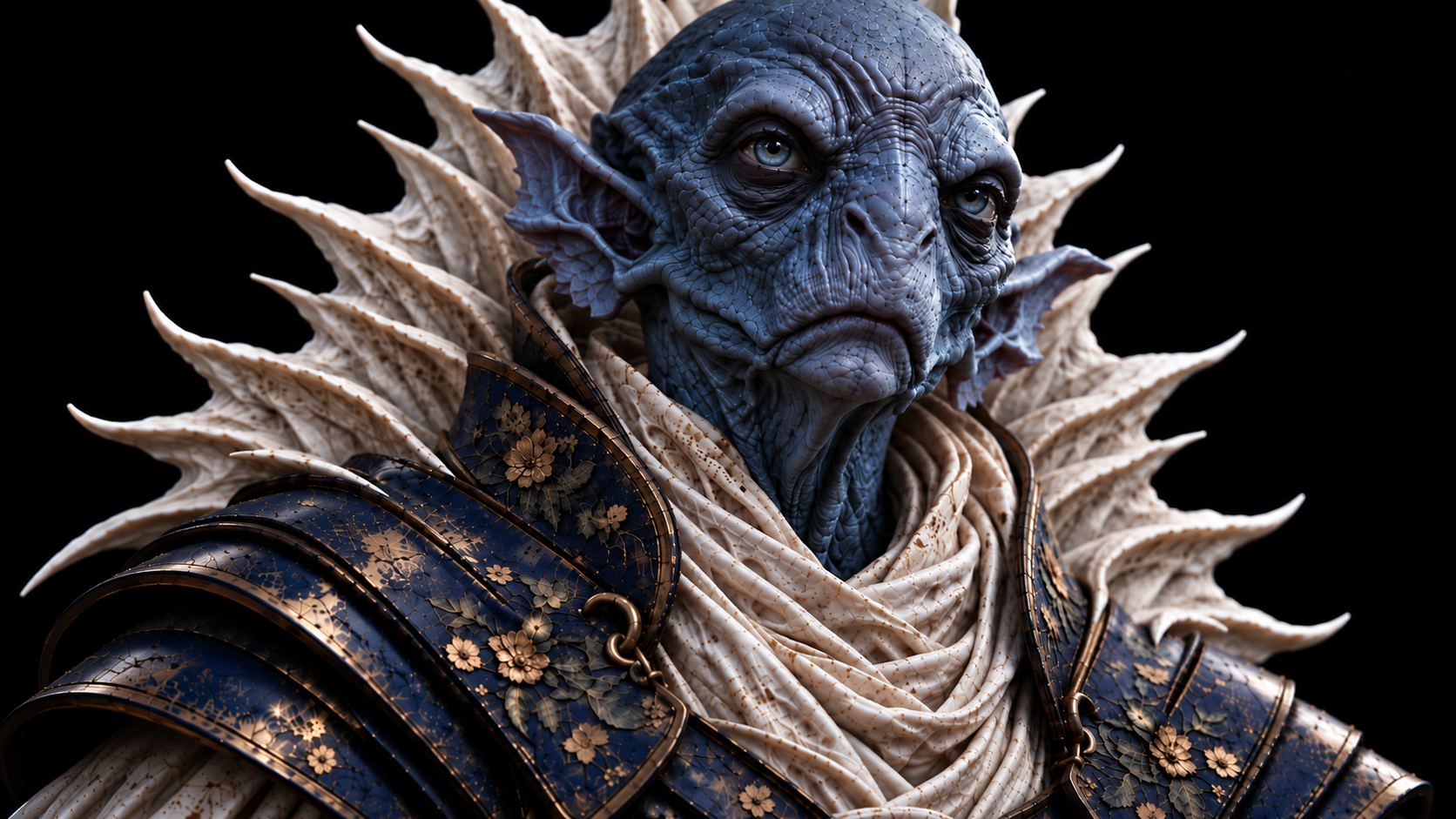
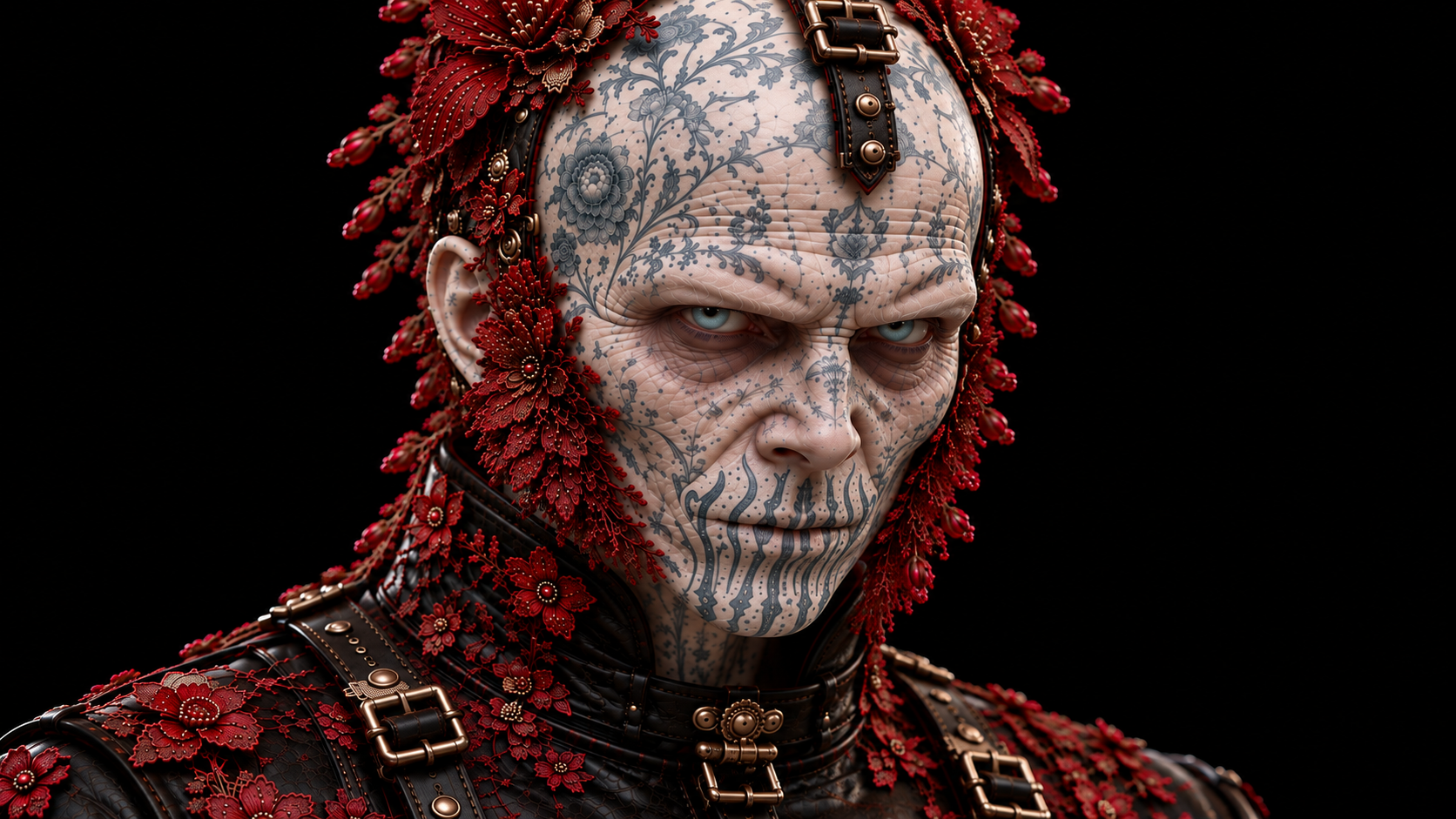
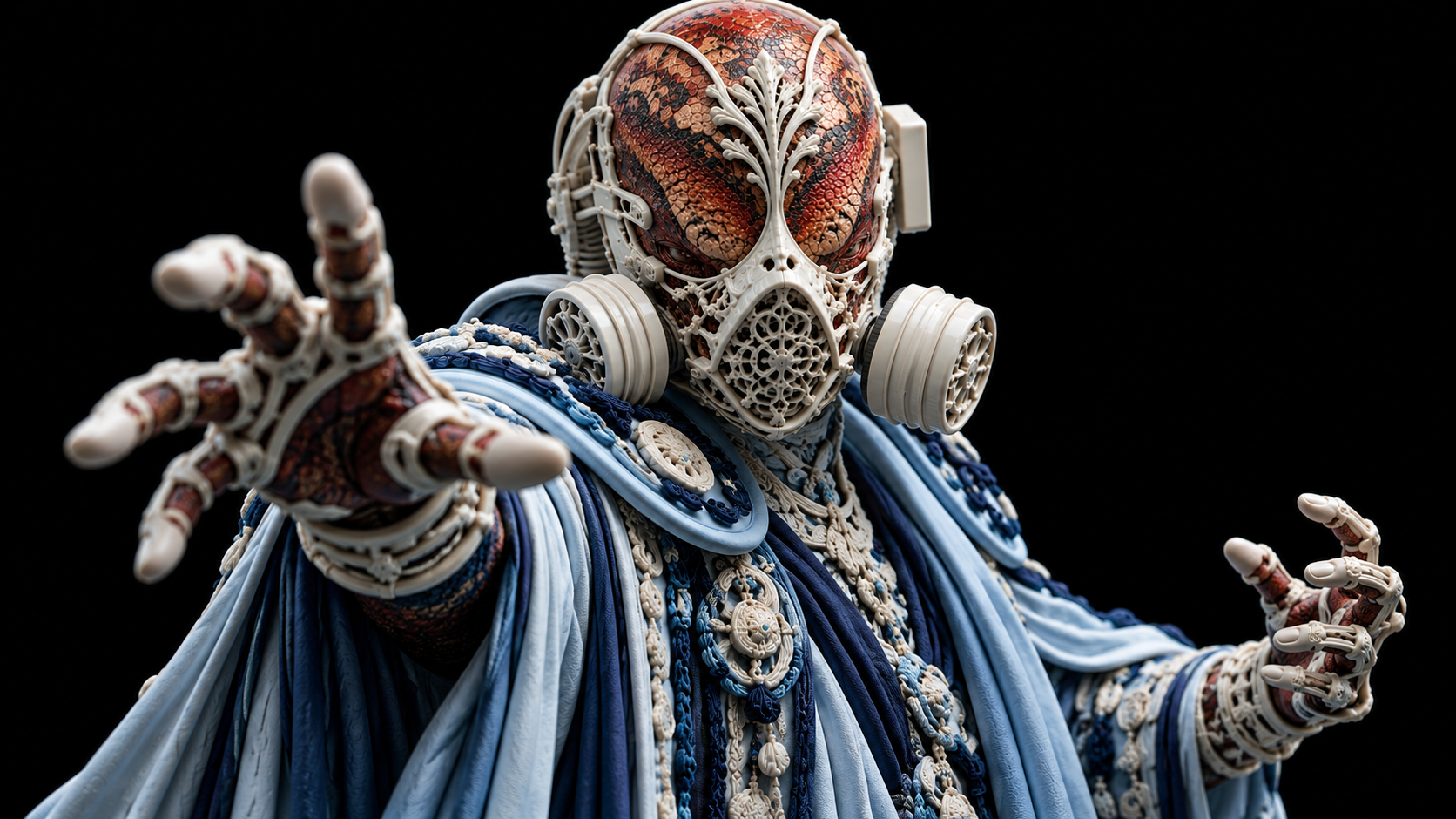
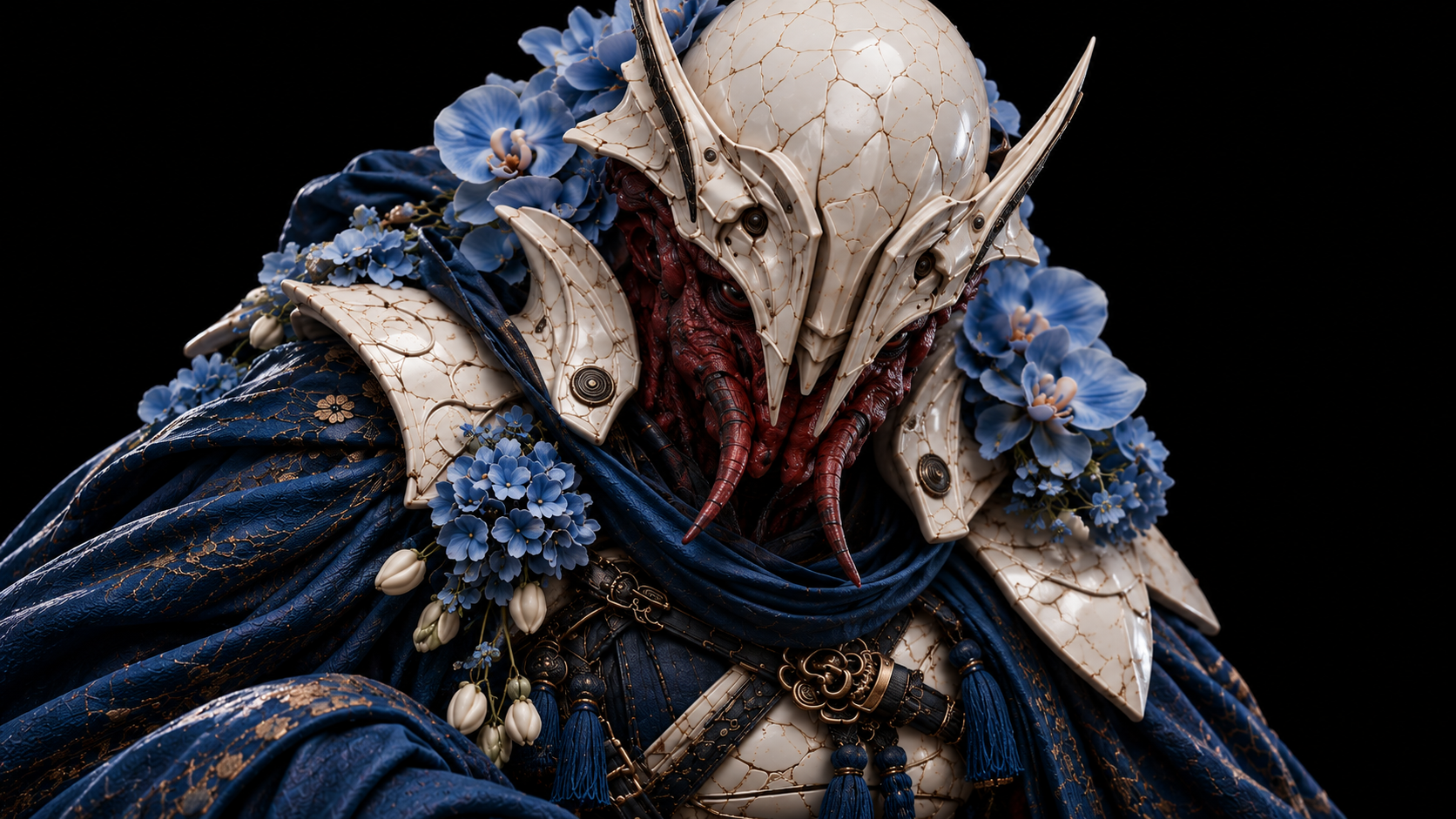
Namar, Stair-Warden of the Tessan
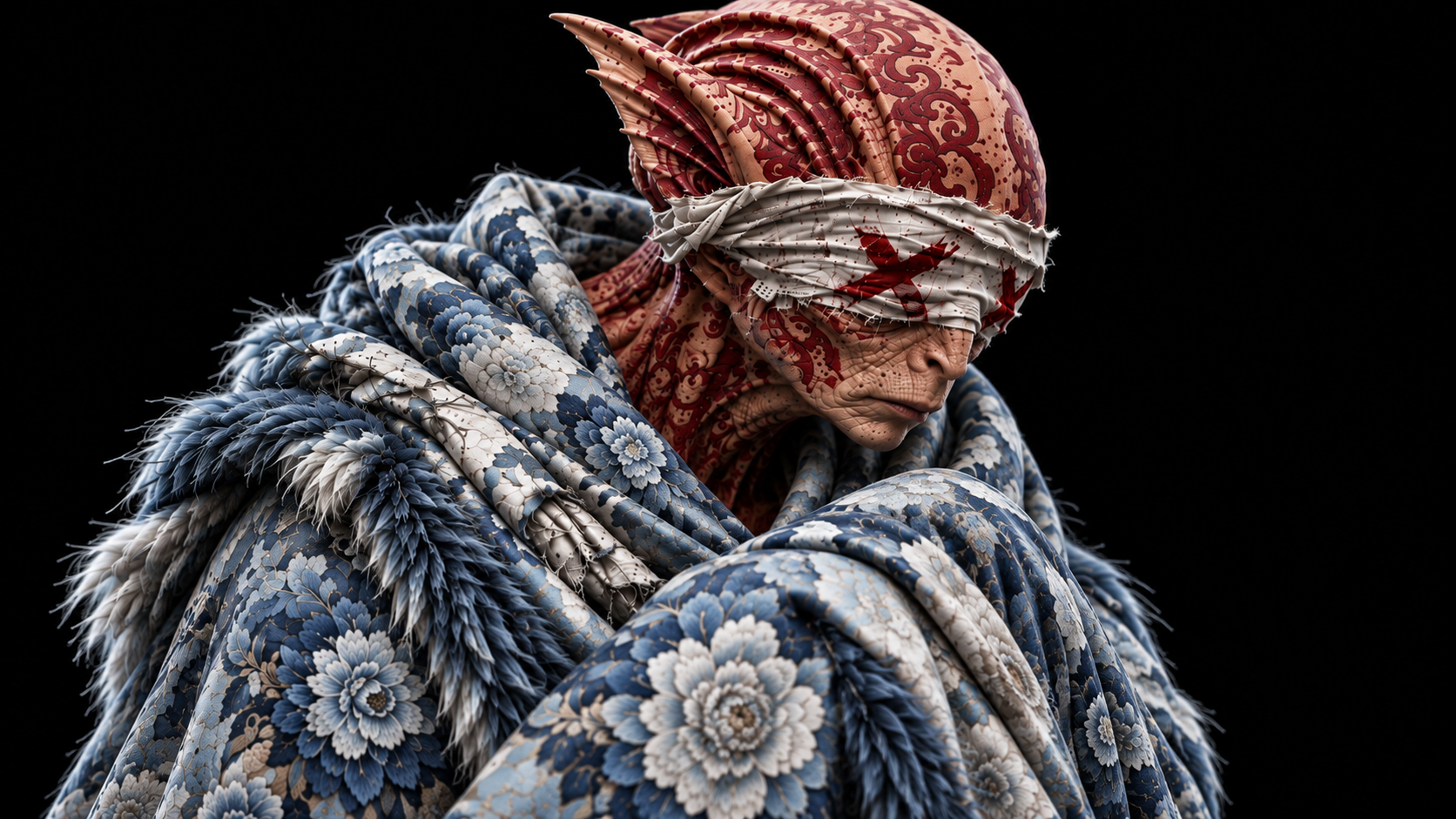
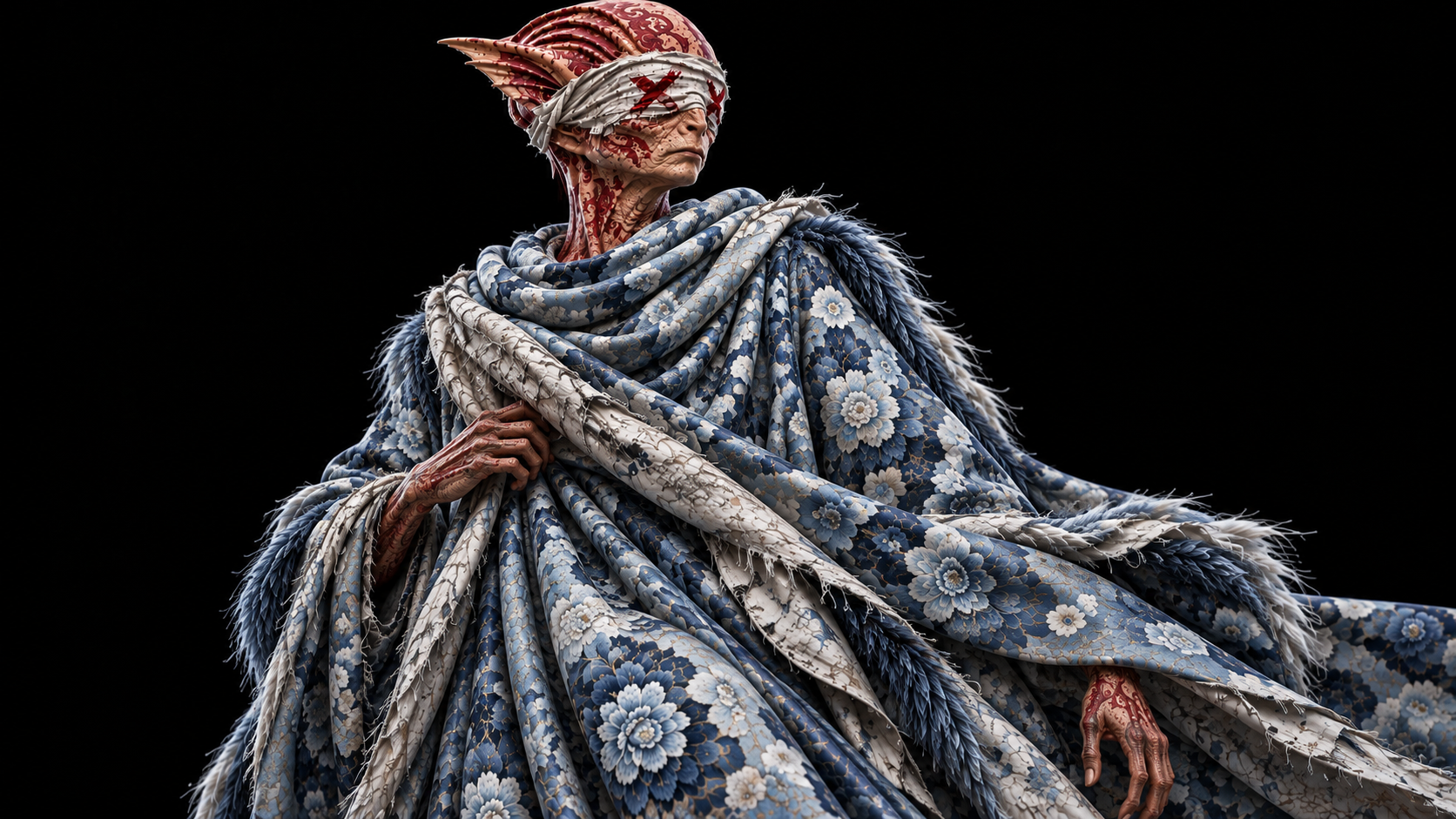
Namar is a stair-warden of the Tessan, the single stair that leads down into Tesh-Amarun. Among the Ulmaeth, to be seen on the stair is to be witnessed. For sixty-nine years her work was to see. On the first day of the Reckoning she bound her eyes.
The law says an ashed person may never come down the Tessan again while anyone remembers the ashing. Namar has found the one way round it. If no warden sees him, he has not come back. She stands at the top of the stair every noon, blind, and waits for someone she has never met.
- Name
- Namar, born Amaerith
- People
- Ulmaeth, of Tesh-Amarun
- Born
- 1998 F.K., in the upper galleries
- Age at the Reckoning
- 89
- Office
- Stair-warden of the Tessan, since 2018
- Known for
- Binding her eyes so the ashed can come home
- Marks
- Stair-marks: every stranger she let down the Tessan
- Wears
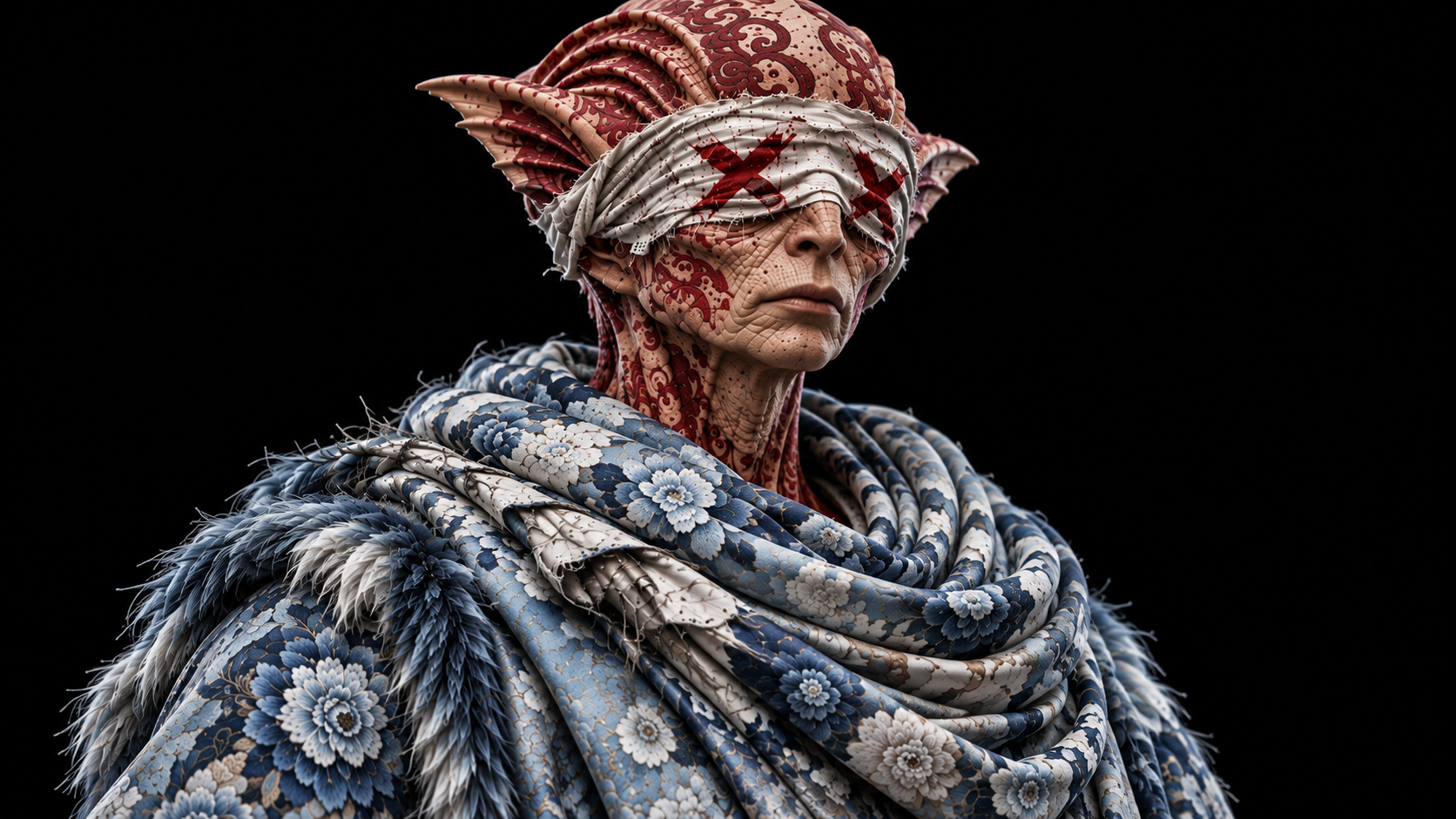
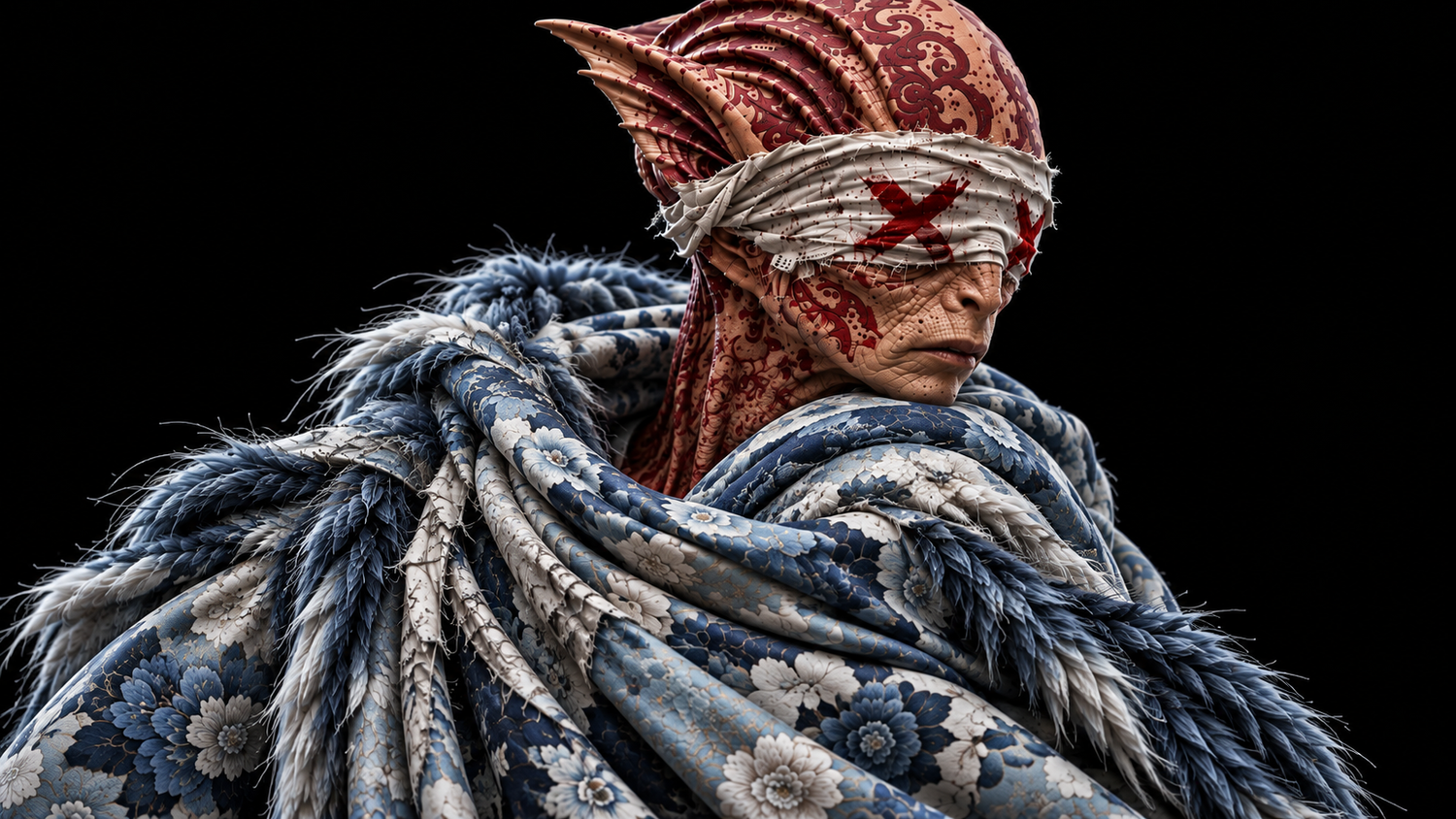
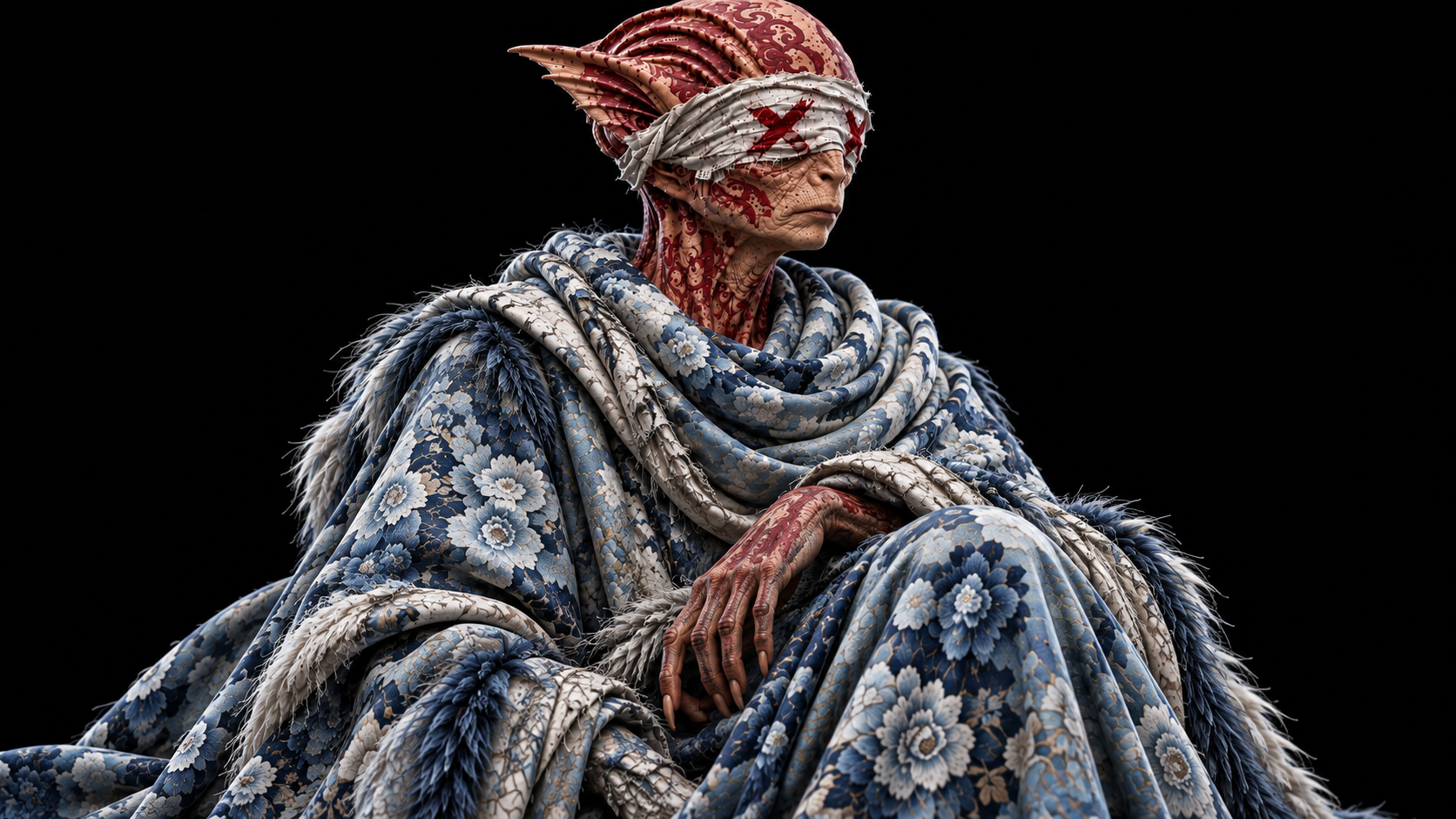
- A blindfold with two crosses. A Reader's cloak that is not hers.
- Carries
- The warden's staff, and a lamp for other people
- Seen in
- Namar, Don't Come At Me With The Madness. 3 Up: Namar, Sael-Ennu & Ennesse. Chapter One: The Twelfth Day.
The Tessan and Its Wardens
Tesh-Amarun is the city of the Ulmaeth. It is not built on the surface of the basin. It is cut down into the Kiln-Scarp, the red and yellow cliff on the eastern side of the Ulmorn, in nine galleries going down. The kilns and the living are at the top. The marking-halls are in the middle. At the bottom are the drying-halls, where shed skins hang in the dark.
The city has no gates. Its only entrance is a single stair cut into the cliff, wide enough for one person at a time. It is called the Tessan, "the cut."
The Law Of Witness
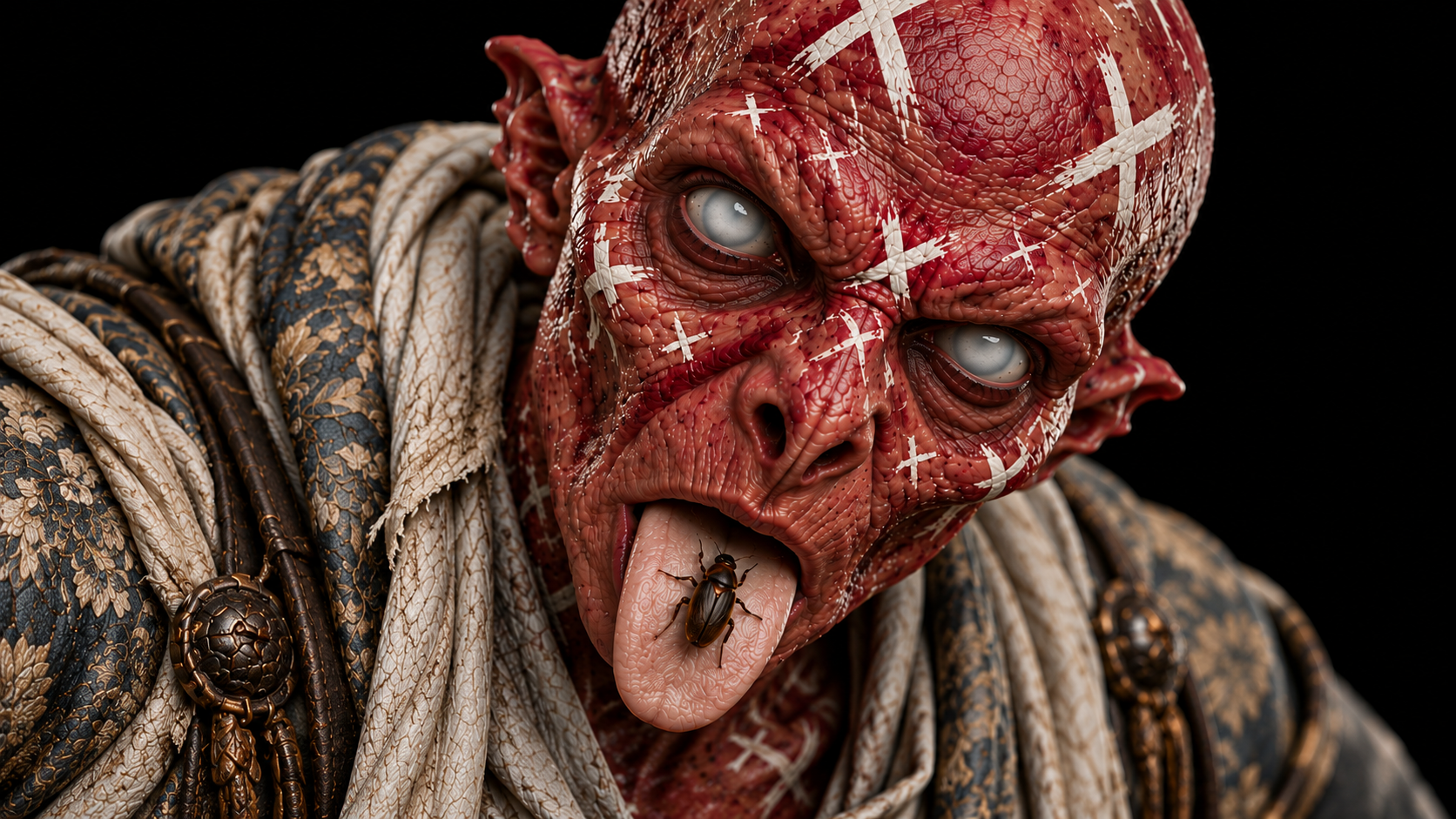
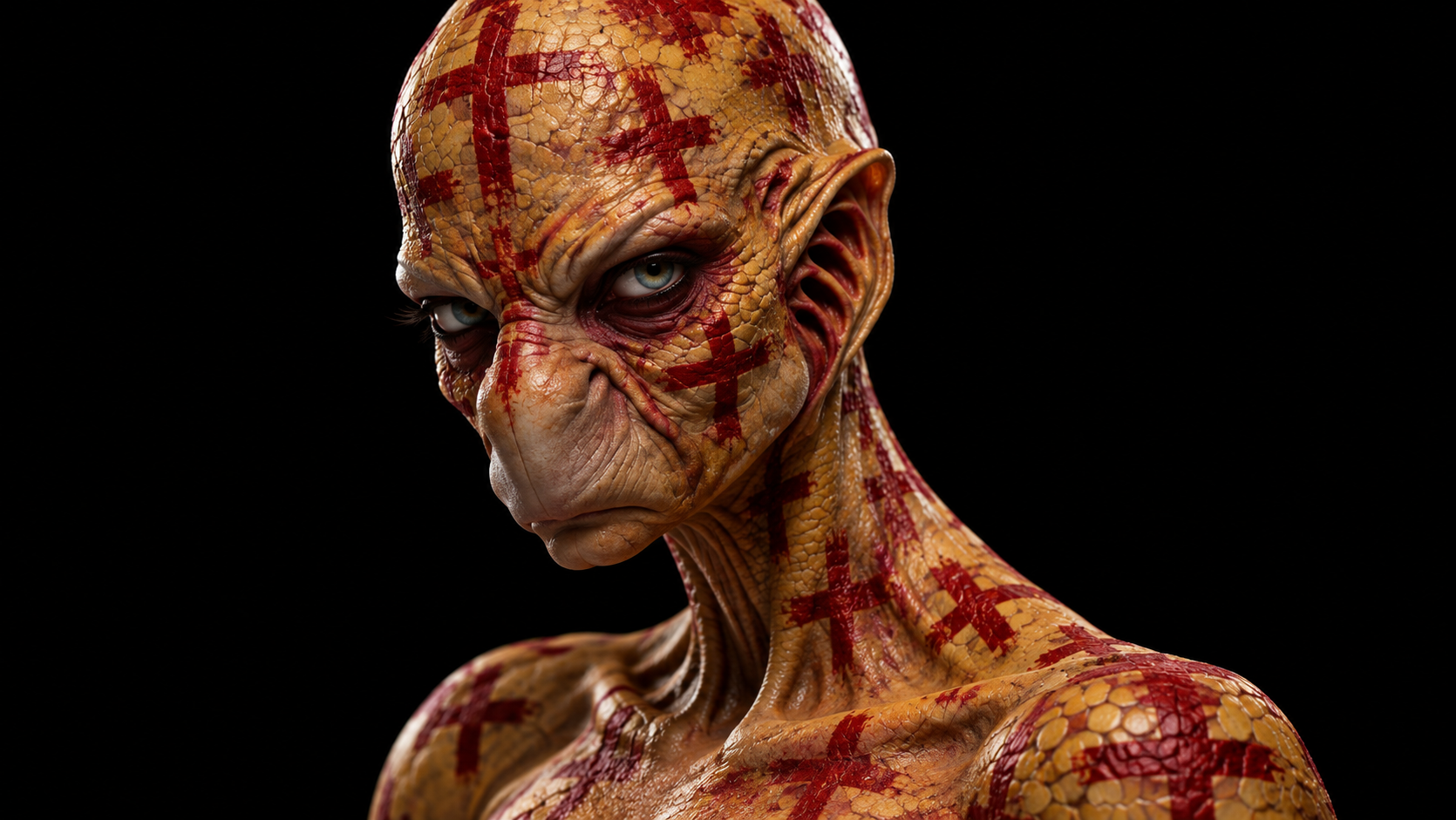
The Ulmaeth keep their history on their bodies. A deed is recorded as a red cross painted on the skin by someone who saw it happen. No one marks themselves. A mark with no witness is called hollow, and it is washed off. The whole record of the Ulmaeth rests on one act: someone else seeing.
The Tessan is where that act begins. Every Ulmaeth who goes down the stair passes a warden. The warden sees them. That seeing counts as witness. It is the first fact recorded about anyone who enters the city: they came down, and they were seen.
Strangers are let down the Tessan once, at noon, in the hour of silence. They pass the warden without speaking. Being seen once is enough.
The Law Of The Ashed
The Ulmaeth have one punishment worse than any other. They call it ashing. A person's marks are struck through with ash, in front of the kiln-wardens. Among a people who keep only what they paint, it means never to have lived.
An ashed person is sent up the Tessan. By law they may never come down it again for as long as anyone remembers the ashing.
In practice, ashings are forgotten. Memory on skin fades. The witnesses die or shed. Within a generation or two, an ashed name could pass the stair again and nobody would know.
But the Ulmaeth now have Khaerith, the last carrier, who keeps the marks of everyone who has ever died. She has forgotten nothing. As long as she lives, no ashing is ever forgotten.
Amaerith
Namar was born in 1998 F.K. in the upper galleries of Tesh-Amarun. Her name then was Amaerith. She was born thirty-seven years after the Shedding.
That matters more than anything else about her early life. In the summer of 1961 every Ulmaeth shed at once and lost every mark they carried. The history of the people went with it. Everything older now survives only on Khaerith. Children born after the Shedding carry only the marks of their own lives. There is nothing older on anyone they know.
Amaerith grew up among people with almost blank skin. Her parents had shed as young adults. Their marks began again in 1961, as though they had been born that year. Her grandparents had lost a century each. The old people of her childhood had faces like scraped cloth. They told her stories about what their crosses used to say. Nobody could check.
She has said this is why she became a warden. In a city that had lost its past, the stair was the one place where the record still began cleanly. Someone came down. Someone saw. A mark was made. She wanted to be the one who saw.
The Stair-Wardens
She took the office in 2018, at twenty. Wardens serve in shifts on the Tessan, one at the top and one at each turn of the stair. They do not speak while they watch. Their seeing is the work.
The noon shift is the hardest. It is the hour of silence, when strangers come. A noon warden may stand for months and see no one. Then a stranger appears at the top of the stair, from the Bone, from the north or from beyond the red mountains. The warden has a single long moment to see them fully. Namar asked for the noon shift in her first year and kept it for sixty-nine years.
The Stair-Marks
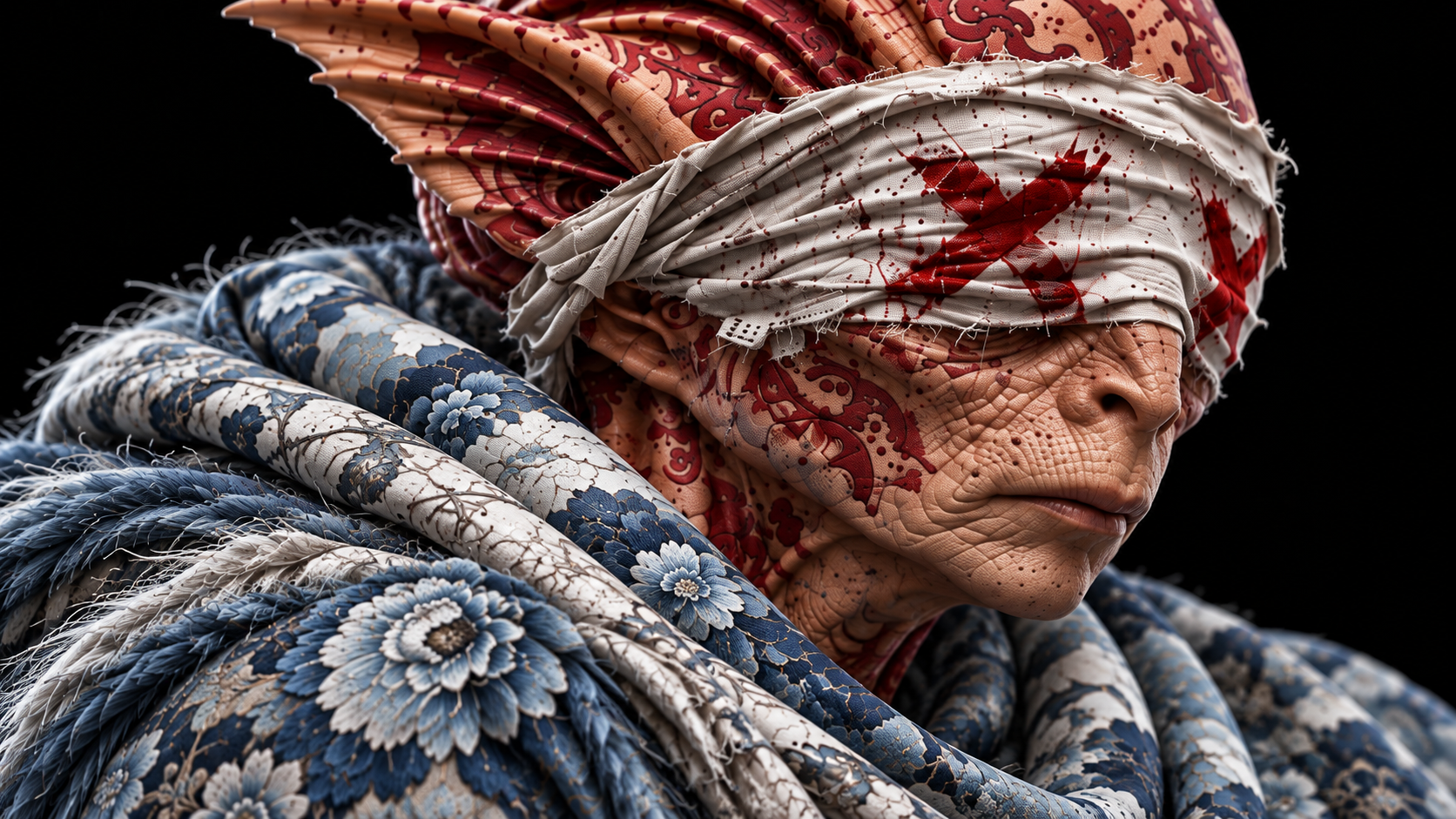
Wardens carry a kind of mark no one else does. Each time a warden lets a stranger down the Tessan, the other wardens lay a small red mark on her skin to witness that she saw. It is not a cross. It is a curl, like a hook turned on itself, laid close to the last one. Over a lifetime the curls run together into lace.
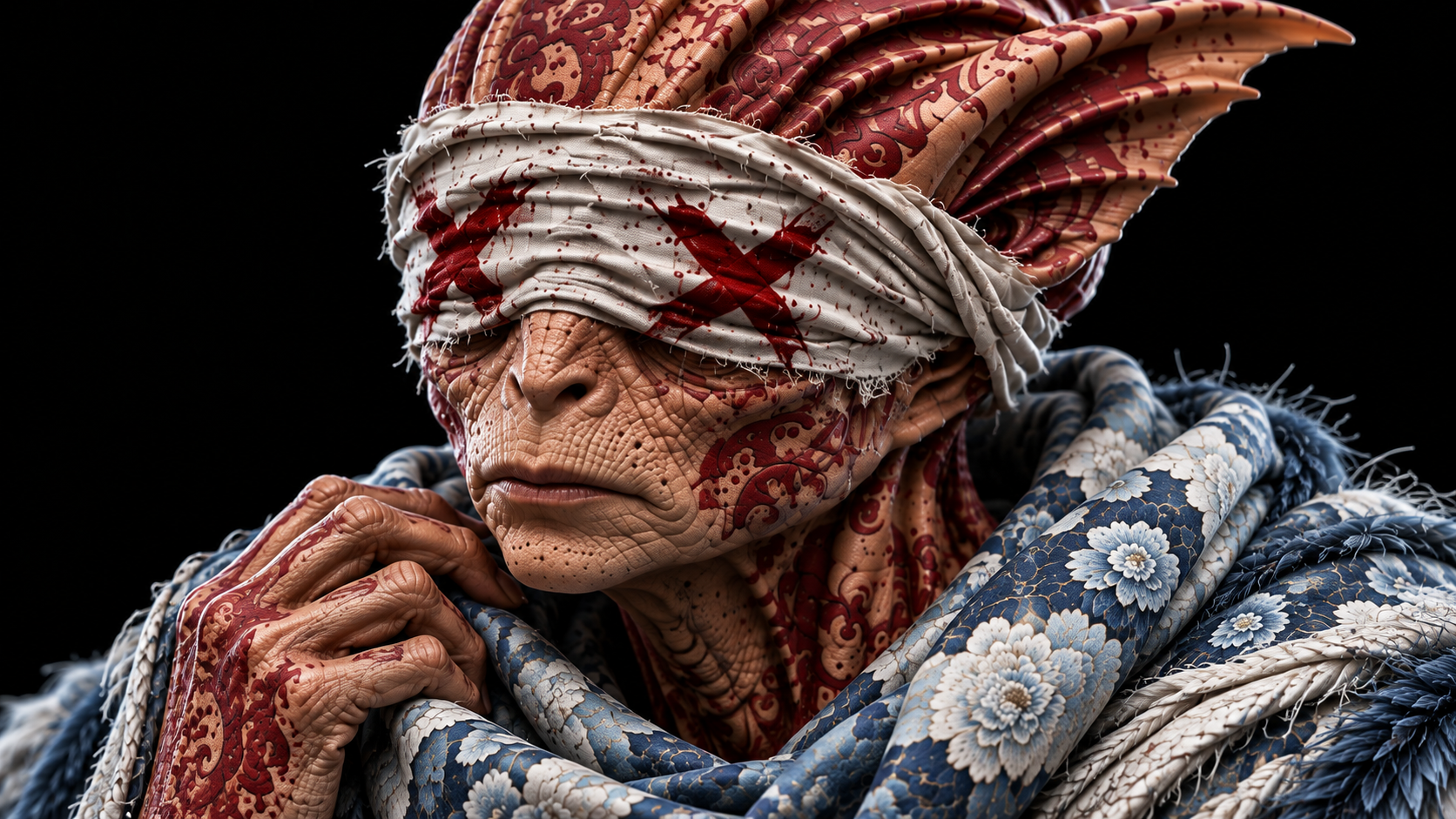
Namar's stair-marks cover her hands, her throat and the side of her face. There are about four hundred. Each one is a stranger she saw once, at noon, and let down. She can name most of them by touch.
In 2079 she shed, at eighty-one, as Ulmaeth do once in a long life. The old skin took every curl with it. The other wardens sat with her for nine days afterwards and laid all four hundred again from memory. They argued about the order. She corrected them by touch. The new marks are brighter than the old ones were. That is why her hands look freshly painted.
The Courier
For most of her life Namar was one warden among many. She became more than that because of one stranger.
The Ninth Reader
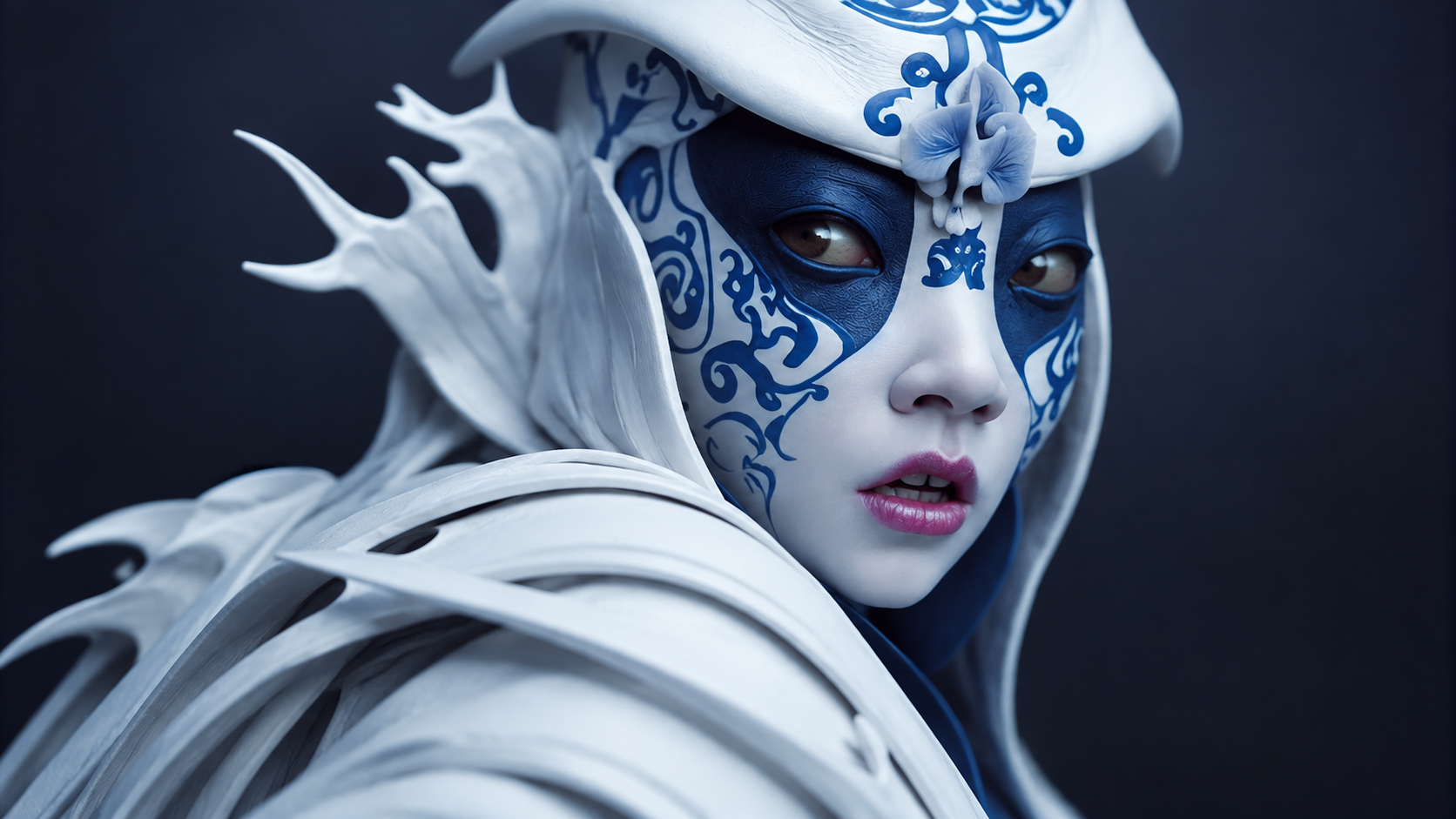
At noon one autumn day in 2040, a fired woman appeared at the top of the Tessan. She was white porcelain, with cobalt patterns on her face and a porcelain orchid at her brow. She was the first Ilvenne to come south in two hundred years. She was Qaresse, the Ninth Reader.
Namar was forty-two and on the noon shift. She saw her. Qaresse went down without a word, as strangers must. That night the other wardens laid a curl on the back of Namar's left hand. It is still there, repainted after her shedding, near the wrist.
Qaresse spent the winter in Tesh-Amarun. At the end of it the wardens asked her to swear on the Lid-Stone that she would not copy the marks of the lower galleries. Namar stood with them. She watched Khaerith lay the oath-cross on Qaresse's throat in red earth. She watched the red bead and run off the glaze like rain off a cup. Nobody there had ever seen a body that could not be witnessed.
That night Qaresse broke the oath. The next morning she went up the Tessan and did not come back.
The Things That Went Up And Down
From then on, whatever passed between Khaerith and the world above went through Namar's hands. Nobody decided this. It simply happened, because she was the warden at the top, and because Khaerith trusted her.
2044. A strip of hide, painted with a double-barred cross, the sign of an oath kept. Khaerith's reply to Amarwen's reading of the Law. Namar carried it up the stair to a Kharrin trader.
2045. A blue tal-flower from the Spoil Garden in the north. Qaresse brought it to the top of the Tessan and asked that it be given to Khaerith. Namar took it down. The next day it came back up with a single red cross painted across it: I know.
2048. The same flower, sent south again three springs later with no message. Namar took it down. It did not come back up.
2085. A cross with one arm broken, the sign of an oath broken, presented by the one who kept it. Khaerith had carried it on her own throat for forty-four years. Namar carried it up to the Ember Road. It went east to Darrak, and it called the Reckoning.
The twelfth night of the Reckoning, 2087. The same tal-flower, flat and dry, its old cross now crossed by a second bar. Namar carried it across the Bone at midnight to Darrak. She brought a lamp. She did not need it. The lamp was for him.
The Ulmaeth do not speak when they carry a message. The mark speaks for them. Namar has carried the most important messages of the age without saying a word about any of them.
Khaerith
Namar is the only person who goes down to the lowest hall without being sent for. She brings water. She sits. They do not talk much.
She is the only person alive who knows how Khaerith says the name of her father.
The Old Man in the North
In the autumn of 1903, before Namar's grandparents were born, a blue-scaled stranger came down the Tessan at noon. He had fins at his ears. The warden on the stair that day did not know what he was. No Ilvenne had come south since the Parting, and the Ulmaeth had kept no likeness of the people they ashed.
He was Sael-Ennu, an unfired Ilvenne who had refused the kiln. He worked the kiln of a kiln-warden named Ysmarr through the winter. In the spring she laid a cross on his shoulder for the work. Unfired skin can hold paint, so it took. He is the only northerner the Ulmaeth have ever witnessed.
Then an Elder recognised the fins. Sael-Ennu's cross was struck with ash and he was sent back up the stair. The Red Ledger records it in one line: A fire-taker found among the kilns; his mark struck with ash.
By then Ysmarr was carrying his child. She declared the open hand, the right of a parent to leave no mark of the other. That way the child could never be ashed for her father. The child was Khaerith.
The Request
Sael-Ennu is two hundred and seven years old now and blind. He grows flowers on the cobalt waste of the Blue Hollow. He has never seen his daughter. In the summer of 2087, when the Reckoner came north to take his testimony, he asked for one thing. He asked that the ashing be lifted, so that he could go down the Tessan once.
The Kiln-Elders were asked. They gave the answer the law requires. An ashing stands while anyone remembers it. Only Khaerith can say whether she remembers. Khaerith remembers everything.
So the law could not be lifted unless Khaerith herself agreed to forget. The Elders sent no one to ask her. They said she would refuse. They also said it would be cruel to ask.
Namar agreed with them about the cruelty. That was where her thinking began.
Who Would Come
Sael-Ennu is too old to walk ten days across the Bone. On the twelfth day of the Reckoning, Qorran asked to be allowed to go down the Tessan in his place. Qorran is the war-leader of the Hollow and the old man's foster-son. He wants to carry to Khaerith whatever she will accept. Others have spoken of carrying Sael-Ennu himself, on a board, the way the Weneth carry the dying.
No one knows yet who will come to the top of the stair. Namar does not know either. She only knows that someone might.
Binding Her Eyes
Namar is not a scholar. She is a warden. She knows one law better than anyone alive, because she has stood inside it every noon for sixty-nine years. It is the law of witness.
The Reasoning
To the Ulmaeth, a deed is not a deed until someone sees it. A mark with no witness is hollow. It is washed off as though it never happened.
Coming down the Tessan is a deed like any other. It is recorded the moment a warden sees it. The law of the ashed forbids an ashed person to come back. But coming back, like everything else, only happens if it is witnessed.
So if no warden sees him on the stair, he has not come back. His return would be hollow. In law, it would never have happened. He could walk all the way down to the lowest hall, and the ashing would still stand, untouched and unbroken. Khaerith would never have to forget anything. She would never even have to be asked.
What She Did
On the first day of the Reckoning, in the autumn of 2087, Namar went to the other wardens. She asked them for two things.
First, that from then on the noon shift be hers alone. Strangers only come at noon. If no other warden stood on the stair in that hour, no other warden could see.
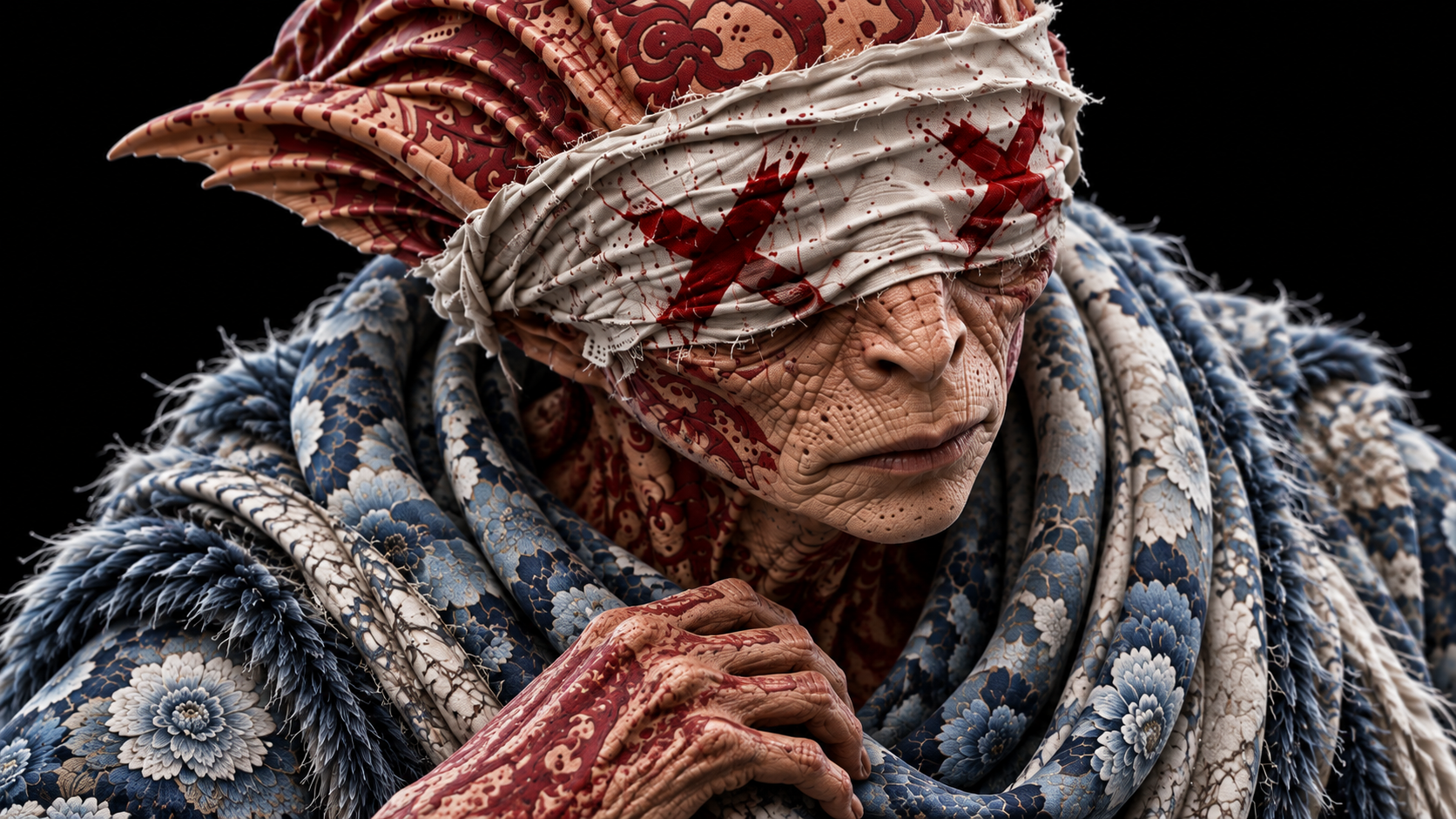
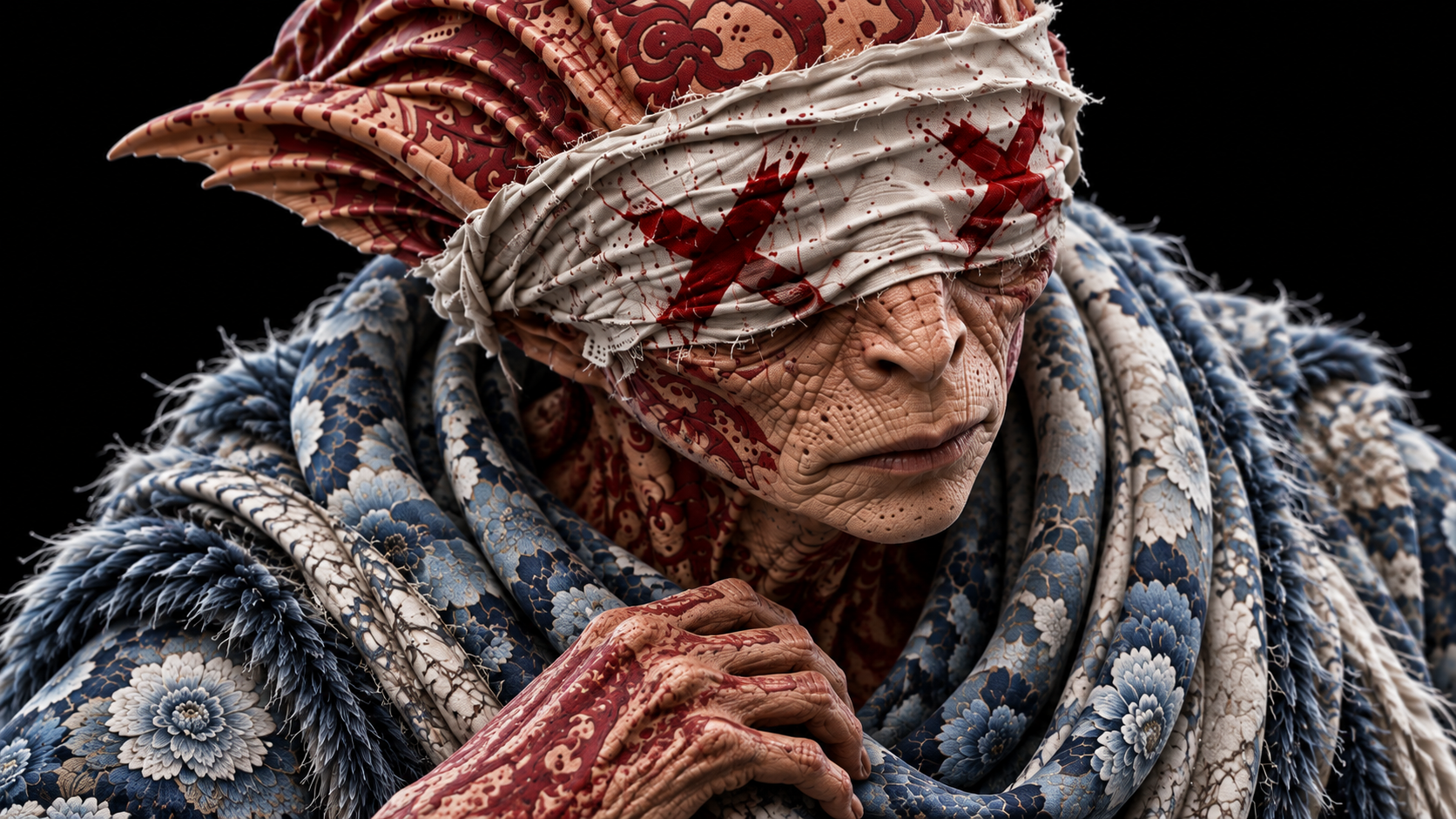
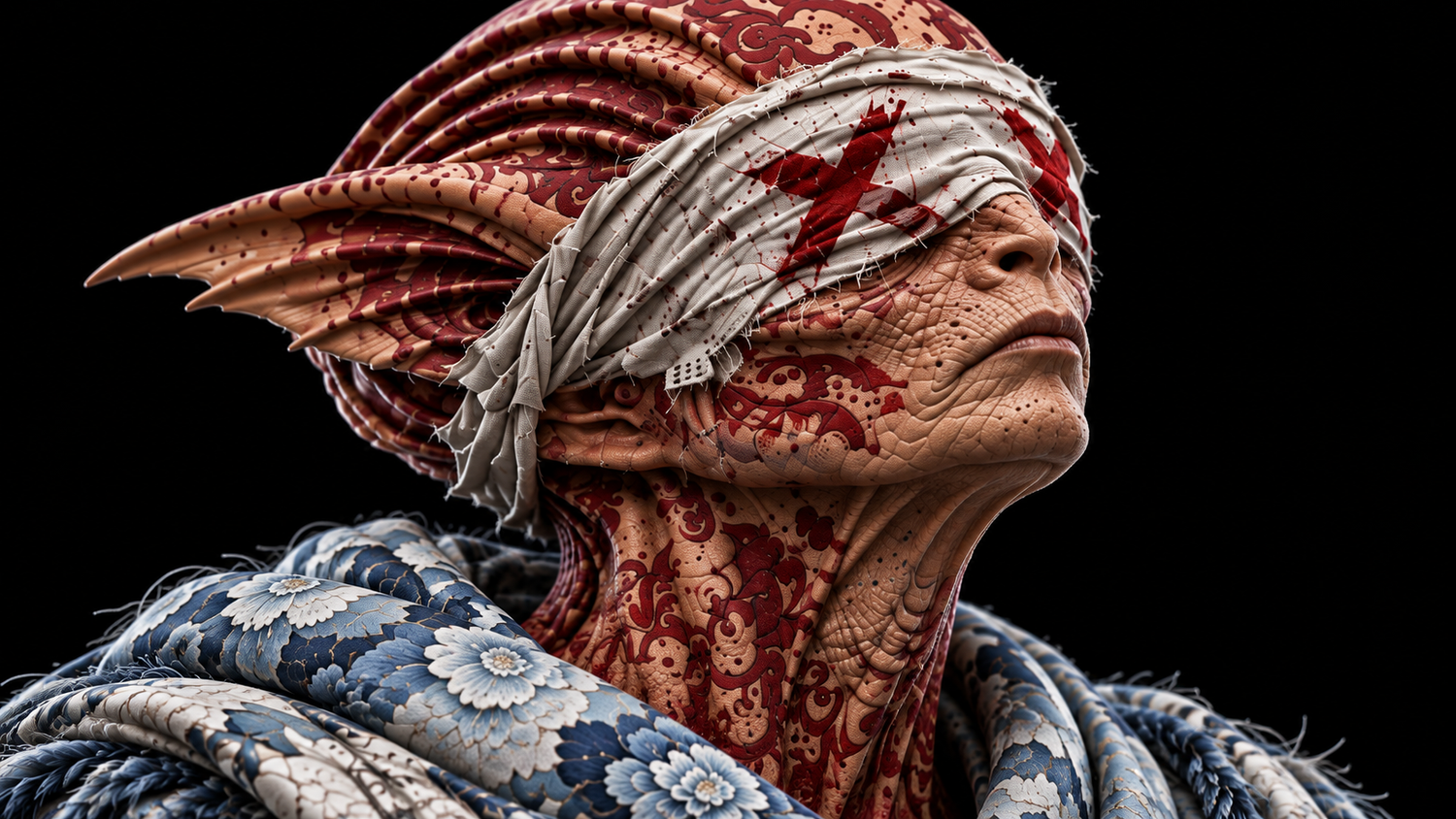
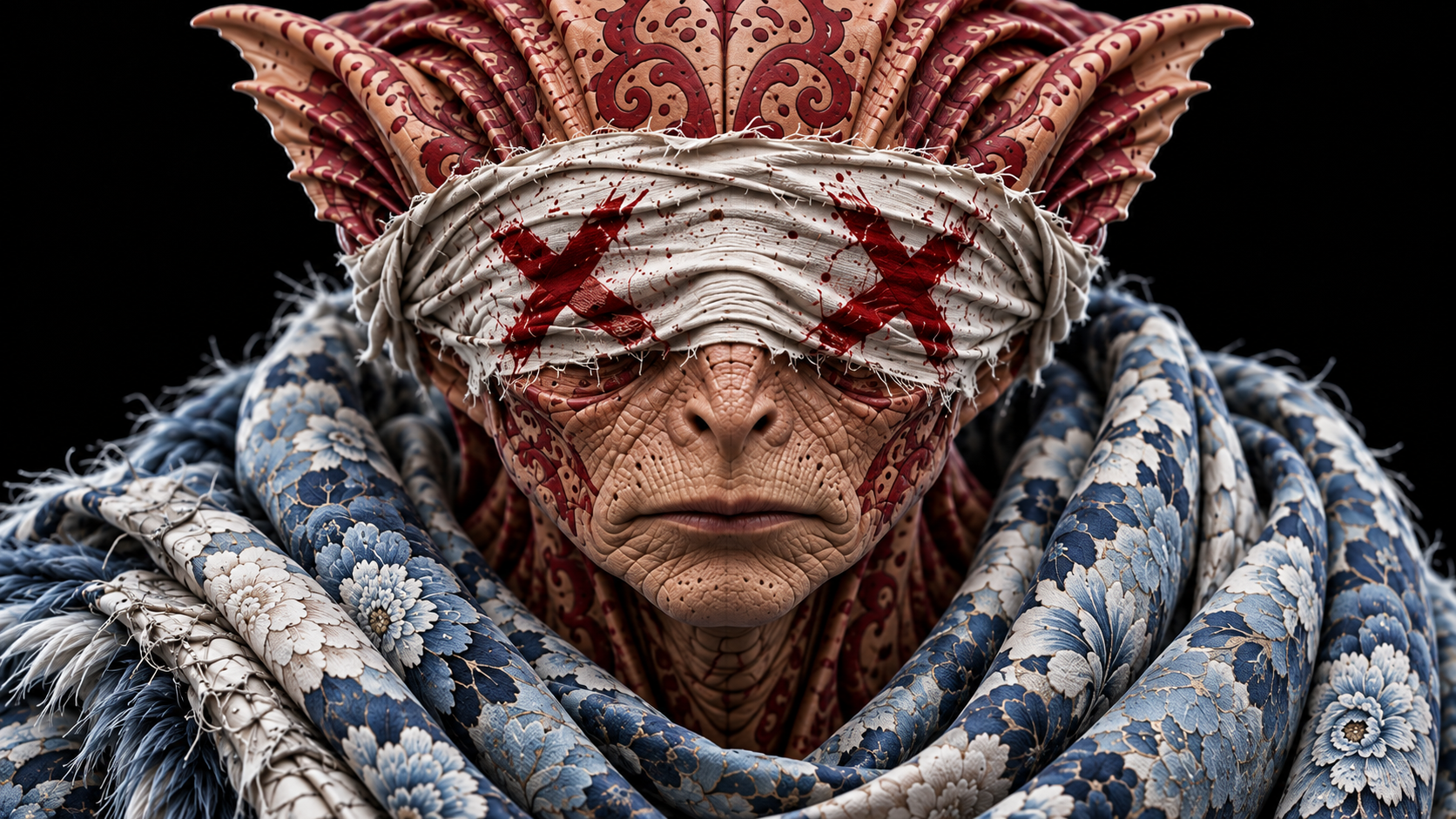
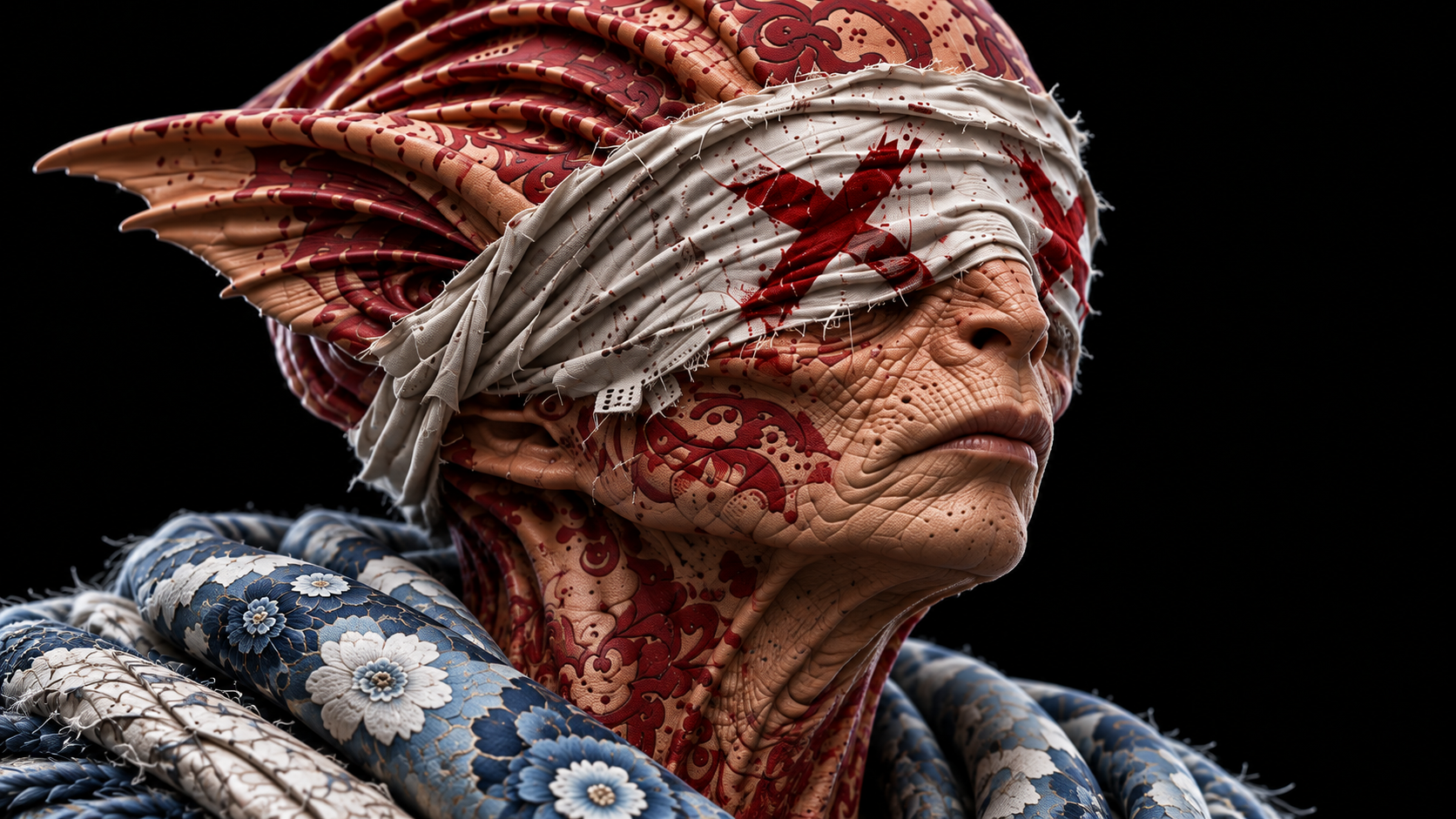
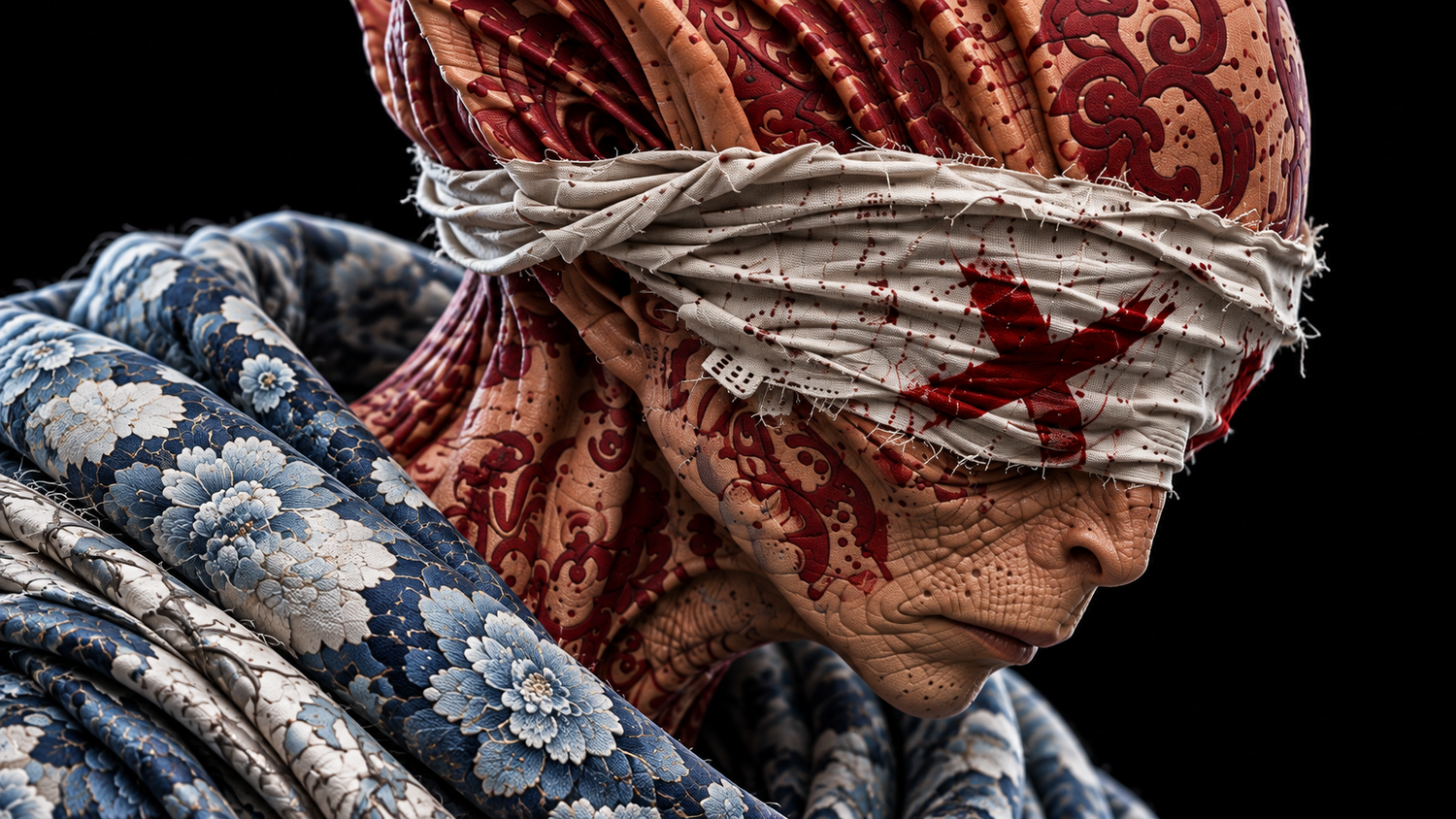
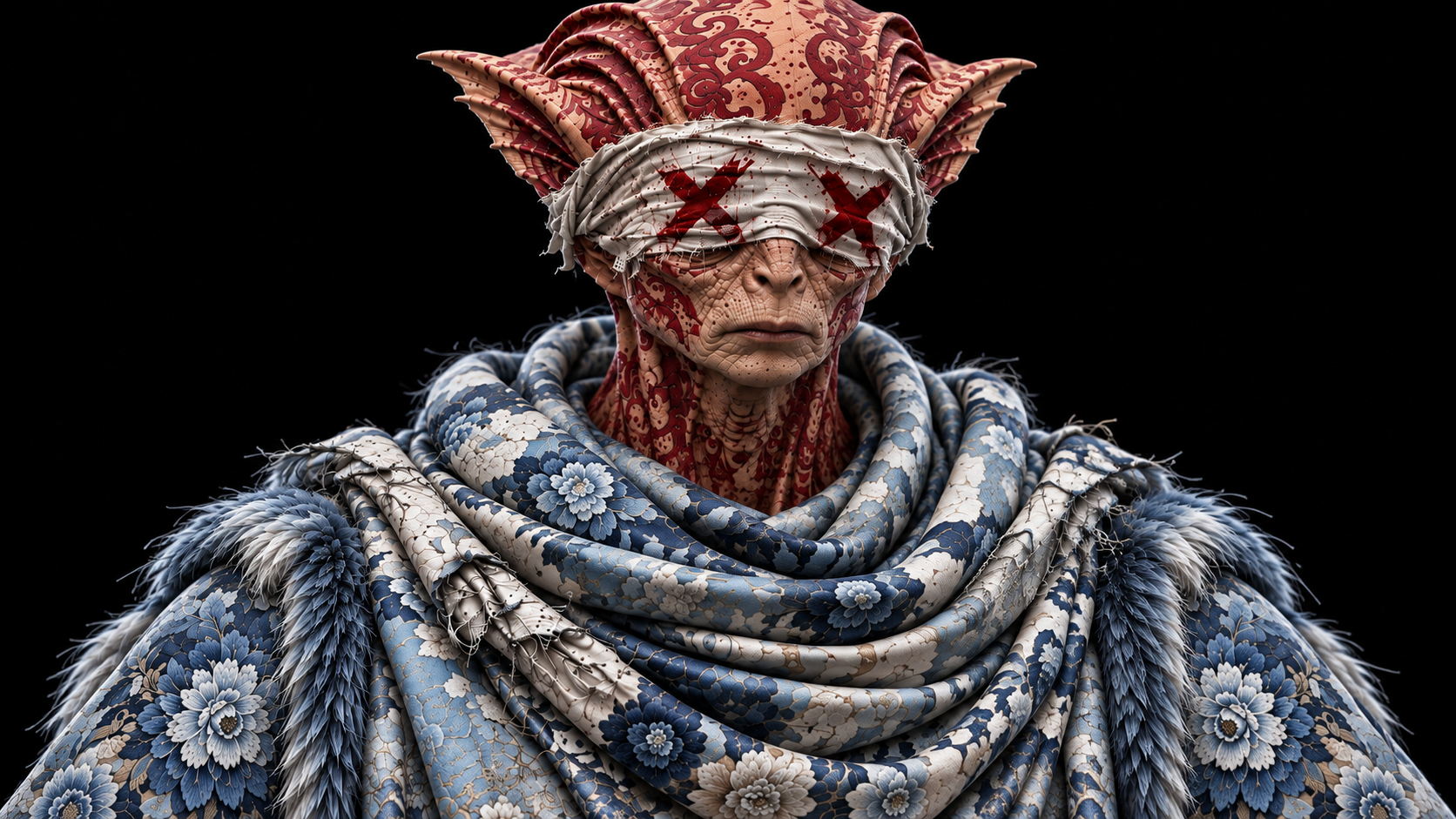
Second, that one of them bind her eyes, and mark the binding. A warden who simply claims she saw nothing could be lying. Her not-seeing had to be witnessed like anything else. So the eldest warden tied a strip of undyed linen over her eyes and painted two red crosses on it, one over each eye. The crosses mean I saw this. What they witness is that Namar cannot see.
The wardens agreed to both. Some did it gladly. Some did it because nobody had a law against it.
The Elders
The Kiln-Elders came up the stair the next morning. They told her it was a trick. They said she was making the law of witness into a game, and that the whole record of the Ulmaeth rests on that law. One of them said she had gone mad.
Namar turned her blindfolded face toward the voice.
"Don't come at me with the madness," she said. "I have watched this stair for sixty-nine years. I know exactly what I am not seeing."
The Elders went back down. They have not ordered her off the stair. They have not found a law that would let them.
Qaresse At Noon
Every noon since the Reckoning began, Qaresse has come to the top of the Tessan and asked to come down. She broke her oath here, and she wants to make it right.
The camps say the wardens refuse her. That is not quite what happens. Qaresse comes, and Namar says, "I see no one."
Qaresse does not go down. She stands at the top of the stair for the whole hour, then leaves. She does not want to come back unseen. She broke an oath in front of witnesses, and she wants to be witnessed coming back. Namar's kindness is the one thing she will not accept.
They have become friends, in the hour of silence, without speaking.
What Khaerith Knows
Namar did not ask Khaerith, because asking was the cruelty she meant to spare her. The first time she went down to the lowest hall blindfolded, Khaerith reached up and touched the two crosses on the linen. She did not say anything.
Eleven nights later, Khaerith painted a second bar across the cross on the old flower and sent it up the stair. Namar carried it to Darrak. She does not know whether one thing had anything to do with the other. She has not asked.
What She Wears
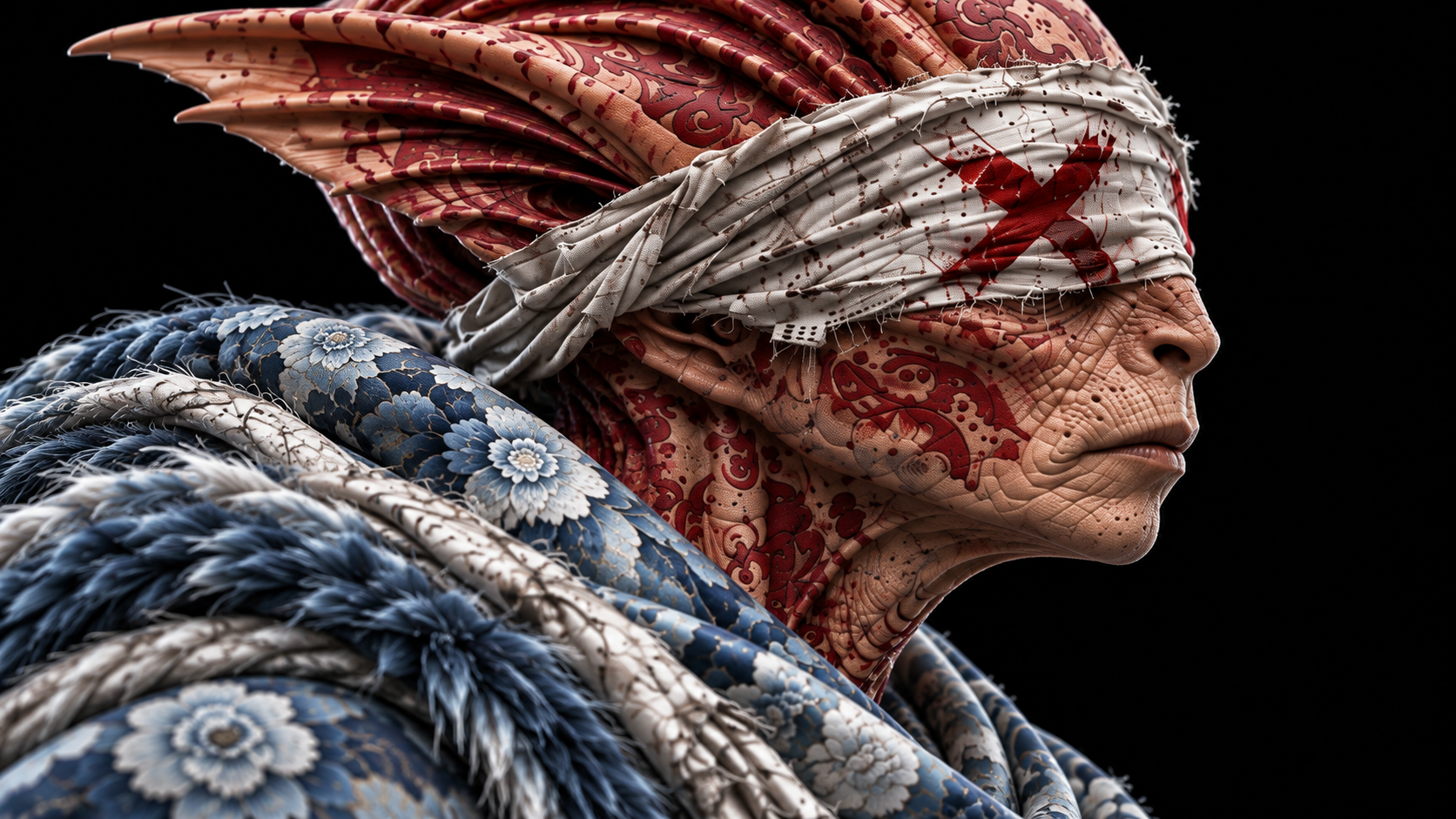
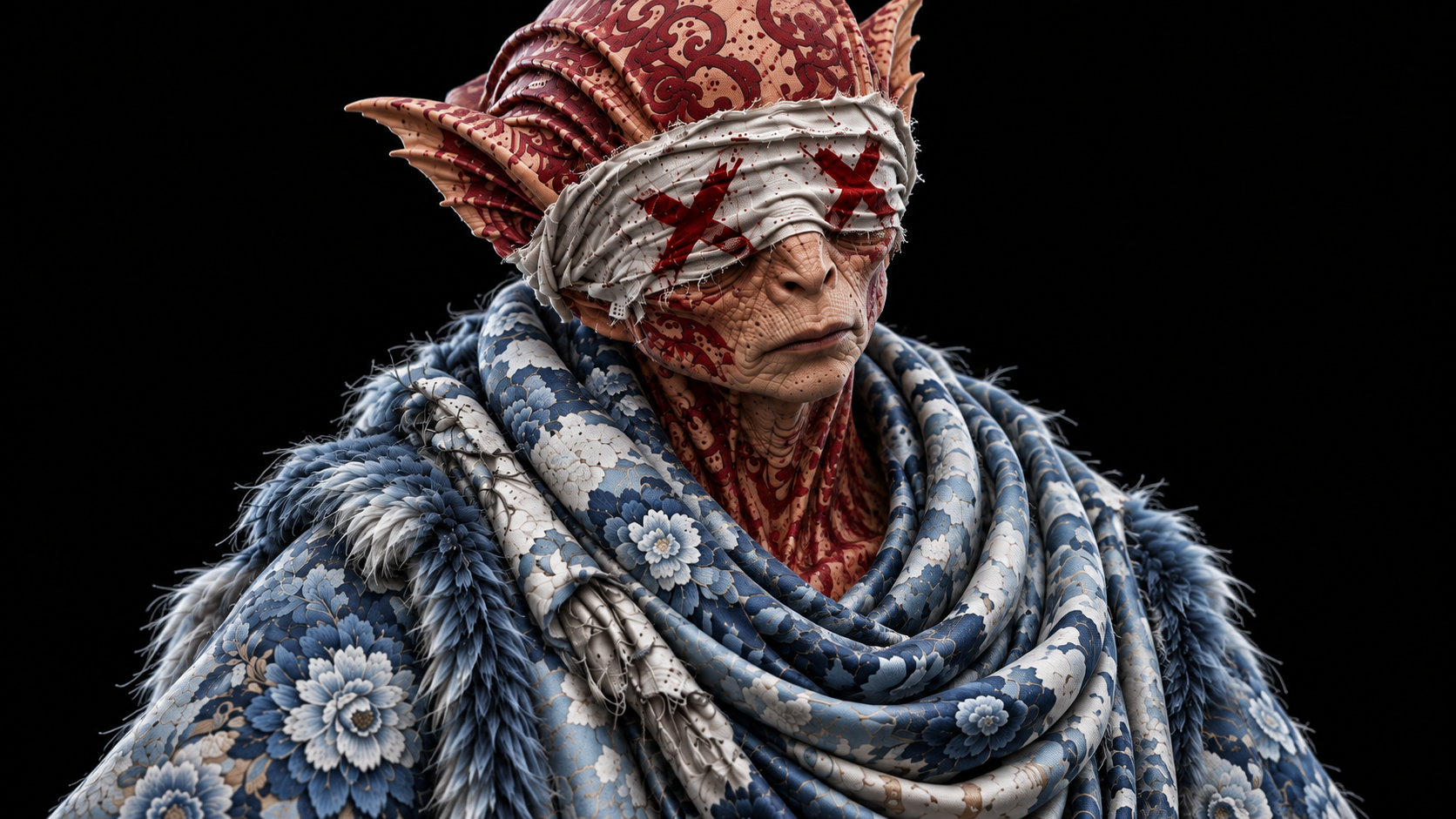
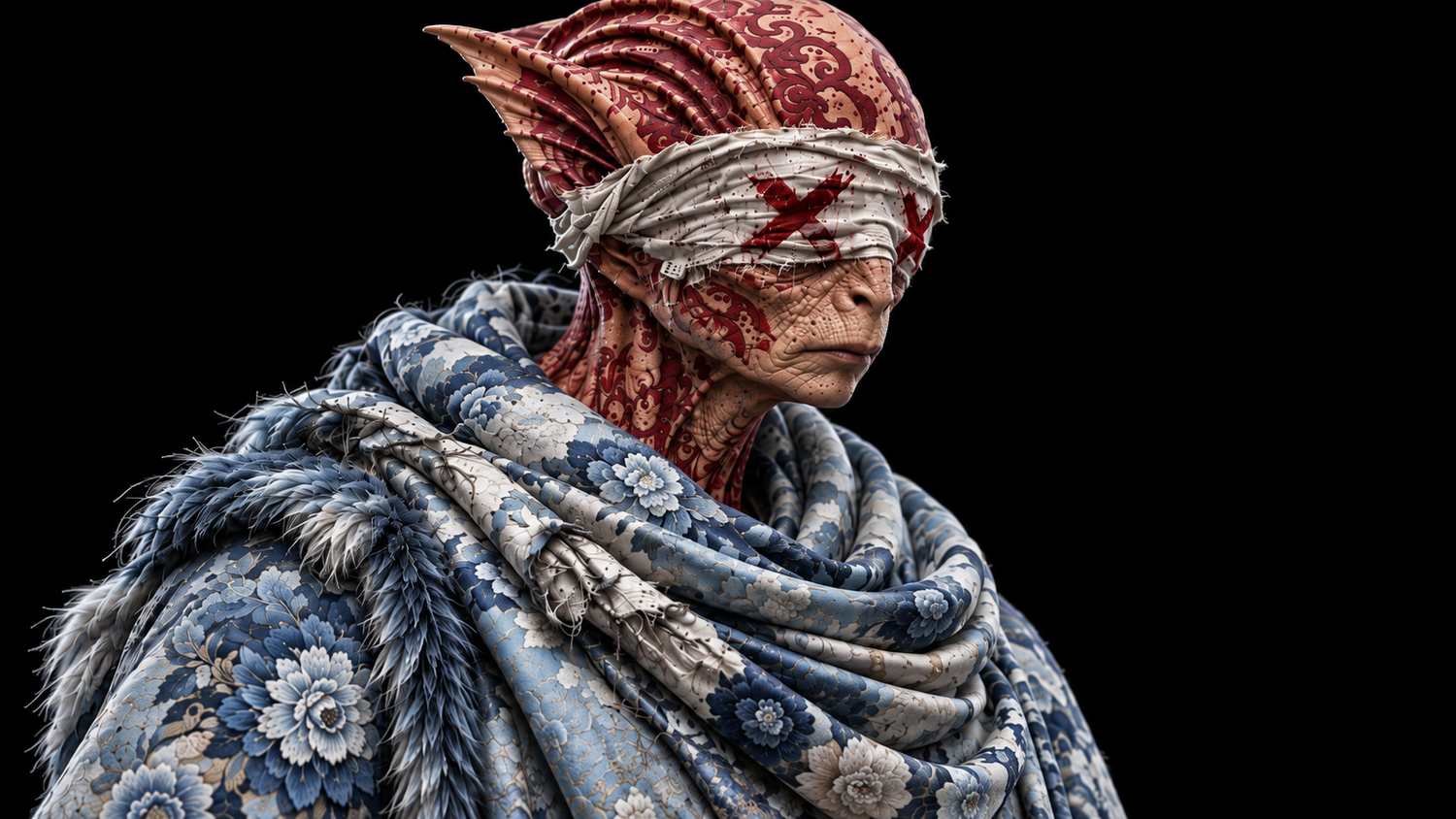
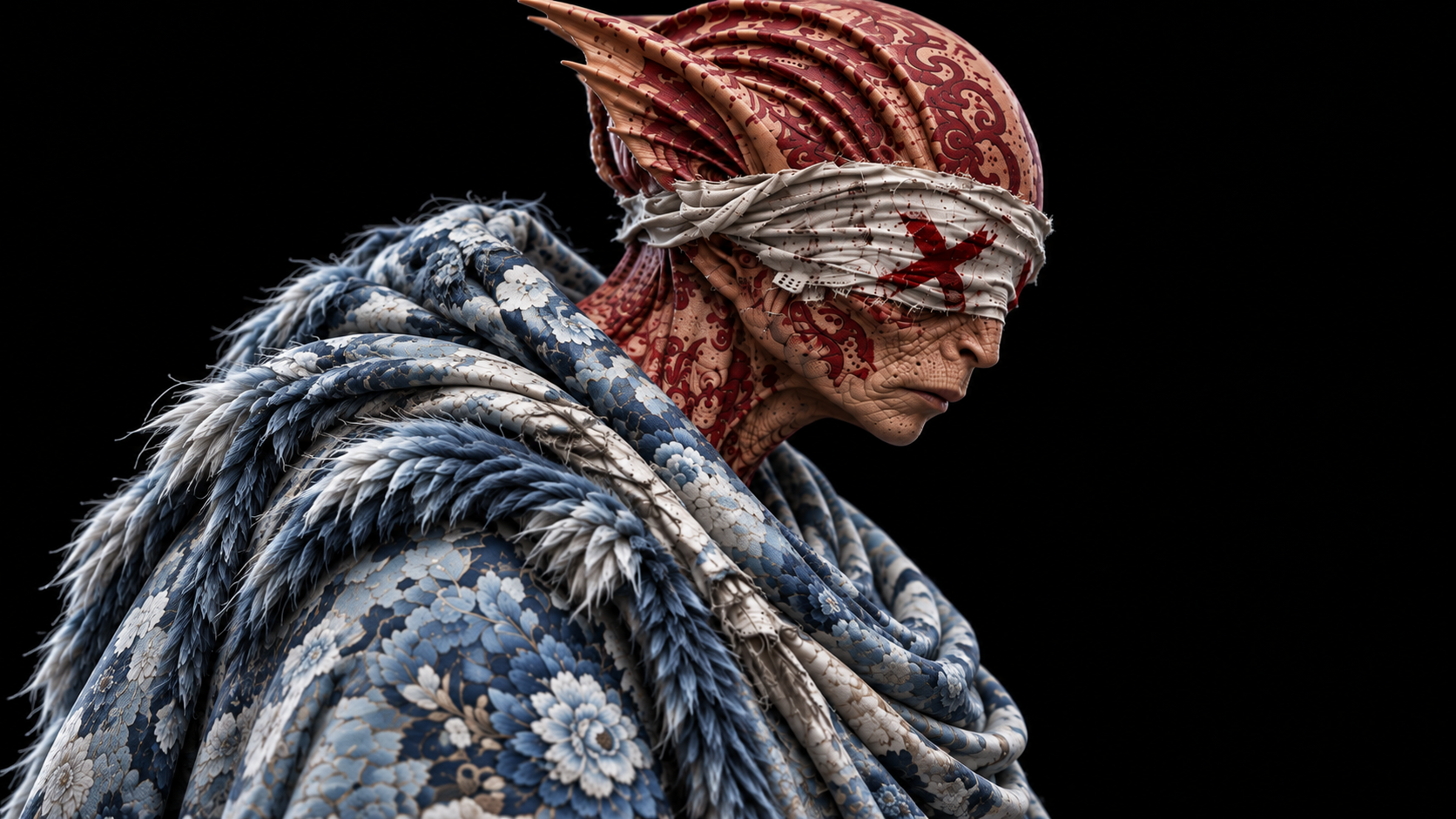
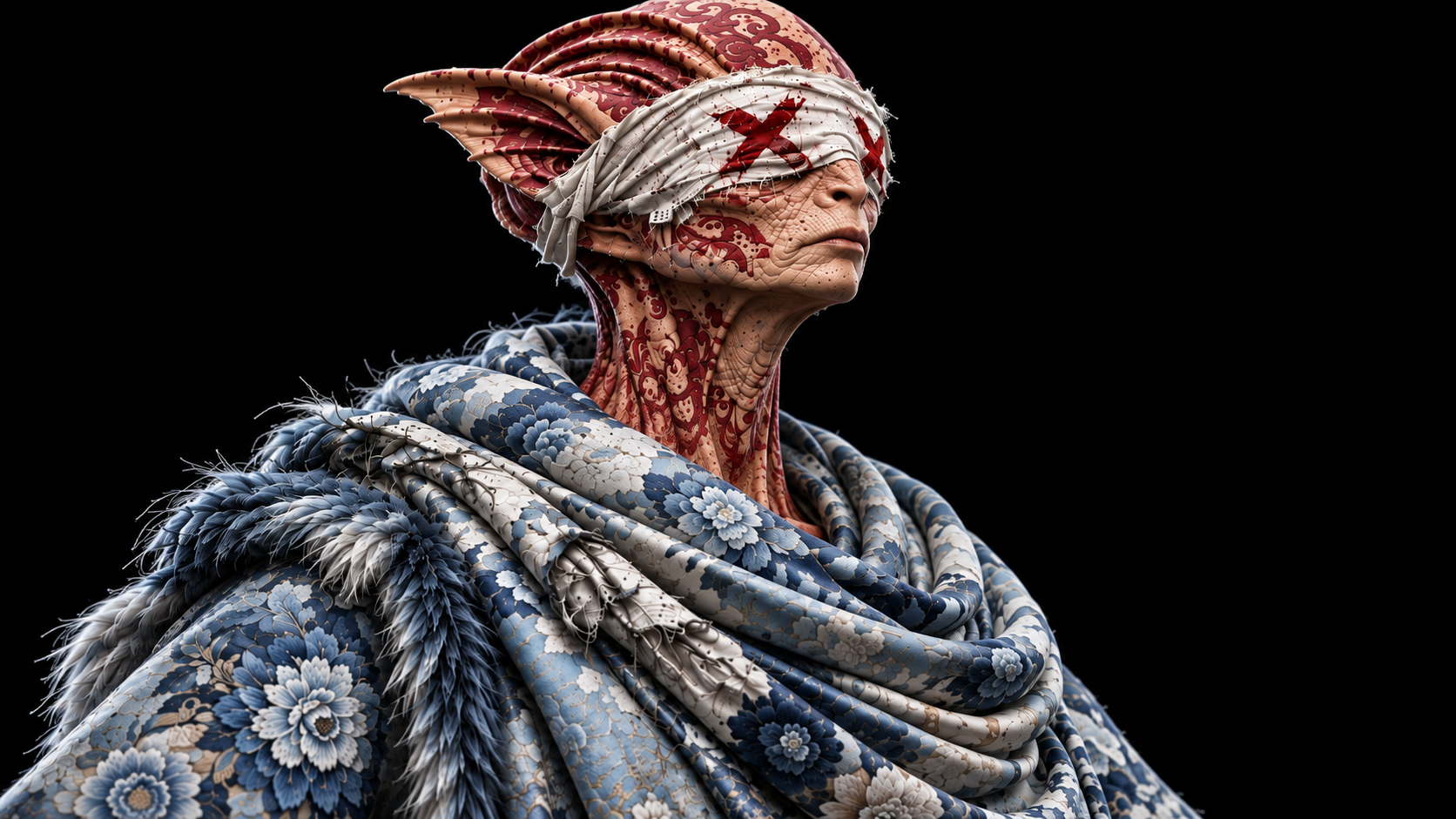
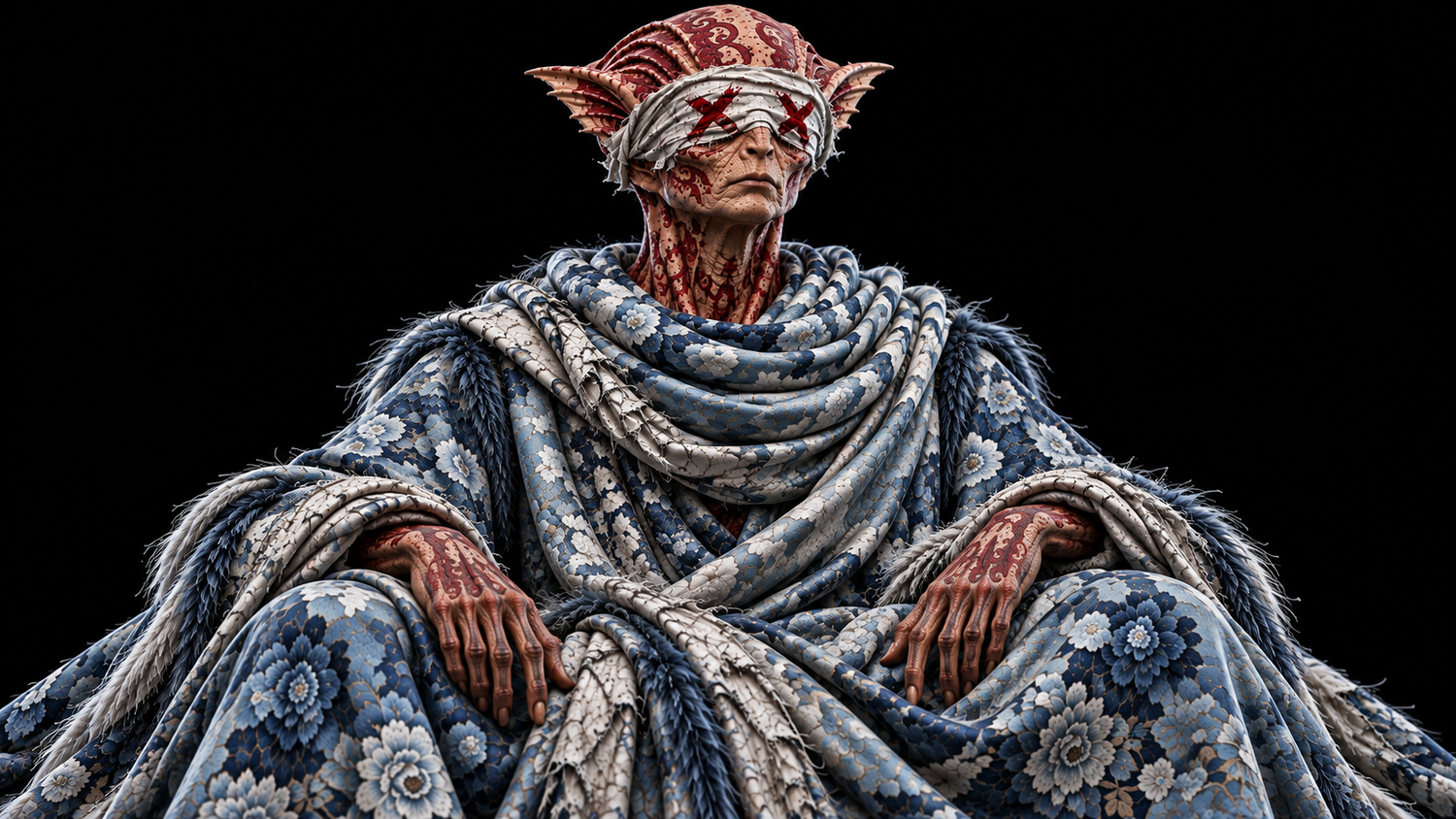
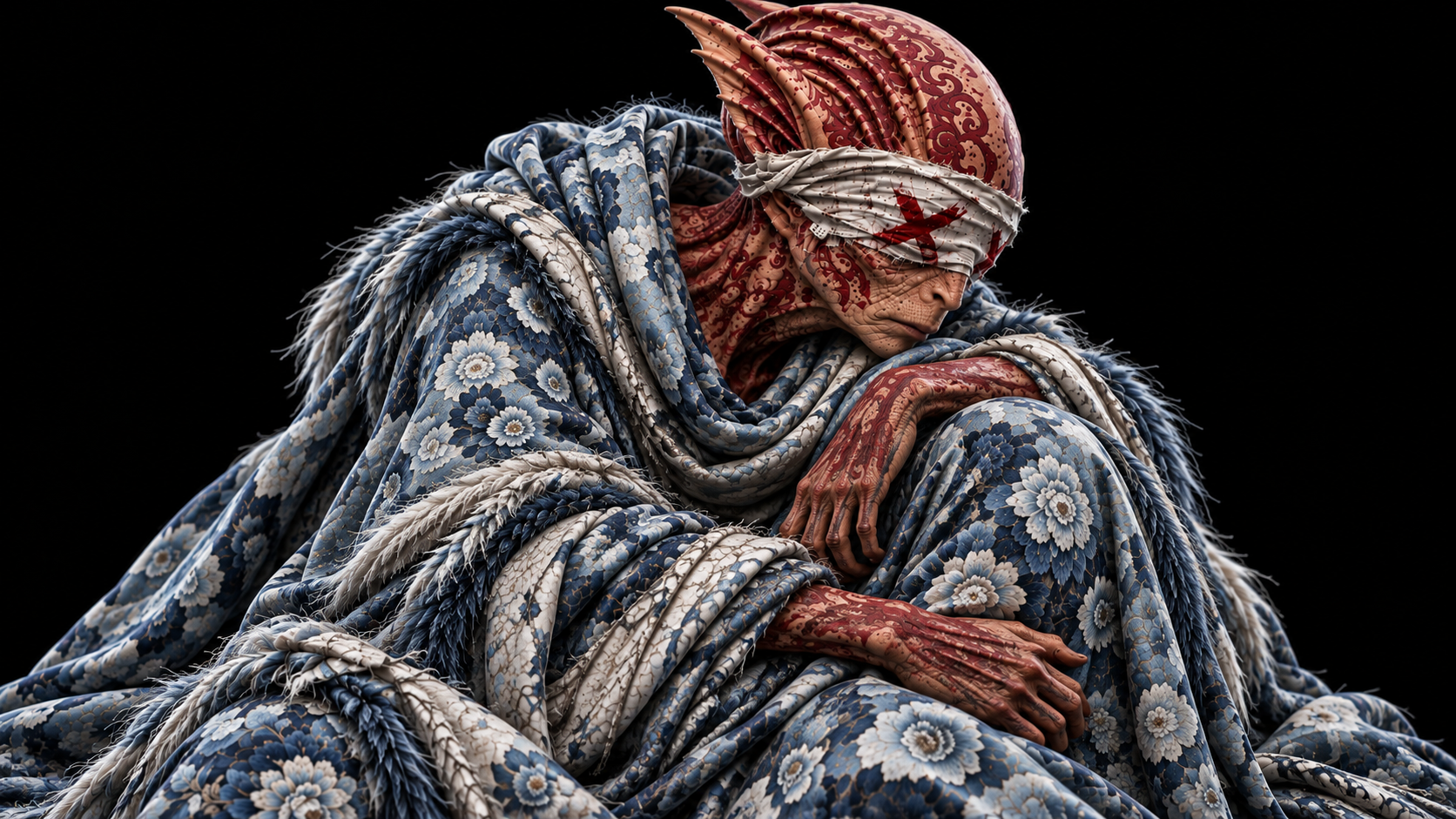
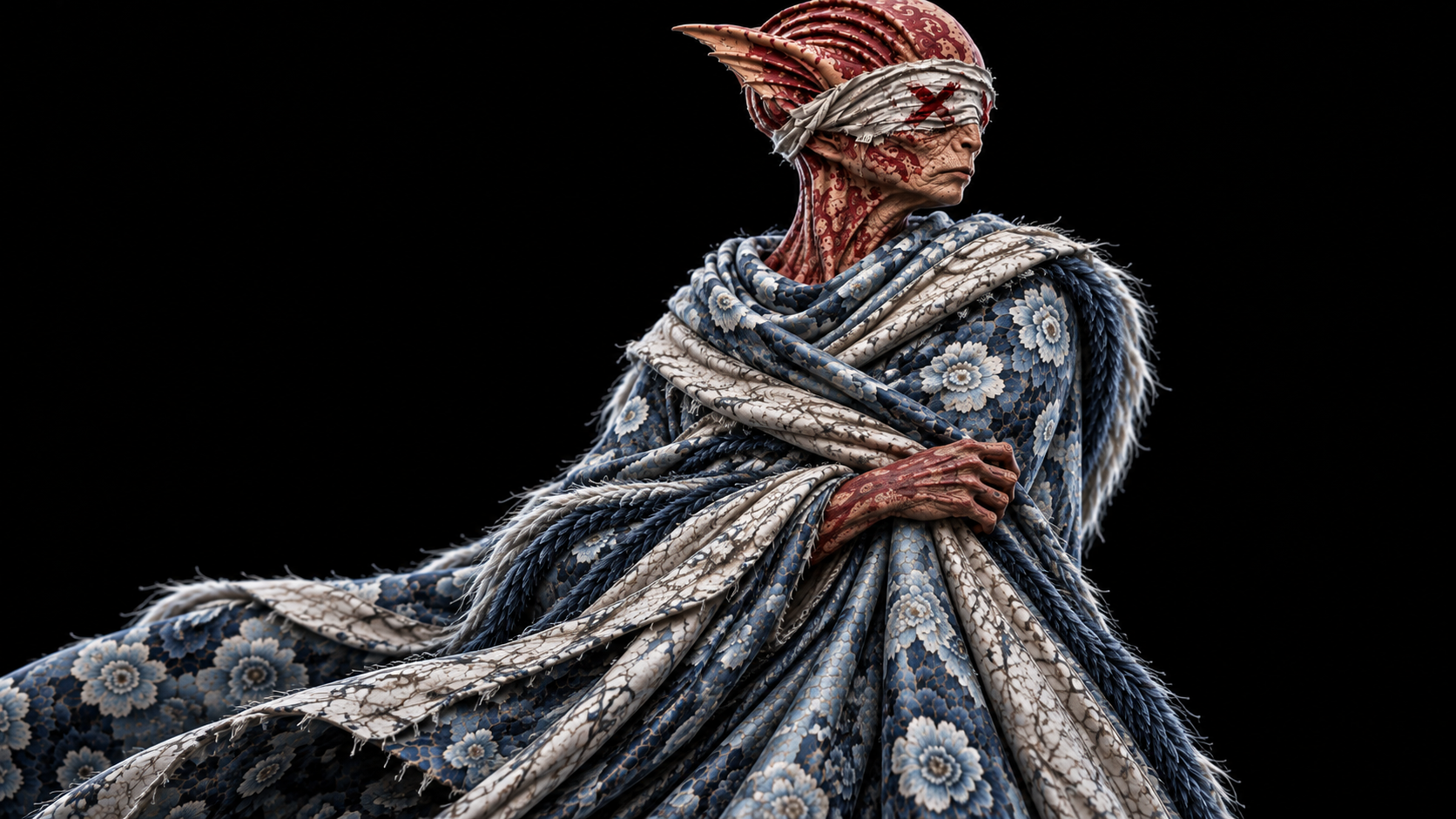
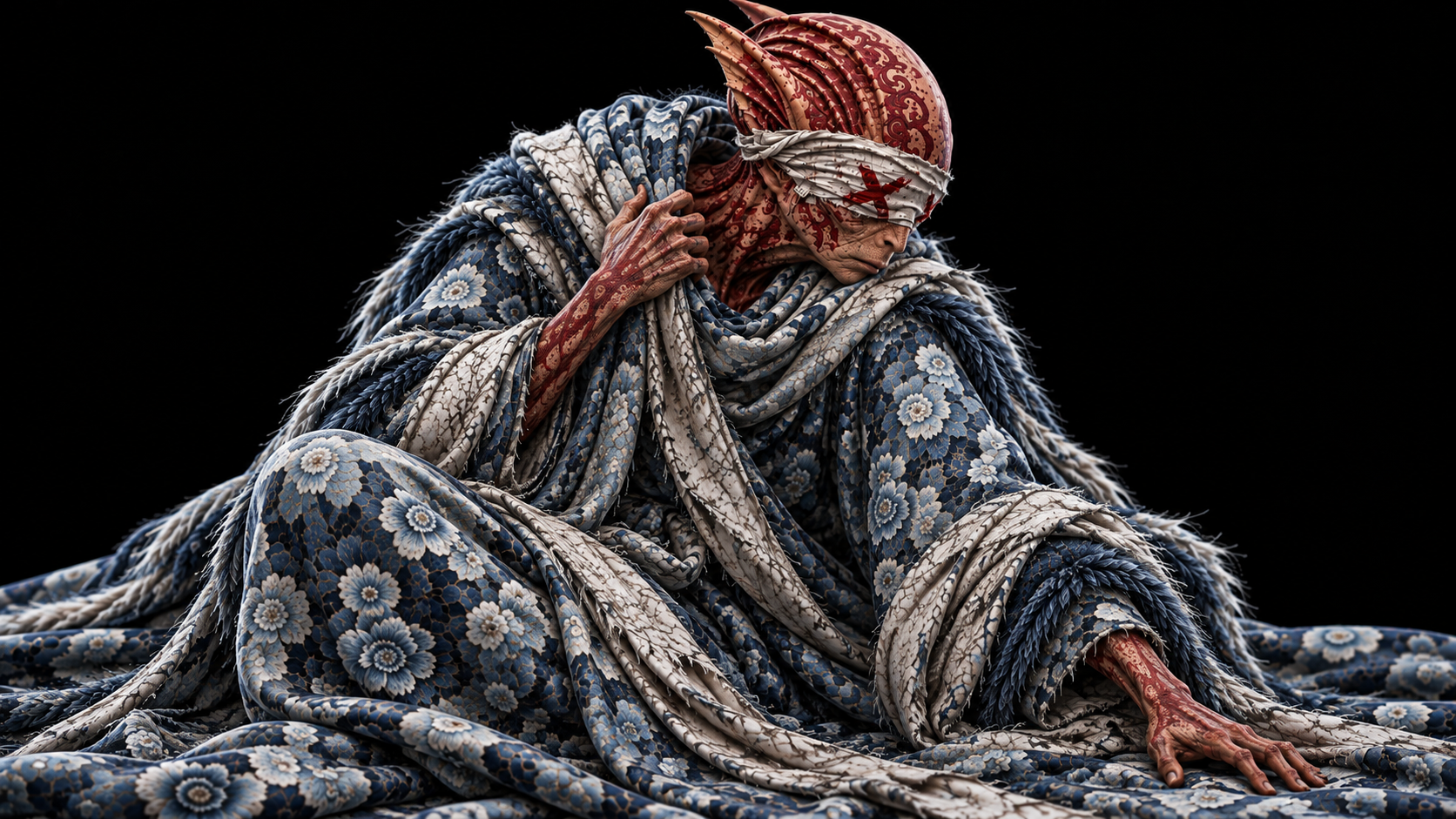
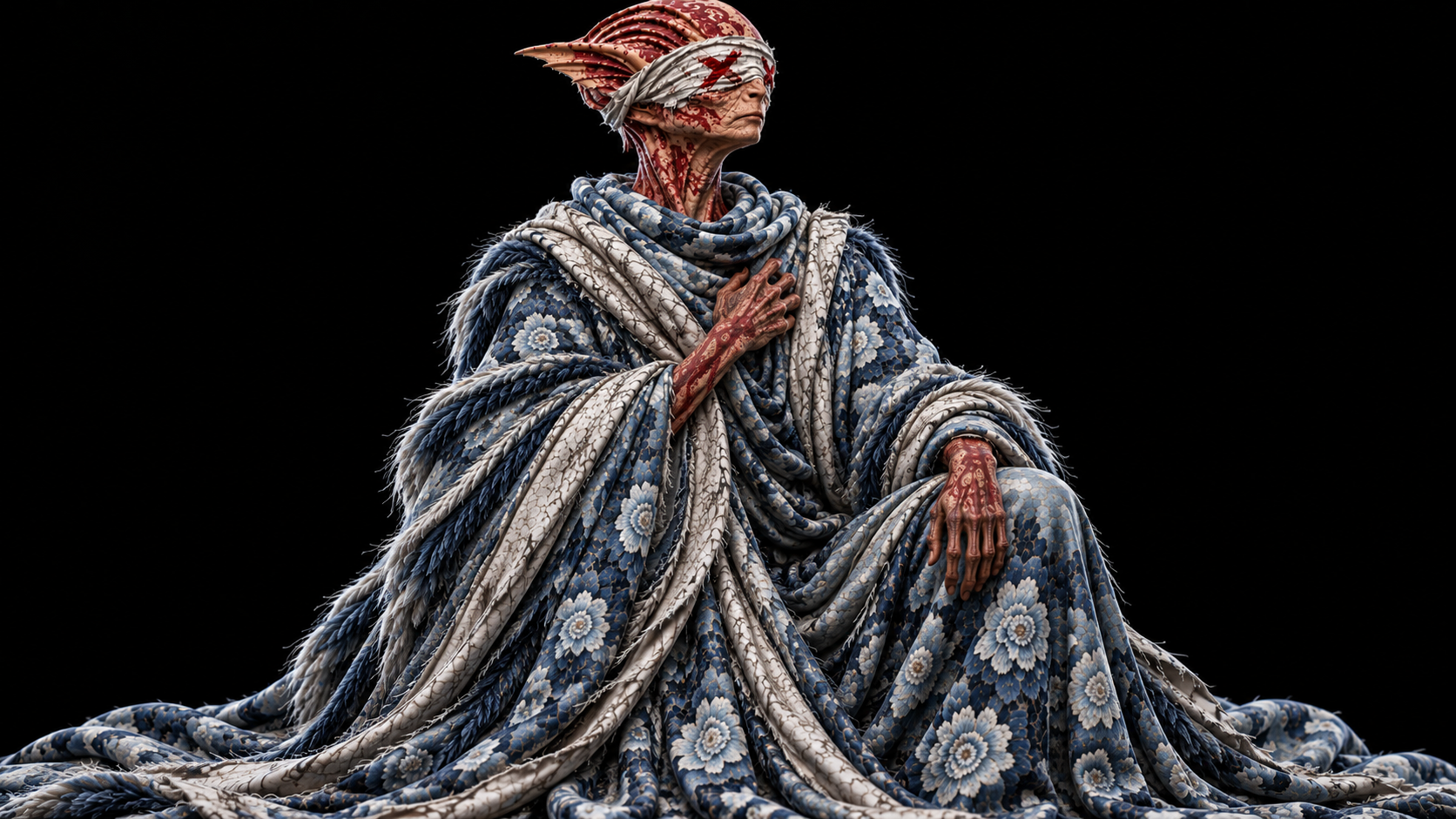
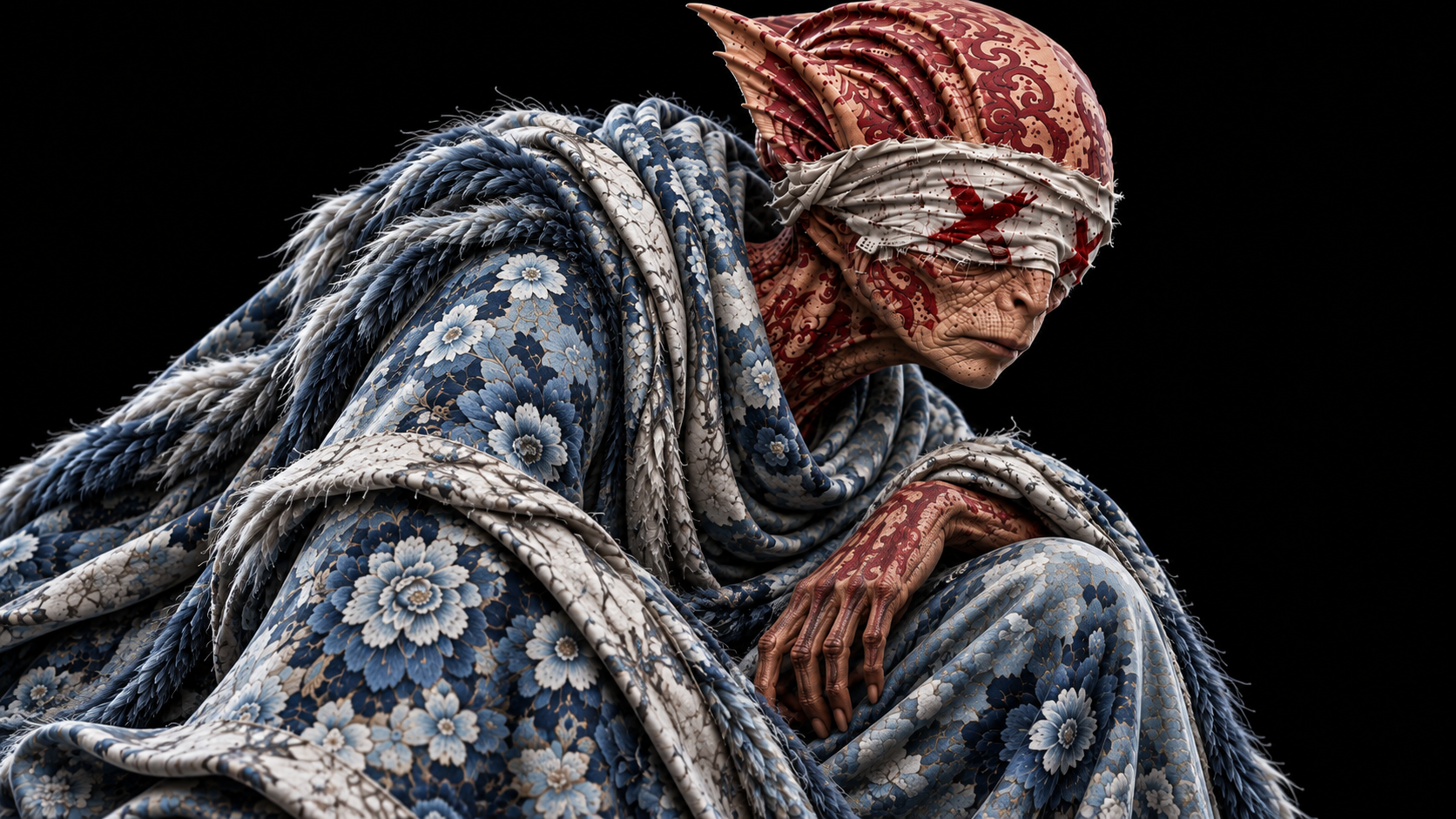
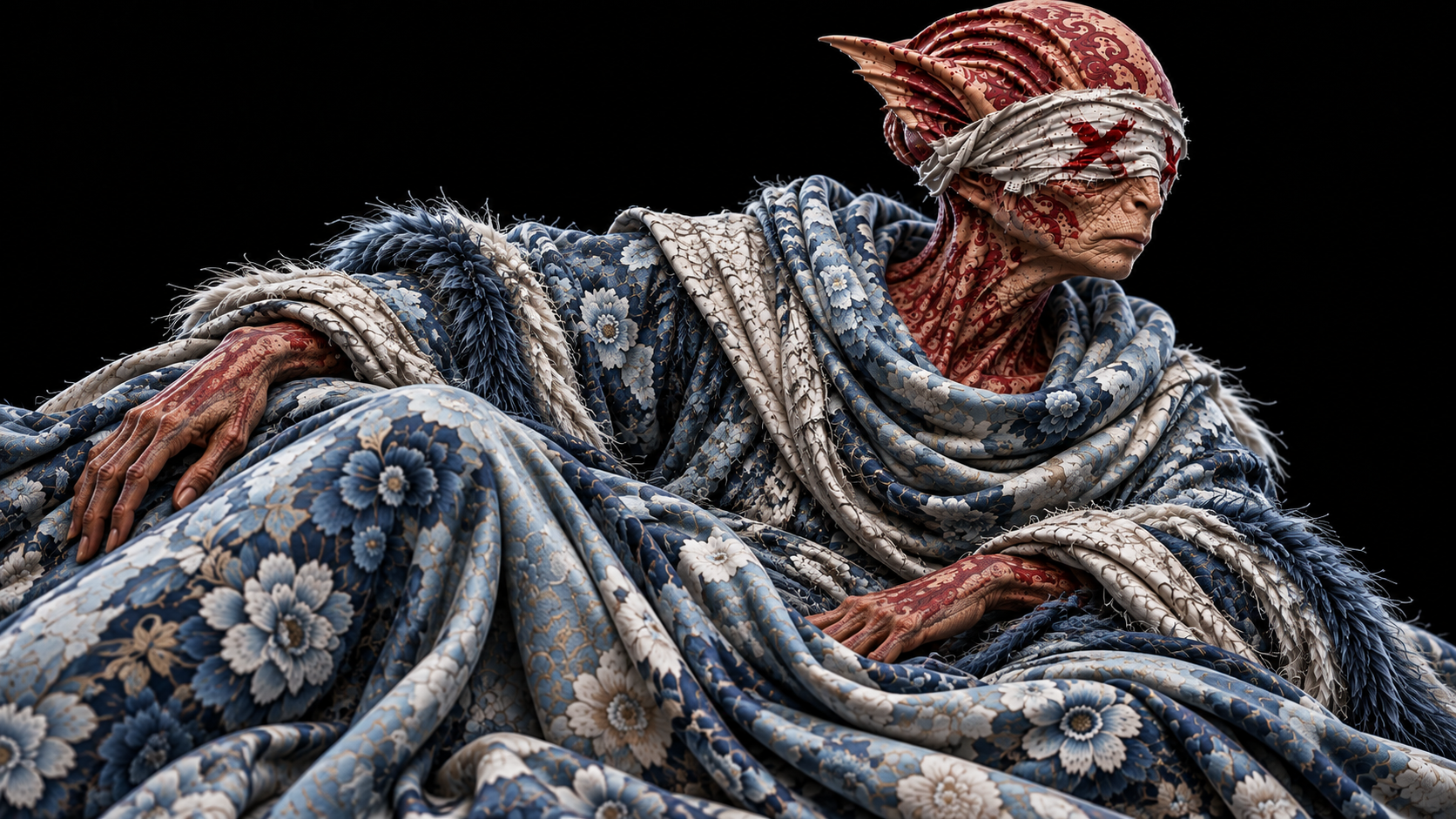
The blindfold is a strip of undyed linen, torn from a drying-hall shroud. It is tied twice round her head. The two red crosses over her eyes were painted wet by the eldest warden, and the red spattered as it was laid. Namar would not let anyone clean the spatter off. She says the mess is part of the witness. It shows the crosses were made in a hurry, by someone who was not sure they were allowed.
The hood is the wardens' livery: a length of ochre cloth painted with kharn, red earth, in the curled pattern of the stair-marks. It is folded into a peak at the back, like the top of the Kiln-Scarp seen from the Bone. Every warden wears one. Hers is faded from sixty-nine years of noon.
The cloak is not hers. It is an Ilvenne travelling cloak, white wool printed with cobalt flowers, edged in blue-dyed Weneth fleece. It belongs to Qaresse.
On the fourth night of the Reckoning a cold wind came off the Bone. Namar was on the top step, blind, with nothing over her shoulders. Qaresse took off her cloak and laid it round her without a word, then went back to the Ilvenne camp in the cold. The next noon she came to the top of the stair as usual and asked to come down. Namar said she saw no one, and handed the cloak back. Qaresse would not take it.
So an Ulmaeth warden now keeps the stair in the colours of the north. The Kiln-Elders have noticed. They have not said anything about that either.
The marks on her hands, throat and cheek are her stair-marks. Every curl is a stranger she let down the Tessan. There are about four hundred. The newest is from 2081, a Weneth driver bringing red earth.
The staff is the warden's staff: a tall rod of red iron from the Kharrah, topped with an open ring and a bell. Wardens strike the step with it at the start of the hour of silence. Namar uses hers now to find the edge of the top step.
The lamp is the one she carried across the Bone to Darrak on the twelfth night. She keeps it lit at the top of the stair after dark. She cannot see it. It is for whoever comes.
Her Names
She was born Amaerith. The name is built from amar, the oldest root of witness, meaning "to see and say." To it is added -ith, the southern ending that makes a word passive: "she who has been." So Amaerith means "she who has been witnessed."
The southern tongue brightens a stressed a to ae when an i or e follows it. That is why amar-ith becomes Amaerith, just as khar-ith becomes Khaerith. The two names are built the same way. One means "she who has been crossed." The other means "she who has been seen."
It was a common name for children born in the years after the Shedding. Parents gave it as a wish. Their own marks had just been lost, and they wanted their children to be seen and remembered.
Namar
On the first day of the Reckoning, when the eldest warden tied the linen over her eyes, Amaerith asked the wardens to call her something else.
Namar is built from na, "not," and amar. It means "the one who does not witness." No vowel follows the stressed a, so it does not brighten. It stays as plain and blunt as a refusal.
Na is one of the oldest words in the world. It survives in the southern curse Hesk na tesh, which the Weneth reader Amarwen has shown is a fragment of the Law of the Floor. Namar likes knowing that her name shares a word with the Law. She says they are both about what you should not do with your hands, or your eyes.
What She Says At Noon
The Ulmaeth words of witness are amar-nai, "I saw you." They are the first words Amar the Firstwitness spoke when she laid the first cross. Namar spoke them, in one form or another, to four hundred strangers.
Now, at noon, when Qaresse asks to come down the stair, Namar answers her in two words of the old speech: Na amar. "I see no one." Said quickly, the words run together.
Every day, when she refuses to witness her friend, she is saying her own name.
The People Around Her
Khaerith. The last carrier, who holds the marks of the dead and lives in the lowest hall. Namar is her water-bearer and her only regular visitor. Every message Khaerith has sent into the world for forty years went up the stair in Namar's hands. Namar bound her eyes so that Khaerith would never have to choose between her father and the law.
Sael-Ennu. Khaerith's father, blind and two hundred and seven, among his flowers in the north. Namar has never met him. Everything she has done since the first day of the Reckoning is for him. In the portrait 3 Up: Namar, Sael-Ennu & Ennesse she stands at his right hand with her staff. In the story, that meeting has not happened yet.
Qaresse. The Ninth Reader, whom Namar saw come down the stair in 2040 and watched break her oath in 2041. They meet every noon now, at the top of the Tessan. Neither of them speaks except for one question and one answer. Qaresse gave her the cloak she wears. Qaresse is Sael-Ennu's niece, which makes her Khaerith's cousin. Namar has known this longer than either of them.
Ennesse. A salt-fired Ilvenne of the Blue Hollow, whose tears crazed her glaze in black lines down both cheeks. She lifts failing glaze from the flaked with a thin knife when they ask. She stands on Sael-Ennu's other side in the portrait. They have not met. Between them they show what kindness looks like in the two halves of the world. In the south it is a law kept by looking away. In the north it is a blade used gently.
Qorran. The war-leader of the Blue Hollow and Sael-Ennu's foster-son. He has asked to come down the Tessan in the old man's place. Qorran is not ashed. As a stranger he may come down once, at noon, if he is witnessed. If he comes at Namar's noon, he will not be. Nobody knows yet whether a stranger who passes unseen has come down at all.
Darrak. The Reckoner. On the twelfth night Namar carried the mended flower to him across the Bone, with a lamp she could not see by. She stood directly in front of him, where his blinkers would let him see her. It is the only time in the Reckoning that anyone has made sure to be seen by Darrak, rather than the other way round.
Amarwen. The Weneth reader of the Law. Namar carried Khaerith's reply to Amarwen's reading up the stair in 2044. Both women now read the world mostly by touch. Amarwen's eyes are clouding. Namar's are covered. They have never met. Amarwen has said she would like to hear how Namar says na.
Alvak. The Kharrin holy fool who witnessed every one of his own debts so completely that he crossed them out. His kindness is to see everything and let it go. Hers is to see nothing and let it pass. They are, in a sense, the same act done from opposite ends.
Vaelith. The young Ulmaeth carrier who has begun to copy the dead onto her own skin, and who may one day take Khaerith's place. She comes up the stair each evening to ask Namar how Khaerith is. Namar always tells her the truth. She has asked Vaelith not to look at her when she does.
What Is Still Unsettled
Is it lawful? No law forbids a warden to bind her eyes. No law forbids the noon shift to be kept by one warden. The Kiln-Elders cannot find a rule she has broken. They say she has broken the meaning of all the rules at once. Namar says the meaning of the law of witness was always mercy. A thing unseen is let go.
What would the meeting cost? If Sael-Ennu comes down unseen, his return is hollow. In law it never happens. The meeting with his daughter would be hollow too. Khaerith could never lay a cross for it. The one thing she has wanted her whole life would be the one thing she was not allowed to record. Namar has thought about this every night since the first day. She believes Khaerith would rather have the meeting than the mark. She has not asked.
Does it open the stair to anyone? At Namar's noon, anyone at all could come down the Tessan unseen. So far only one person comes, and she will not go down. The other wardens have begun to stand at the foot of the stair at noon, with their backs turned to it. They say they are not watching. Nobody quite believes them.
What happens when she takes it off? A warden who unbinds her eyes sees again. Namar has said she will not take the blindfold off until the person she is waiting for has come and gone. She has not said what she will do if they never come.
The Top Step
At noon Namar stands on the top step of the Tessan with her staff, her lamp and the borrowed cloak. The Bone is silent. She listens.
She has learned the sound of every Ulmaeth foot on that stair. She knows the wardens by their weight, the kiln-workers by their drag, and Qaresse by the click of glaze. She knows the young carrier Vaelith by how lightly she comes up in the evenings.
She is listening for a step she has never heard. It will be slow and uneven, and very old. Whoever comes with it will be carrying him.