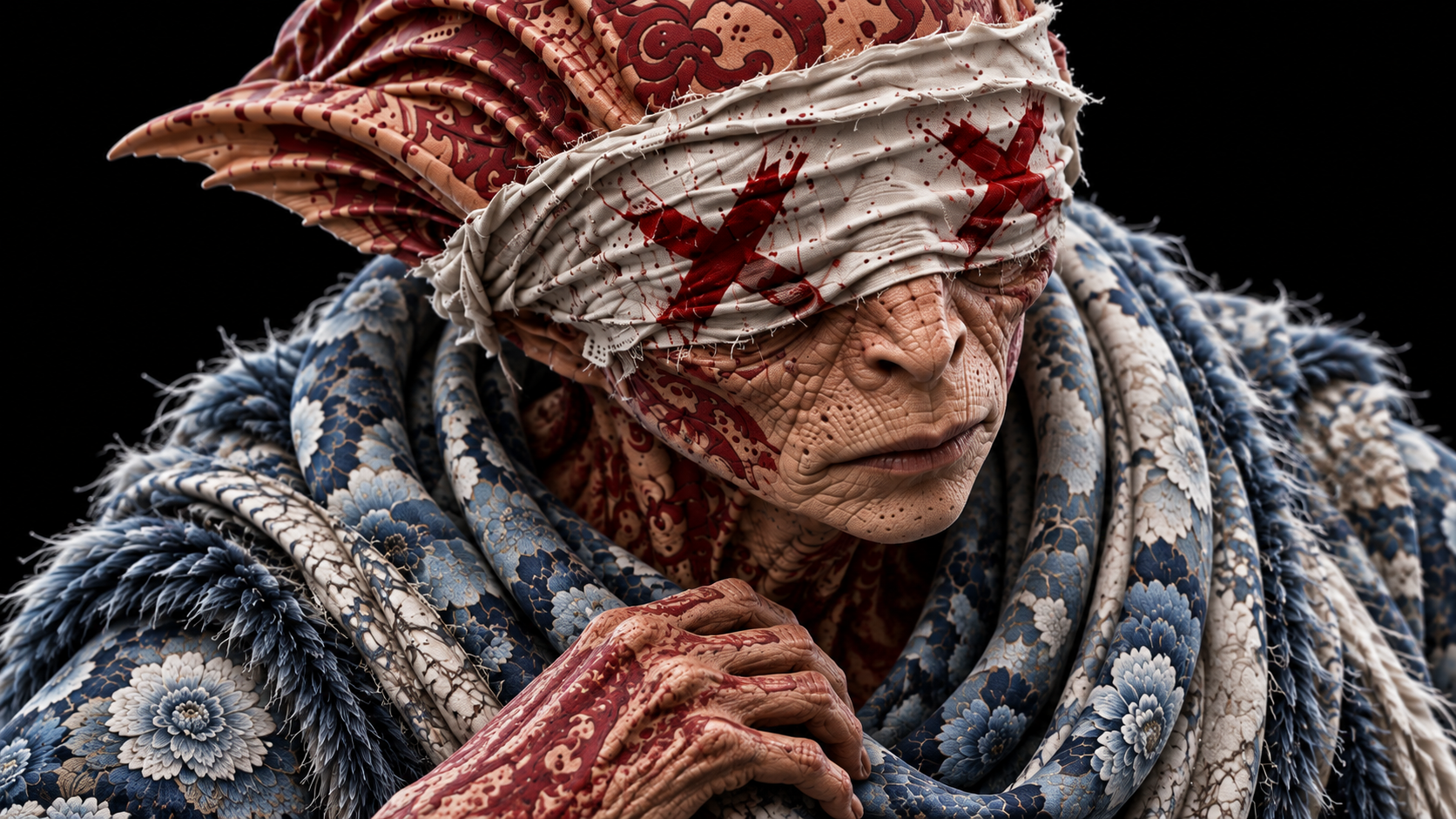
Amarwen, Reader of Knots
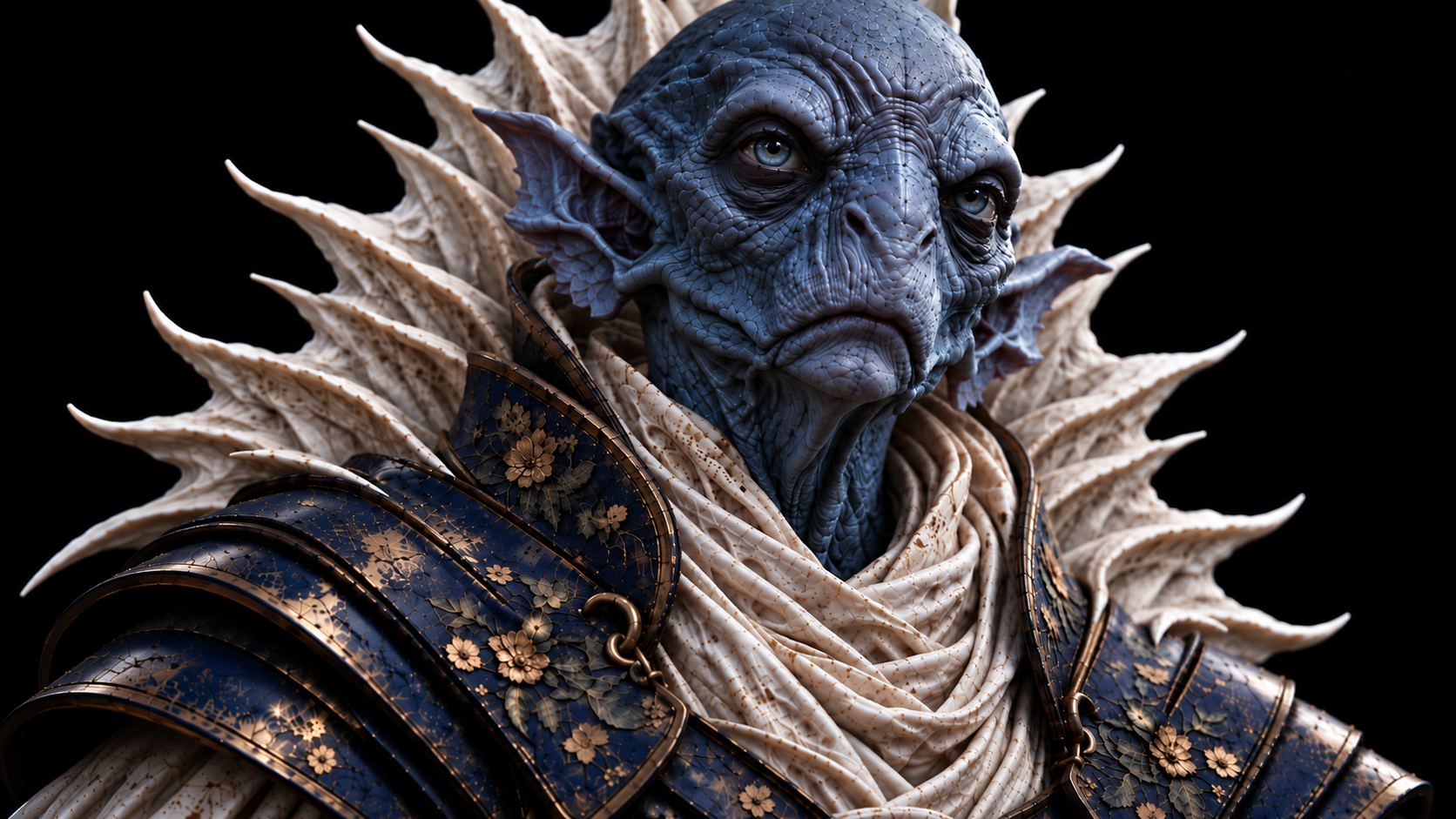
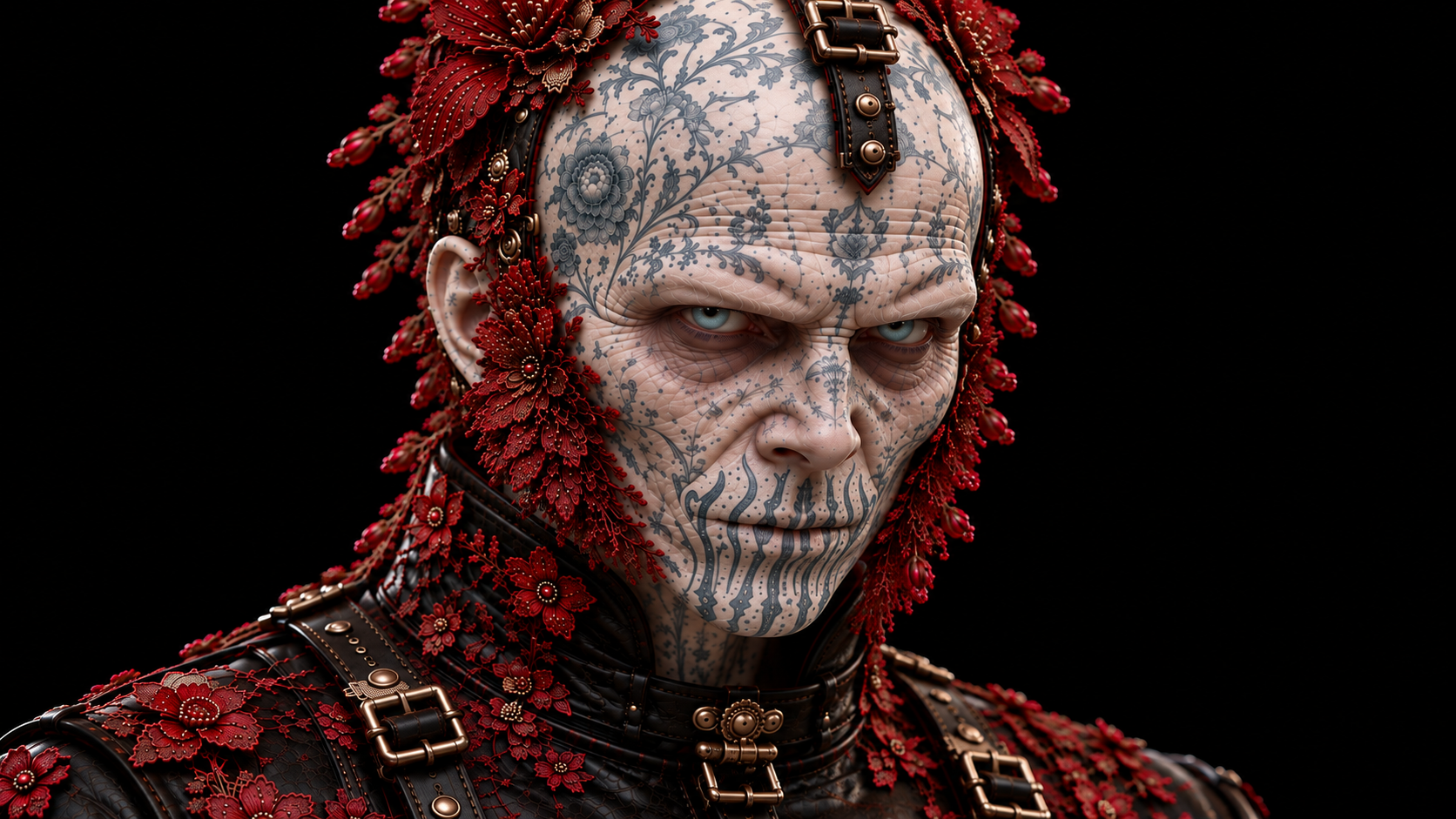
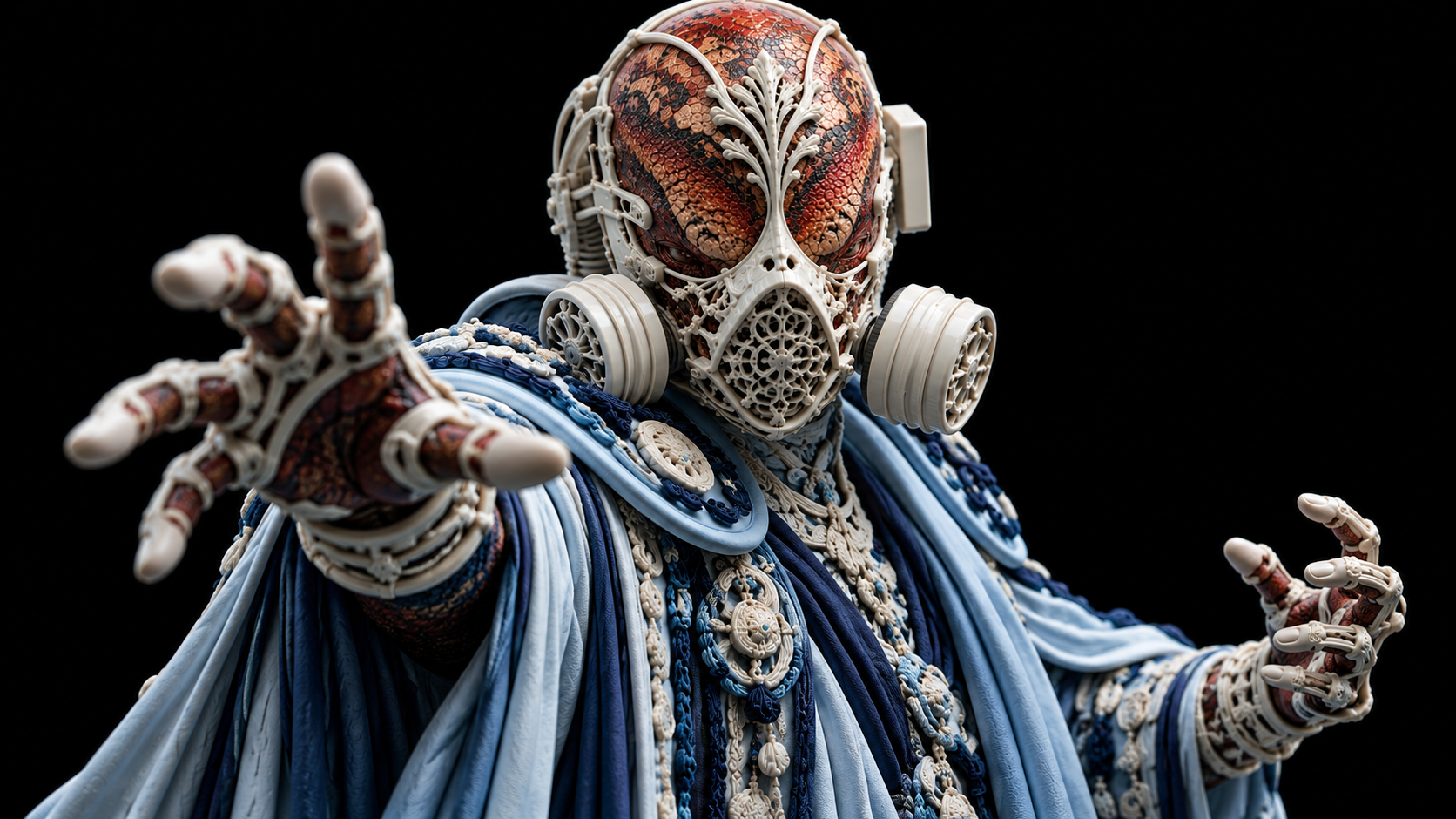
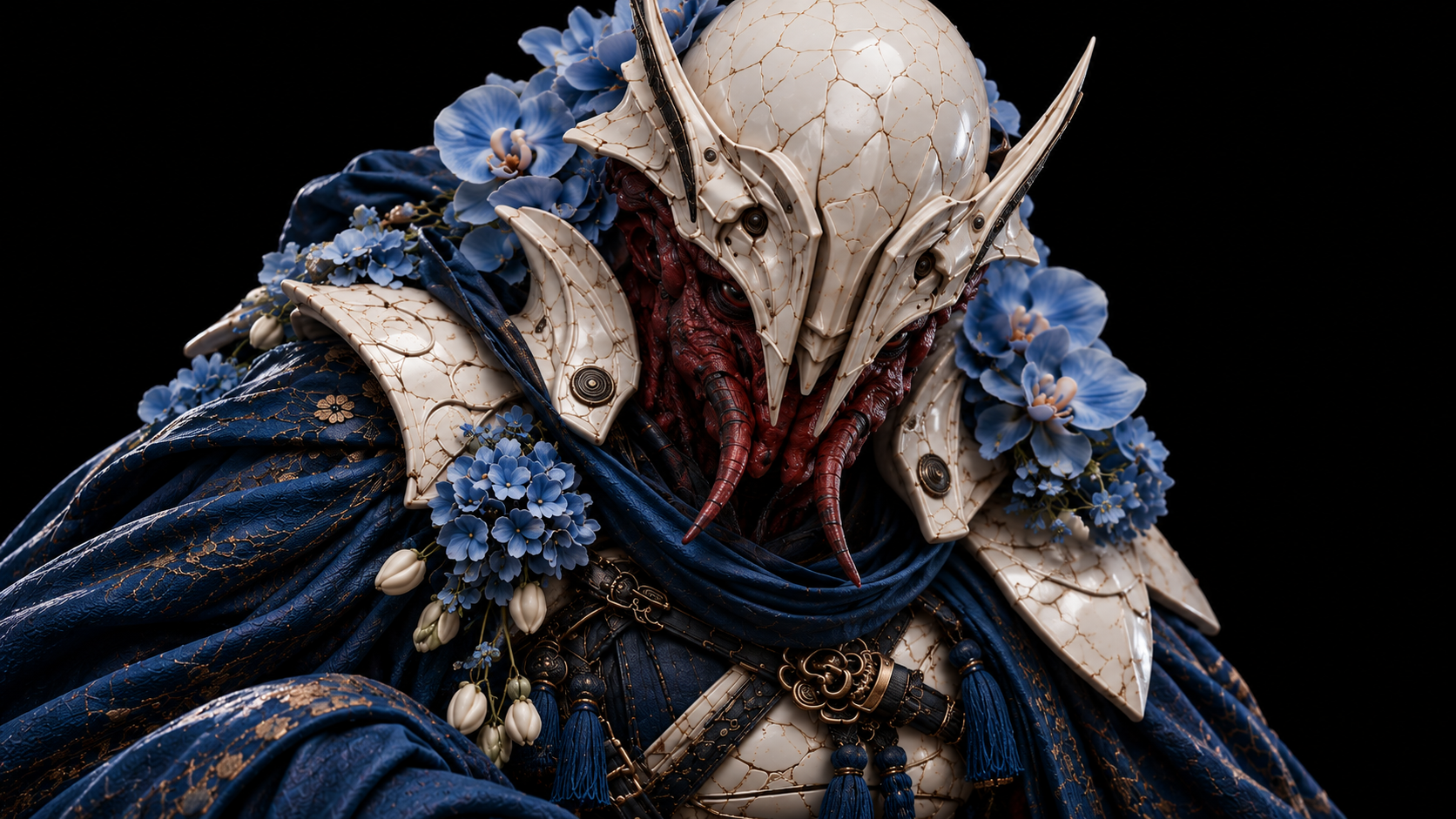
Amarwen is a weaver of the Weneth and the finest reader of thread alive. In 2043 F.K. she read seven lines that no one had been able to read for fourteen centuries. They were a warning against cutting the floor of the world. Her own people had spent ninety-three years carrying the salt that cut it.
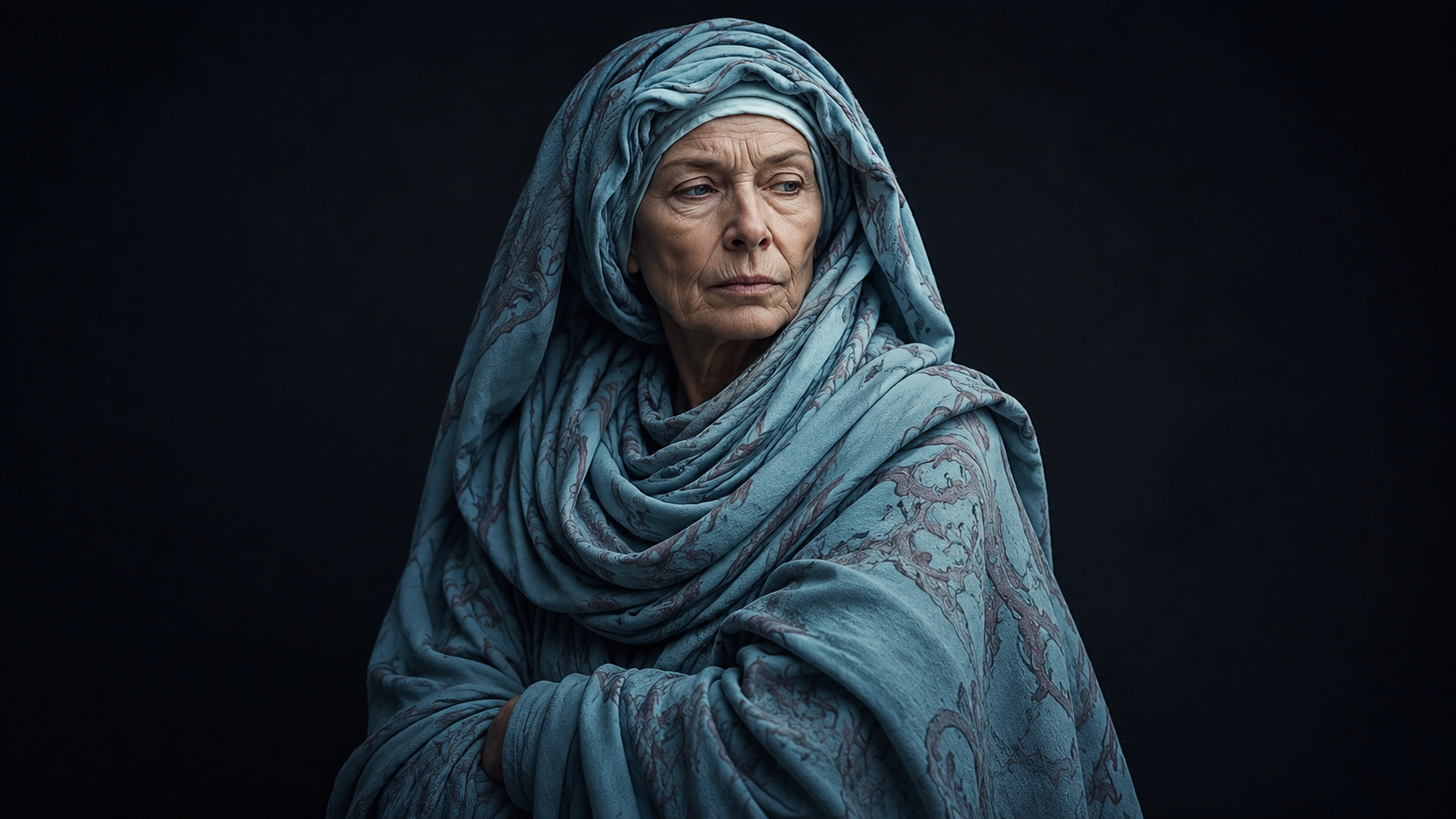
She has worn her translation ever since. It is a shawl, wrapped over her head. Every morning of the Reckoning she stands at the Lid-Stone and reads it aloud. Then she sits down and listens to everyone argue about who should have read it first.
- Name
- Amarwen
- Title
- Reader of Knots (結び目を読み解く者)
- People
- Weneth, the Fleece Downs
- Born
- 1960 F.K., in the hall of Wennar
- Age at the Reckoning
- 127
- Craft
- Loom-tender of the oldest rooms. Reader of the Great Cloth by hand.
- Known for
- Reading the Law of the Floor, 2043 F.K.
- Wears
- The shawl of the Law
- Eyes
- Pale blue, clouding
- Seen in
- The Kelborn Arrive. 3 Up: Alvak, Amarwen & Tallas. Chapter One: The Twelfth Day.

Born into the Blue
Amarwen was born in 1960 F.K. in the hall of Wennar. It was the year before the Shedding. The south was still whole. Nobody at Wennar knew that would change.
She was born into the blue. Cobalt had been coming west from Sael-Qor for eight years by then. It paid the Weneth for carrying salt. Every length of the Great Cloth woven in her lifetime had been dyed with it. The children of Wennar thought blue was simply the colour of history. They did not know it had a price.
Her family were loom-tenders of the oldest rooms. That is a low office. Loom-tenders do not weave. They keep the old lengths dry, turn them on their trestles and pick the moss out of their edges. Her mother did it, and her mother's mother before her. It was work for people the elders trusted not to be curious.

The Rule About Lamps
The oldest lengths of the Cloth are undyed. They run ochre-brown and grey for two thousand years before the blue begins. The Weneth do not bring lamps near them. Old wool fades in light, and the oldest wool fades fastest.
So the children of loom-tenders work in the dark. Amarwen was sent to dust the far end of the first hall at the age of six. She had a soft brush and no light. She was told to keep her hands on the trestle so she would not fall.
She kept her hands on the Cloth instead. The weft is raised enough to feel. Within a year she could tell a death from a marriage by touch. Within three she was following whole passages, from the starting knot to the closing loop, in the dark. Nobody had taught her. Nobody had thought to stop her either, because nobody imagined a child could read the first ells. The adults who could had died a century before.

The First Thousand Ells
The Weneth measure their history in distance. The Cloth is laid out against the Ell-Stones on the western ridge, one ell apart. The first thousand ells are the Dry Dawn and the ages just after it. They are the part the Weneth are proudest of and read least.
By the time Amarwen was forty, she was the only living Weneth who could read those thousand ells without a guide. The elders knew this and thought it harmless. Old thread, to them, meant old stories. They asked her to read at festivals sometimes, the way you might ask someone to sing.
Her Eyes
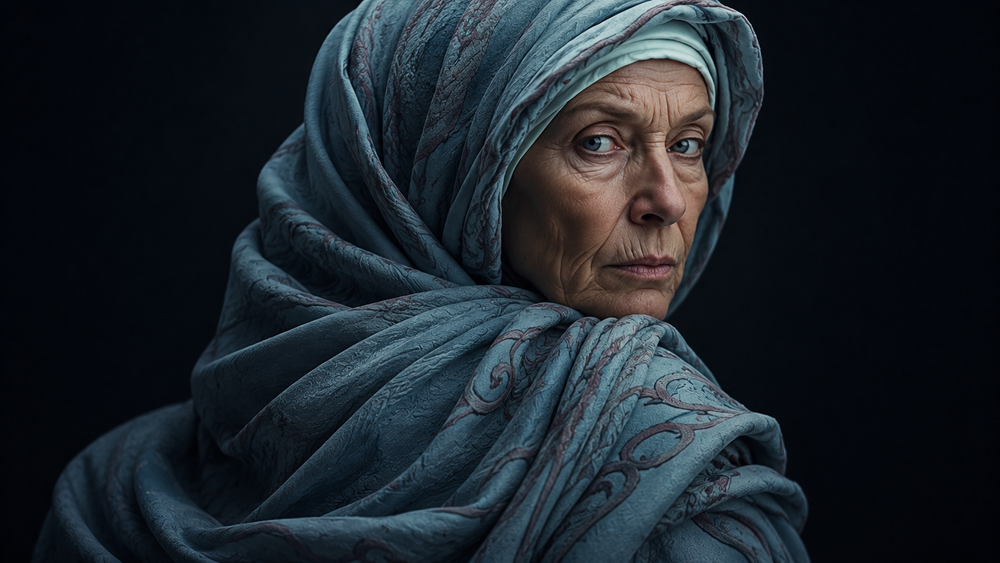
Amarwen's eyes are pale blue, like Orrin's and Khaerith's. It is the eye of the eldest Brine blood. In her seventies they began to cloud. Now she sees light and shape and very little else.
It has cost her less than it would cost anyone else. She learned to read in the dark at six. She has been practising blindness her whole life. The Weneth honour their blind readers, because the oldest cloth was always read by hand. Amarwen says her eyes are simply catching up with her fingers.

The Weneth And The Great Cloth
To understand what Amarwen did, you have to understand what the Weneth keep.
The Kelborn are five peoples descended from the Brine-children, who climbed out from under the Bone in the Dry Dawn. Each keeps the past in its own way. The Ulmaeth paint it on their skin, and it fades. The Ilvenne fire it into glaze, and it never changes. The Kharrin wear only what they owe. The Hollow plants what it mourns. The Weneth weave what they have agreed.
The Weneth were the first to leave the basin. Their ancestor Wen took the hook that cut the Floor, bent it into a spindle and walked west into the rain. She tied the first thing she knew into the first length of cloth: the floor is a closing, and beneath it is still water. The Weneth have been weaving ever since, without once cutting the thread.

How The Cloth Works
The Great Cloth is one continuous weaving. It lies rolled on trestles down the middle of the hall at Wennar, then runs out through a door into a second hall built for it, and a third.
The warp runs its length and stands for time. It never breaks. The weft crosses it, one pass of the shuttle for each event the elders have agreed on. A raised loop is a death. A thread run back on itself is a matter reopened. Undyed wool means something agreed but not yet understood. Blue means anything paid for with cobalt, which since 1952 has meant almost everything.
Nothing enters the Cloth until the elders agree how it is to be told. Until then it is held as raw fleece by the Keeper of the Unspun. That office now belongs to Orrin, and it matters a great deal to Amarwen's story. A thing that is not yet woven has, in a sense, not yet happened.

Why It Matters That The Weneth Read By Hand
Weft threads travel across the warp in spirals and hooks. Lift one off the loom and lay it flat on skin, and it becomes a line of writing. That is the oldest script in the world. It is called Old Coil. The Ulmaeth cross, the Ilvenne Coil and the Kharrin dot all descend from the shape a thread makes passing over and under.
So the Weneth were always closer to the first writing than anyone. They had it in their hands. They had simply stopped reading the part where it began.

The Copy
In the spring of 2042 a fired woman came to Wennar from the south. She had a porcelain orchid at her brow, which marked her as an Ilvenne Reader. She was Qaresse, the Ninth Reader, and she had walked west from Tesh-Amarun instead of going home.
She carried a sheet of Ilvenne paper. On it were marks she had copied by firelight, in one night, from behind the ear of Khaerith, the last carrier of the Ulmaeth. She had sworn on the Lid-Stone not to copy them. She had copied them anyway. She did not say why she had come to the Weneth rather than her own people. Orrin did not ask.
Orrin handed the sheet to Amarwen.
What She Saw
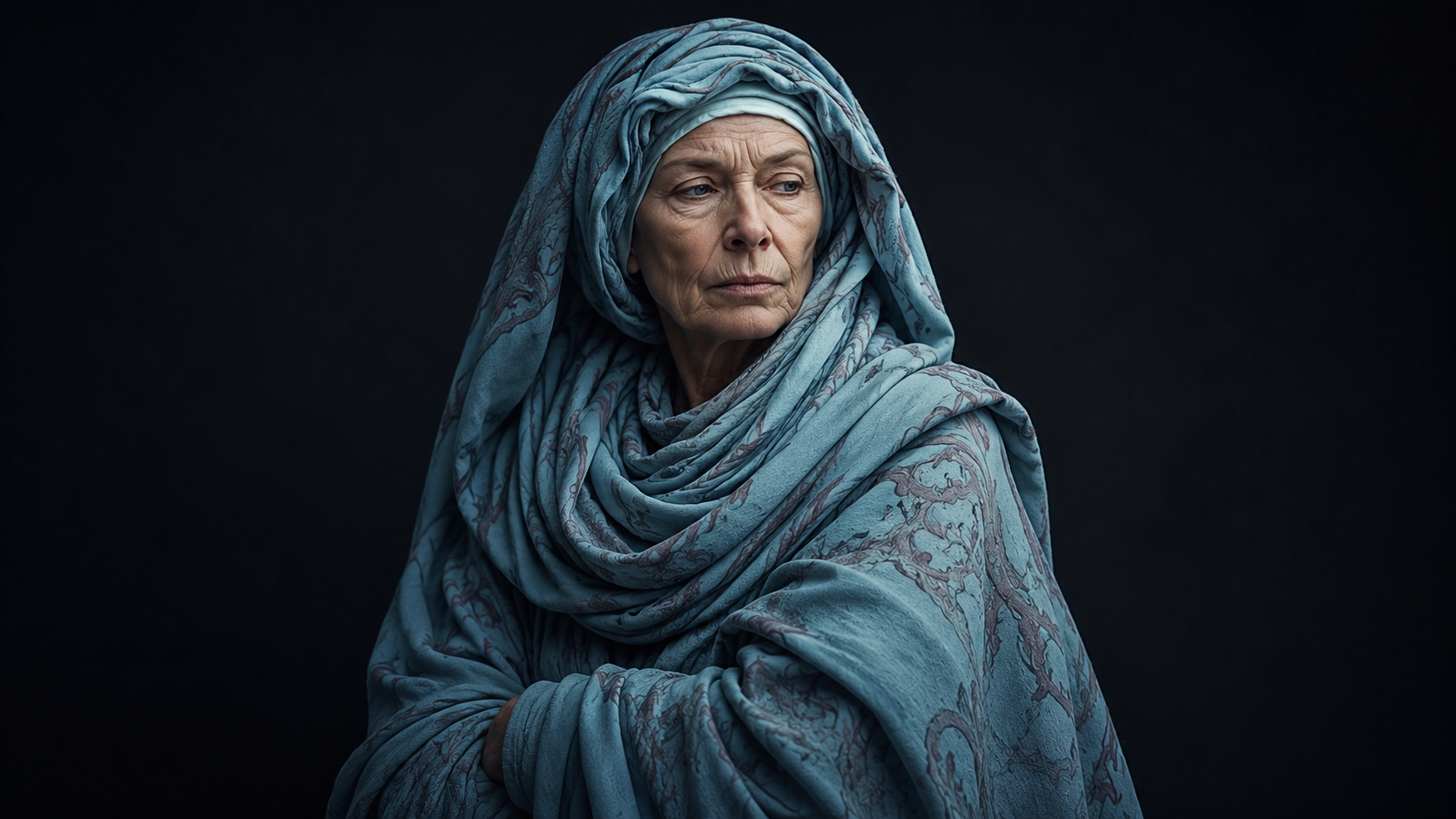
She knew at once it was Old Coil. She had felt that hand a thousand times on the first ells of the Cloth. But the hand on the paper was different. It was later and more careful, almost cramped. It looked like someone writing an old script they had learned as an adult.
Qaresse had copied faithfully, colours and all. Under the southern red, Khaerith's oldest marks carried two older colours. Some strokes were ochre. Some were pale slip, the white clay of the north. Qaresse had drawn them as she saw them, without knowing why they were there. Amarwen noticed. Old Coil does not usually carry colour. Someone had wanted these lines to be told apart.

A Year Of Matching
The paper had no thread in it to follow. That was the problem. Old Coil is read the way a thread is followed: from a starting knot to an ending loop, without lifting the eye. On paper there is no rope in the dark. There is only a picture of one.
So Amarwen made a rope. She laid the copy on top of the Cloth and moved it, ell by ell, down the oldest lengths. She was looking for a place where the lines on the paper and the threads beneath her fingers matched. She did it in the dark, as she had always worked. She moved the sheet the width of a hand each night.
It took her a year.

The Yellow Woman
In the spring of 2043 she found it. It was not in the Dry Dawn lengths, where she had expected it. It was later, in a passage from 611 F.K.
The Cloth records a visitor that winter. She is woven as the yellow woman who wanted fire to keep a promise. She came from the south, sat at the looms all winter and learned the oldest hand. In the margin of that passage, where the selvedge is wide, someone had practised. There were small trial marks, made in thread with a needle, the way a student copies letters.
Amarwen laid the copy over the margin. The strokes matched. They matched in their slant, in the cramped turns and in the hesitation before each hook.
The yellow woman was Ilvara. She was the kiln-master who would take fire north a year later and found the Ilvenne. The south ashed her name from every song. The Weneth had kept it all along, in a margin no one read, in the form of a student's handwriting.
The marks behind Khaerith's ear were Ilvara's. And they said: Do not cut the floor.

The Law Of The Floor
The Law is seven lines of Old Coil. Ilvara wrote it in 611 or 612 F.K. She wrote it twice, once on her own shed skin, which she left in the dark beneath the first kiln of Tesh-Amarun, and once in fire, at the foundation of the city she built in the north. For fourteen centuries it stood at the base of both cities. Nobody in either could read it.
Old Coil has no tense. A line can mean was, is or will be. Old Coil has no sounds either. It is drawn, not spoken. So every reading is a choice. Here are Amarwen's choices, with the words she gives each line in the Brine Speech, and the readings she set aside.
Line one. A closed spiral. Ulv tal. "The floor is a closing." It could also mean "The floor was closed" or "The floor is the lid."
Line two. A spiral laid over a still line. Ulv-orun ish. "Beneath the floor, still water." Or "Beneath the floor, the old sea sleeps."
Line three. A break, then a hook. Na tes ulv. "Do not cut the floor." Or "The floor was not cut." Or "The floor is not to be opened."
Line four. A break, then a hook turning into a coil. Na khor ulv. "Do not feed the floor to the fire." Or "No one has fed the floor to fire."
Line five. A hook, then falling strokes in ochre. Tes-ulv: ulv-kel hesk. "If it is cut, the yellow will fall from their skins." Or "When it was cut, the yellow fell."
Line six. A coil, then falling strokes in pale slip. Khor-ulv: ilv-kel hesk. "If it is burned, the white will fall after." Or "When it is burned, the white fall."
Line seven. A cross laid over a coil. Khar. "Bound." It is Ilvara's signature. It is also a picture of the painted and the fired, joined.
Where It Came From
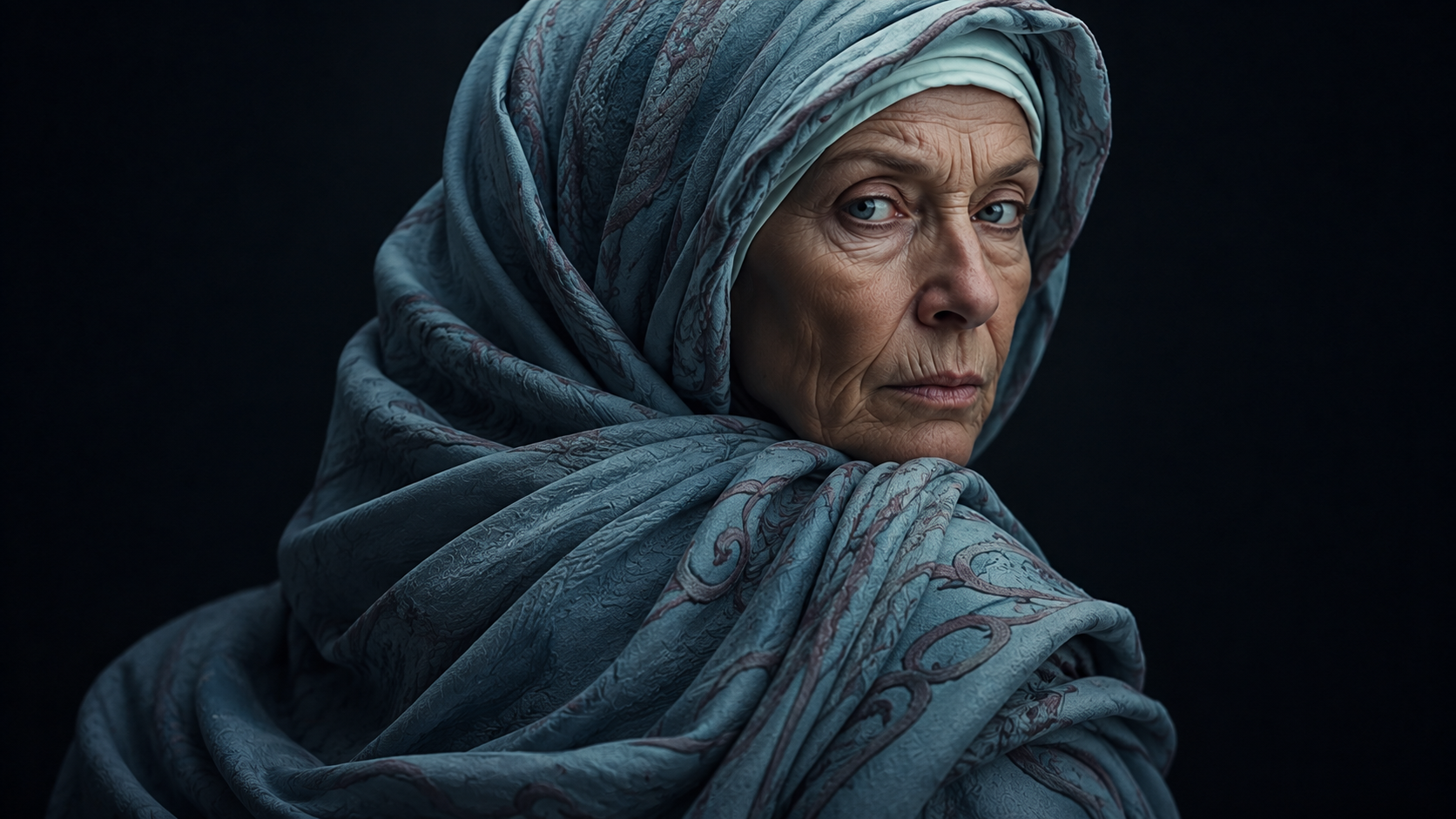
The first two lines are not Ilvara's. Amarwen found them, word for word, in the first ell of the Great Cloth. Wen tied them there in the Dry Dawn. The Weneth had held them for longer than anyone had held anything.
Ilvara added lines three to seven. She knew the old law because she had read it at Wennar that winter. She also knew what her own people meant to do with fire. Amarwen thinks Ilvara wrote the warning in Old Coil on purpose, so that neither of the parted peoples could read it alone. Only someone who went looking for both halves, the skin in the south and the wall in the north, would ever hold the whole.

What The Colors Mean
Lines five and six are the only lines that carry color. The falling strokes in line five are ochre, the color of the Ulmaeth. The falling strokes in line six are pale slip, the white of the fired. Ilvara wanted the reader to know which people each line named.
In 1961 the Bone cracked, and in a single summer the Ulmaeth shed every mark they had. Since the 2060s, the glaze has been lifting from every Ilvenne fired with Bone-salt. The yellow fell. The white is falling after.
Amarwen does not say the Law was a prophecy. She says it was a description of what happens to a body when you cut the ground it stands on. She thinks that is worse.

What The Reading Cost
Amarwen took the reading to Orrin in the spring of 2043. She read it to him in the dark of the first hall, with his hand on the margin where Ilvara had practised. He did not speak for a long time.
That week he cut the caravans' contract. It was the first decision of his life he did not take to the elders first. The salt-carrying that had dyed the Cloth blue for ninety-one years was over.

The Elders
The elders did not thank her. Some called the reading a betrayal. A Weneth reader had convicted the Weneth, from the Weneth's own Cloth. Others called it an error. Old thread was old stories, they said, and a student's practice marks proved nothing. A few, mostly the oldest, said nothing at all. Amarwen thinks they had always half known.
The Law has never been woven into the Great Cloth. The elders have not agreed how it should be told. By Weneth custom, a thing that is not woven has not yet happened. Officially, Amarwen's reading does not exist. It lives only on her shawl.

The Loom-Talk
The Weneth keep an unwritten record alongside the Cloth. It is called the Loom-Talk: the spoken memory of every argument behind every thread. The Loom-Talk is where Amarwen's reading lives in Wennar. It is also where she is blamed.
The Loom-Talk says Orrin's mother, Tamwen, once wove a warning about the Bone into the oldest rooms, and that Orrin read it as a boy and thought it a story. It says the first two lines of the Law sat in the first ell the whole time, under the hands of loom-tenders who never read them. That includes Amarwen's mother, and her mother's mother. Amarwen does not argue with this. She says the Loom-Talk is right about the thread and wrong about the hands. Nobody taught them to read it.

The Breaking
In the spring of 2044, a year after her reading, three hundred ilv-hesk walked from the Blue Hollow to Sael-Qor carrying brine. They poured it into the salt-kilns of the ninth tower at full heat and broke them. Thirteen people died. One was Vessan, the husband of Orrin's sister Ishwen.
The man who led them was Qorran. He has said many times that he broke the kilns on Amarwen's word.
She finds this unbearable. She meant the reading as a record, not a command. She made a careful translation and stitched every doubt she had along its hems. He took one line of it and walked to war. They have argued about it in the camps at the Lid-Stone. Neither will concede. Amarwen thinks both of them are right, and that this is the worst thing she has learned in her life.
The Reply From The South
In 2044 Amarwen sent word south, through a Kharrin trader, of what the marks behind Khaerith's ear said. She did not know if anyone at Tesh-Amarun would tell her.
The reply came back months later on a strip of hide. It carried a single painted cross with a second bar: a kharu-tal, the southern sign of an oath kept to its end. No words came with it. Amarwen reads it as I kept it anyway. Khaerith had carried the warning on her body for most of a century, without knowing what it said, because it was hers to carry.
Amarwen keeps the hide folded inside the shawl, against the line it answers.

The Shawl
The Weneth have a custom for any reading that will be fought over. It is not filed in the hall. It is woven into a garment and worn. A worn text goes wherever its reader goes. It is warmed by her body. Anyone who wants to argue with it has to argue with her.
Amarwen wove the shawl herself over the winter of 2043. It is the only Weneth text ever made to leave Wennar.

How It Is Made
The ground is cobalt-dyed wool, the blue of the salt years. She chose it deliberately. Her translation is written on the debt. She calls the blue lengths of the Great Cloth the debt that dyed us. The shawl is cut from the same dye lot.
The tendrils are the seven lines of the Law, couched onto the blue in a purple thread. The purple is cobalt dyed over red earth, the north laid over the south. Each line runs once around her body. When she wears it properly, she is wrapped in the Law seven times.
The inner band is the pale fold that frames her face. It carries the first two lines, the Dry Dawn lines, in undyed wool. They are the oldest words, so she keeps them closest to her head.
The hems carry her doubts. Every alternative reading of every line is stitched along the edges in a thinner thread. Anyone who holds the shawl holds the uncertainty with it. She was careful about this. She did not want anyone to be able to pick up the reading without also picking up the doubt.
The hems did not stop Qorran. She knows that. She has not unpicked them.

Why It Covers Her Head
A Weneth reader travelling to testify wears the whole text, with nothing folded away. That is why the shawl is wrapped over her shoulders and around her body.
A reader goes with her head covered only when the text is a grief. It is the Weneth way of saying a reading is true and should not have been. Amarwen has worn it over her head every day since 2043.

What Happens If They Reject It
If the Reckoning rules against her reading, custom says the reader unwinds the shawl in front of the court and lays it on the ground. The text is then returned to the fleece, unspun, as if it had never been read.
Amarwen has already decided she will not do that, whatever they rule. She has told Orrin she will be buried in it.

At The Lid-Stone
In 2085 Khaerith sent a broken cross east along the Ember Road. Among the Kharrin, an oath broken and presented by the one who kept it is the oldest way to call a Reckoning. Darrak, the Reckoner, answered. In the autumn of 2087 the Reckoning of the Shedding opened at the Lid-Stone, at the centre of the basin, where the sea last stood.
On the first morning Darrak asked Amarwen to recite the Law before each day's sitting. She has done it every morning since.

The Mornings
She stands at the foot of the stone at first light, with the shawl over her head. She speaks the seven lines in the Brine Speech, a language no living people speaks. Her voice is thin. It carries a long way. There is nothing on the Bone to stop it.
Then no one speaks. That is the rule. The Law is allowed its silence. After it, Darrak counts the debts on his own face aloud, as the Kharrin do before they speak. Then the day begins.
She can hear the four camps while she recites. The Kiln-Elders of the south cough in the cold on their reed mats. The glaze of the Ilvenne clicks when they shift on their stools. The Weneth sit behind her, very still. Qorran's ruff of kiln-spurs ticks in the wind, over by the salt-rakes.

What She Said To Darrak
On the first day, before the sitting, she spoke to Darrak quietly.
"I would rather be wrong," she said.
He told her the Kharrin have a word for that. It means a debt you hope someone will forgive. She asked who could forgive this one. He said he did not know. She has not asked him again.

Her Hands
Amarwen's kindness is mostly done with her hands.
At Wennar, every evening, Orrin goes to sit with his sister Ishwen. She lies at the end of the first hall on a red couch. The glaze is falling from her, and the weavers are making her last cloth on her as she lies there. Each fallen plate of glaze is stitched to her gown. Each evening a gold stitch is added for Orrin's visit.
Orrin cannot read the gown on his own. His fingers stop at her throat, where the crossing her husband fired is coming away. So Amarwen guides them. She lays his hand on the cloth and moves it, line by line, over what was added that day. She has done this every evening for eight years.
She did the same for the compiler of this archive, who could not read the Cloth at all. Every Weneth reading in these pages passed through her hands first.

The Twelfth Day
On the twelfth day of the Reckoning, a runner came from Wennar. Ishwen's glaze had come off her throat in the night. She had asked to be brought to the Lid-Stone. The Weneth bearers would not carry her until Orrin decided how the Compact should end, and he did not know how.
He stood in front of the stone, holding the unspun fleece, and said so.
Amarwen stood up behind him. She took his hand and laid his fingers on the raw wool, the way she lays them on Ishwen's gown.
"You do not have to know how it ends," she said. "You only have to know how it goes on."
When he sat down, he did not let go of her hand.
That evening Qorran came to the Weneth tents and offered to carry Ishwen himself. Amarwen asked him one word: Why? He told her about his parents, dug out of a cobalt seam by an old man's hands, and buried in the spoil. She did not say anything after that. She put her hand on Orrin's arm.

Her Name And The Slow Thread
Amarwen is built from two roots. The first is amar, from the oldest speech, meaning "to see and say." It is the root of witness everywhere. It gave the Ulmaeth their first words of record, amar-nai, "I saw you." The second is Venethic wen, "thread." Together they mean "she who reads the thread aloud."
It is a common name among loom families. Her mother meant it as a hope. It turned out to be a description.
Her title came later. The Weneth call her the Reader of Knots, because a Venethic knot, an Ulmaethic cross and an Ilvenne coil are the same word worked three ways. On the Kelborn title card the title is written in Japanese: 結び目を読み解く者, "the one who unravels and reads the knots."

The Slow Thread
Venethic is the language of the Weneth. Amarwen calls it the slow thread. It parted from the other tongues first and then changed least. So it is the language scholars use to reach back to the speech before all of them.
That older speech is the Brine Speech, the tongue of the Brine-children in the caves beneath the Bone. No living people speaks it. Amarwen rebuilt as much of it as she could from its four daughters. She needed it because Old Coil has no sounds. To read the Law aloud at the Reckoning, she had to give the lines a voice. She chose the oldest one she could find.
Her recital is probably the first time in three thousand years that whole sentences of the Brine Speech have been spoken.
The Roots She Uses
She works from a small set of reconstructed words.
ulv, the earth or the floor. It survives as ulv in Venethic, ulm in the south, ilv in the north and alv in the east.
kel, skin. It survives only inside old compounds. It is the root of Kelborn.
tes, to cut. It survives in the south, in Tesh and Tessan.
khor, to burn. The south lost it at the Parting. The north kept it as qor.
hesk, to scorch, ash, to strike out.
ish, still water.
na, not.
She admits that one of her choices is partly a guess. In line six she uses ilv to mean pale. That is really the northern word for white clay, dressed in older clothes. She has stitched this admission into the hem.
A Curse That Was A Law
The reconstruction gave her one small discovery that nobody asked for.
The Ulmaeth have a curse: Hesk na tesh. For centuries it has been understood to mean "ash on the mark." It is said when someone slanders another, or forgets them on purpose.
In the older grammar it means something else: "ash, no mark." It is a fragment of the Law. It survived in the south as an insult, in the mouths of people who no longer knew where it came from. The warning was never entirely lost. It was just being used to swear with.
Her Sayings
She is not a quotable person, but a few of her phrases have gone round the camps.
"The debt that dyed us." Her name for the blue lengths of the Great Cloth.
"Walking a path in the dark with one hand on a rope." Her description of reading Old Coil.
"I would rather be wrong." Said to Darrak on the first day.
"You do not have to know how it ends. You only have to know how it goes on." Said to Orrin on the twelfth.
The People Around Her
Ilvara. The Law's author, dead for fourteen and a half centuries. Amarwen has spent more time with Ilvara's handwriting than anyone alive. She speaks of her as a colleague. She knows how Ilvara's hand hesitated before each hook, and she thinks it was fear. Ilvara knew what her people would do with fire, and she did it anyway.
Orrin. The Keeper of the Unspun, who set her the task in 2042. Her reading convicts him. It was his Salt Compact, his caravans and his sister. She guides his hands every evening anyway. They are the closest thing either of them has to a friend.
Ishwen. Orrin's sister, given north at thirteen to seal the Compact, fired with Bone-salt, and now flaking at Wennar. Line six of the Law describes her exactly. Amarwen thinks Ilvara never imagined a Weneth woman fired white, and that the Law has caught someone it was never meant for.
Khaerith. The last carrier of the Ulmaeth, who held the Law on her skin without knowing it. They have never met. Their whole correspondence is one translation sent south and one painted cross sent back.
Qaresse. The Ninth Reader, who brought the copy. She stayed at Wennar the year Amarwen worked. They are not friends. Qaresse wanted the reading to say the Shedding came from the salt-bread. Amarwen would not let it. They have been honest with each other ever since, which is not the same as kind.
Qorran. The ilv-hesk war-leader who broke the salt-kilns on her word. She cannot forgive him for that. She is beginning to suspect he cannot forgive her either.
Darrak. The Reckoner, who asked her to open each day with the Law. He is the only person at the Lid-Stone she has told she would rather be wrong.
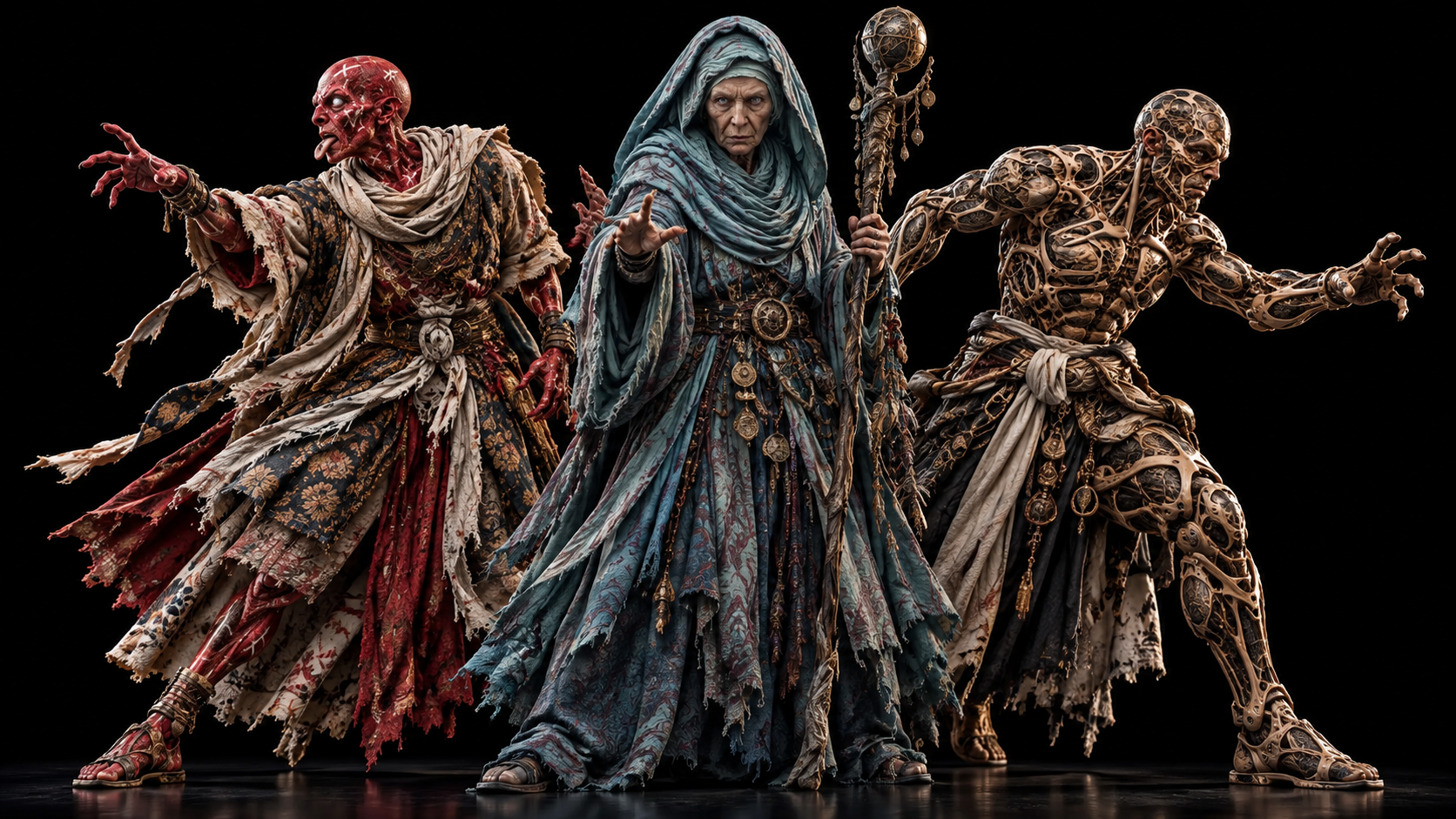
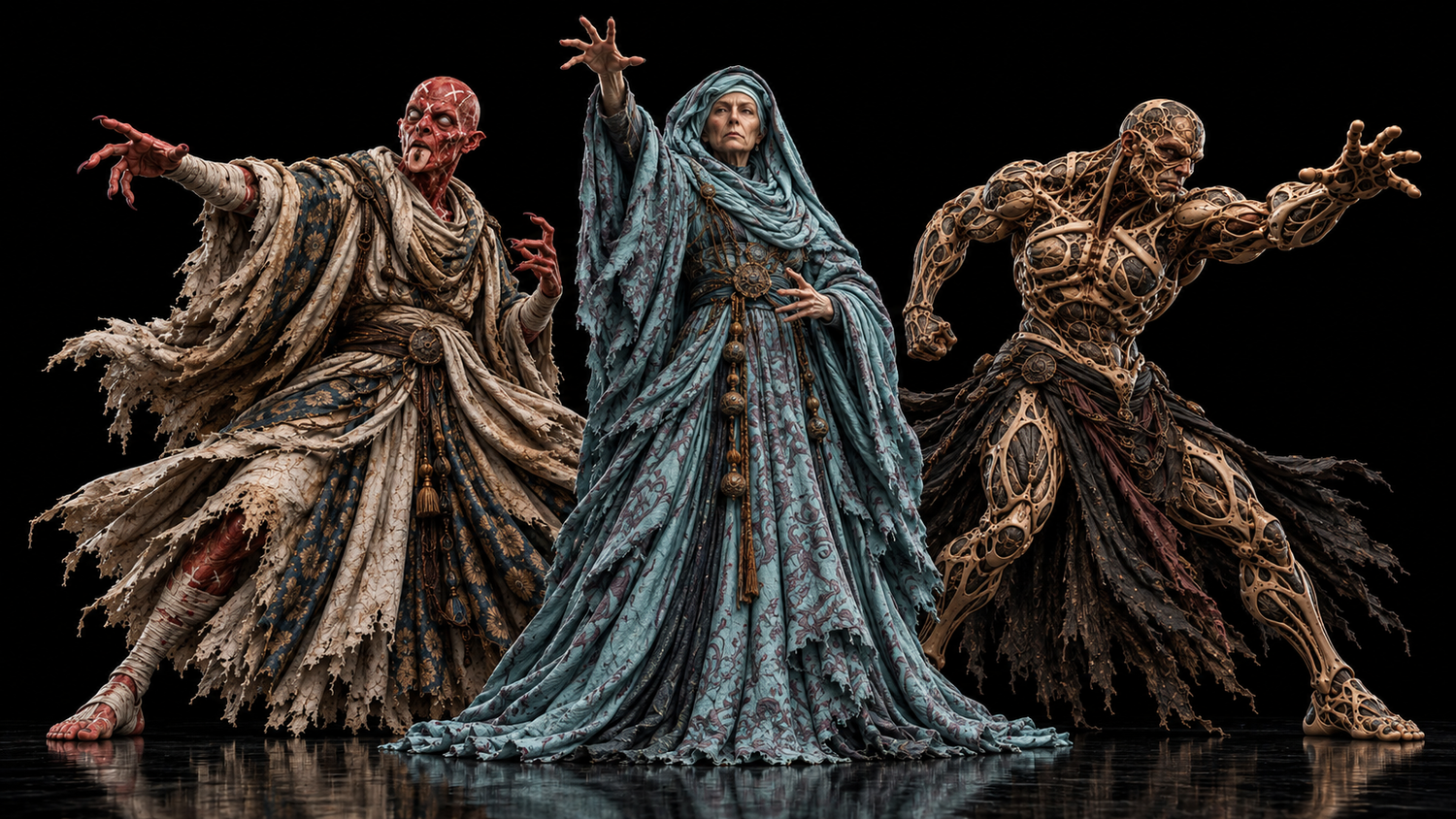
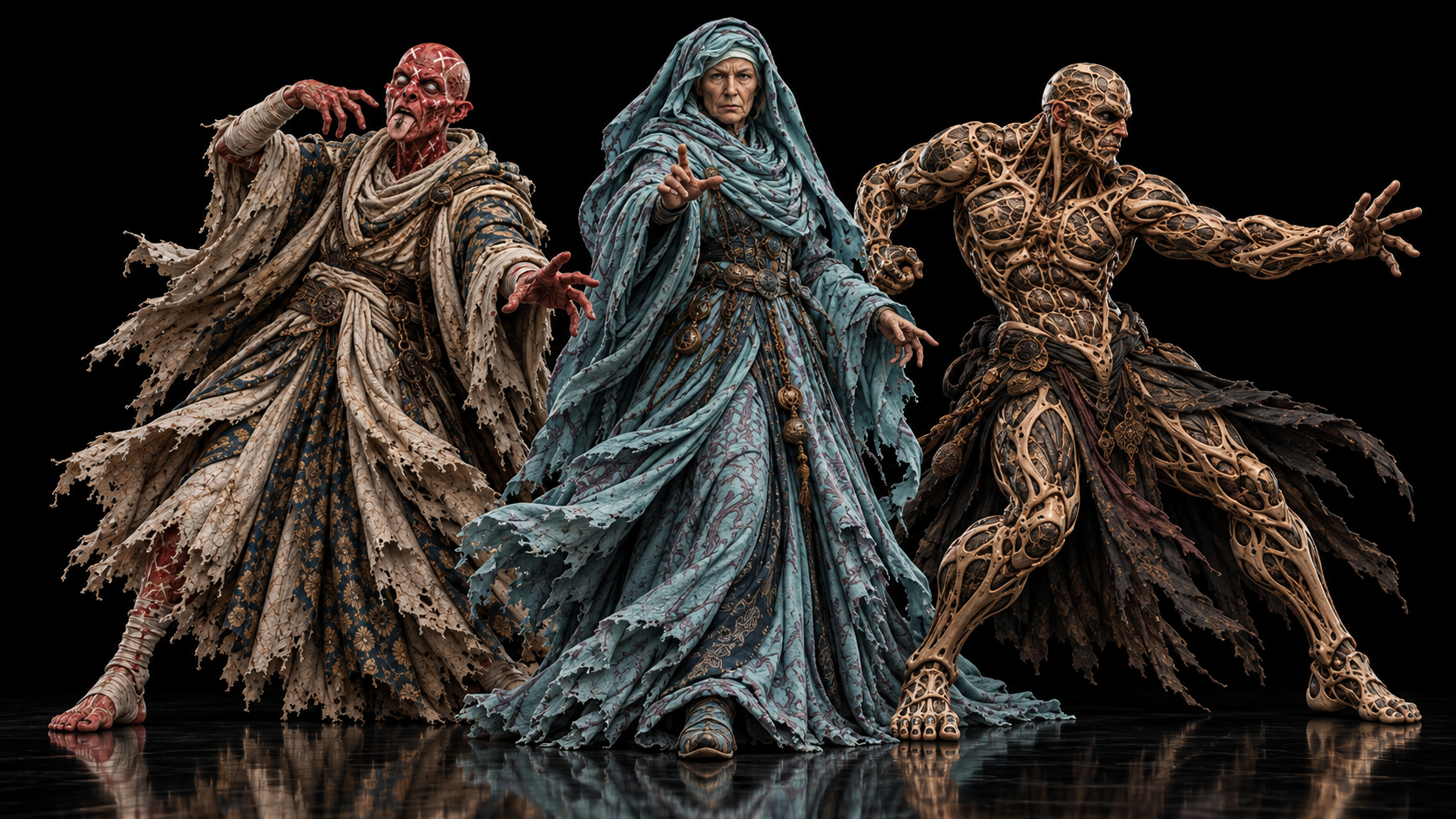
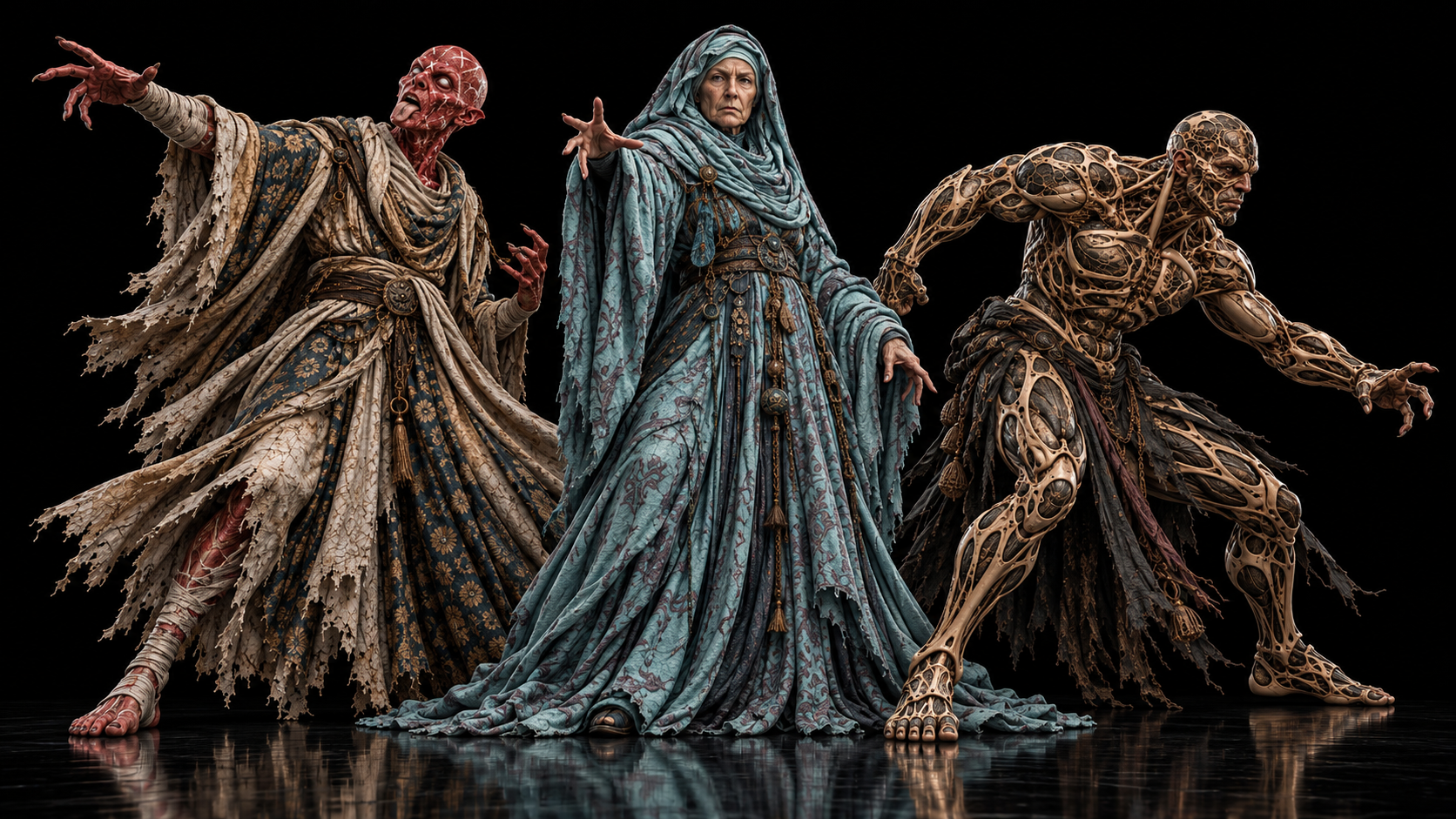
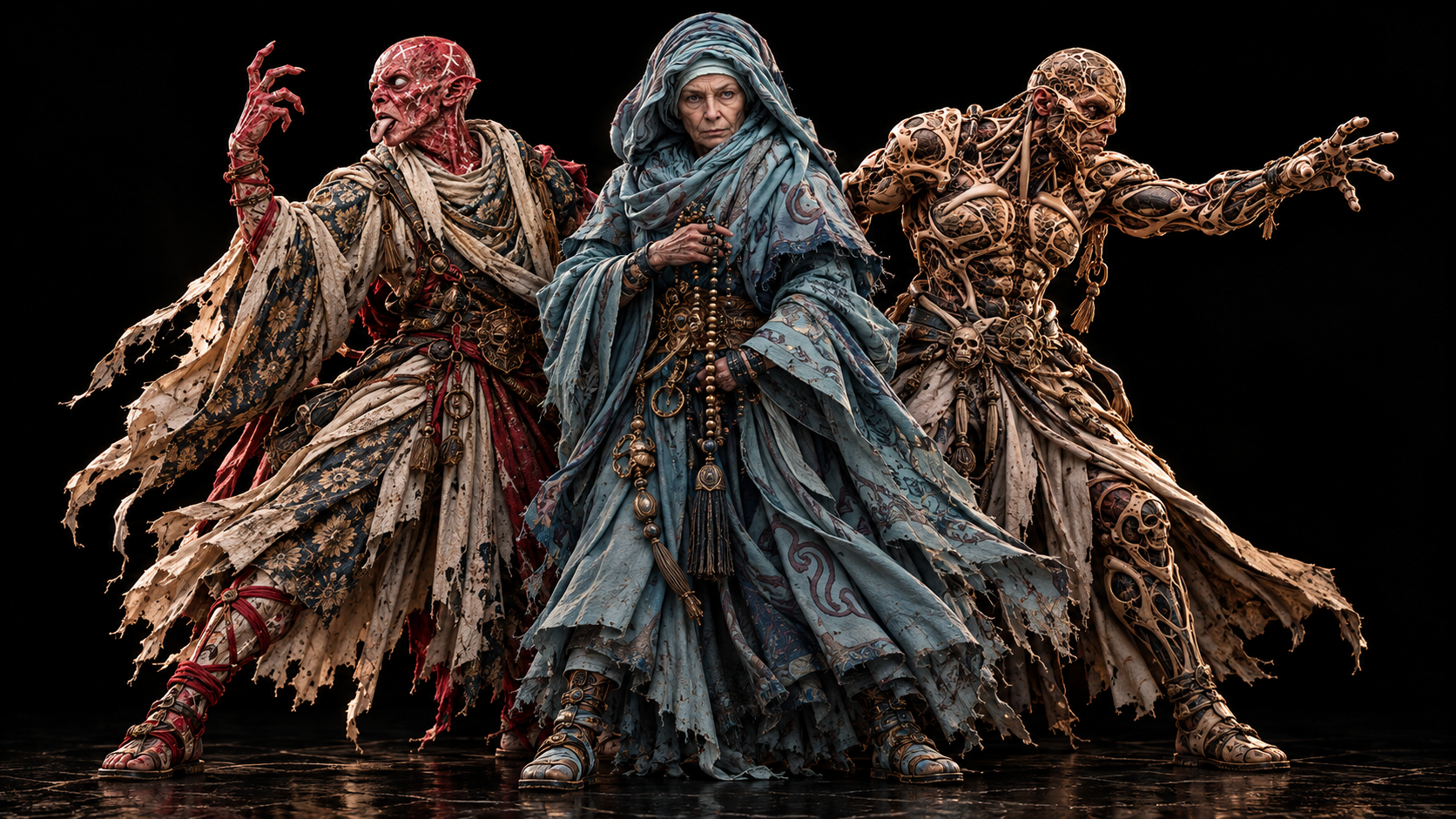
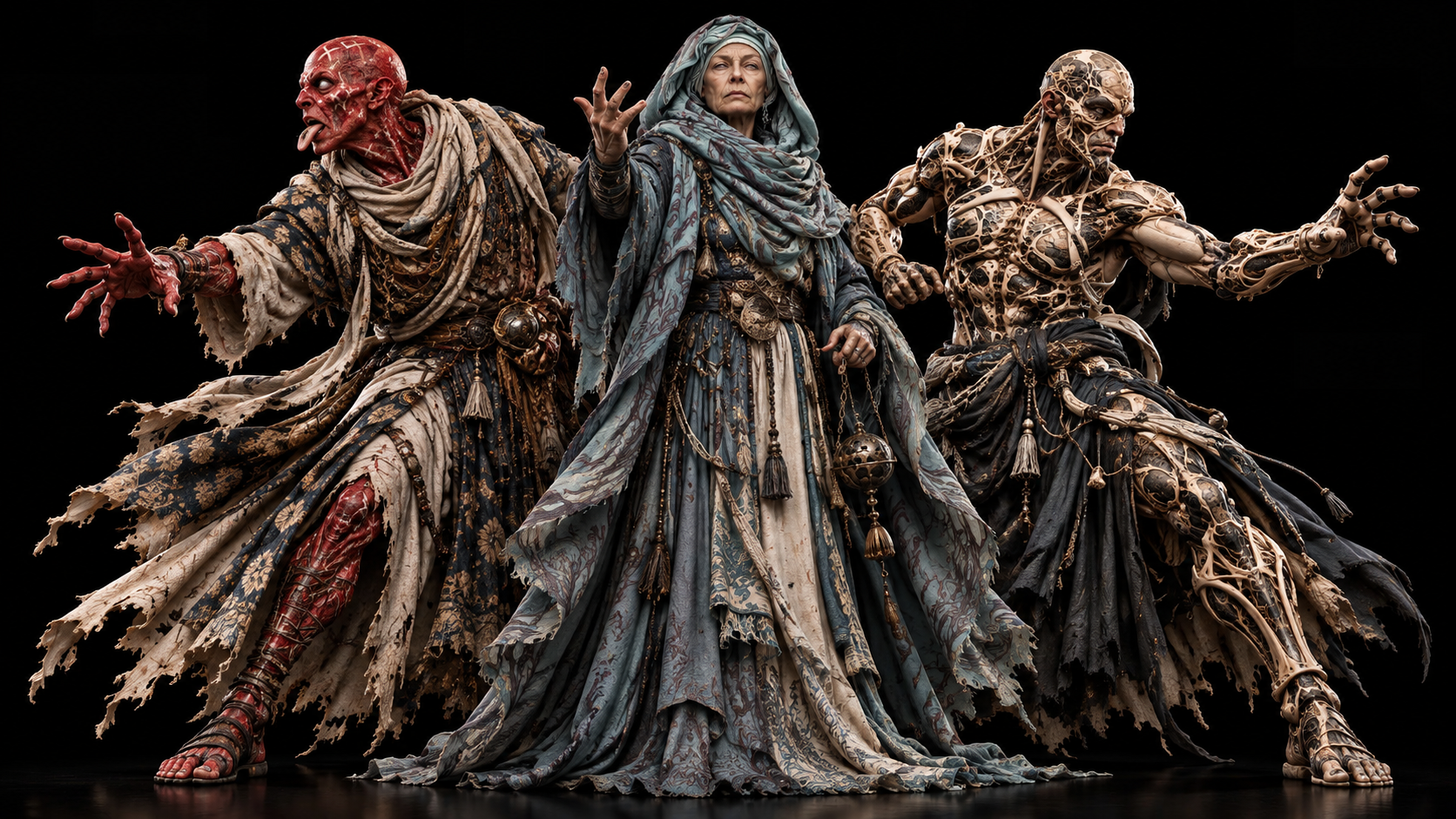
Alvak and Tallas. In the portrait 3 Up: Alvak, Amarwen & Tallas, she stands between them.
Alvak is the Kharrin holy fool who scratched crosses through his own debts and walks the Ember Road crossing out other people's. He follows her between camps. He keeps asking her to read his face and tell him which debts are real. She has not yet found the words.
Tallas is a fired Ilvenne of the ninth tower who cracked almost completely in the Breaking. He was mended in Kharrin gold, so more of him is mending than glaze.
The portrait is the book's argument in one picture. On one side is a man who forgives without counting. On the other is a man made whole by someone else's payment. She stands between them holding the Law.
Imaresse. An ilv-hesk scholar of the Blue Hollow who carried the eight unread Readers' books out of the ninth tower after the Breaking. She has been writing their routes onto her own skin. The oldest passages of those books are in Old Coil. Amarwen is the only living person who might read them. They have not yet met. When they do, the story leaves the basin.
What Is Still Unsettled
The Law is now the most argued-over text in the world. Almost all of it rests on one woman's hands. These are the questions still open at the Lid-Stone.
Warning or description? Old Coil has no way to give an order. Ilvenne scholars read lines three and four as plain statements: "the floor is not cut." On that reading, Ilvara was describing her own time, not making a rule for the future. Amarwen reads them as commands. She admits the grammar does not settle it.
If or when? Lines five and six can be read either way. If they mean when, then Ilvara foresaw the Shedding and the Flaking. The Ilvenne Coil is written in the future tense. Their first vow would then have been a prophecy of their own ruin.
Did Ilvara hide it on purpose? Amarwen says yes. Others say Ilvara simply wrote in the one script both peoples still shared, and assumed it would stay readable.
Did the Weneth know? Lines one and two sat in the first ell of the Cloth the whole time. The elders say no one had read that far back in centuries. Amarwen says that is exactly the problem.
Is there a second reader? The same seven lines are fired into the base of the first Tally-Wall at Sael-Qor. If someone else read them there and agreed with her, the Law would stand. The Ilvenne have not yet let a Weneth reader touch the wall. They have asked the Reckoning for a second reader. Amarwen says she would welcome one, if one existed.
The Shawl at Night
Her eyes are almost gone now. In the camp at the Lid-Stone, after the others are asleep, she sits up in the dark and reads the shawl on herself. She starts at the inner band and works outward, line by line, with her fingers, the way she learned at six. She reads the hems last.
She says she does it to make sure the shawl still says what it said. It always has. She has not yet found a line she wishes said something else. She is still looking.