Qorran, The Unfired
Qorran is the war-leader of the Blue Hollow, an unfired Ilvenne raised among blue flowers by a blind old man. In 2044 F.K. he led three hundred miners up to Sael-Qor carrying brine. They broke the salt-kilns of the ninth tower and ended the cutting of the Bone. Thirteen people died. He has never denied it.
He came to the Reckoning wearing the evidence and asked to be judged with everyone else. Of everyone at the Lid-Stone, he is the only one who has killed. He is also the only one who acted. Whether that makes him the worst of them or the only one who did anything is the question the Reckoning keeps coming back to.
- Name
- Qorran
- Called
- Qorran the Unfired, by the towers
- People
- Ilv-hesk, the unfired, of the Blue Hollow
- Born
- 2010 F.K., below the Azure Seam
- Age at the Reckoning
- 77
- Raised by
- Sael-Ennu, in the Spoil Garden
- Office
- War-leader of the Hollow
- Known for
- The Breaking of the ninth tower, spring equinox 2044
- Wears
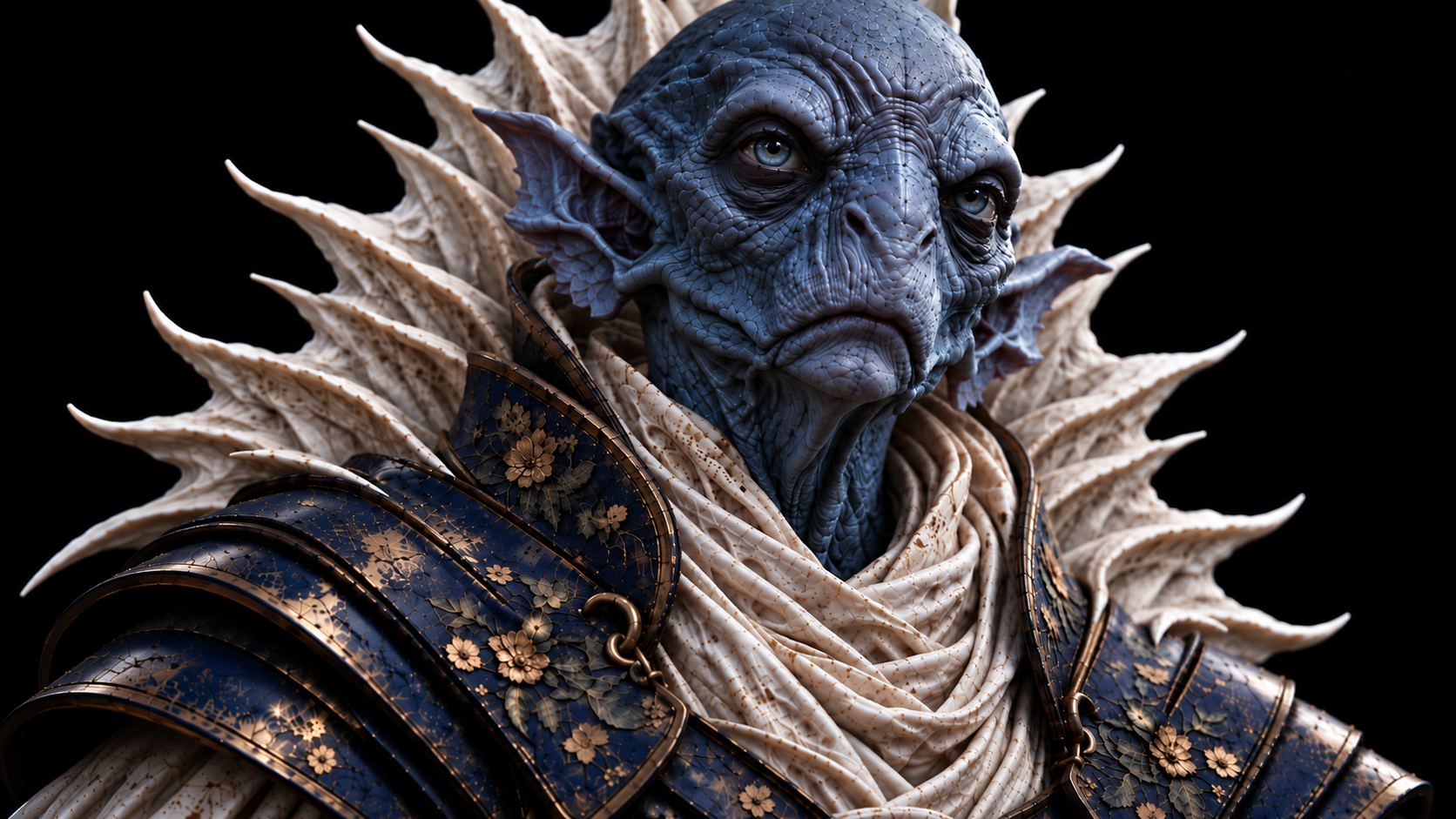
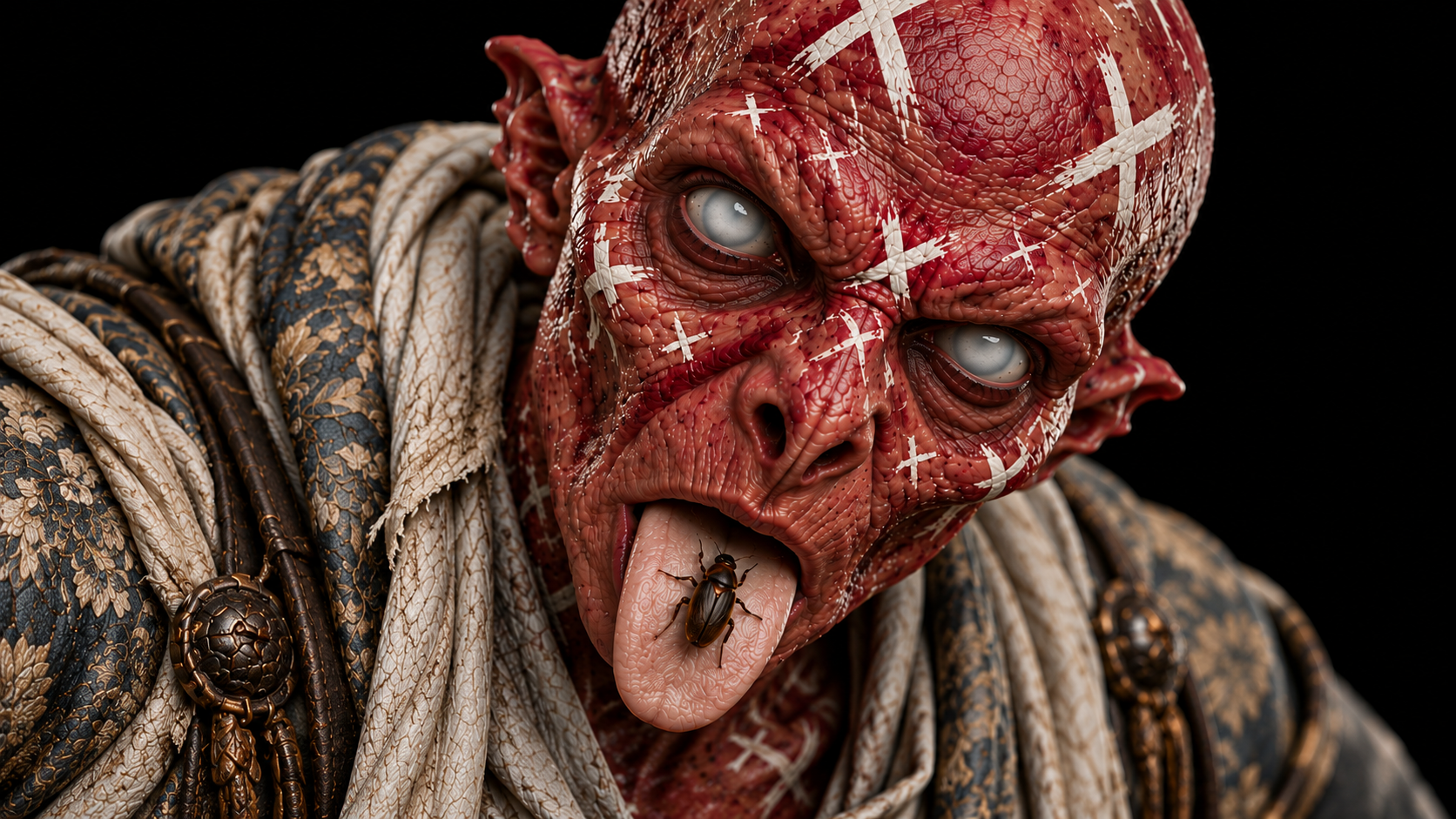
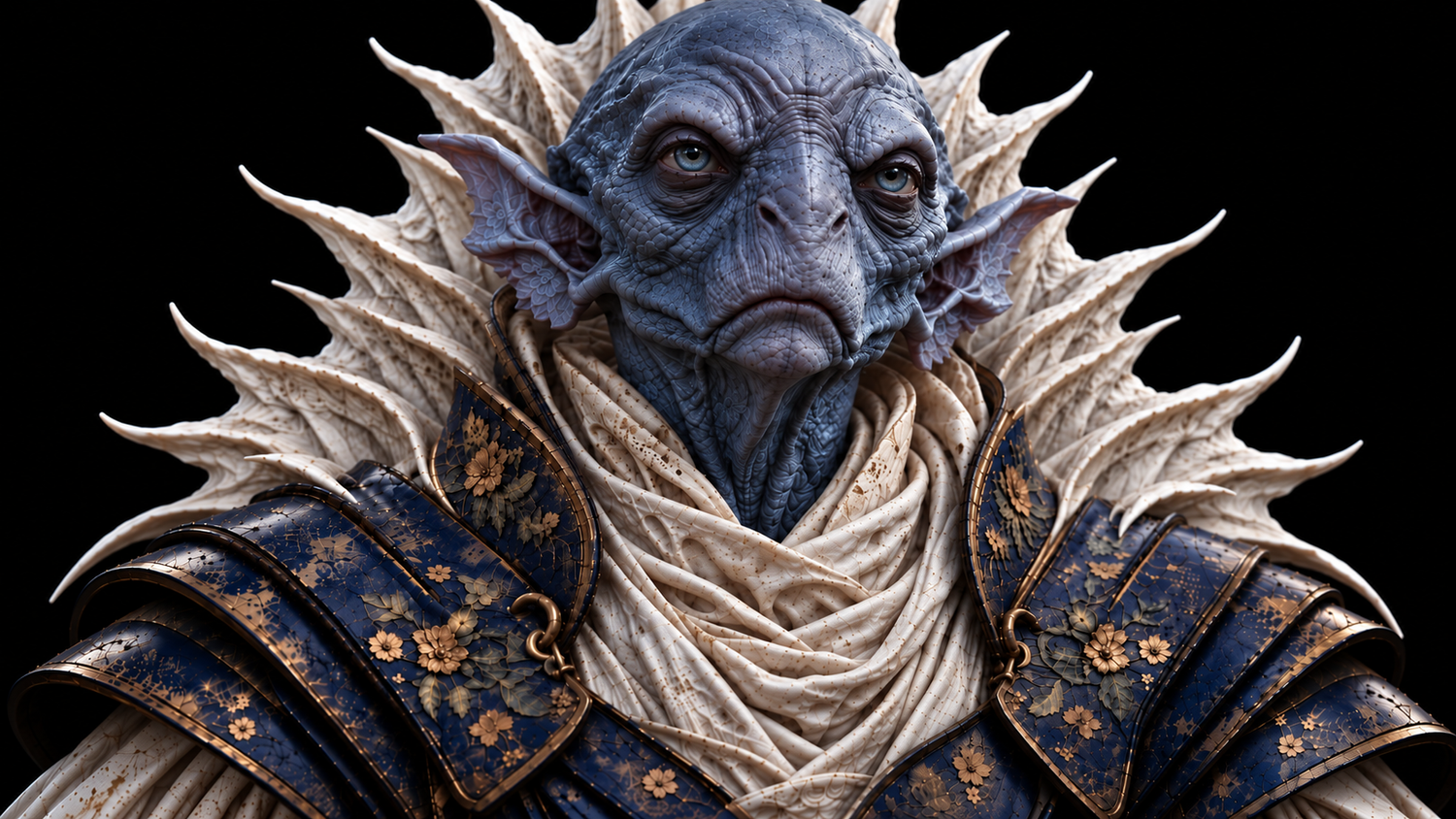
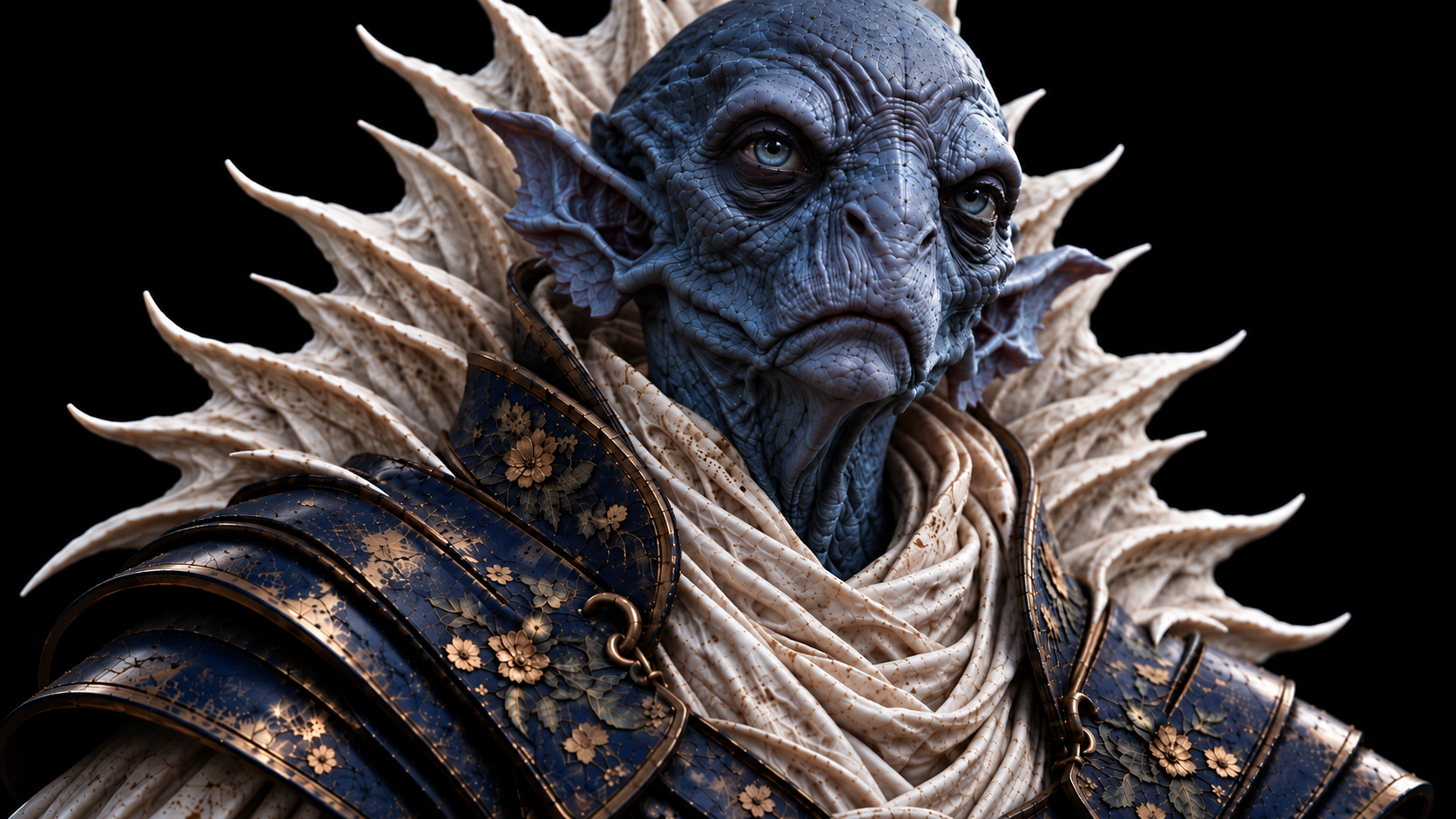
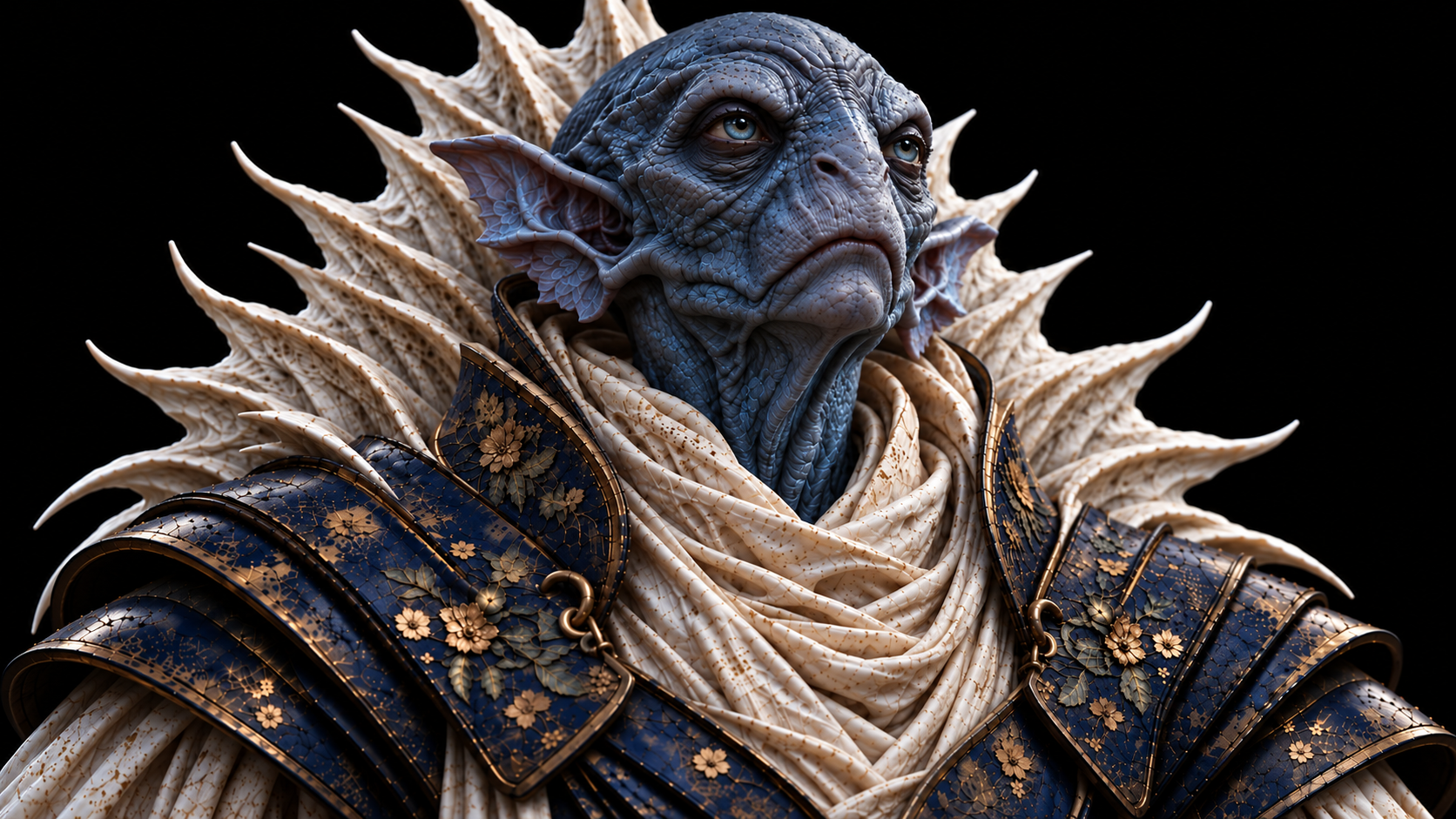
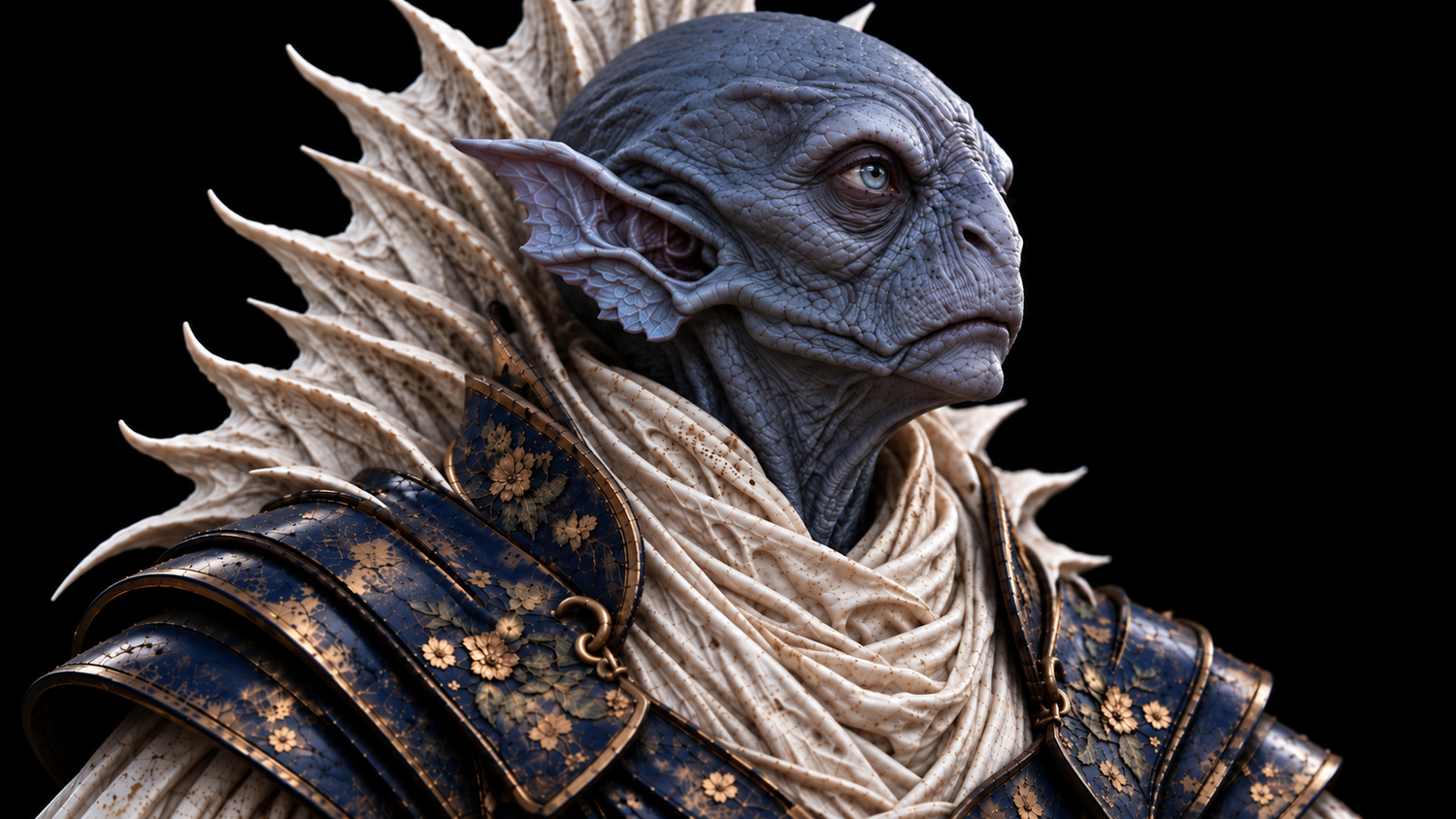
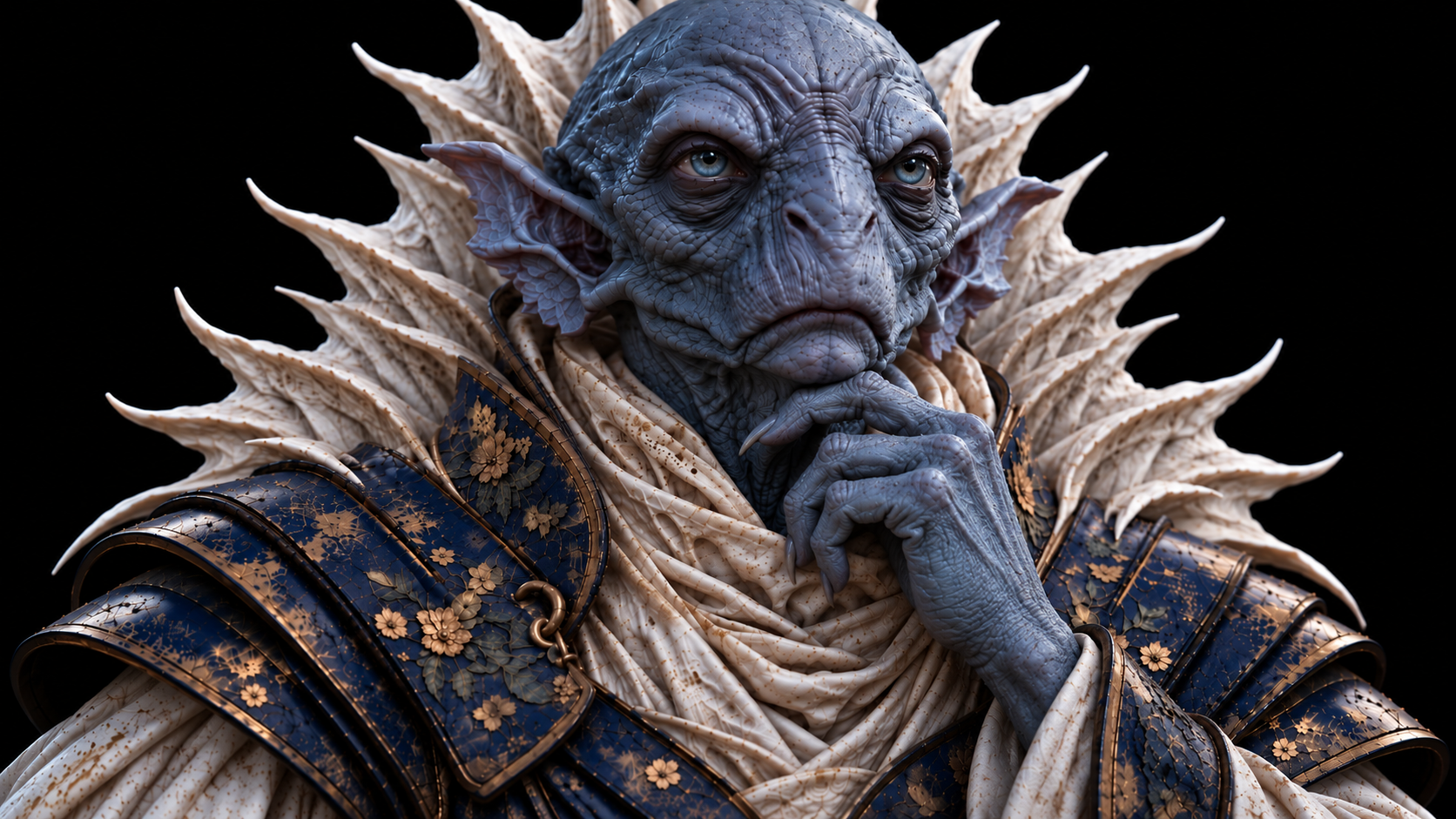
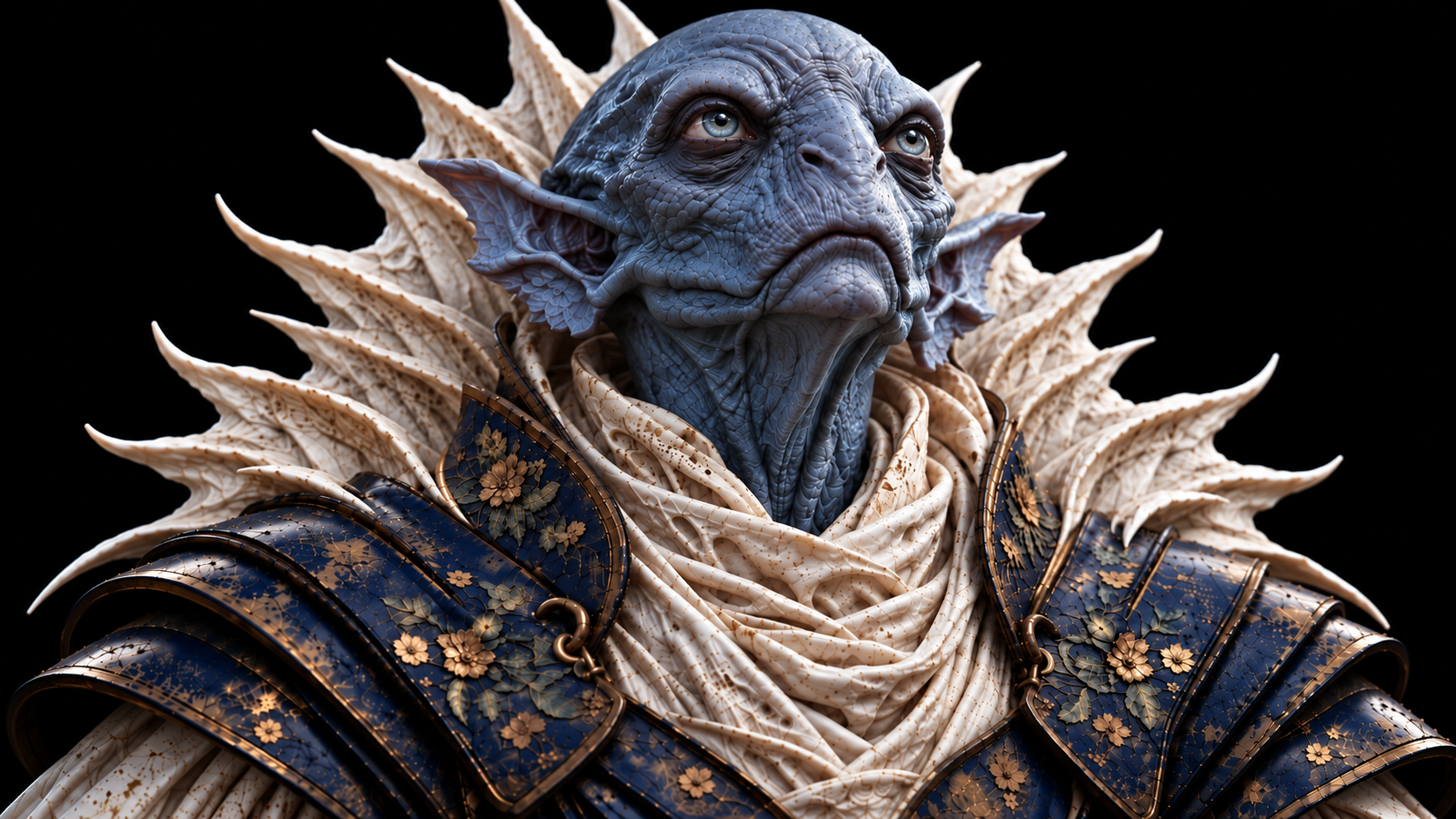
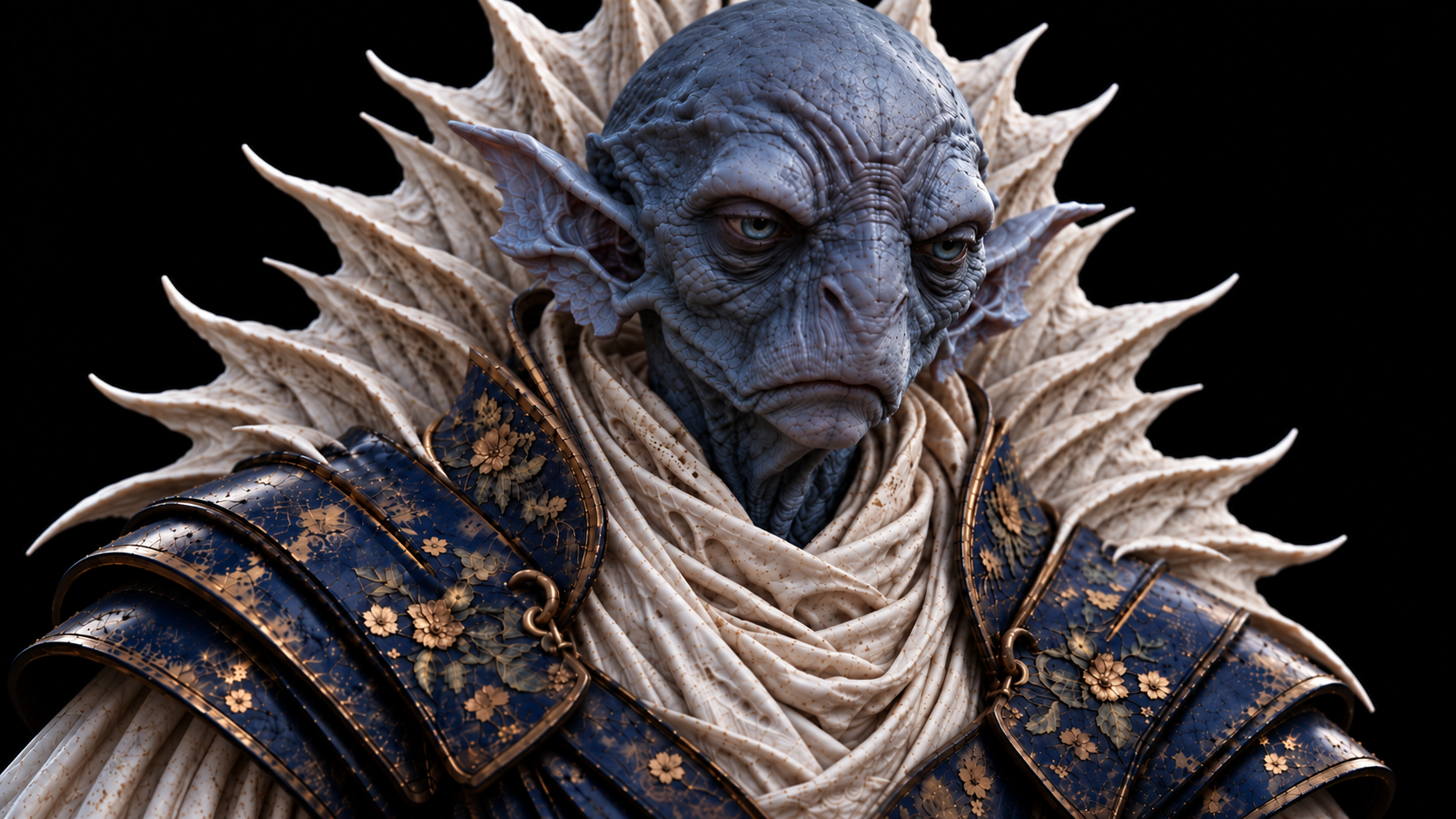
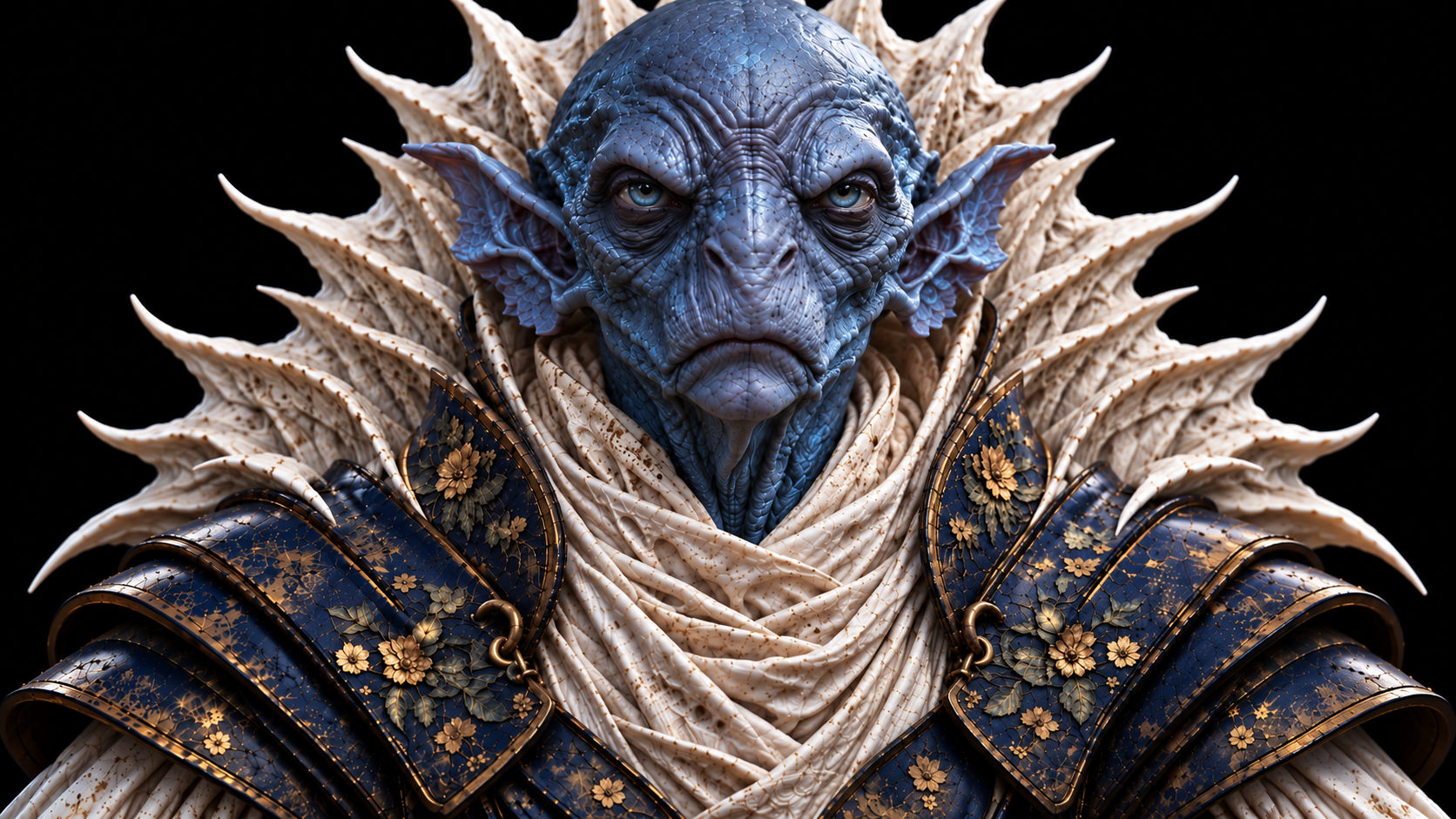
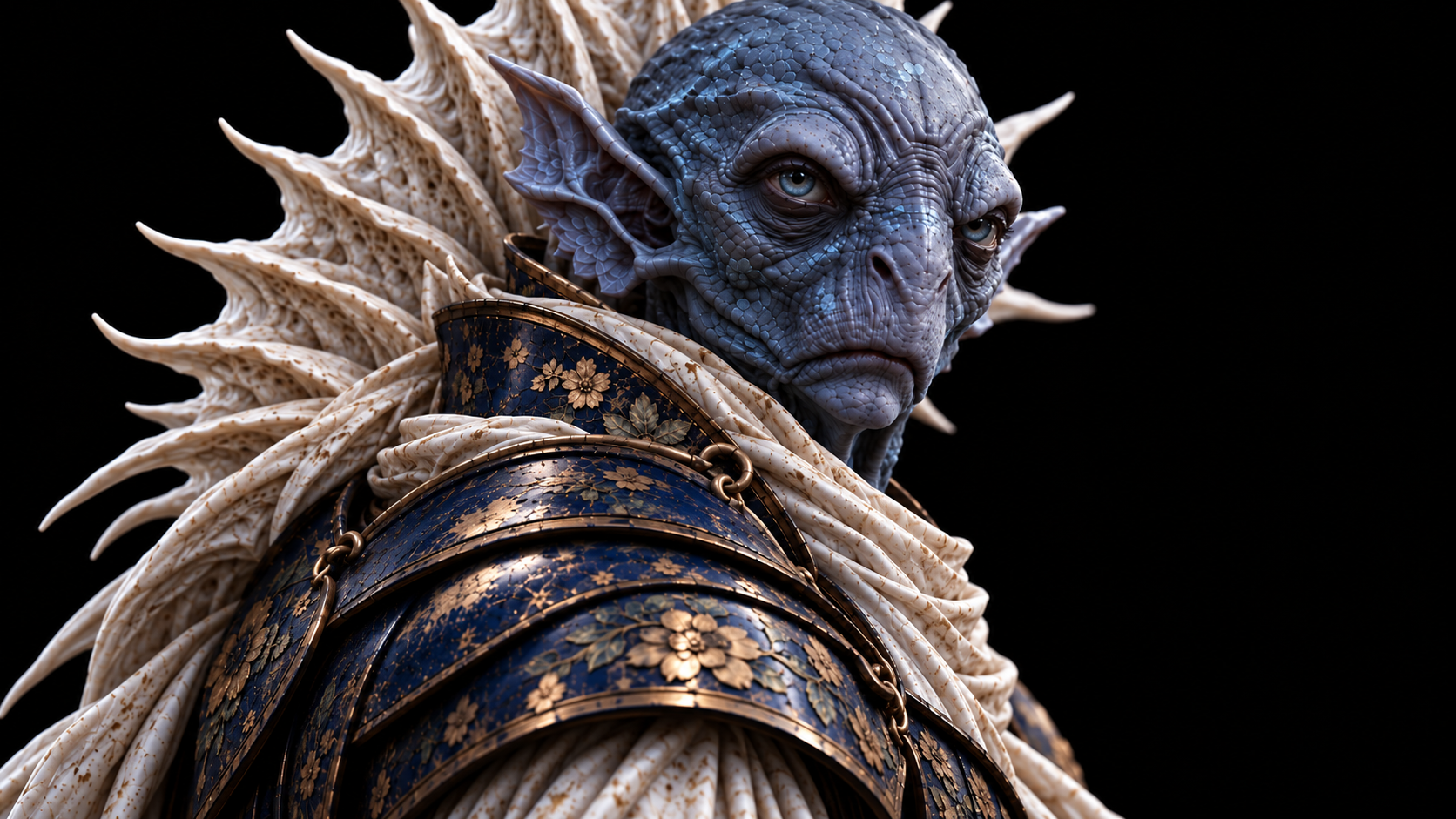
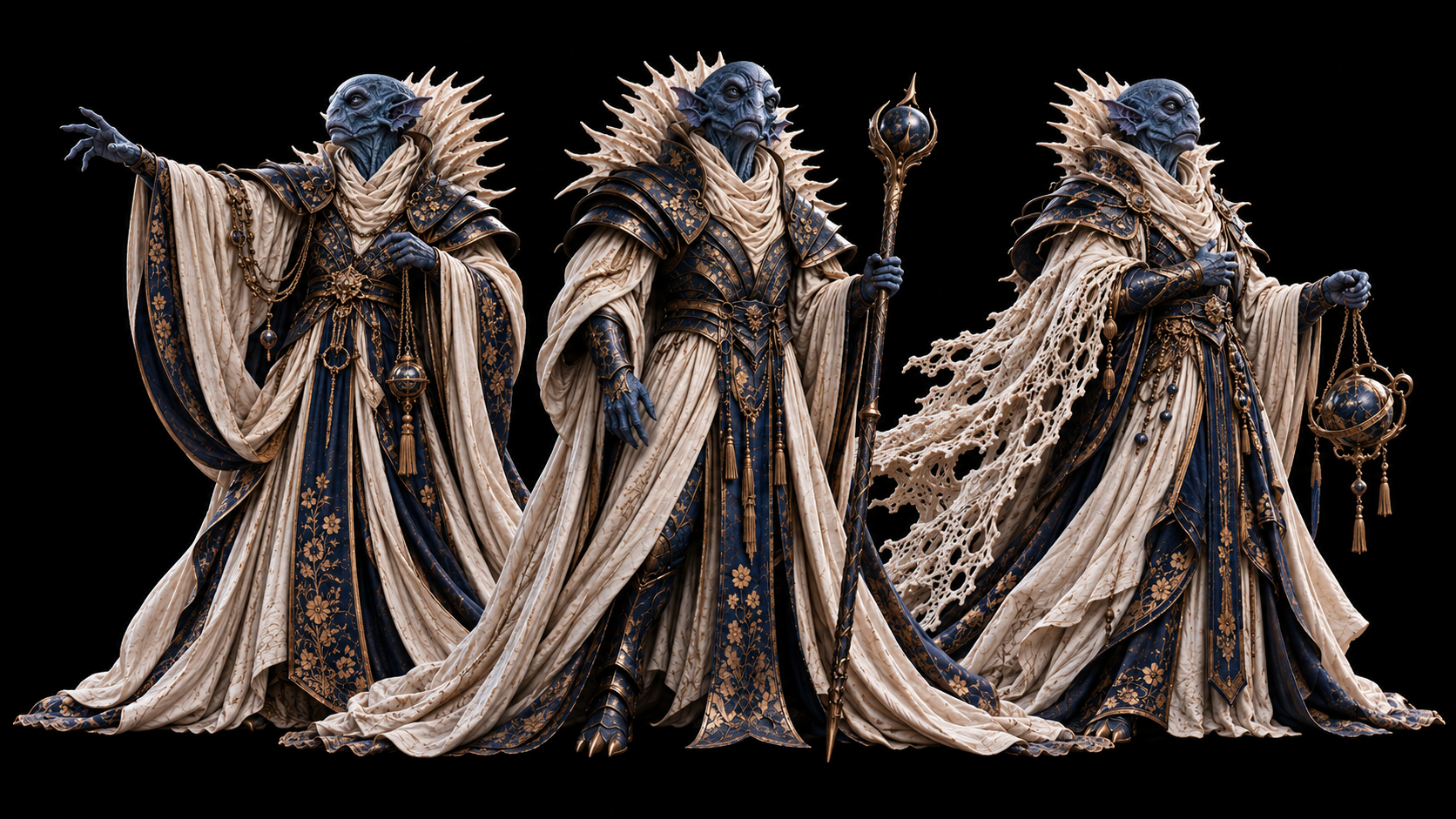
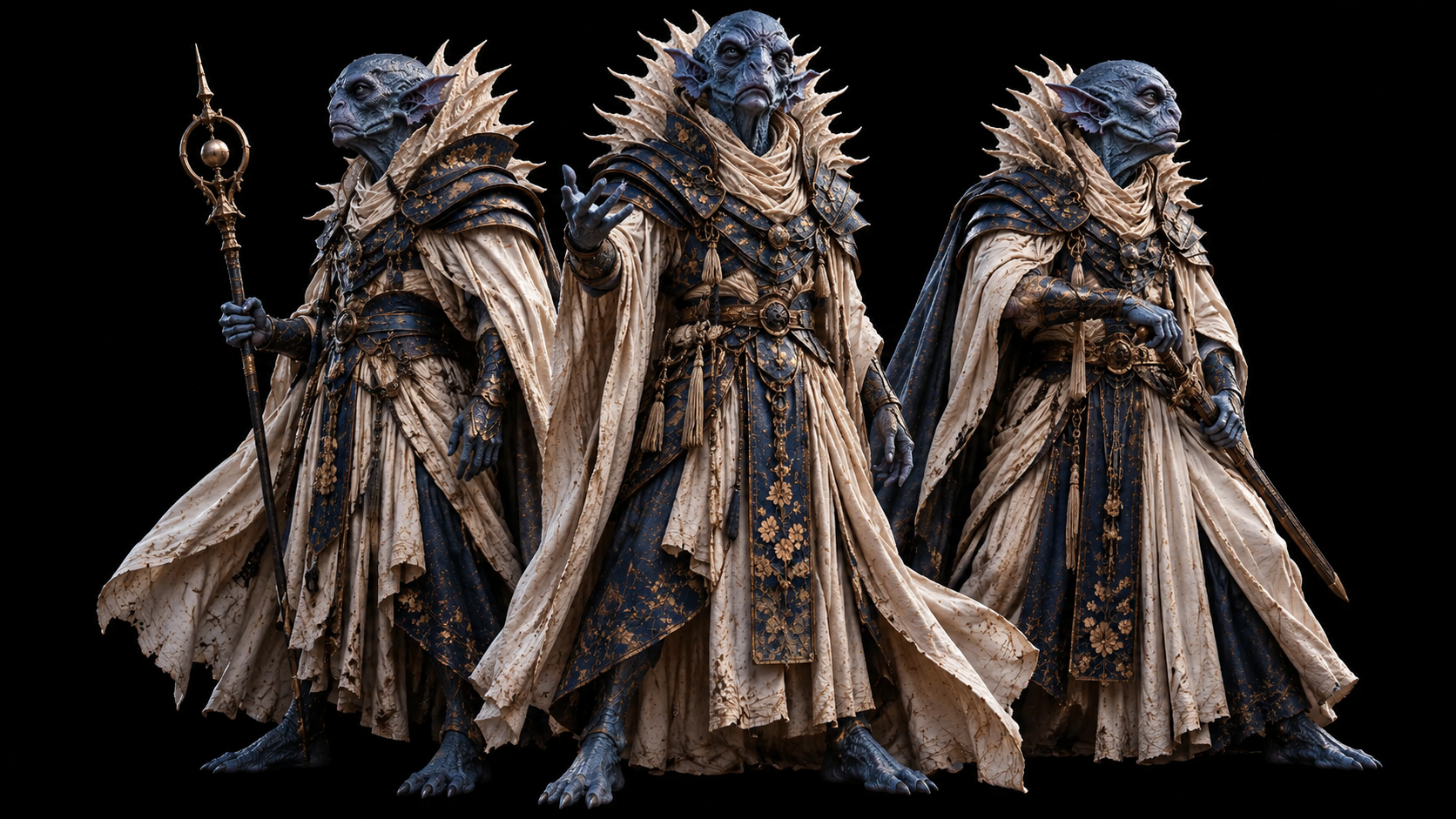
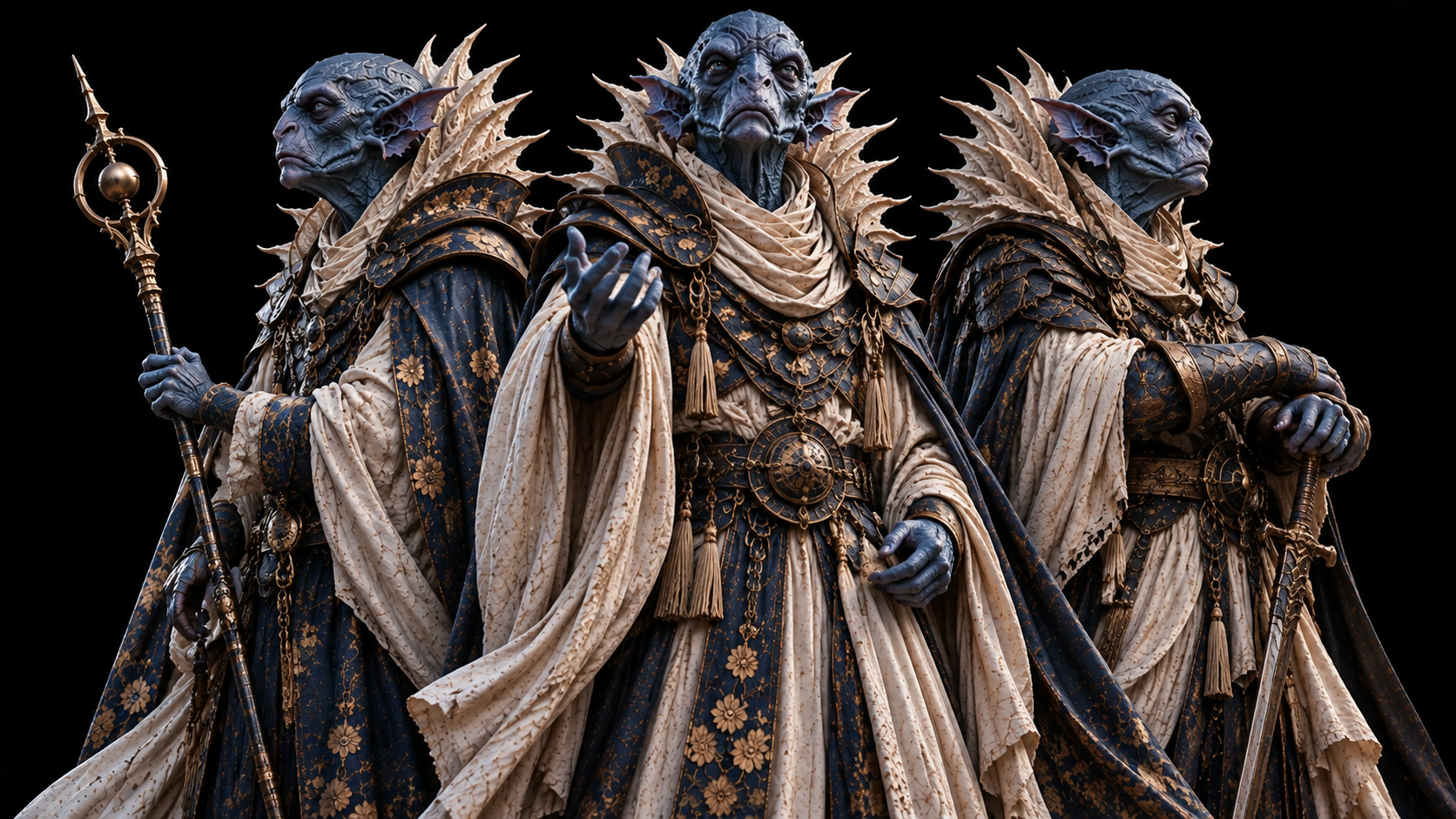
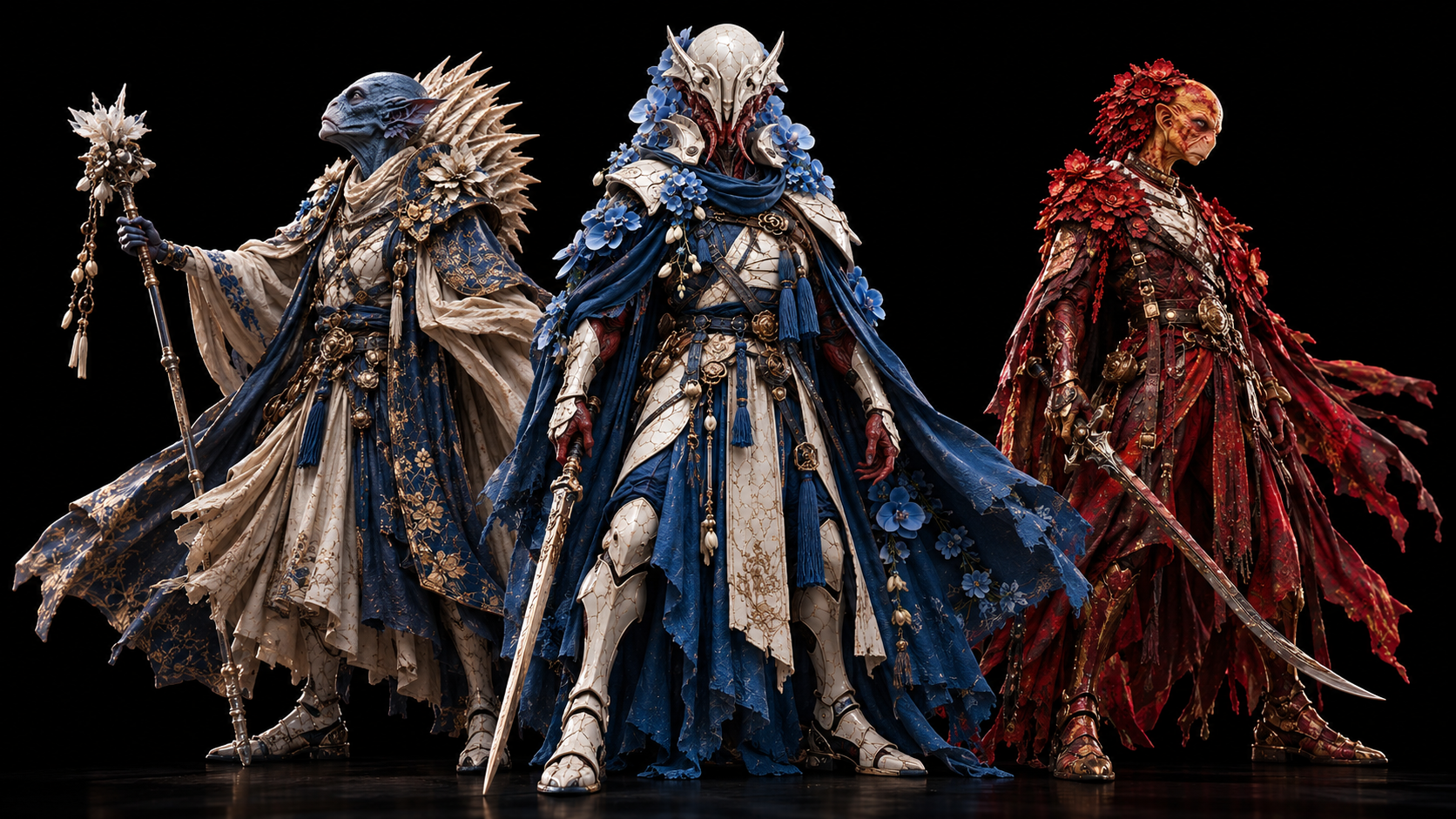
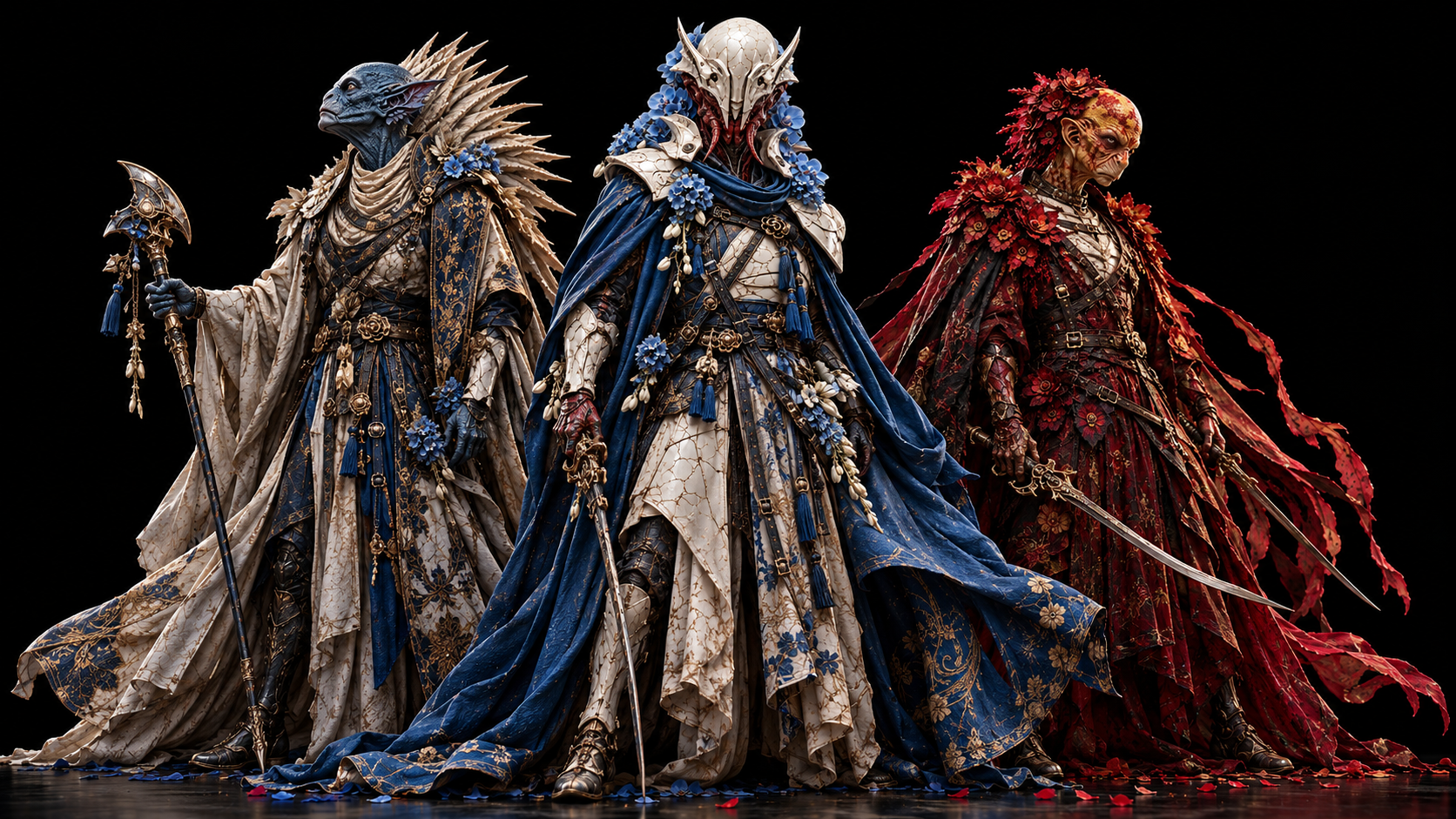
- A ruff of 213 kiln-spurs. Armour of broken tally tiles, mended in gold.
- Has asked for
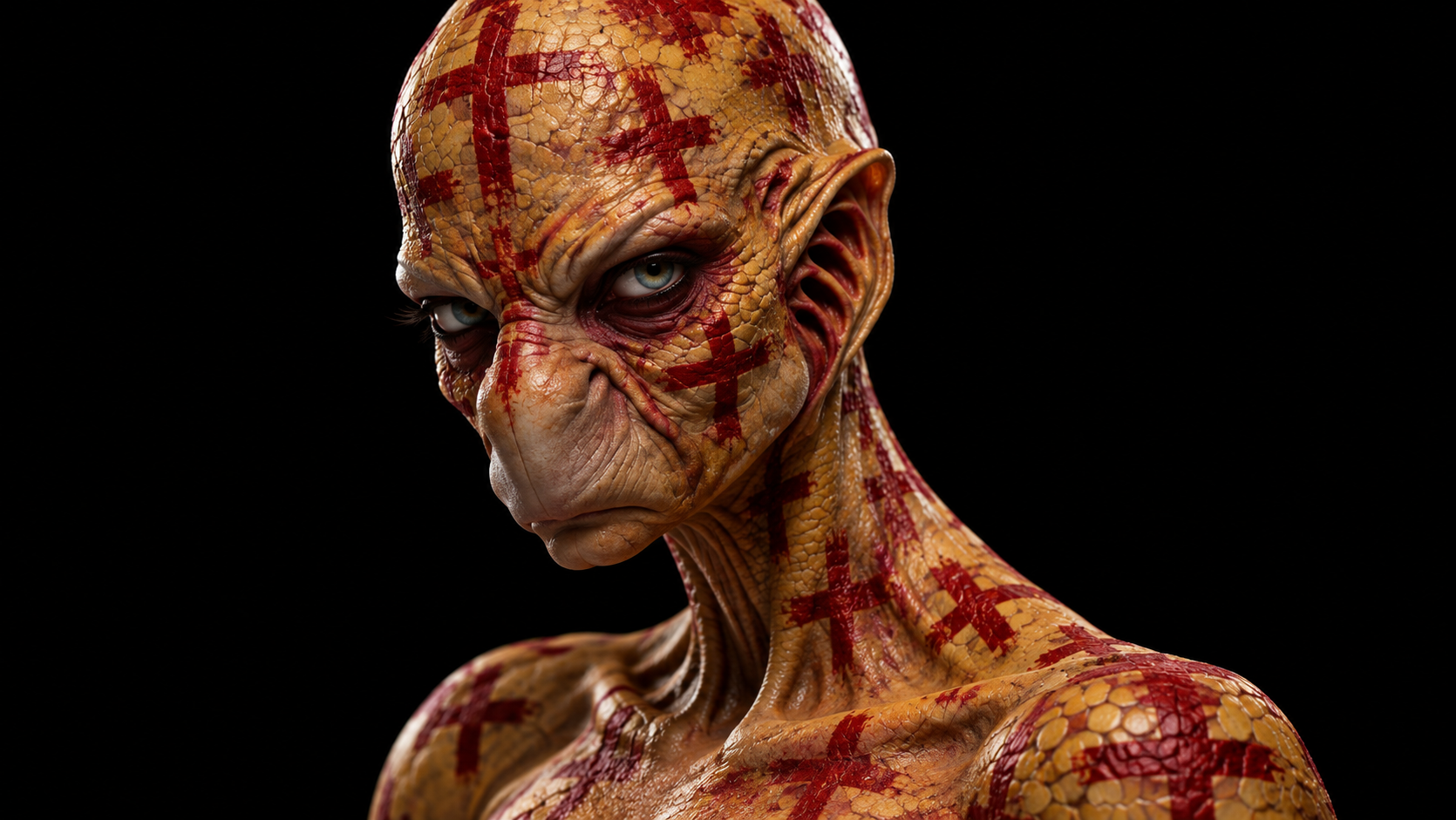
- To be judged, in red, on his own skin
- Seen in
- 3 Up: Qorran, Wessan & Vaelith. 3 Up: Qorran, Irunas & Vaelith. Chapter One: The Twelfth Day.
The Blue Hollow and the Unfired
The Ilvenne live in the white mountains north of the basin, in a city of nine towers called Sael-Qor. Every Ilvenne child is fired at sixteen. They are laid in white slip, painted with a Coil, a vow written in the future tense, and brought slowly to the heat of the great kilns. They come out porcelain: white, hard, unable to change. The Coil says what they will be. A life is judged by how closely it comes to match.
Not every child goes in. A few stand at the kiln-mouth in their slip and walk away. The Ilvenne call them ilv-hesk, ash-clay.
The Unfired
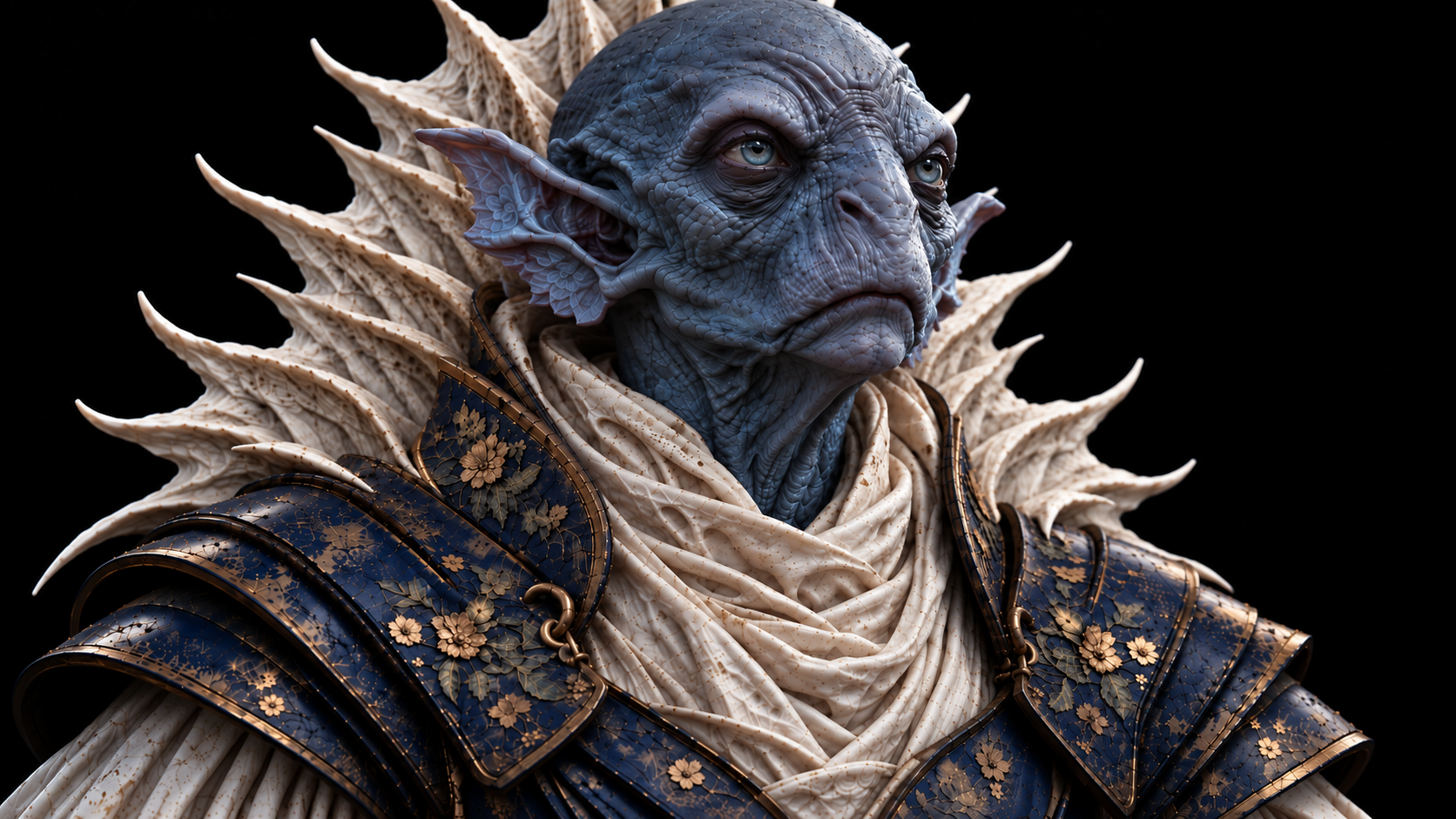
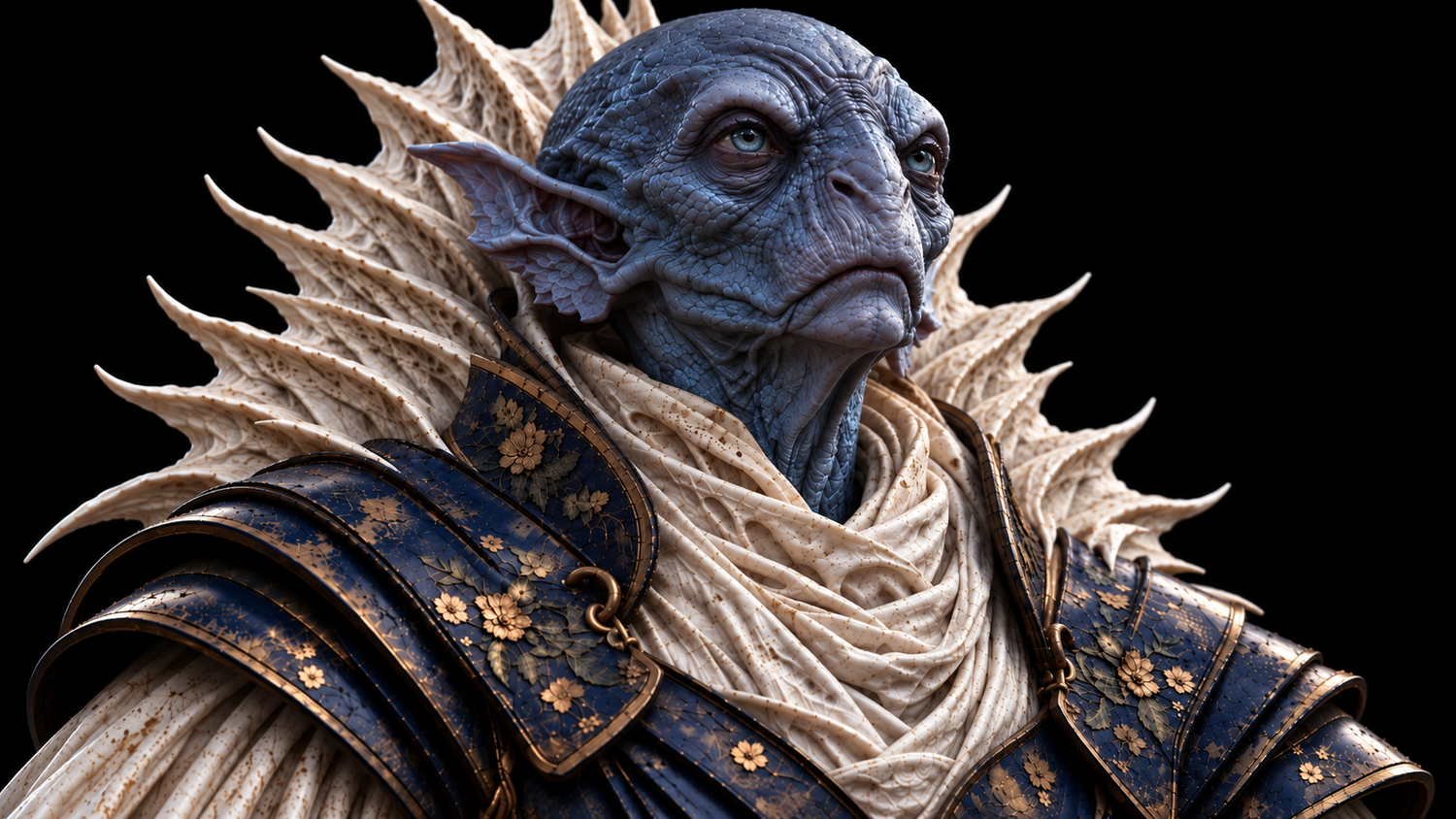
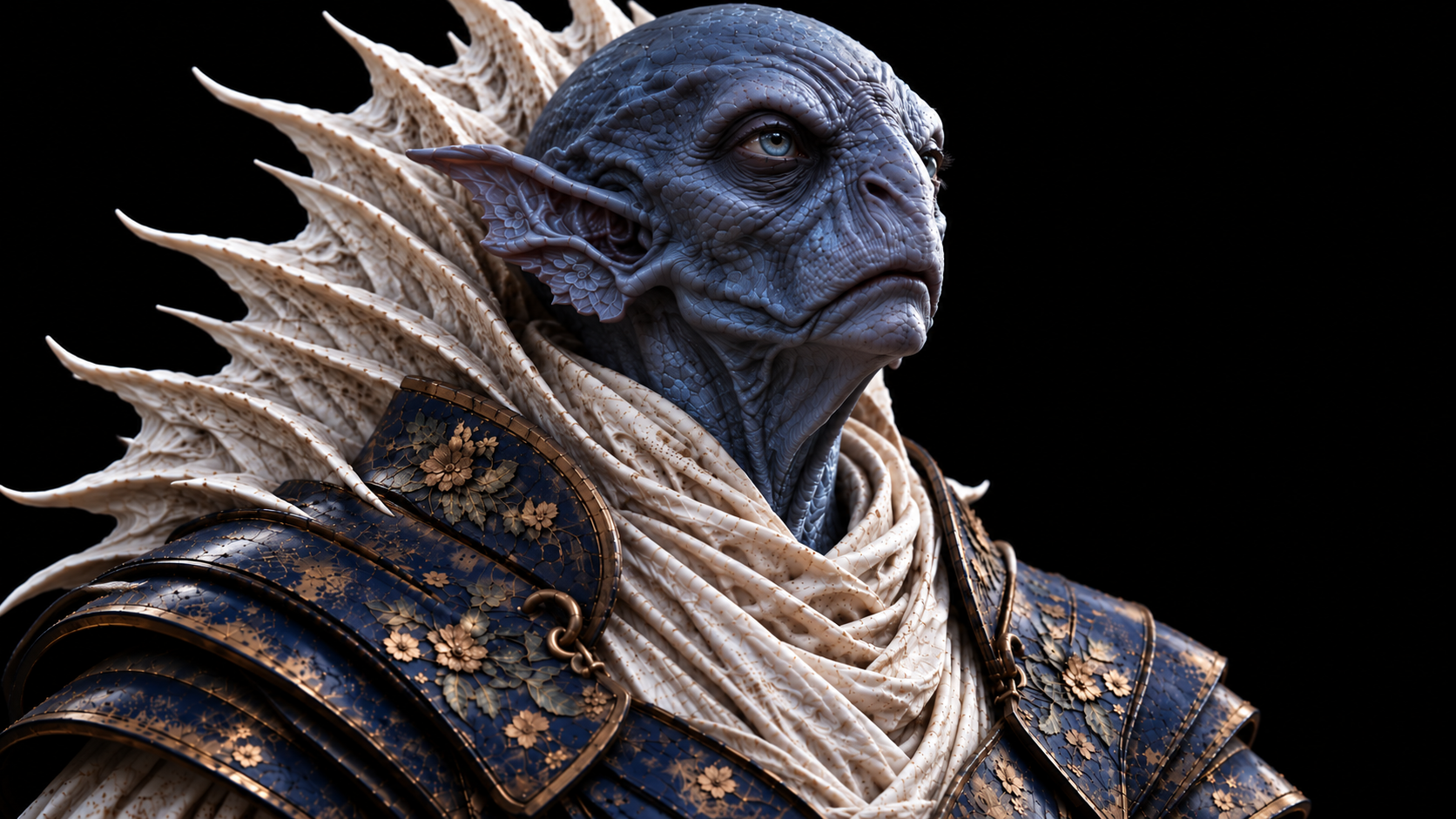
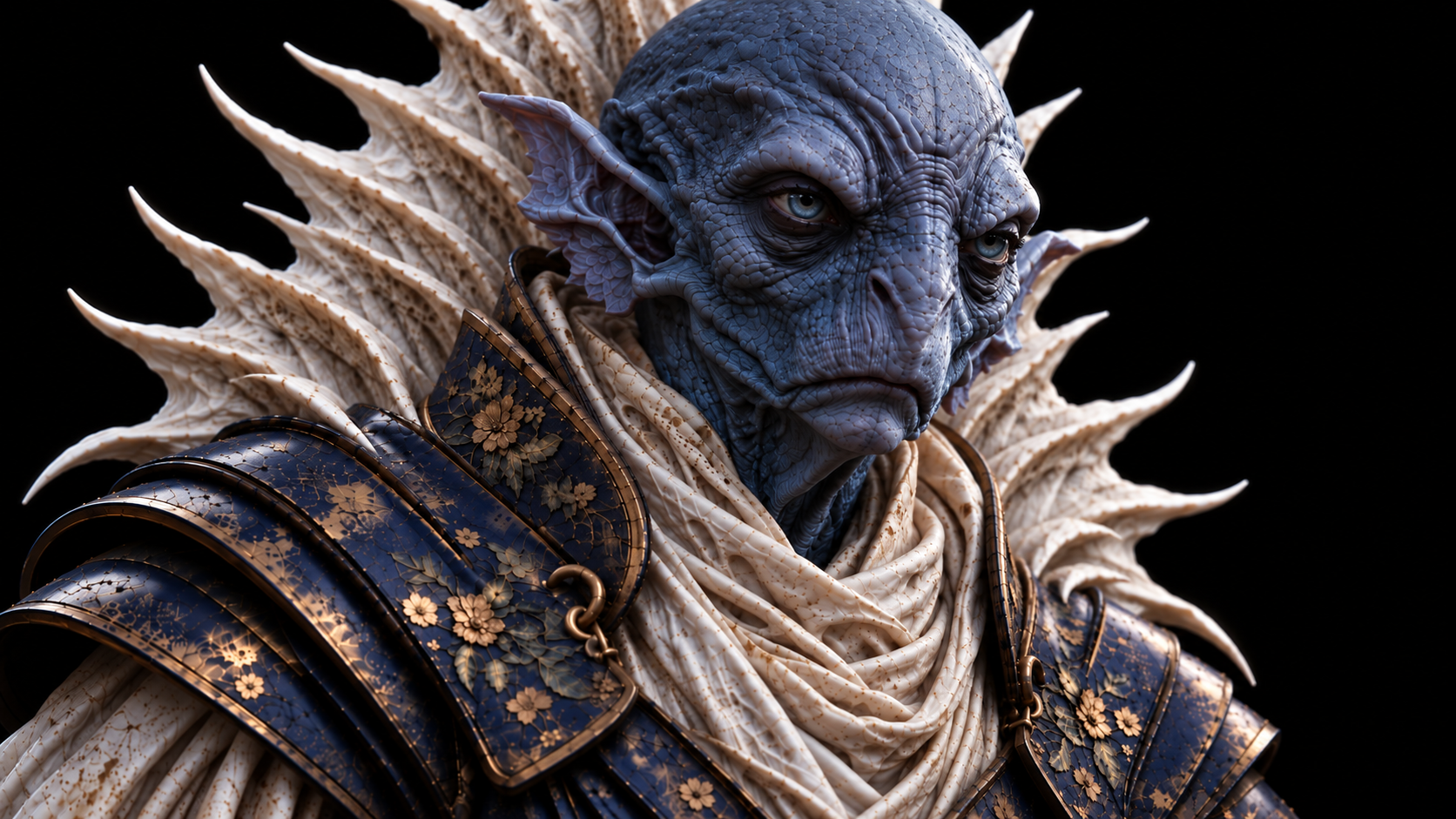
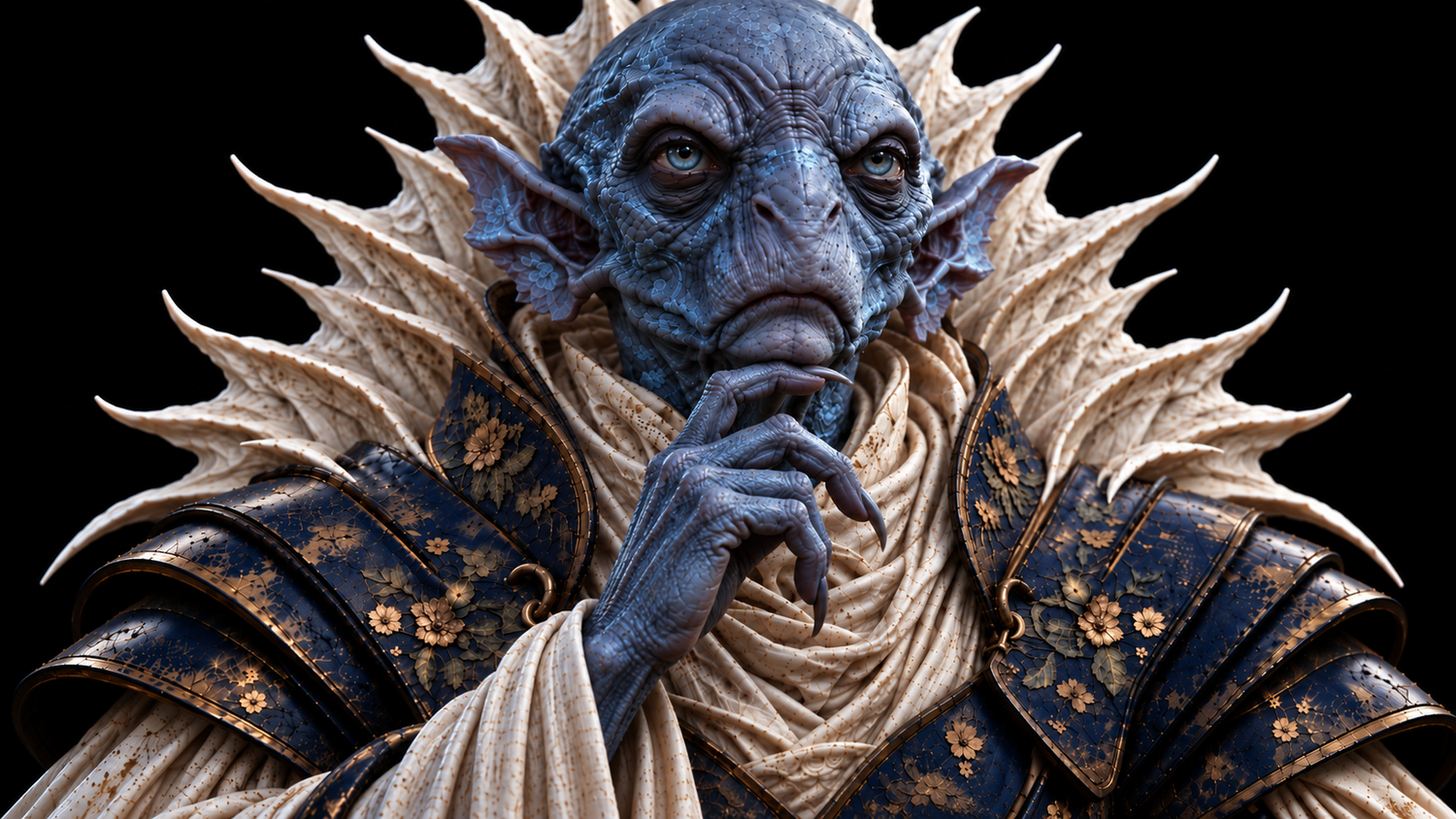
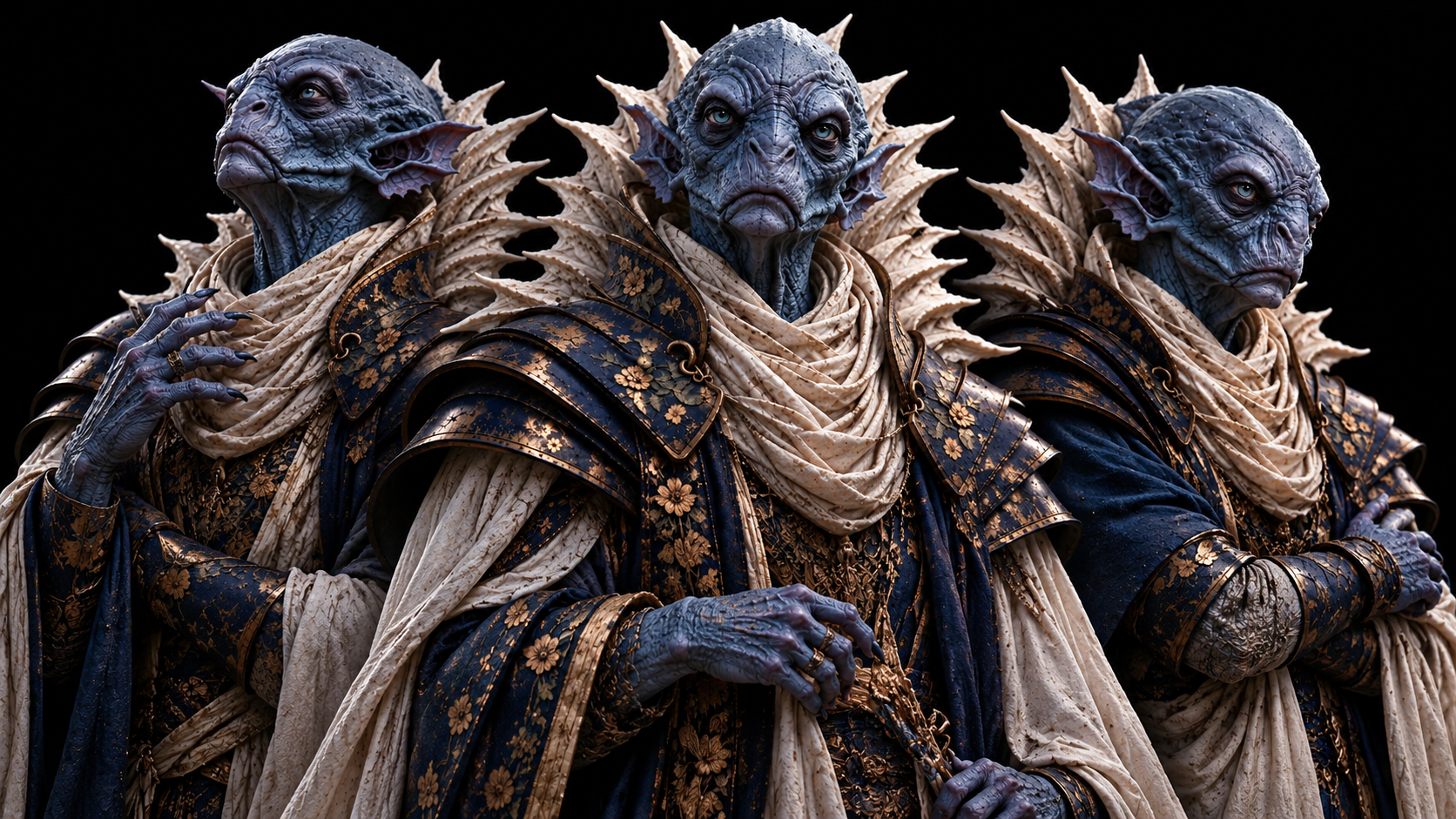
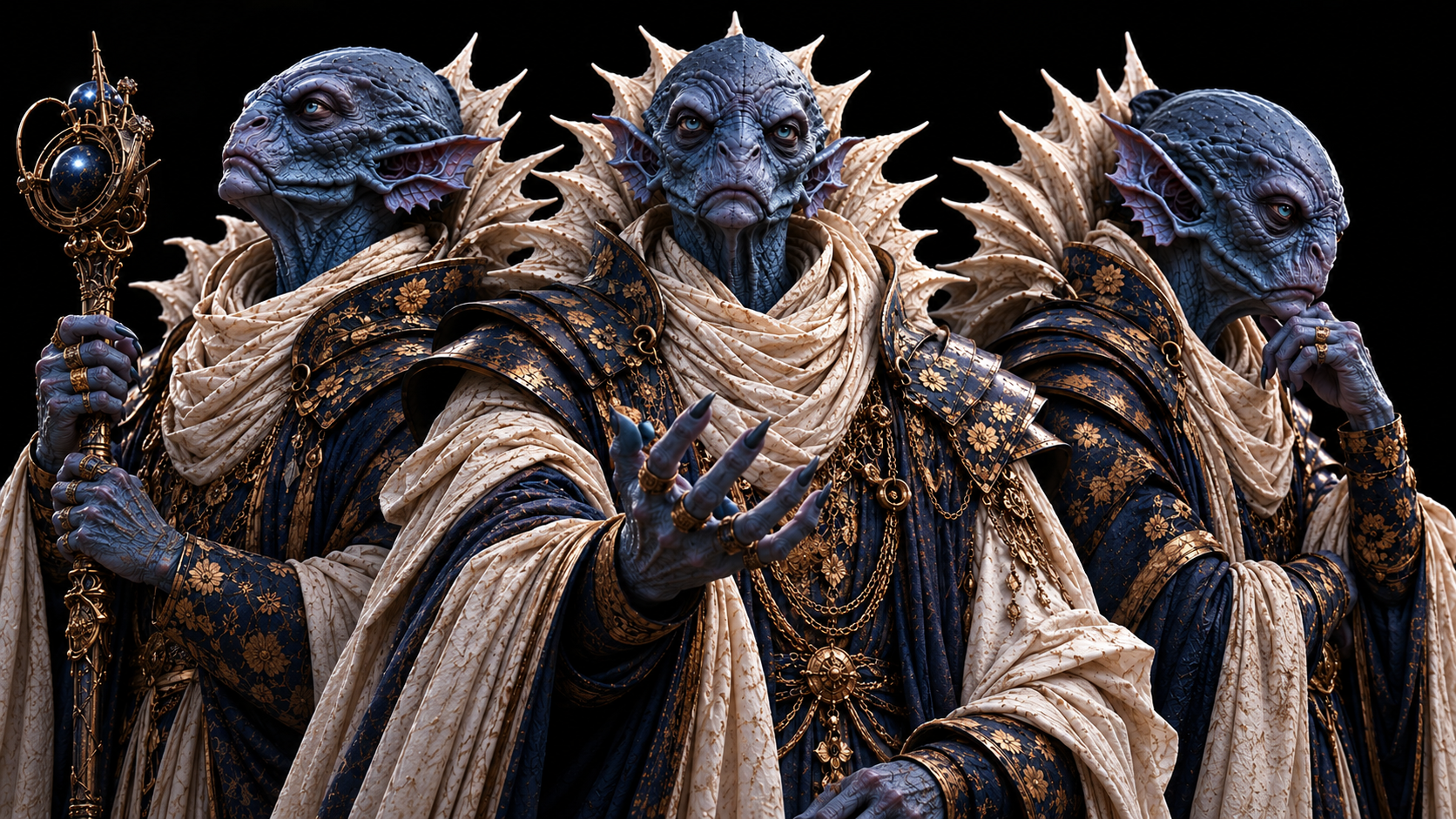
An unfired Ilvenne keeps the body they were born with. They are deep blue and scaled, with webbed fins at the ear that the kiln takes from everyone else. They are cold-blooded and slow in the mornings. They look more like the yellow people of the south than like their own fired kin. They can moult, though rarely. Their skin can hold paint.
They have no Coil. So they have no vow, and nothing to be judged against. To the towers this makes them unfinished. To themselves it makes them free.
The Hollow
For most of history the refusers were sent to the Azure Seam, the great cobalt mine of the Ilvaran, to dig the blue that every Coil is painted with. They lived in a cold valley below the mine called the Blue Hollow. It was a camp, not a home. Nobody counted it as a people. Refusers could not petition the towers. Their children were still taken up to the kilns at sixteen, in case they chose differently.
After 1951 the Seam was mined far faster. The cobalt paid the Weneth to carry Bone-salt north for the glazing. The waste rock was dumped in the Hollow, until the valley floor was blue rubble. That rubble is where Qorran was born, and where his parents died.
The Seam
Qorran was born in 2010 F.K. in the Blue Hollow. His parents were refusers who worked the Seam. Their names were Teshvel and Ilmas. They cut cobalt every day of his childhood. The cobalt went west to pay for salt carts.
In 2019, when he was nine, a gallery of the Seam came down under the pace of the digging. Both his parents were inside it.
The Old Man's Hands
The oldest refuser in the Hollow was a blind man named Sael-Ennu. He had refused the kiln in 1896. He was a hundred and thirty-nine years old.
He dug Qorran's parents out of the fall with his hands. It took him two days. He would not let the young miners help, because the gallery was still moving. When he had them, he carried them down to the Hollow one at a time. Then he buried them in the spoil and planted over them.
Qorran watched all of it. He has said that the old man never once asked whose fault it was. He did not ask who had set the pace of the digging, or who owed whom. He only dug, and carried, and planted.
The Garden
Sael-Ennu took the boy in. Qorran grew up in the Spoil Garden, the only garden in the north. The old man had been planting it on the cobalt waste since the Compact began. The flowers there are called tal-flowers. They grow huge and deep blue in the spoil and nowhere else. Each bed records a year of the mining. A single flower apart from the beds records a refuser who died in the Seam.
There are two single flowers near the gate. They are his parents. He carried spoil for the beds every day of his childhood. He knew what the spoil was. He carried it anyway.
The Kiln-Mouth
In 2026, at sixteen, Qorran was taken up to Sael-Qor for the Firing. Children of refusers still are. The towers like to give them the chance to choose differently from their parents.
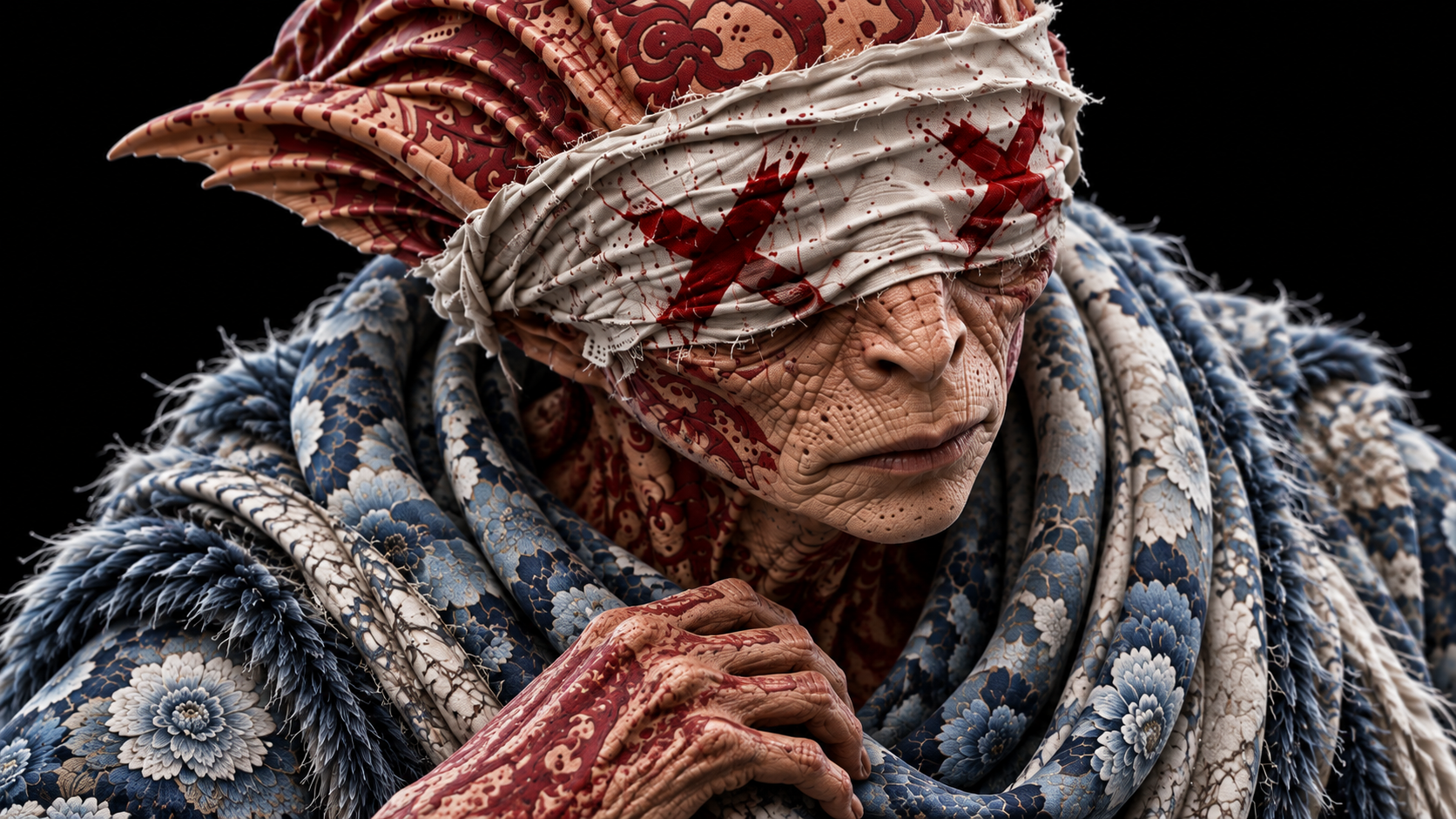
He was taken to the ninth tower, the newest and smallest of the nine. It was the tower that glazed with salt. He was wound in slip-cloth, the pale wrapping children wear before they go into the kiln. He was walked into the firing-chamber.
The salt-kilns were hot. He could smell the brine in the fire. There were tiles stacked against the walls, glazed brighter than anything in the Hollow. In the corner, waiting to be carried out, were the shards of a Coil that had cracked in the firing. A child had not survived it. The masters were too busy to have moved them yet.
He looked at the kiln for a while. Then he turned round and walked out, still in the slip-cloth.
He has said it was not courage. "I had seen what the salt was for." He meant the cobalt galleries, and the flowers by the gate, and what the glaze in that room had cost before it reached the wall.
The towers offered him a refuser's name, as the Seam does. Refusers are usually renamed for what they are left with. He kept the one he had. He also kept the slip-cloth. He wears it at his throat to this day.
The Waiting
For fifteen years Qorran was a miner. Then he was a foreman. Then he was the one the young of the Hollow listened to.
He was not, in those years, a man of war. He was a man of petitions. Four times he walked up to Sael-Qor and asked the elders of the towers to slow the mining. Four times he was not answered. A refuser has no standing to petition. The elders did not refuse him. They simply did not hear.
The galleries kept coming down. Nine more refusers died in the Seam between 2026 and 2041. Sael-Ennu planted nine more flowers by the gate.
The Cousin
In 2042 a fired woman came to the Hollow from the west, not from the towers. It was Qaresse, the Ninth Reader, home from the south at last. She was Sael-Ennu's niece. So, by fostering, she was Qorran's cousin.
She had been a scribe of the ninth tower, and she had kept its salt-tallies. She sat with her uncle in the garden and told him what she had copied in the south. It was a set of marks behind the ear of a southern carrier, in a script no one could read. Qorran listened from the gate.
The Reading
In 2043 word came from Wennar, in the west. A Weneth reader named Amarwen had read the marks. They were a law, written fourteen centuries ago by the founder of the Ilvenne herself, and fired into the foundations of Sael-Qor. Do not cut the floor. Do not feed the floor to the fire. If it is cut, the yellow will fall from their skins. If it is burned, the white will fall after.
The yellow had already fallen. The whole south had shed in 1961. The white had not yet begun to fall.
Qorran read it as an order. He has never pretended otherwise. Within a year the Hollow had marched.
The Breaking
On the night of the spring equinox, 2044, three hundred refusers walked from the Blue Hollow to Sael-Qor. They carried no weapons. They carried water.
The plan
Qorran knew the ninth tower from his Firing day. Its salt-kilns were fired hottest at the equinox, when the tower glazed its year's tiles. Every potter in the north knows that a kiln at full heat cannot bear sudden cold.
The water they carried was brine, from the pools at the bottom of the Seam. It is the same brine that lies under the Bone. Qorran chose it on purpose. He said the floor could answer for itself.
The Night
They reached the foot of the ninth tower at dusk. It was the place where Sael-Ennu used to leave his flowers every spring. In the first watch, the gate-keepers opened the lower doors. They were refusers themselves, hired as labour. In the second watch the column entered the firing-chamber. Qorran ordered the kiln-masters out. Most of them went.
At midnight they poured the brine into all four salt-kilns at once. The firing-chamber cracked from floor to crown. The lower third of the tower settled and split.
The Dead
At dawn they counted thirteen dead.
One was Vessan Qor-Tal, master of the ninth tower, the man who had first thrown salt into a kiln. He had refused to leave the chamber. Witnesses say he stood at the main kiln and told Qorran the salt had made the finest glaze in fourteen centuries. Qorran says he told him to go, twice. When the chamber cracked, Vessan was struck by falling kiln-furniture and cracked through. He died in his rooms a week later, with his wife Ishwen beside him.
Nine were kiln-workers who stayed at the fires. Three were from the Hollow, scalded by the steam. Their names are planted as single flowers in the Spoil Garden.
One more did not die. A kiln-worker named Tallas cracked almost to pieces in the collapse and somehow lived. There was too little of him left to mend in cobalt, as the Ilvenne mend. He was mended in gold, sent from the east by the Kharrin Reckoner. Qorran sees him at the Lid-Stone most days. They have never spoken.
What It Ended
The salt-glazing ended that night, and it has never come back. The cutting of the Bone stopped with it. Qorran had done in one night what the petitions, the reading and the Reckoner had not done in ninety-three years.
He has never called it a victory. The young of the Hollow do.
Qorran expected to be tried. He was not.
Three days after the Breaking, the elders of the eight standing towers met. They had two things in front of them. One was a tower half fallen. The other was the Weneth reading of the Law, the warning their own founder had fired into the base of their own first wall. They had stood on it for fourteen centuries without reading it.
They chose not to try him. Some say it was mercy. Others say a trial would have meant reading the Law aloud in Sael-Qor, in front of everyone, and admitting what the towers had been standing on. Qorran has said he would rather have been tried.
The Charter
Instead, the elders signed the Hollow Charter before the summer. It has five articles. The Blue Hollow governs itself, under a council of its own elders. Refusers may petition the towers and must be answered. The Seam is mined at the Hollow's pace, not the towers'. Salt from the Bone will not be fired in any tower. The ninth tower is not rebuilt.
The Charter says nothing about the thirteen dead. It says nothing about the south. Both silences are now before the Reckoning.
The Last Caravan
A week after the Breaking, the last Weneth salt caravan came down the Salt Road. Orrin had ended the carrying a year before, but this caravan had already been on the road. It was led by Neshwen, the caravan-mistress.
Qorran met it at the Salt Fold with forty of the Hollow. He did not touch a single driver. He turned the beasts round and sent everyone home. He gave Neshwen a kiln-spur from the broken chamber floor to carry back to Wennar. It still hangs in the hall there.
The Flaked
In the 2060s the glaze began to lift from everyone who had been fired with salt. The Coil came away with it. The Ilvenne call it the Flaking. The Law had said it would happen: the white will fall after.
A fired Ilvenne who loses their Coil has no vow left, and no way to be judged. Many of them could not bear Sael-Qor after that. They came to the Blue Hollow, where nobody has vows. The refusers took them in.
Many of the flaked are the families of ninth-tower workers. They were sheltered by the people who broke the tower.
The Quarrel Of The Young
Some of the young of the Hollow, Qorran's own followers, want the flaked sent back. They call the Flaking the second answer, the Breaking being the first. They say the Hollow is not obliged to shelter the people the floor has fallen on.
Qorran opposes them. He says no one who was sixteen when they were fired owes anything for the glaze. Twice a month he sleeps in the shelters with the flaked. His followers say he has gone soft in his seventies. Sael-Ennu says he has grown up.
What He Wears
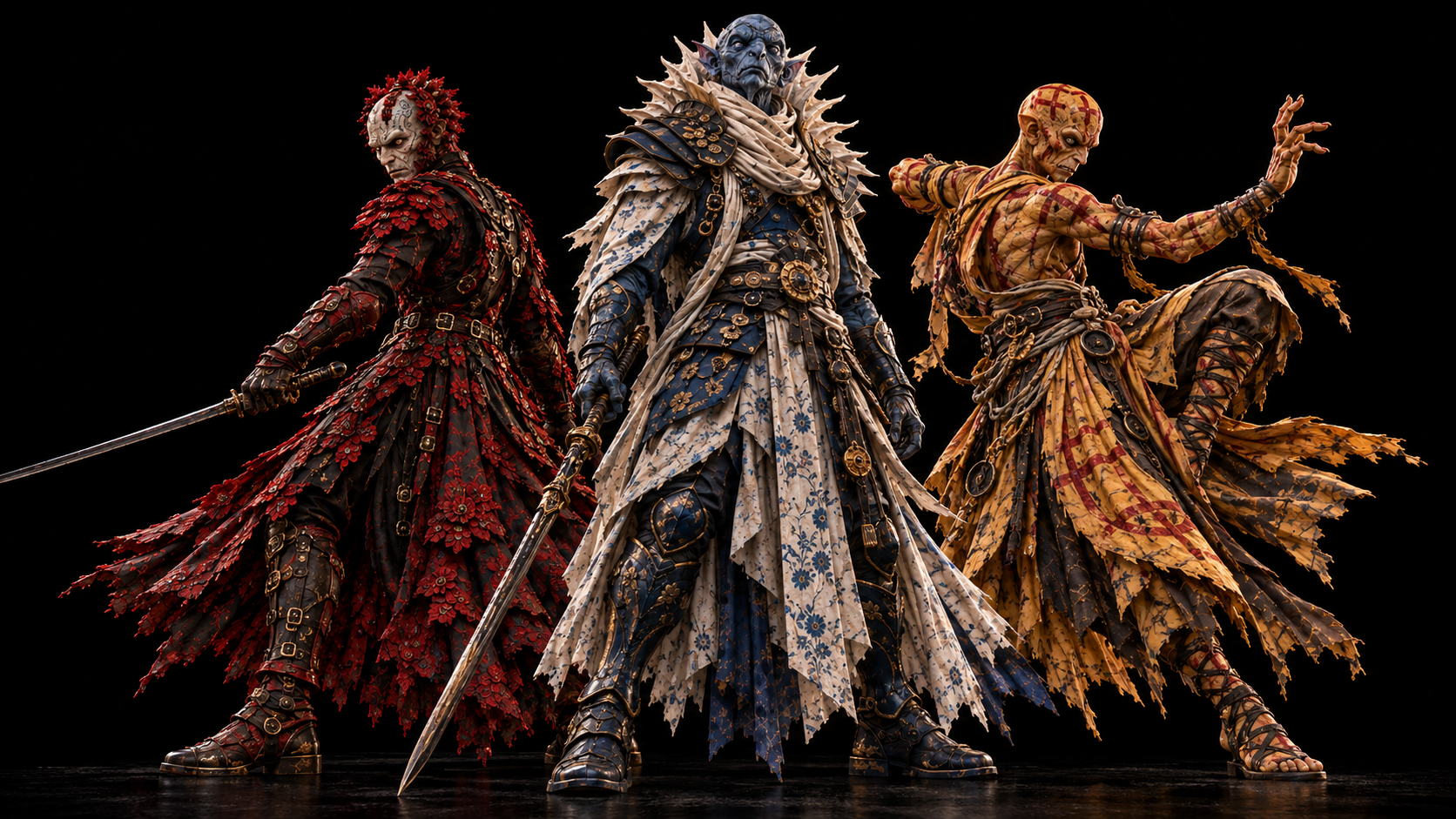
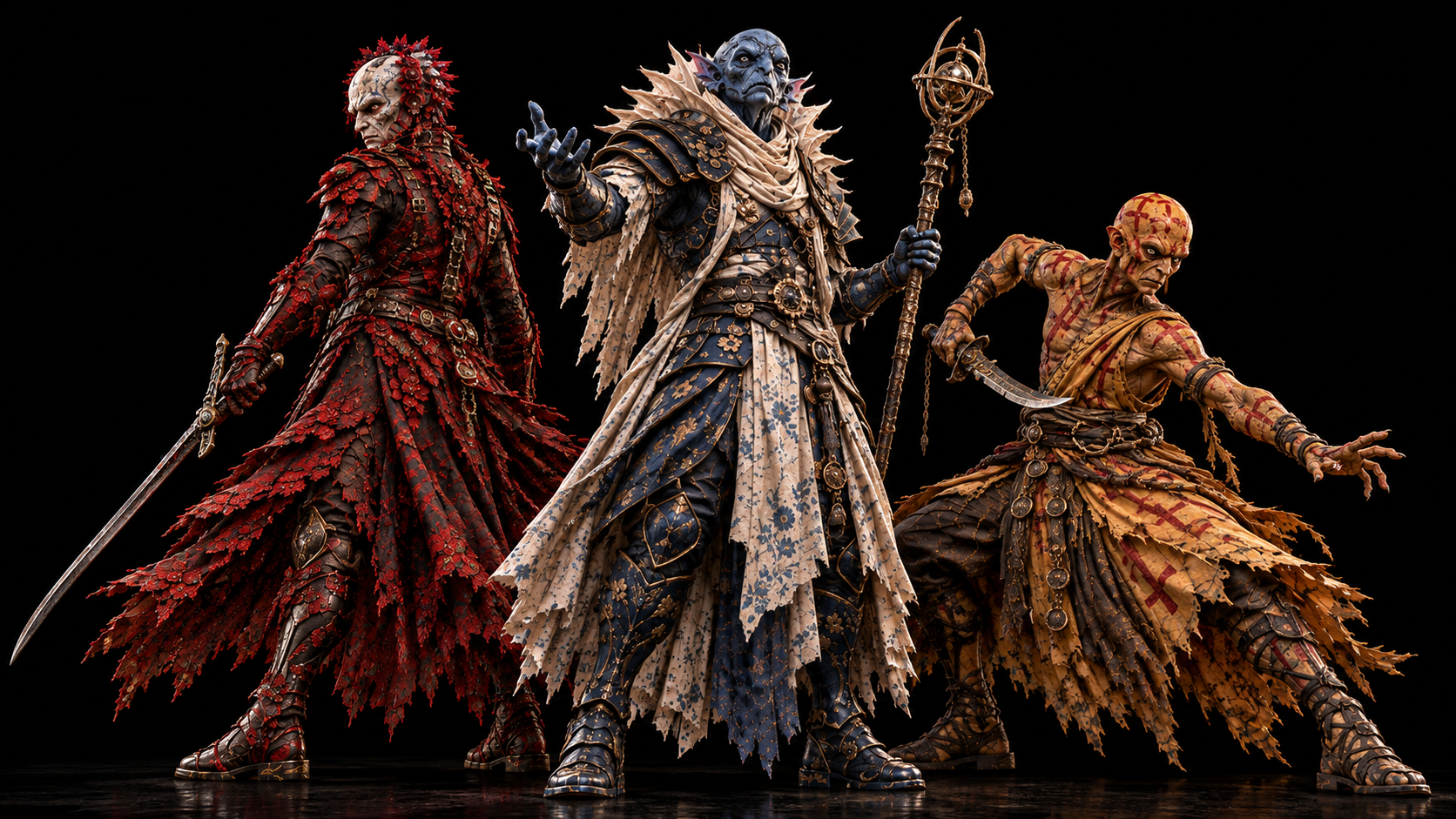
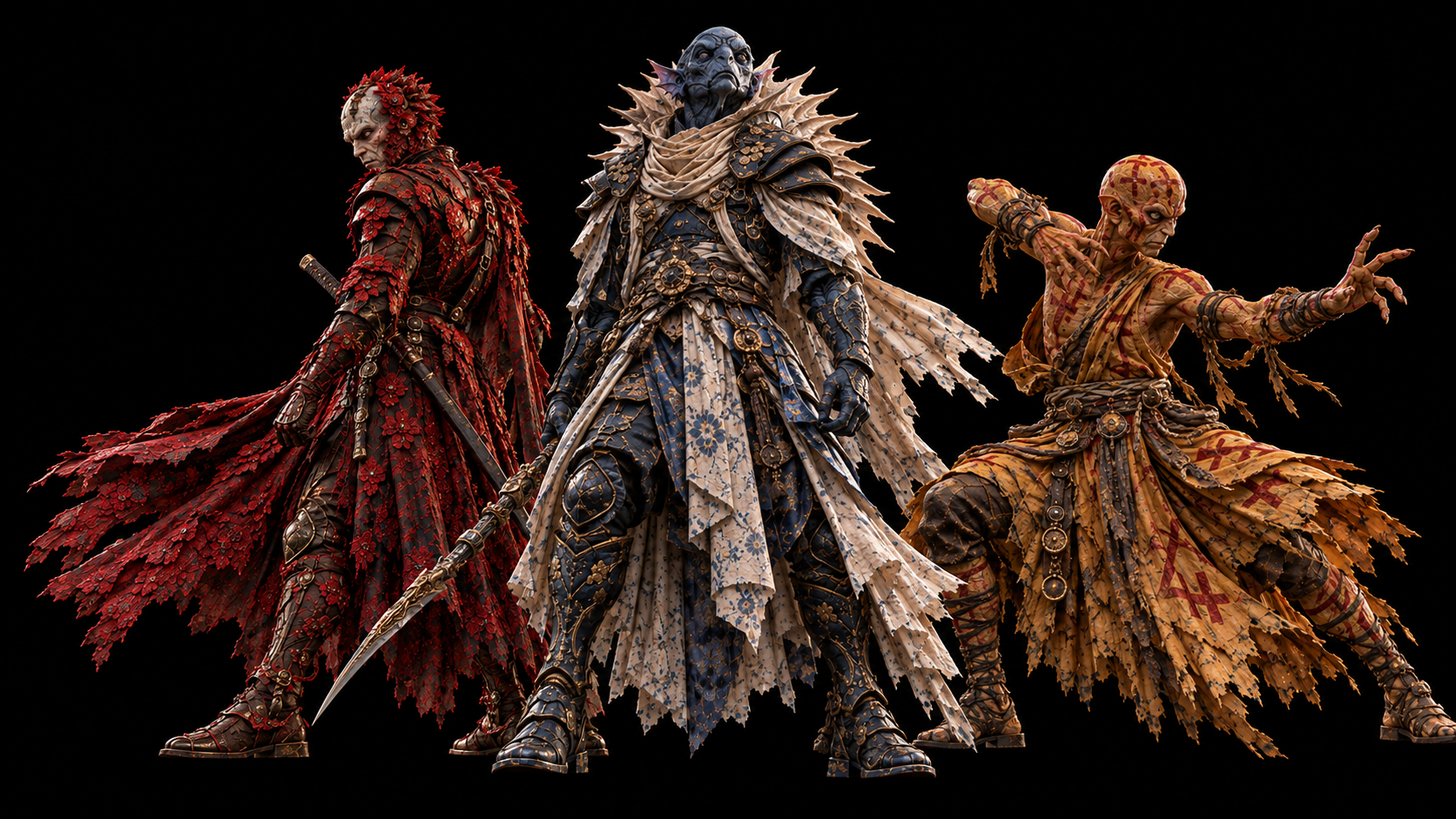
Everything Qorran wears was taken from the ninth tower on the night of the Breaking. He wears it the way a southern carrier wears the dead, as a record he cannot take off.
The ruff is made of kiln-spurs. These are the small pointed stands of fired clay that a body or a tile rests on in the kiln, so it does not fuse to the floor. Every fired Ilvenne has lain on spurs. The ninth tower's spurs were salt-glazed along with everything else in the kiln. They are flecked with rust where the iron in the Bone-salt bled through. There are 213 of them, gathered from the cracked chamber floor. The Hollow calls them qor-teeth. Qorran has never said how many people lay on each one.
The armour is tiles from the ninth tower's Tally-Wall, the fired record of the salt years. The wall split in the Breaking, and its cobalt tiles broke in their hundreds. The Hollow's armourers chose the tiles for 1952 to 1961, from the start of the cutting to the Shedding, and bound them in bronze. Over his heart sits the tally for the summer of 1961, in Qaresse's hand: The rim is quiet. Cutting continues.
The gold seams run through every crack in the tiles. The Ilvenne mend cracks in cobalt, a seam they call the second line. Qorran's tiles are mended in gold instead. No Ilvenne would put gold on a body. The gold came from Darra, the Kharrin Reckoner, in 2045. It arrived with a message: a debt mended in a different colour is still a debt.
The flowers painted in gold over the tiles are tal-flowers from the Spoil Garden. There are thirteen. Three are for the dead of the Hollow and ten are for the dead of the tower. Qorran asked for all thirteen to be painted alike.
The slip-cloth at his throat is the pale wrapping from the tower's firing store. It is the cloth he walked out of the kiln-mouth in, at sixteen. It is flecked with rust now, like the spurs.
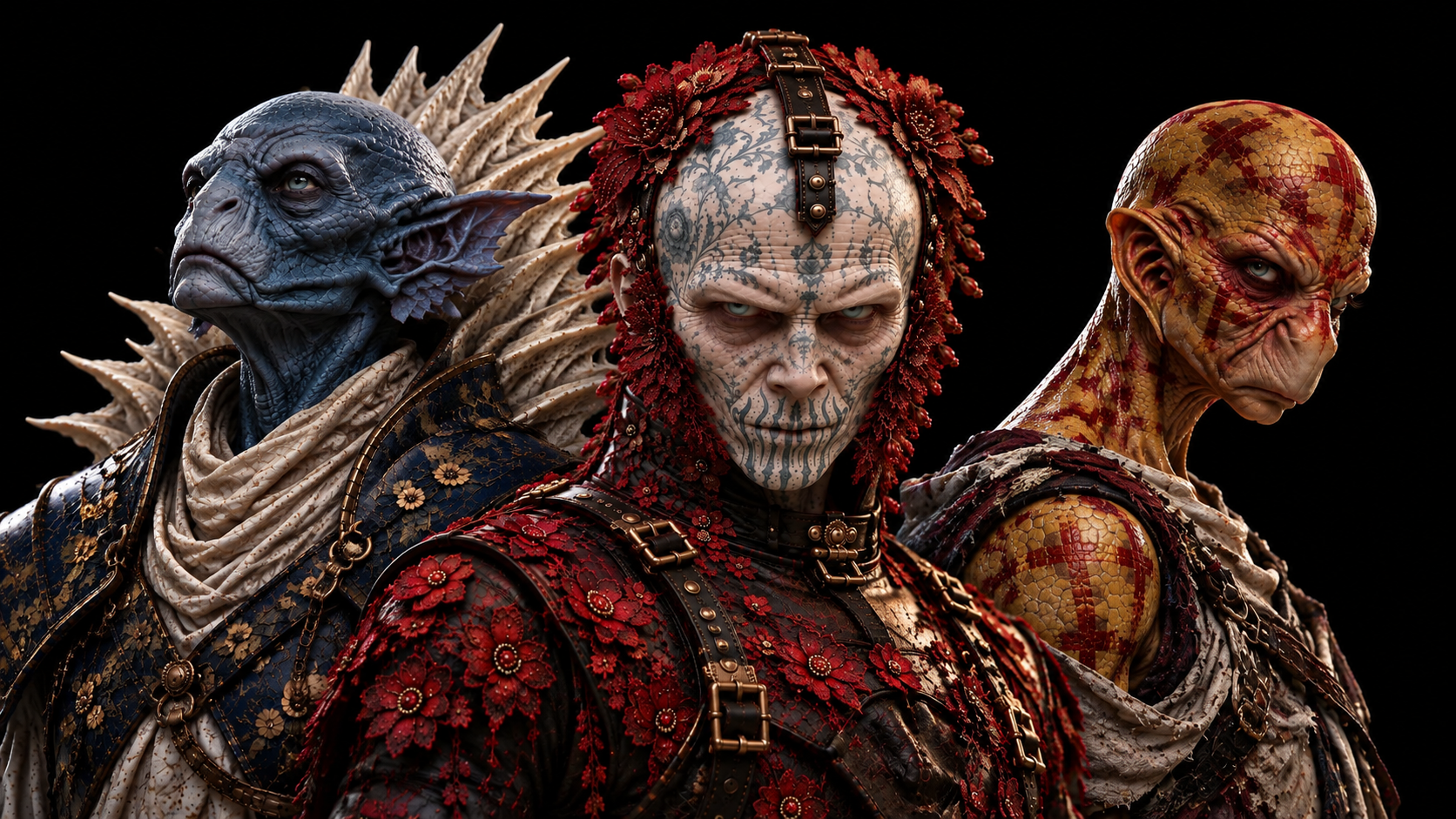
His body is unfired: blue-scaled, heavy-faced, with pale eyes. His ear-fins are torn at the edges from the Seam. He is seventy-seven, about halfway through a refuser's life. There is not a single mark on his skin.
Ishwen, And Her Son
Vessan's wife was a Weneth woman named Ishwen. She had been sent north at thirteen to seal the Salt Compact and fired with Bone-salt at sixteen. She lived ninety years in the ninth tower. She was in the upper rooms on the night of the Breaking and was not hurt. She sat beside her husband for the week it took him to die.
In 2079 her glaze was falling away, and she was carried home to Wennar on her red marriage couch.
2081
In 2081 Qorran walked to Wennar alone and unarmed. He asked at the door of the hall to be let in. The Weneth would not decide. They sent the question down the hall to Ishwen, on her couch.
She let him in.
He sat at the foot of the couch for a day. Neither of them spoke much. When he left, he put a kiln-spur on the floor beside her. He had taken it from the main kiln of the ninth tower. It was the spur she had lain on when she was fired, at sixteen, in 1954.
She has asked the Reckoning not to judge him on her account.
The Offer
On the twelfth day of the Reckoning, word came that Ishwen's glaze had come off her throat. She had asked to be brought to the Lid-Stone. The Weneth bearers would not carry her until her brother Orrin decided how the Compact should end.
That evening Qorran walked to the Weneth camp without his ruff. He offered to carry her himself, with eight bearers from the Hollow. They carry the flaked every week.
Wessan
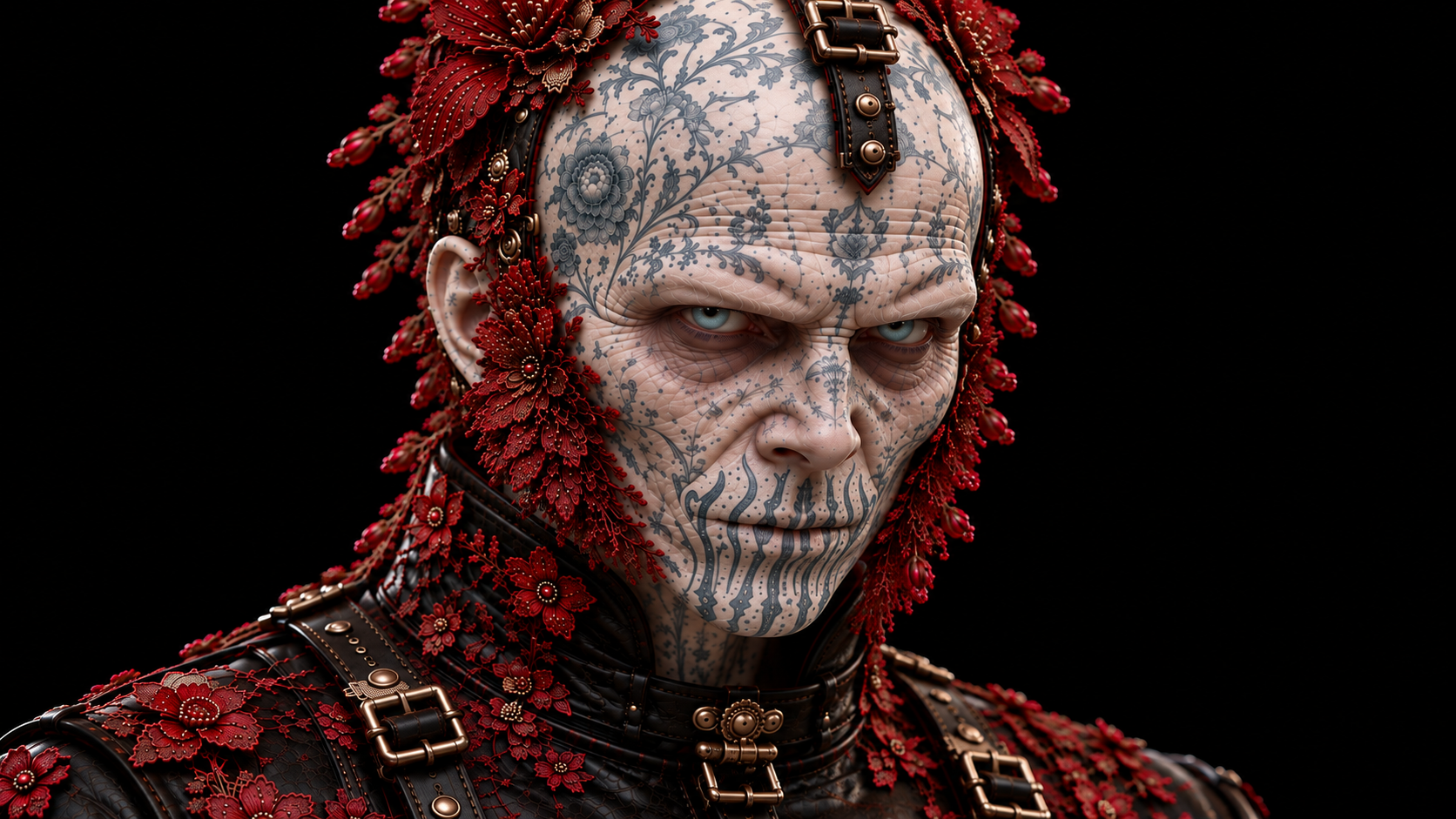
Ishwen's son was at the fire. His name is Wessan. His father was Vessan. He was born with Weneth skin that could not be glazed. His father tried to give him a Coil anyway, with ink and a needle, and it has spread and greyed across his face like lace.
He stood up.
"You killed my father," he said.
"Yes," said Qorran.
"You want to carry my mother."
"If she will let me."
Wessan did not say yes. He did not say no. The caravan-mistress Neshwen said she would teach the Hollow's bearers to walk the Bone in eight days. Wessan sat back down by the fire.
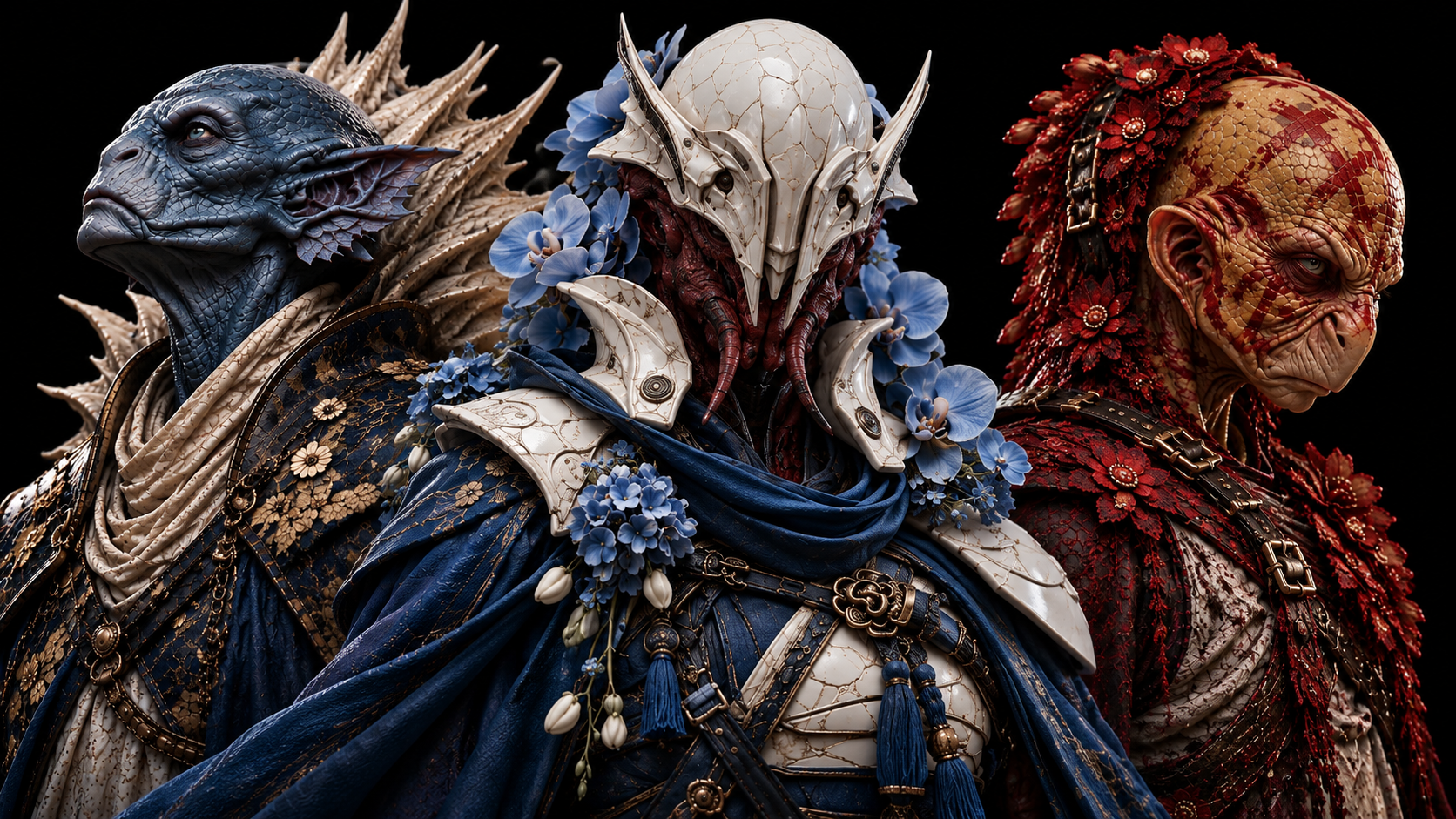
In the portrait 3 Up: Qorran, Wessan & Vaelith, they stand shoulder to shoulder. Wessan is in the middle, in red, and looks straight out. Qorran looks away, up and to the north.
At The Reckoning
In the autumn of 2087 the Reckoning of the Shedding opened at the Lid-Stone, at the centre of the southern basin. The Hollow was given a seat for the first time in history. It is the fourth fan on the Reckoner's headdress. Qorran speaks for it. The Hollow sits apart from the others, near the Kharrin salt-rakes. When the wind blows, his ruff ticks.
What he has asked for
He has asked the Reckoning for three things.
First, that the Charter's silence about the south be filled. The Hollow should owe a debt to the Ulmaeth, alongside the towers, because the Hollow dug the cobalt that paid for the salt.
Second, that the ashing on Sael-Ennu be lifted, so the old man can go down the stair to the daughter he has never seen.
Third, that he be judged for the thirteen.
He has asked for his judgment to be painted in southern red, on his own blue skin, so it can never be glazed over.
Last
The Reckoner, Darrak, has refused to judge him first. Qorran has asked eleven times. On the twelfth day the kiln-master Hessal stood before the stone and asked when his nine dead would be heard. Qorran stood beside him.
"He is right," Qorran said. "Judge me now."
Hessal turned on him. "You do not speak for my dead."
"No," said Qorran. "I made them."
Darrak sent him back to his seat. "I will judge you last because you want to be judged first," he said. "A man who asks to be punished is trying to pay for something. I want to know what before I take it."
The Stair
Sael-Ennu is two hundred and seven and too old to walk ten days across the Bone. Qorran has asked to go down the Tessan in his place. He wants to carry to Khaerith whatever she will accept from her father.
He is not ashed. As a stranger he may go down the stair once, at noon, if a warden sees him. But the noon warden, Namar, has bound her eyes, so that whoever comes will come unseen. No one knows yet whether a stranger who passes unseen has gone down at all.
The Carrier's Question
Khaerith, the last carrier, is a hundred and eighty-three and has no heir. When she dies, the history of the Ulmaeth before 1961 dies with her. Somebody has to take up her marks.
A carrier must hold paint. The Weneth do not mark. The fired cannot hold red. The Kharrin mark only debt. An unfired Ilvenne can carry a southern cross. Sael-Ennu proved it in 1903.
Qorran is unfired. He has asked to have his judgment painted in red on his skin. Darrak has noticed what that would make him. So has Qorran.
His Name and the Words of the Breaking
Qorran is built from the Ilvennic qor, kiln-fire, with -ran, "born of." It means "fire-born."
His parents chose it as a defiance. They were refusers, who had walked away from the kiln. They named their son for it anyway. When he walked away from the kiln himself at sixteen, the Seam offered him a refuser's name. He kept the one he had.
Qor comes from the oldest speech, the Brine root khor, "to burn." The south lost that word at the Parting. They struck it from their language along with everyone who left. Only the north and the west still have it. In the far west it survives as hor. In the north it is qor. In Qorran's name it is a boast.
The towers call him Qorran the Unfired. It is half an insult and half a fear.
Words of the Breaking
The refusers speak Ilvennic with a Seam accent. Since 2044 they have made new words for things the towers never needed to name.
Ish-qor, "water-fire." The Breaking.
Qor-teeth. Kiln-spurs. The towers call them stands.
Ulv-vel, "floor-guard." The Hollow's watch since 2044. It uses ulv, the old word for the floor from the Law, not ilv, the northern word for white clay. The Hollow chose the older form on purpose. The Law was written about the floor.
Un-qaru. Anyone without a Coil, fired or not. It now includes the flaked.
The second answer. The Flaking, as the young of the Hollow call it. Qorran will not use the phrase.
The People Around Him
Sael-Ennu. His foster-father, who dug his parents out of the Seam and raised him in the garden. He did not want the Breaking. He has never said Qorran was wrong. Qorran's stone sits in the garden path, left the night after. The old man has said the kiln-spurs are the only things in the Hollow he will not touch.
Qaresse. His cousin by fostering. Her tally for 1961 sits over his heart. They argue every night. She thinks he made her confession into a weapon. He thinks she would have kept it a confession forever.
Amarwen. He says he broke the kilns on her word. She says she wrote a record, not an order. Both are right. Neither will concede it.
Ishwen and Wessan. The widow of the man he killed, who let him in, and her son, who has not.
Orrin. The Keeper who ended the salt-carrying by choice, a year before Qorran ended it by force. Orrin has said he will walk beside the board if Qorran's bearers carry his sister.
Hessal and Qarukh. The eldest surviving kiln-master of the ninth tower, who lost nine workers to the Breaking, and his flaked apprentice. Qorran has offered to bring the master the children of his dead from the Hollow shelters. Hessal has not answered.
Tallas. The kiln-worker who cracked almost to pieces in the Breaking and was mended in gold. Qorran made the cracks. The same Reckoner's gold mends them both.
Ennesse. A salt-fired woman of the Hollow whose tears after the Breaking crazed her glaze in black lines. She lifts failing glaze from the flaked with a thin knife. Qorran brings the flaked to her.
Ulvas. Captain of the floor-guard, the Hollow's watch. He wears southern crosses on his blue face, the first refuser to do so. Qorran has not.
Saelesse. The Hollow's Coil-reader, who inks chosen vows into adult refusers. She has offered Qorran a Coil. He told her he wants red, not blue, and he wants someone else to choose it.
Khaerith. His father's daughter, so in a sense his sister. She carries the history of a people his work helped to strip. He could carry it after her. They have never met.
Darrak. The Reckoner, who will judge him last. Darrak's mother sent the gold that mends his armour.
What Is Still Unsettled
Was it a killing? The Hollow carried water, not weapons, and warned the masters twice. The towers say a man who pours cold into a hot kiln knows it may crack.
On whose word? Qorran says Amarwen's. Amarwen says no one's. The kiln-masters say Qaresse's, because it was her tally that convicted the tower.
What is he paying for? Darrak believes a man who asks to be punished is trying to pay for something. Qorran has never said what. Some think it is the thirteen. Some think it is his parents, and the nine flowers by the gate. Some think it is that he was right.
Will he carry? If Khaerith will not give her marks to the young Vaelith, someone unfired could take them. Qorran has asked for red on his skin. He has not said that is what he meant.
The Empty Board
At night, out on the Bone beyond the Hollow's fires, Neshwen has begun teaching the bearers. Eight of them walk in a line with a board between them. It is the board the Weneth use to carry the dying. They move slowly, in step, the way the wool-beasts walk, so the white crust does not break.
Qorran walks at the front corner. The board is empty. It weighs nothing.
They carry it as though it does.