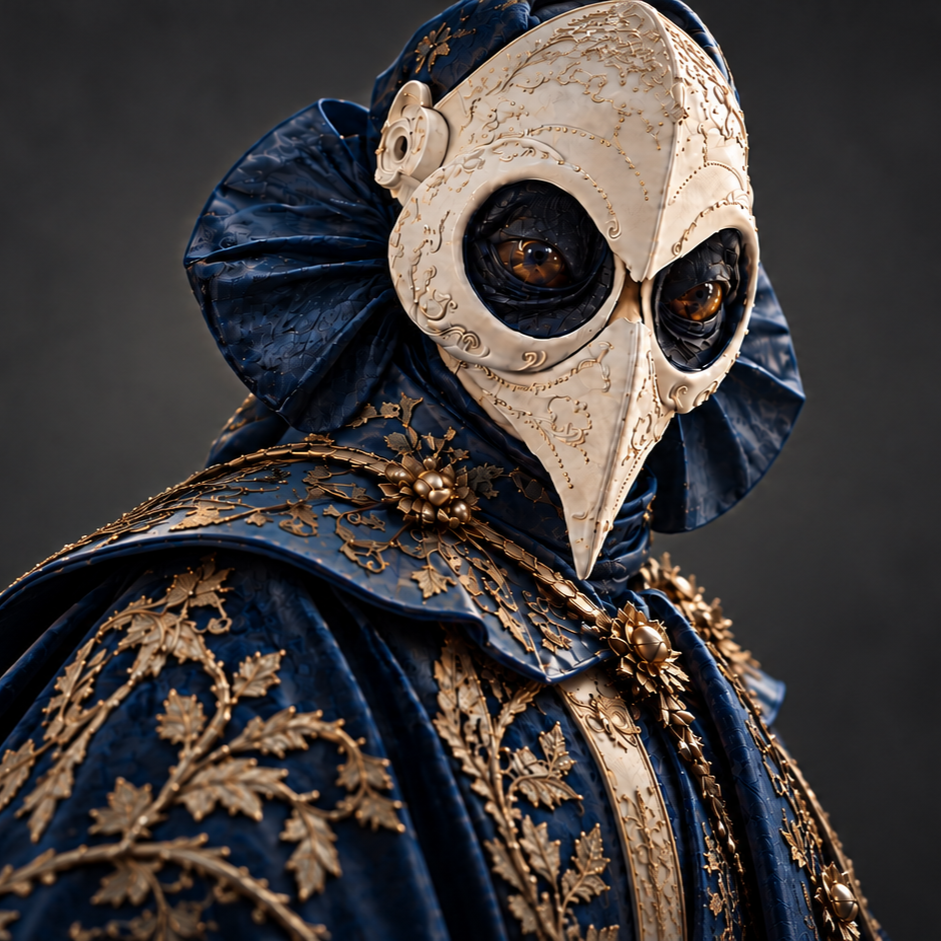
Case Study: Building A Twelve Month Language Learning & Urban Exploration Product
Self-initiated · 2026 · Creative Direction, Experience Design, Route and Sound Design, Writing, Interactive, Motion, Data Visualization
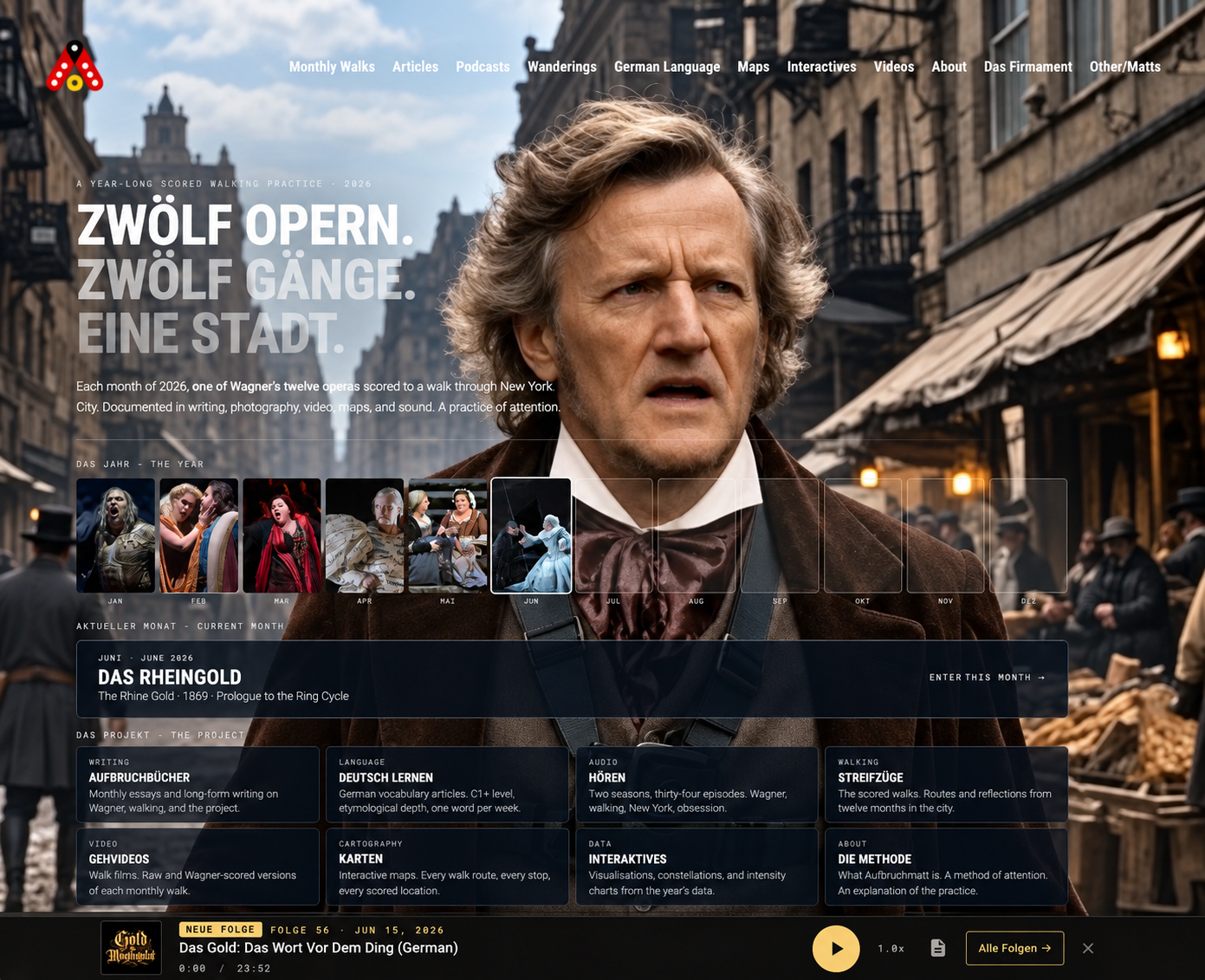
A walk-work in twelve acts. Twelve Wagner operas mapped onto twelve months of scored walks through New York. Around each walk, a whole world: a podcast, a vocabulary, imagined interviews, libretti, films, maps, games and a constellation that connects them. One director. AI as the building crew.
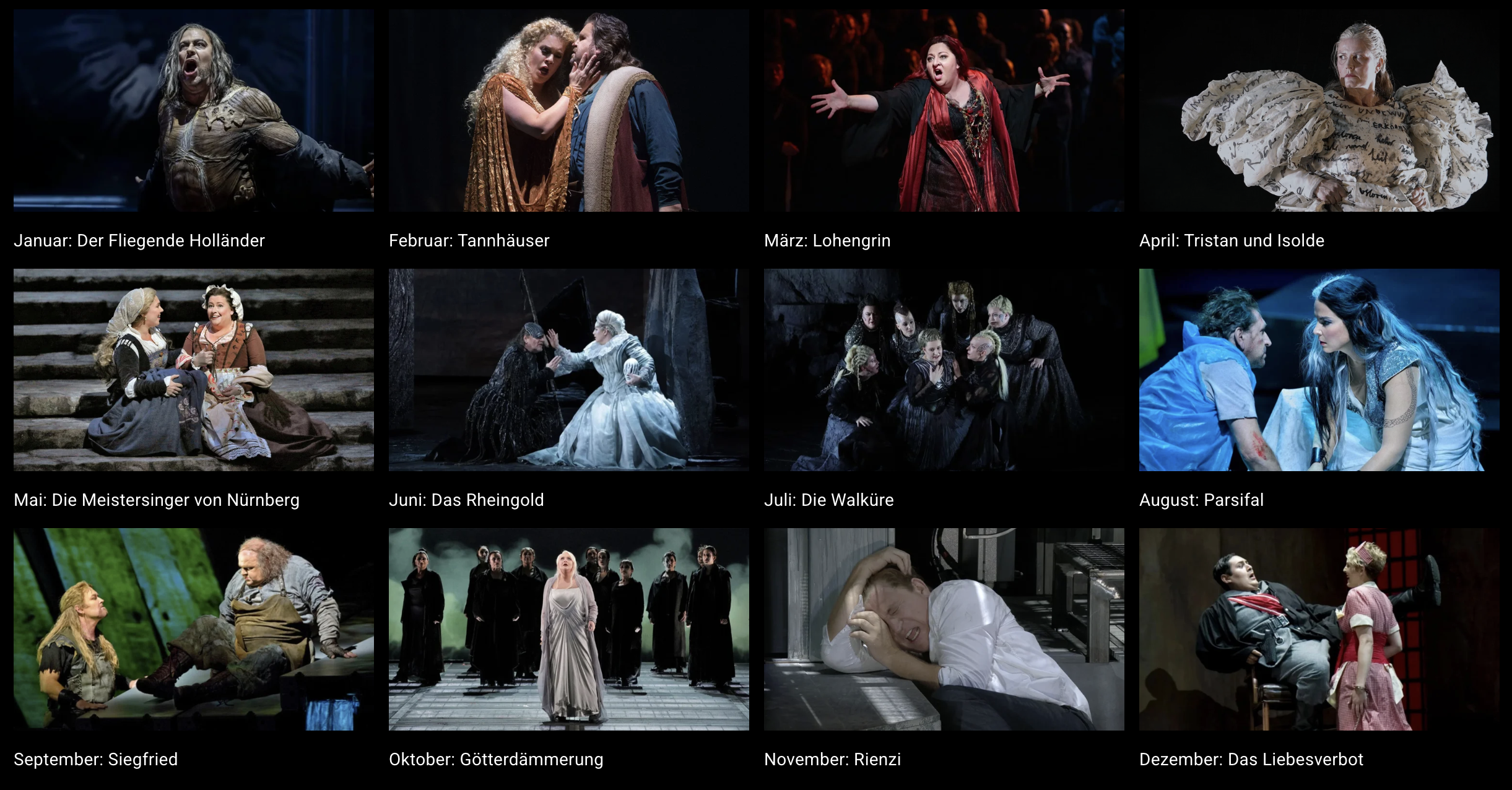
Operas: 12, one per month, in a fixed running order
Scored Walks: 12 monthly routes through New York, plus 5 One Day Experiments in other cities
Hören Podcast Series: 61 episodes across 3 seasons, in English and German
Aufbruchbuch Essays: 40+ vocabulary essays, 17 imagined interviews, 70+ further essays in 8 categories
Libretti: 9 original libretti for operas Wagner never wrote
Gehvideos: 20 films: scored walks, interview walks, essays and animated biography
Interactives: 12 games, players, maps and tools
Streifzüge: 40+ mapped places: walks, opera sites, monuments, churches, parks, crossings
Deutsch Lernen: A monthly lexicon of places, words and libretto lines, plus about 50 German films
Aufbruch/Matt is not a guide to Wagner. It is not a travel blog. It describes itself as a method for attention. Each month takes one opera and maps it onto New York as a route, a listening sequence and a set of instructions. Then it builds a world around that route. The podcast prepares the ear. A German word gives the month its idea. Imagined interviews argue with the material. Films let anyone take the walk from anywhere. Maps chart the walk's dramatic shape. Games offer another way in. By the end of the year the city has been scored twelve different ways, and every piece points back to a street.
The Brief
I set myself a year. Twelve operas by Richard Wagner, one per month, in a running order that follows the seasons. Each opera would become a walk through New York. Each walk would become the centre of a month of work. The whole thing would be public as it happened.
Wagner was the right material because his operas are obsessed with the questions that still run the world. Beginnings and endings. The origins of power. The weight of legacy. The cost of desire. The exhaustion of systems and the possibility of renewal. I did not want to treat him as a monument or a taboo. I wanted to use him as material and test him against the present. Also, I love his music.
New York was the right instrument. The city is not the backdrop. It is the counterpoint. The city provides friction, scale, noise and motion. Wagner provides duration, myth and pressure. The meaning happens between the two. A score changes a street. A street changes a score. The same intersection becomes a different place under a different opera.
The title word holds the brief. Aufbruch means departure, setting out, a breaking open. The project is about beginning a walk, and about what breaks open when you keep walking. The About page puts it in one line: you have to walk long enough to stop being the person who started walking.
Four rules held it together.
Enter anywhere. No knowledge of opera or German is needed. The year is cyclical, not linear. You can begin in January or drop in at any month.
Nothing is tracked. Nothing needs to be completed. There are no streaks, scores or badges. The walks ask for attention, not compliance.
Language is the spine. A German word organises each piece of writing, and the words accumulate across the year.
The making stays visible. I direct. The maps, the players, the games and the constellation are built in sustained conversation with AI, and the project says so on its own pages.
How Everything Fits Together
Aufbruch/Matt is built like a franchise with one centre. The walk is the core experience. Every other format has a job relative to it. Some prepare you before you leave the house. Some carry you through the route. Some let you return to it, or take it with you when you cannot walk it at all.Deutsch Lernen gives the place names and libretto lines in German
| Before the walk | During the walk | After the walk |
|---|---|---|
| Hören episodes tune the ear and set the month’s argument | The walk page gives the route stop by stop: transit, music, instruction, meaning | Gehvideos replay the walk in 4K, scored or clean |
| The Wort des Weges essay gives the month its word | The listening spine tells you which passage plays where, at what volume | Gespräche argue with what the walk raised |
| The Thematischer Rahmen frames the opera’s idea | Silence stations tell you when to take the headphones off | Karten show the dramatic shape of the route as a line |
| Deutsch Lernen gives the place names and libretto lines in German | The Hören player keeps playing as you move between pages | Interactives turn the month into a game or a quiz |
| Streifzüge shows what else is nearby | Das Firmament places the month among everything else |
Das Firmament Places The Month Among Everything Else
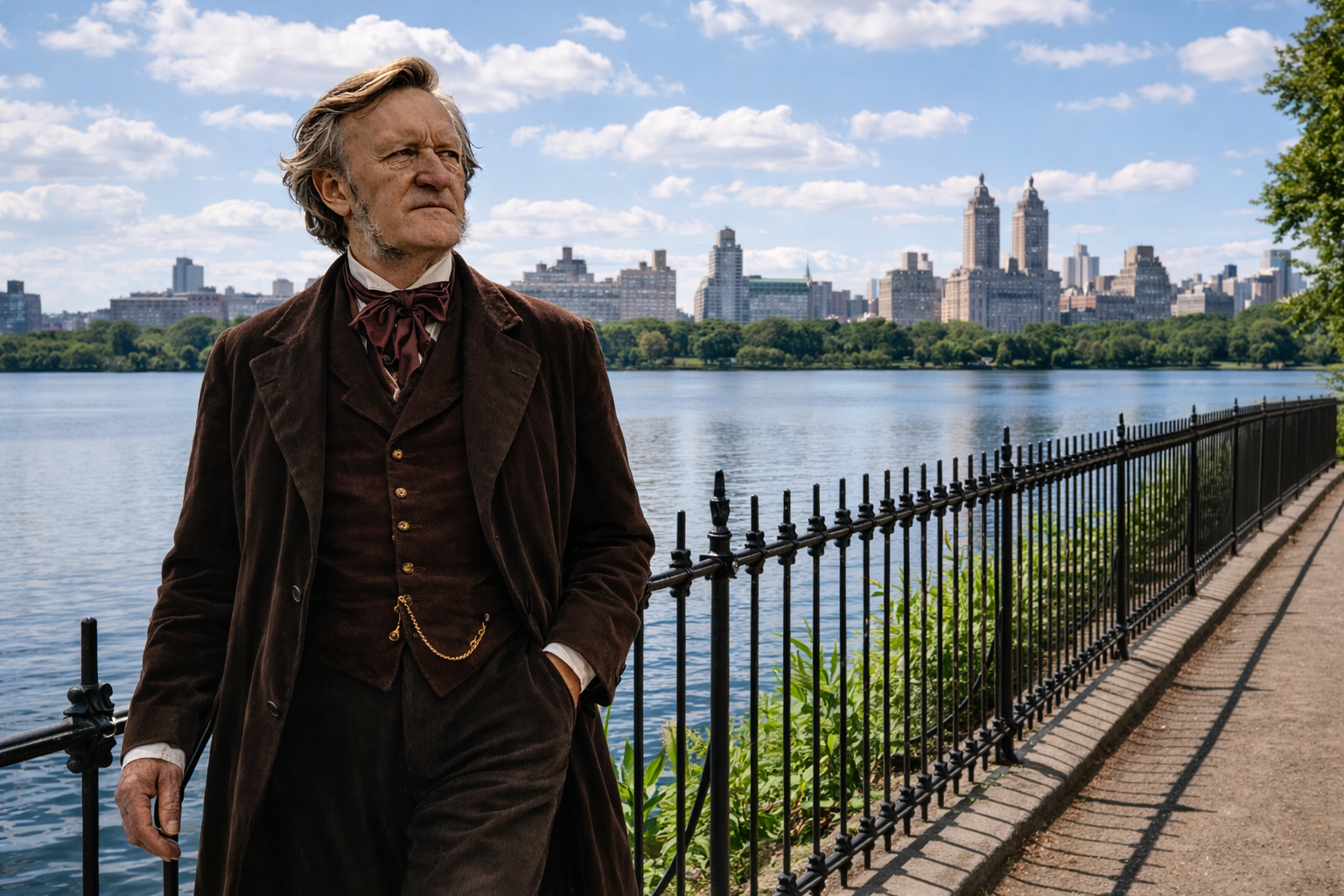
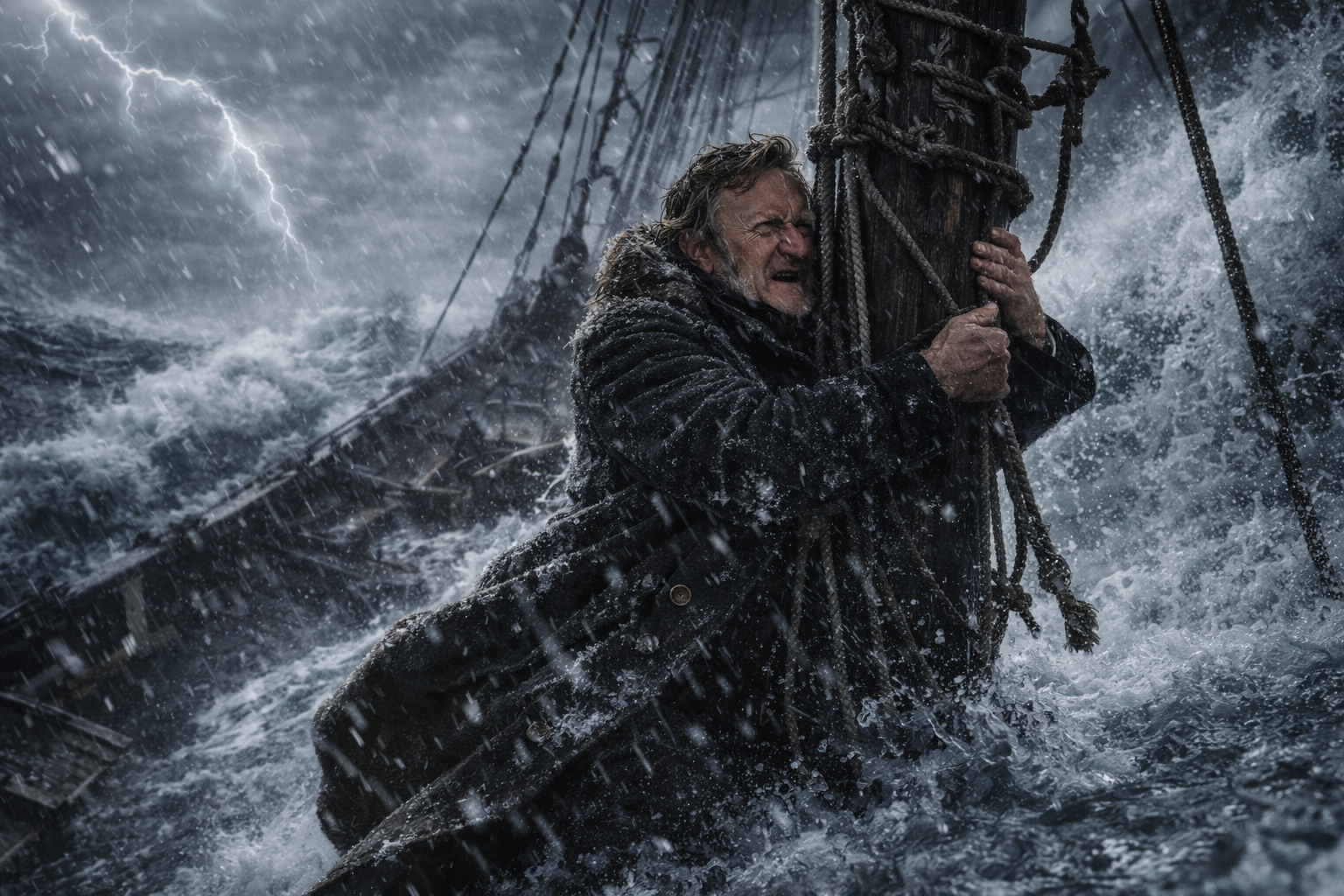
The walk page is the hub, and its layout does the connecting. On Januar the order runs: the Hören player, then the Wort des Weges, then the Thematischer Rahmen, then the stops, then the featured essays, then a look ahead to February, then further reading. The reader moves from ear to word to idea to street to argument to the next month. Every month repeats that architecture, so the year reads as one system.
The formats talk across months. Each vocabulary essay threads back to words from earlier months, so the language accumulates. Sehnsucht appears in January, returns in April, and means more the second time. The podcast revisits old walks. The imagined interviews return to the same figures under different operas. The One Day Experiments take the method to other cities and bring it back. By the sixth month the project had stopped being a series of posts. It had become a world with its own memory.
Das Firmament makes that memory visible. Every article is a star. The links between them are drawn as pathways. Aufbruch sits inside a larger constellation of more than a thousand stars across the other Matt sites. The About page gives the reason: a person does not have to collapse into a single identity.
Process: how a month is made
Every month runs through the same production loop. The loop is the real product. It is what let one person make this much, this consistently, for this long.
1. Find the opera's question. Each opera gets reduced to the one question it cannot stop asking. Der Fliegende Holländer is about ending and repetition: a man condemned to sail until someone is faithful to him. Tristan und Isolde is about the night against the day, and a longing that cannot be satisfied in the world as it is. Siegfried is about a boy who learns by doing. The question decides everything downstream. It picks the route, the word and the tone of the writing.
2. Build the listening spine. Before any route exists, the music gets a structure. I pick the passages that carry the opera's argument and put them in order. April calls this Die Musikalische Wirbelsäule, the musical spine. Each opera is paired with a specific recording, chosen for what it does to the drama. Solti and the Vienna Philharmonic for Rheingold, Meistersinger and Parsifal. Furtwängler and the Philharmonia for Tristan and Götterdämmerung. Haitink and the Bavarian Radio Symphony for Walküre and Siegfried. Sawallisch for Rienzi. Kleiber in Dresden for the second act of Tristan. Knappertsbusch in 1962 for Parsifal.
3. Find a route with the same shape. The route has to match the opera's dramatic shape in physical space. Forests where Wagner writes forests. Stairs where the music climbs. Water where the music turns. Night where the opera needs night. For Siegfried the forge scene lands on the staircases of Highbridge Park, so the walker climbs while the hammering builds. For Tristan the forty-minute love duet lands inside a medieval chapter house at the Cloisters.
4. Research the ground. Every stop has a history, and the history has to earn its place. Castle Clinton was a fort, then a 6,000-seat concert hall, then the immigrant depot that processed millions of arrivals between 1855 and 1890. That makes it the right place to hear about a man who cannot land. Old Slip carries the Wesendonck name: the family whose patronage and whose marriage shaped Tristan. The research turns the city into evidence.
5. Time the music to the stops. Each stop gets a specific passage and, often, a specific moment within it. The January Overture is timed to the first sight of the Statue of Liberty from the harbour edge. The Act III Prelude of Tristan plays on the A train between 59th Street and 125th. Transit is part of the score. So is the ferry.
6. Write the instructions. The walk page tells you what to do, not just where to go. Do not read. Do not write. in the Rose Main Reading Room. Do not skip anything at the Cloisters. Play the music at the lowest audible volume. Stand on the rear deck outbound and the front deck on the way back. The instructions are the direction. They are how a page becomes a performance.
7. Score the silence. Some stations tell the walker to take the headphones off. April's Heather Garden asks for fifteen minutes of silence before the love duet. January ends in Wagner Park with the music off. Silence is not an absence in the design. On the intensity maps it gets an explicit score at the bottom of the scale.
8. Chart the intensity. Every stop is scored on five dimensions drawn from Wagner's own technique: orchestral mass, dynamic range, rhythmic urgency, harmonic tension and dramatic register. The score comes from the exact passage assigned to that stop and the moment the walker is told to listen. The result is a line that shows where a walk builds, breaks and rests. A combined chart normalises the first three months to one length so their arcs can be compared.
9. Find the word. Each month's writing is organised around German words. The Wort des Weges essay never defines a word alone. It sets the word against its nearest neighbours to show what it is not. Then it ties the word to a moment in the opera and a stop on the route. January carries Sehnsucht, Wanderschaft, Sturm, Warten and Geistererscheinung. September carries Waldweben, Nothung and Aufbruch itself.
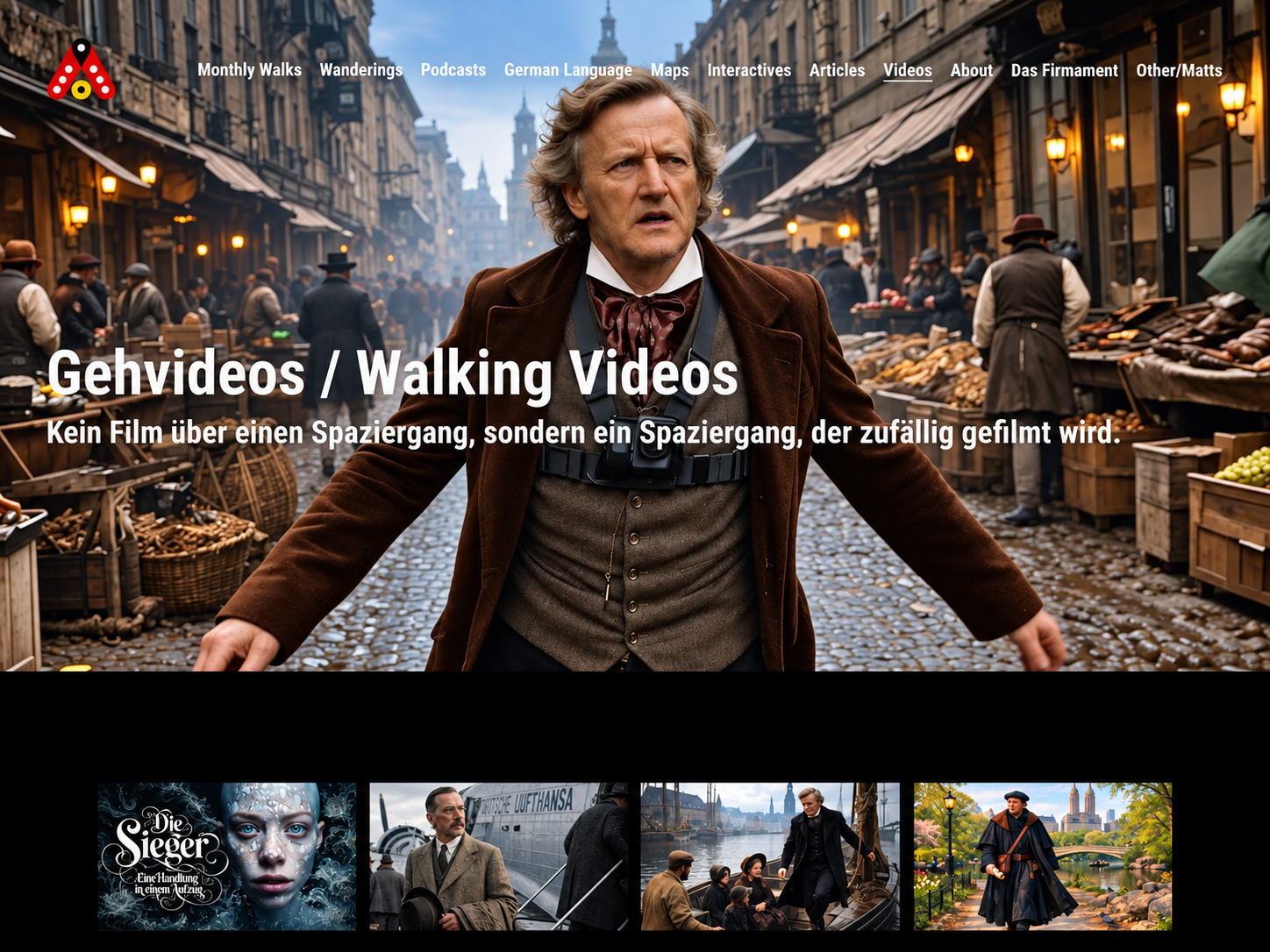
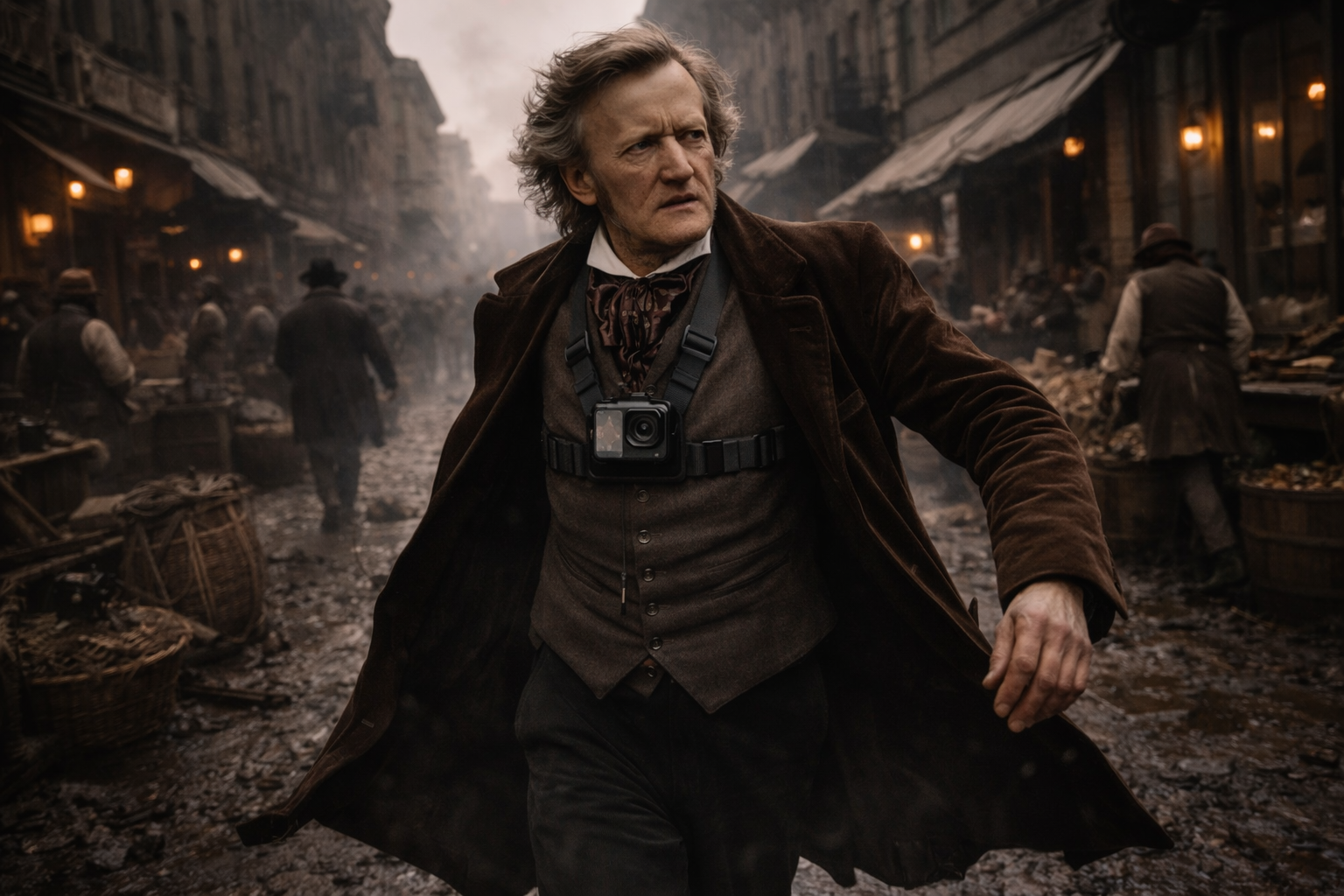
10. Walk it and film it. I walk each route with a GoPro in 4K. The film is released twice: once with the score, once clean. The motto sits at the top of the videos page. Kein Film über einen Spaziergang, sondern ein Spaziergang, der zufällig gefilmt wird. Not a film about a walk. A walk that happens to be filmed.
11. Build outward. The podcast episode, the interviews, the essays and the interactive follow from the walk and the word. Some months also produce an animated biography film or a libretto. The libretti are rare on purpose. They come only when a month earns one.
12. Thread it back. The final step connects the month to everything else. New essays link to old ones. The word threads back to earlier words. The walk page closes by pointing to the next month. The Firmament gains new stars and new pathways. Then the loop starts again.
A month in detail: Januar, Der Fliegende Holländer
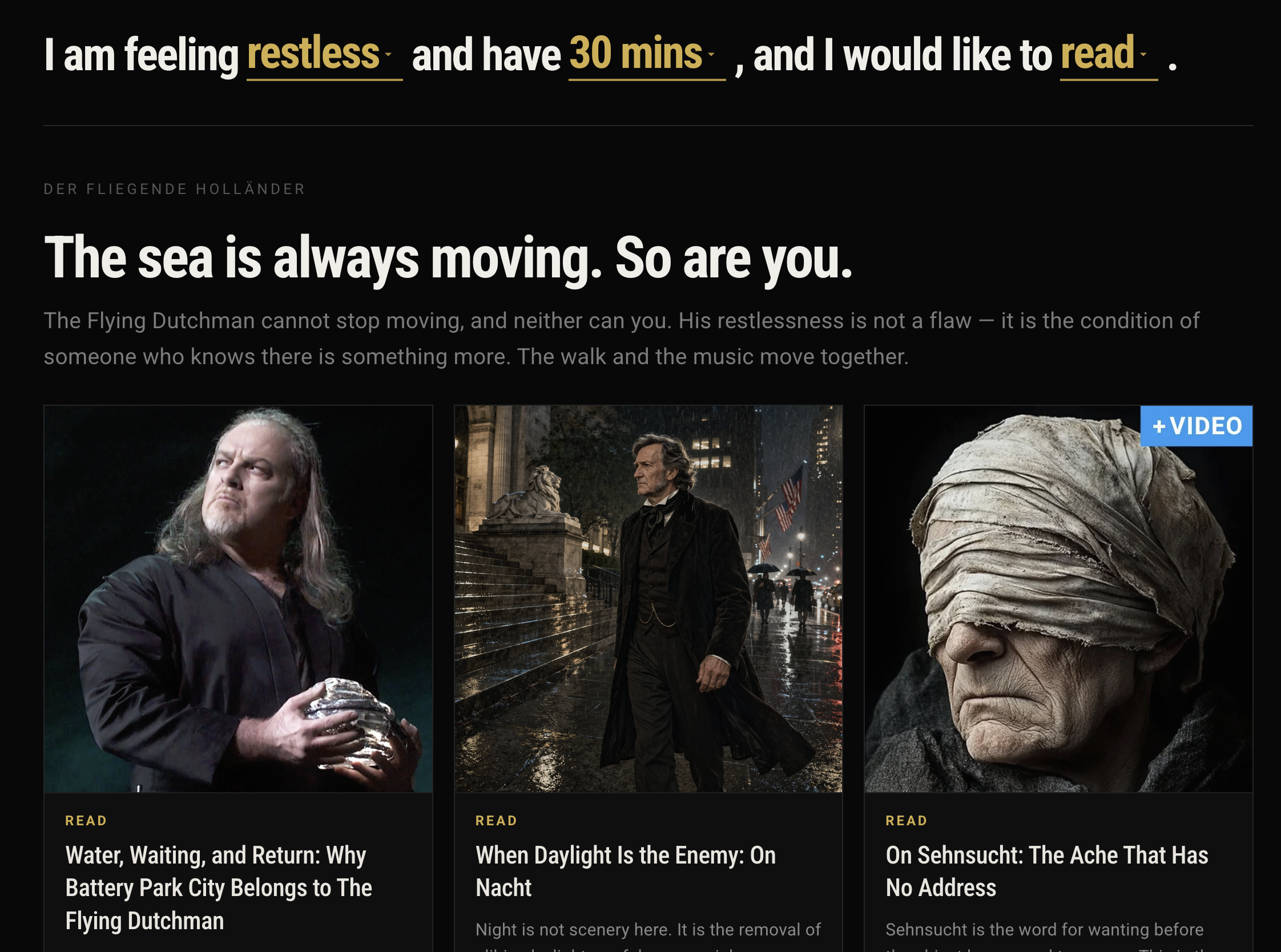
The year opens at the water. Der Fliegende Holländer is the story of a captain condemned to sail forever, allowed ashore once every seven years to look for a faithful love. The month's theme is ending and repetition. New York's harbour becomes the Dutchman's sea, and the city becomes his ship.
The walk takes three to four hours and covers two and a half to three miles. It starts mid-afternoon and ends at dusk. Wind and rain make it better. It includes one free ferry.The page around the walk is the full architecture in miniature. The Hören player sits at the top. The Wort des Weges essays carry Sehnsucht, Wanderschaft, Sturm, Warten, Geistererscheinung and Die Frist ist um. Eleven linked essays follow the route. A screen test from the Göteborgs Opera production. The page ends by pointing to February.
| Stop | The music | What happens here |
|---|---|---|
| Battery Park, the harbour edge | The Overture | Timed to the first sight of the Statue of Liberty. The storm begins where the city meets the sea |
| Castle Clinton | The Steersman’s song, Mit Gewitter und Sturm aus fernem Meer | A fort from 1808–11, then Castle Garden, a 6,000-seat hall, then the immigrant depot that processed 7 to 8 million arrivals between 1855 and 1890. A threshold for people who had not yet landed |
| Staten Island Ferry, outbound | Die Frist ist um | The Dutchman’s monologue, heard on the rear deck, then harbour silence. The ferry repeats forever, like his voyage. The page calls it Die Ewige Überquerung, the eternal crossing |
| Staten Island Ferry, return | The Overture again | Heard from the front deck. New York approaches as the cursed ship |
| Old Slip and the Guardian Life building | Senta’s Ballad and the duet Wie aus der Ferne längst vergang’ner Zeiten | Otto Wesendonck’s firm stood at 12 Old Slip. His brother Hugo founded Germania Life in 1860, renamed Guardian Life in 1917. Wagner once fantasised about a million dollars of American patronage |
| Wall Street | The Act 1 bargain between Daland and the Dutchman, Wie? Hört’ ich recht? Meine Tochter sein Weib? | Kapital als Fluch. Capital as curse. The city financialised the sea |
| Robert F. Wagner Park | Nothing | Headphones off. A silent coda at the water |
The walk page closes with a line that also describes the project. The walk does not conclude the story. It only proves that waiting can be inhabited.
A month in detail: April, Tristan und Isolde
April is the only walk that requires night. Tristan und Isolde is an opera in which the day is the enemy. Its lovers want the night because only there can they stop being separate people. The walk runs from dusk to after midnight, three to four miles with the subway doing part of the work.
The philosophy underneath is Schopenhauer's: the Will, the blind striving that longing can never satisfy. The word underneath is Sehnsucht, which the page ties to what C.S. Lewis called Joy, a longing that points past anything that could fulfil it. The listening index is Die Musikalische Wirbelsäule. The instruction for the whole night is to play the music at the lowest audible volume.
| Station | The music | The instruction |
|---|---|---|
| New York Public Library, Rose Main Reading Room | Prelude to Act I | Do not read. Do not write. |
| St. Patrick’s Cathedral, the side chapels | The Potion Scene | Sit in one chapel. Stand when they drink. |
| The Temple of Dendur at the Met | Brangäne’s Watchsong | Stand with your back to the temple and keep watch. |
| The A train, 59th Street to 125th | Prelude to Act III | Heard underground, moving north |
| The Heather Garden, Fort Tryon Park | Nothing | Fifteen minutes or more of silence. Mandatory |
| The Cloisters, the Pontaut Chapter House | The Love Duet, about forty minutes | Do not skip anything. |
| The A train south to West 4th | The shepherd’s alte Weise and Tristan’s delirium | The long ride back into the city |
| Washington Square after midnight | The Liebestod | The B-major resolution the whole opera has withheld |
The design turns on two stations. The Heather Garden forces silence before the longest passage of music in the year. Then the Cloisters asks for the whole duet, unbroken, in a room built for monks. The contrast is the point. The walker arrives at the music emptied out.
The month builds its world outward from the night. Imagined interviews with Hans von Bülow, Ludwig II and Mathilde Wesendonck put the opera's real triangle on the record. Essays take the vocabulary apart: Auflösung, Nacht, Ekstase, Tod. Cross-links reach out to Derek Jarman's Blue and to Solaris, and the page embeds its own map. It closes with a Nachklang, an afterglow. The night was real. The day returns. Both things are true.
The Formats In Depth
The About page says each new form is another way of paying the same attention. None of them was planned at the start. The method generated them. Here is what each one is, how it works, and what it adds.
Hören: The Podcast
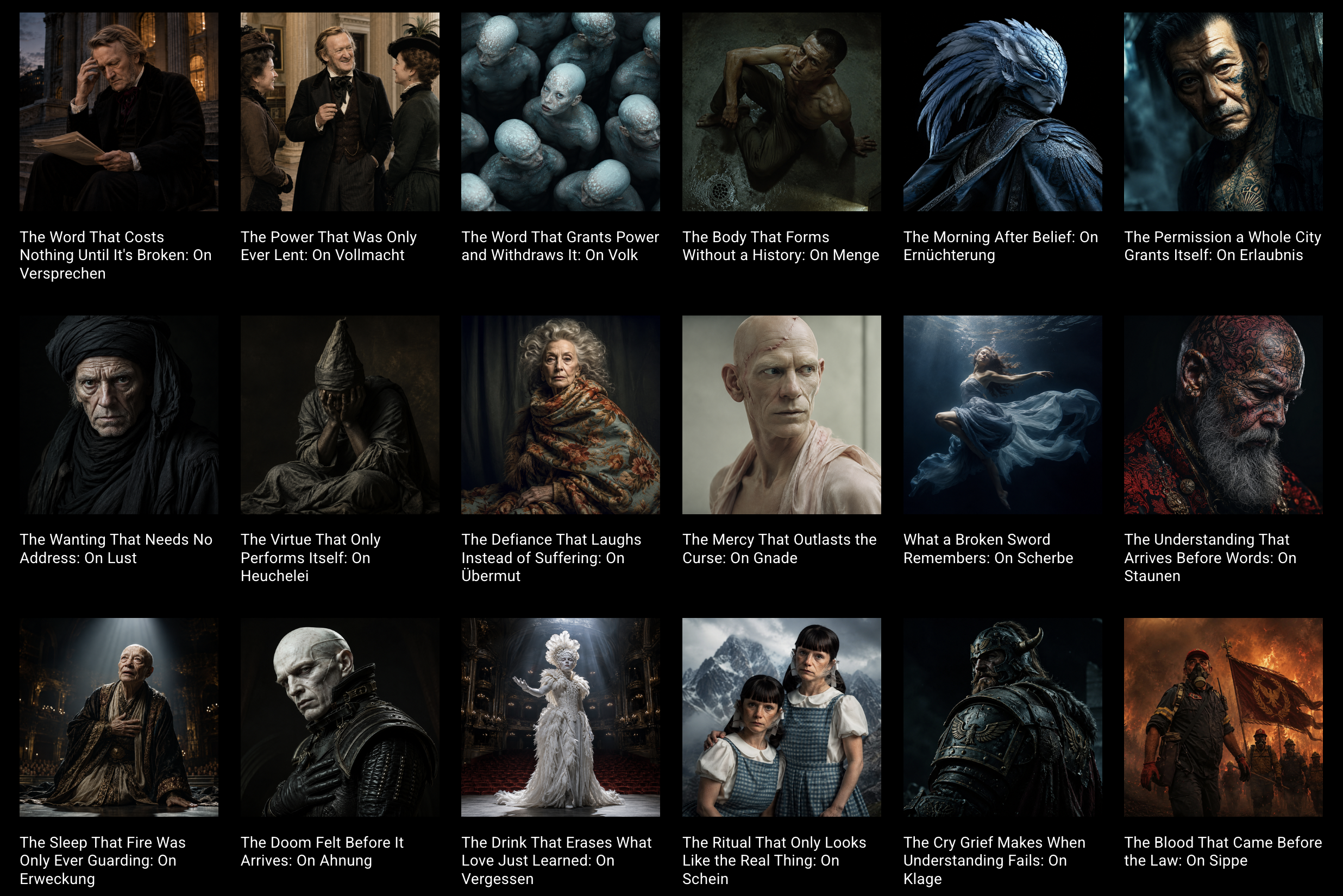
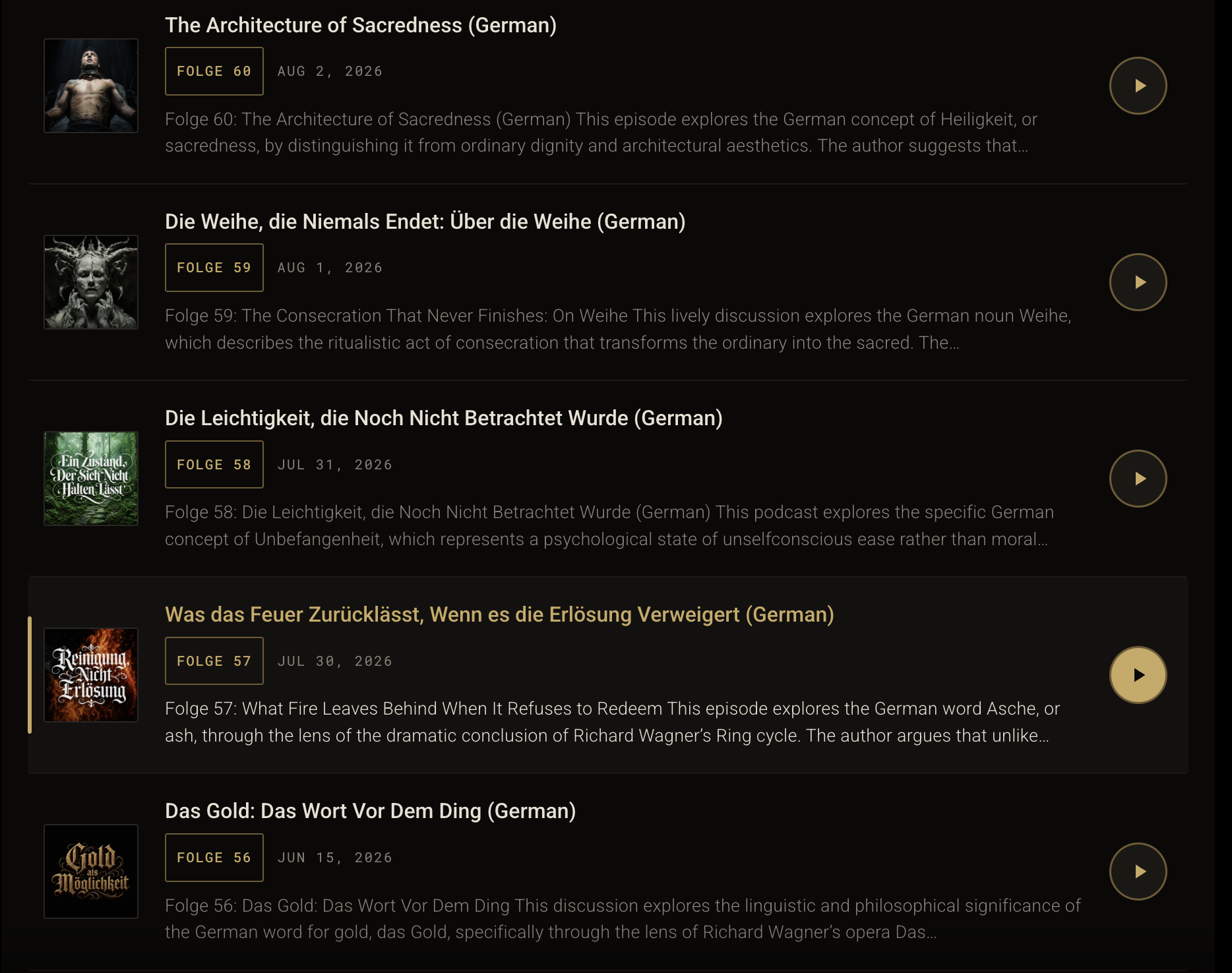
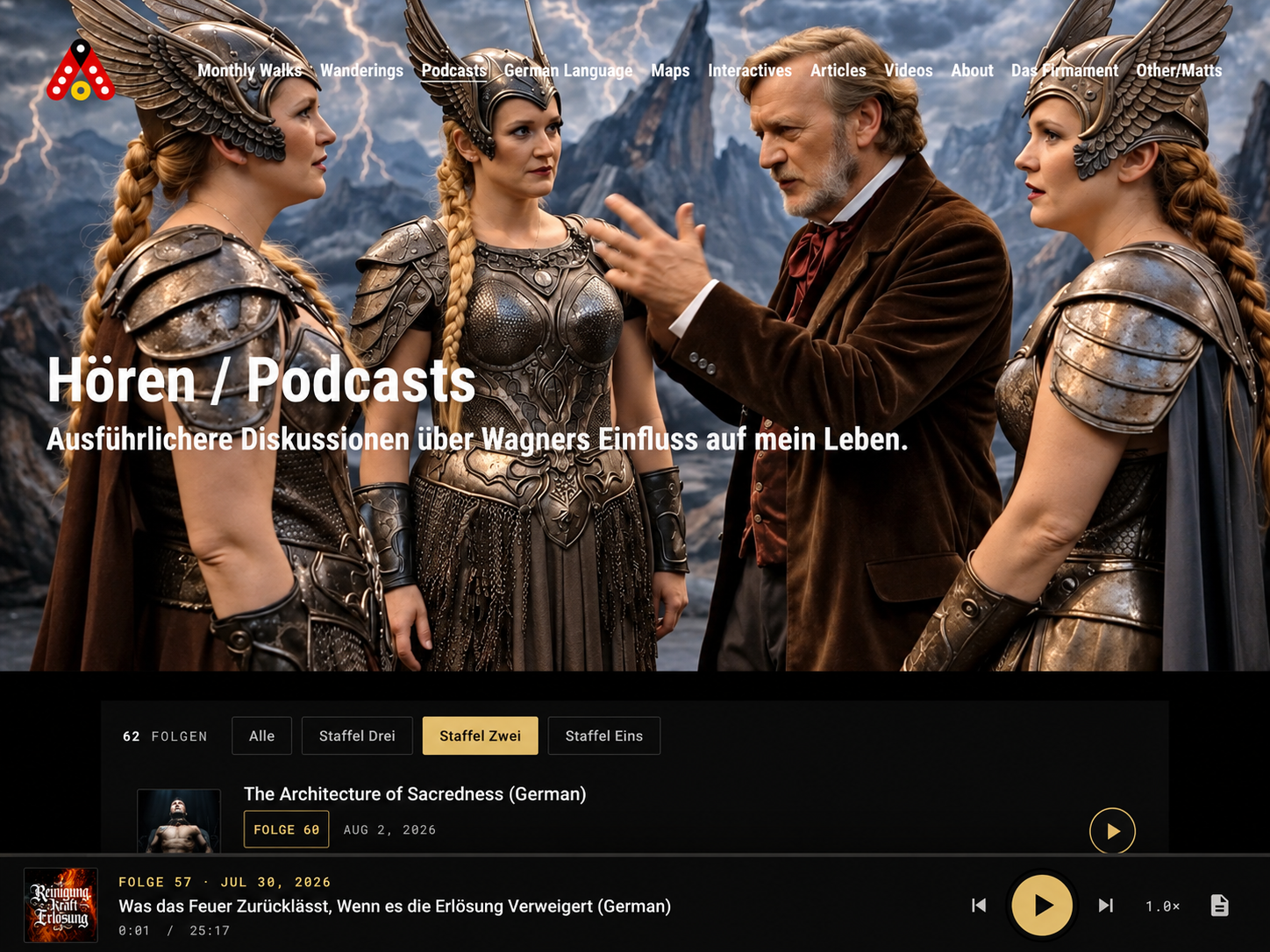
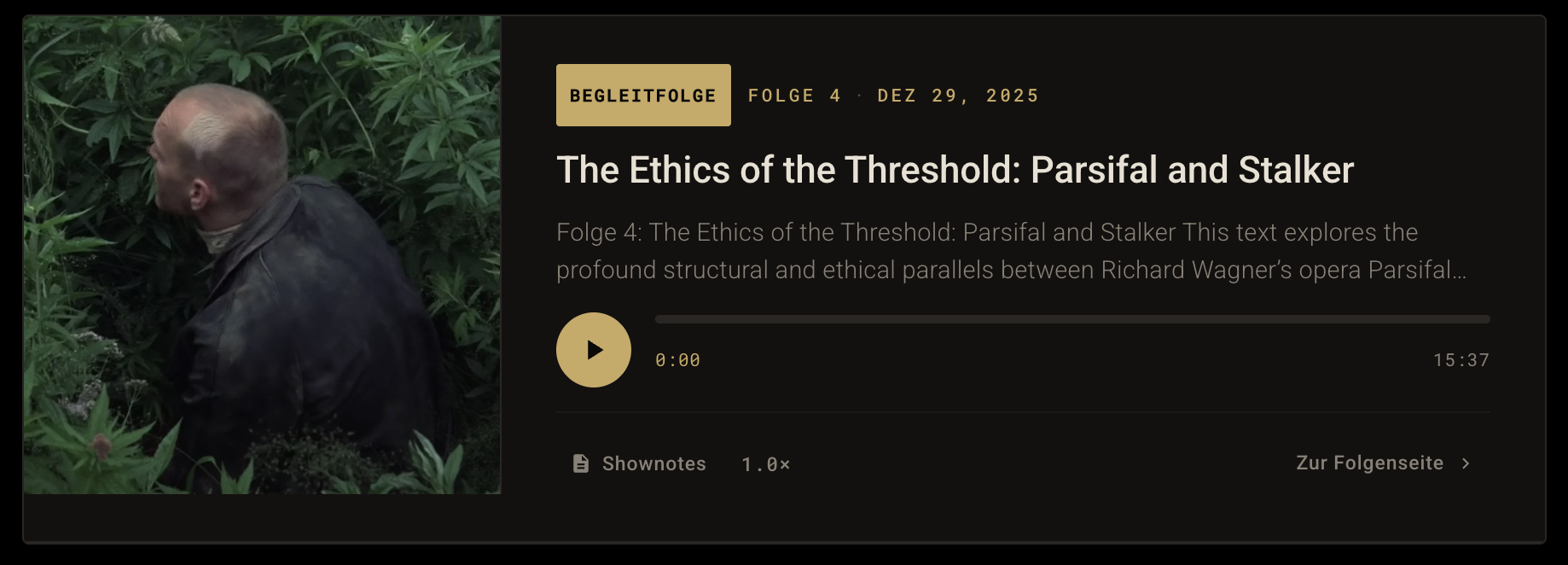
Sixty-one episodes in three seasons. Season one runs from Folge 1 to 29, season two from 30 to 42, season three from 43 to 61. The first episode is A Creative Pilgrimage of Discovery. The show is described as longer conversations about Wagner's influence on a life. It moves between English and German. Folge 56 is Das Gold: Das Wort vor dem Ding, the gold as the word before the thing. Folge 23 is Headphones as Armor Against the City. Folge 34 walks through the Wagnerian Intensity Map. Folge 30 is devoted to Furtwängler. Later episodes carry the libretti, including Die Sieger and Die Bergwerke zu Falun.
The podcast has its own player built into the site. The latest episode plays on the homepage. The full archive is grouped by season. A sticky bar keeps it playing while you move between pages, so the listening does not stop when the reading starts.
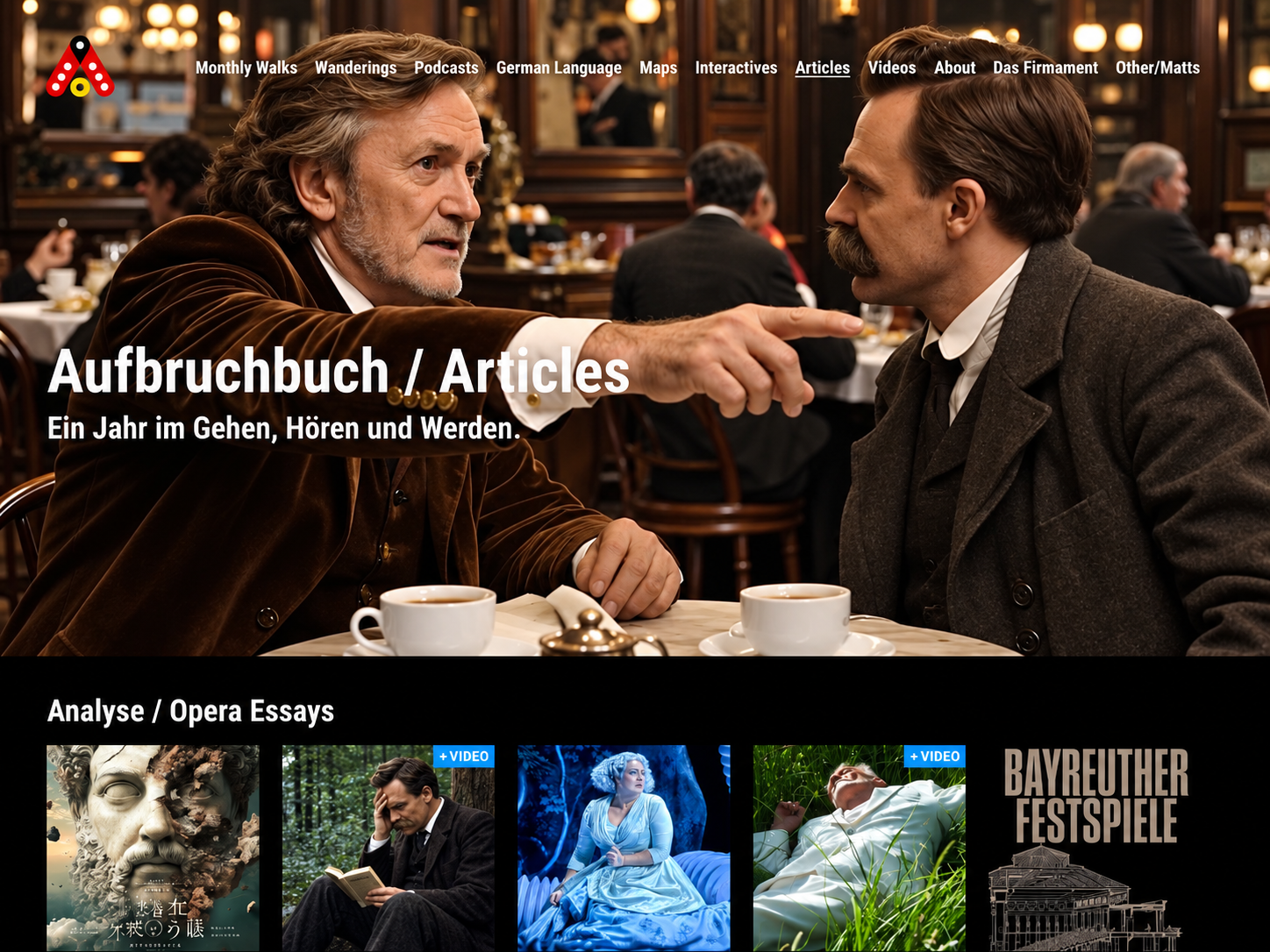
Aufbruchbuch: The Essays
| Category | What it holds | Count |
|---|---|---|
| Wortschatz | One German word per essay: Versprechen, Gnade, Wunde and dozens more | 40+ |
| Gespräche | Imagined interviews with historical figures | 17 |
| Analyse | Close readings of operas, scenes and ideas | 18+ |
| Methode | Essays on the method itself, including The Gesamtkunstwerk Was a Walk | 18+ |
| Kreuzungen | Crossings: Wagner read against film, games and myth | 10+ |
| Bilder | Visual work: screen tests, the Intensity Map, the Streifzüge posters | 7 |
| Geschichte | History, including Wagner’s connections to New York | 6 |
| Stadt | The city, including Kleindeutschland, the German Lower East Side | 5 |
| Sprache | Language | 4 |
| Persönlich | The personal | 4 |
Gespräche: The Imagined Interviews
Seventeen conversations with people who cannot answer back. Walter Benjamin, Cosima Wagner, Baudelaire, Thomas Mann, Proust, Michel de Certeau, Adorno, Nietzsche, Judith Butler, Hans von Bülow, Ludwig II, James Baldwin, Mathilde Wesendonck, Borges, Furtwängler and Wagner himself. Each figure is chosen because they have a real stake in the month's question. De Certeau wrote the theory of walking in the city. Baldwin wrote New York from the inside and from exile. Mathilde Wesendonck was inside Tristan. The interviews let the project argue with its own material, in voices that disagree with it.
Four of them became films: walking interviews with Thomas Mann, Adorno, Nietzsche and Borges.
The Wagnerian Libretti
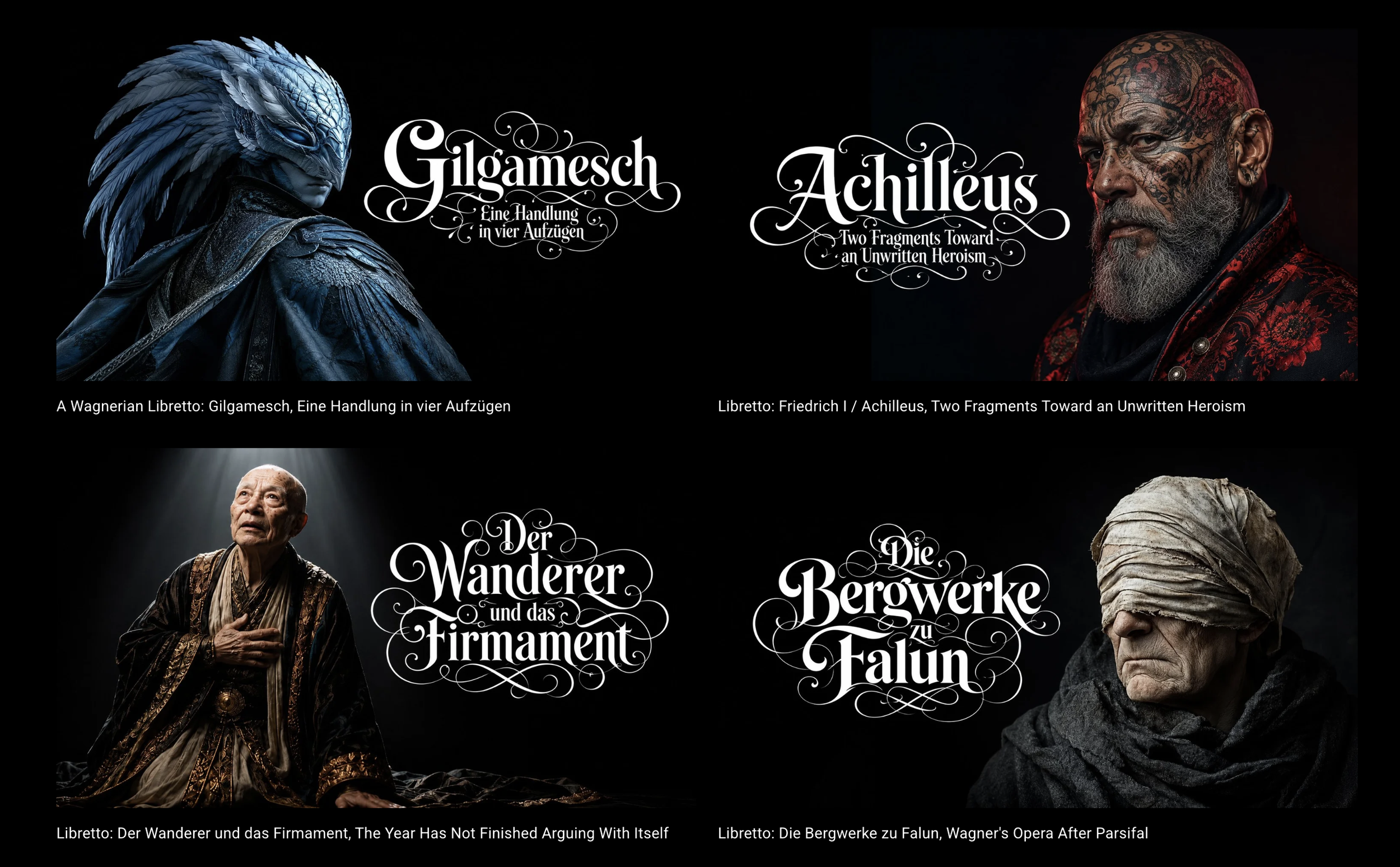
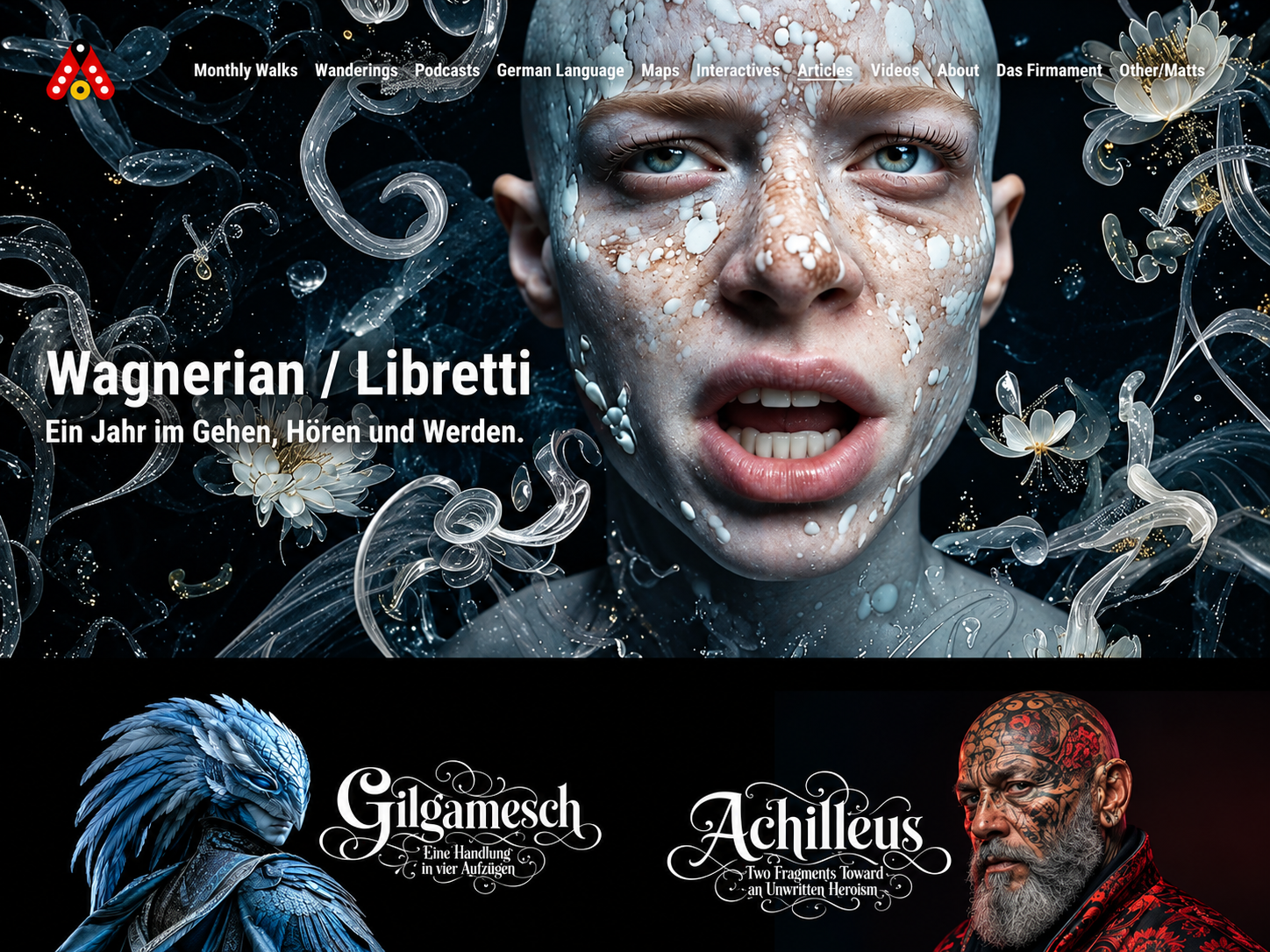
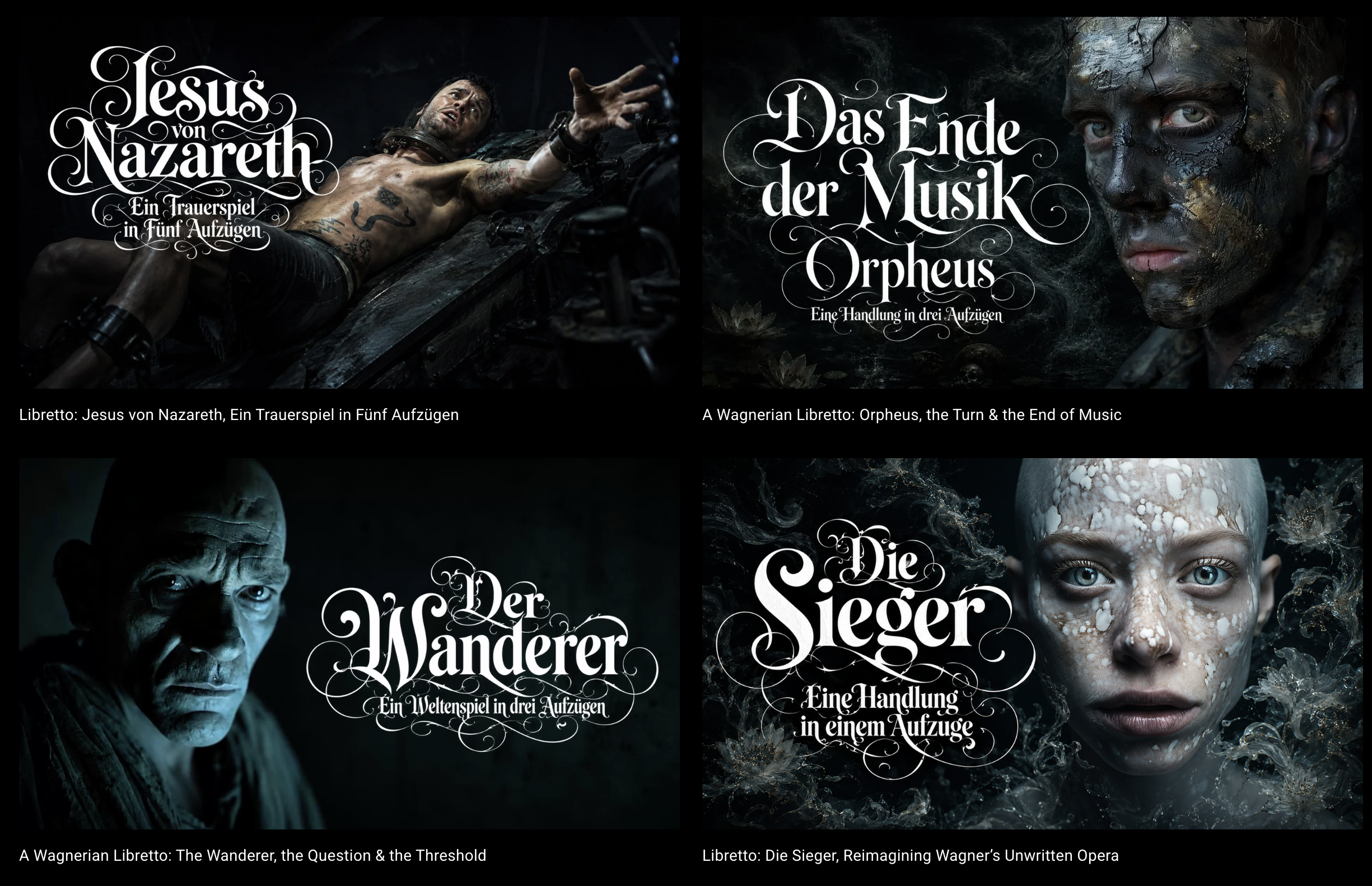
Nine original libretti for operas Wagner never wrote. Some he planned and abandoned. Die Sieger, his Buddhist opera, existed only as a sketch. Jesus von Nazareth was drafted and set aside. Others extend his method into new myth.
Gilgamesch
Friedrich I / Achilleus
Der Wanderer und das Firmament
Die Bergwerke zu Falun
Jesus von Nazareth
Orpheus
The Wanderer, the Question and the Threshold
Die Sieger
Sâvitrî
The libretti are the ceremonial pieces. They appear rarely and carry the most weight. One film, The Operas Wagner Never Wrote, animates imagery from them.
Gehvideos: The Films
| Kind | What it is | Examples |
|---|---|---|
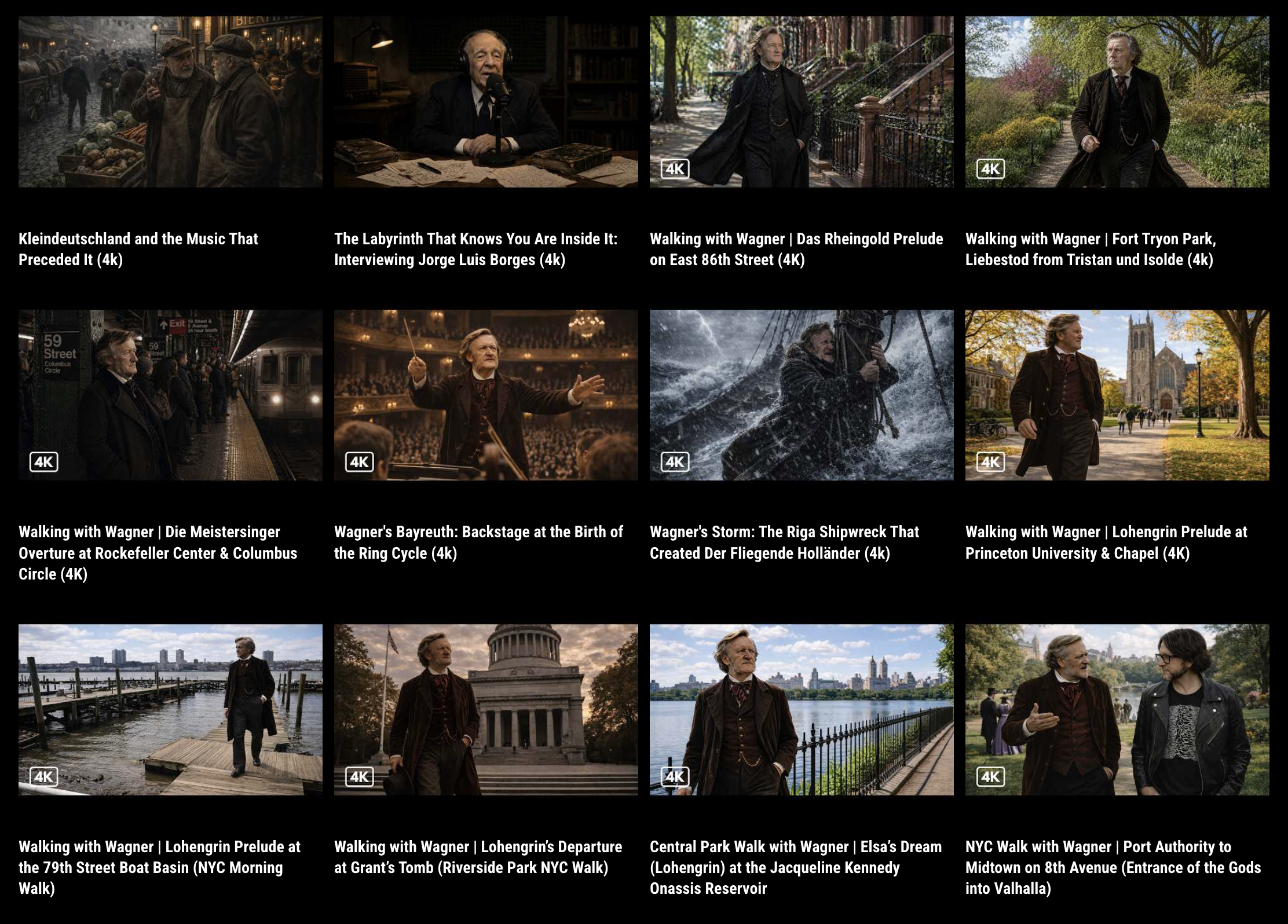
| Walking with Wagner | 4K GoPro scored walks, released scored and clean | The Liebestod in Fort Tryon Park. Lohengrin’s Departure at Grant’s Tomb. Elsa’s Dream at the Reservoir. The Rheingold Prelude on East 86th Street. The Meistersinger Overture from Rockefeller Center to Columbus Circle. The Entrance of the Gods into Valhalla on Eighth Avenue from Port Authority |
| Interview walks | The imagined interviews, walked and filmed | The Disease One Cannot Live Without: Interviewing Thomas Mann. The Administered Walk: Interviewing Theodor Adorno. The Unpromised Renewal: Walking with Nietzsche. The Labyrinth That Knows You Are Inside It: Interviewing Jorge Luis Borges |
| Animated biography | Wagner’s life, animated in Runway | Wagner’s Storm: The Riga Shipwreck That Created Der Fliegende Holländer. Wagner’s Bayreuth: Backstage at the Birth of the Ring Cycle. The Operas Wagner Never Wrote |
| Essay films | Ideas and places | Kleindeutschland and the Music That Preceded It. Wagner, Whist, and the Curse That Plays Itself. You Have to Walk Long Enough to Stop Being the Person Who Started Walking |
Karten: The Maps
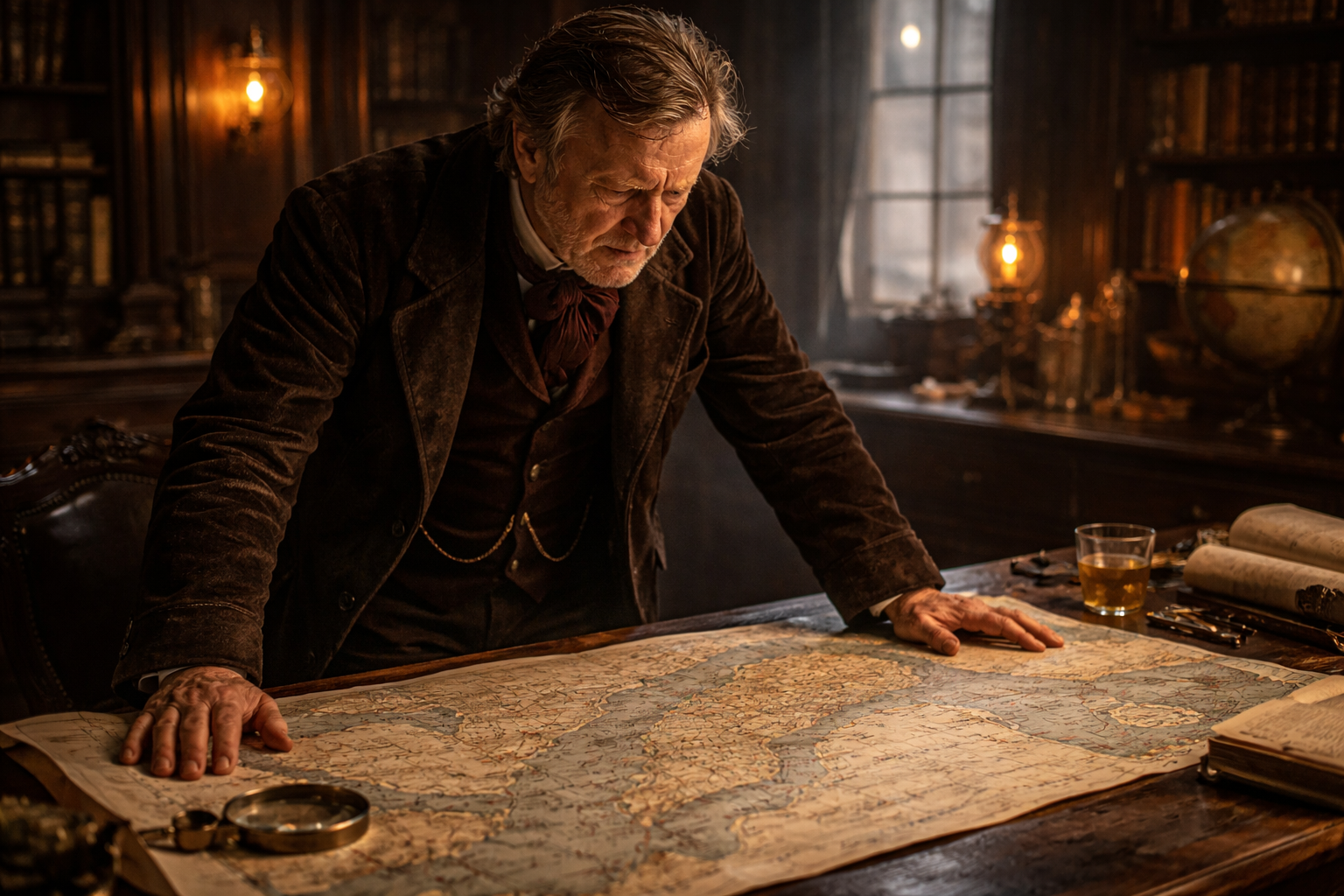
The maps page opens with Die Stadt als Partitur. Zwölf Opern, zwölf Wege. The city as a score. Twelve operas, twelve ways. Each walk has an intensity chart that scores every stop from zero to ten on five dimensions: orchestral mass, dynamic range, rhythmic urgency, harmonic tension and dramatic register. A stop earns its score from the specific passage assigned to it and the moment the walker is told to listen. Silence gets a score. It is not left out of the data. The first quarter's three walks share one axis, then a combined chart normalises them to the same duration. The Februar line peaks at the Venusberg eruption and again at the Pilgrims' Chorus. The Januar line falls to its floor at Wagner Park. A separate Leaflet map holds all twelve routes and every stop.
Interactives
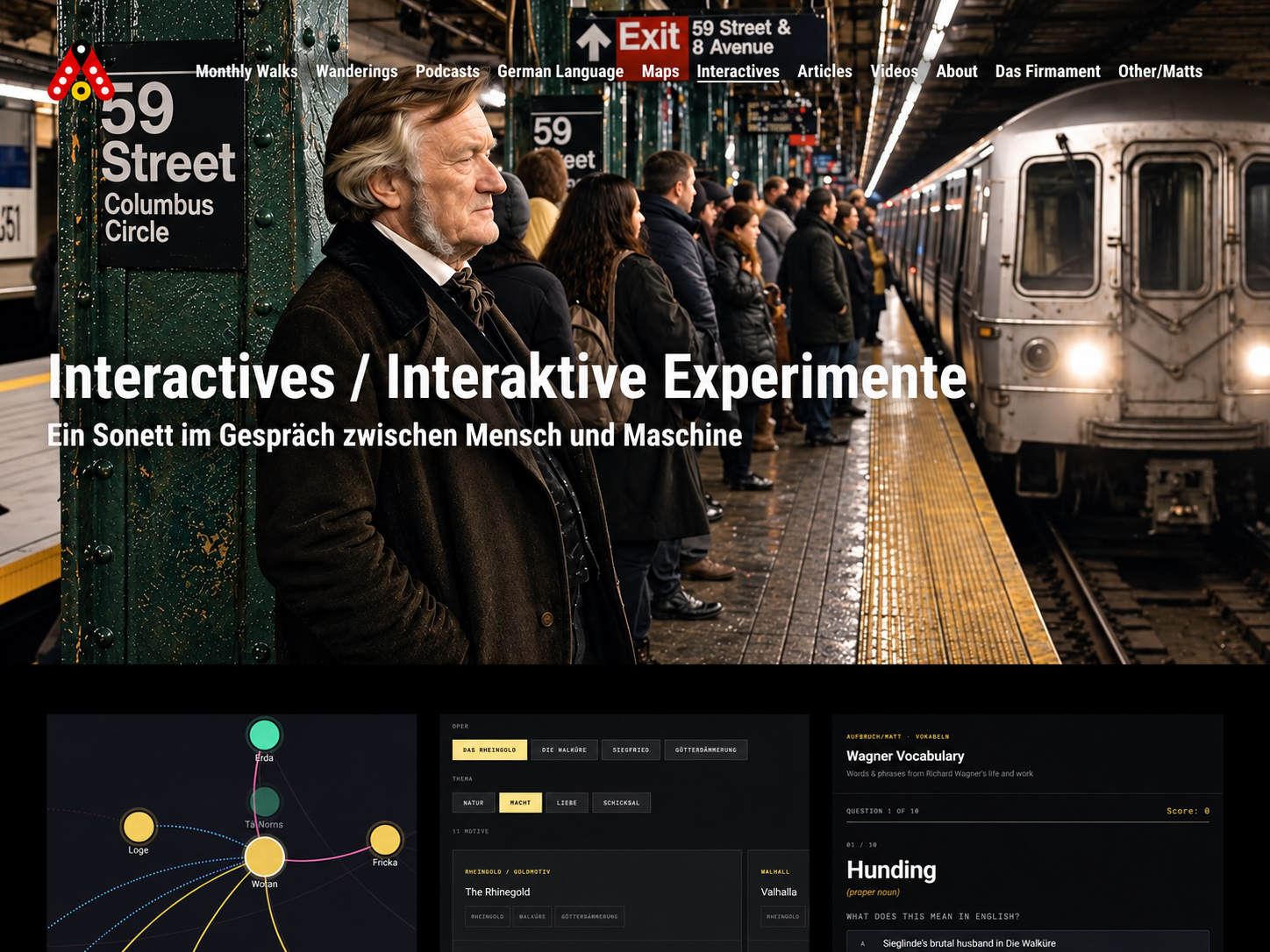
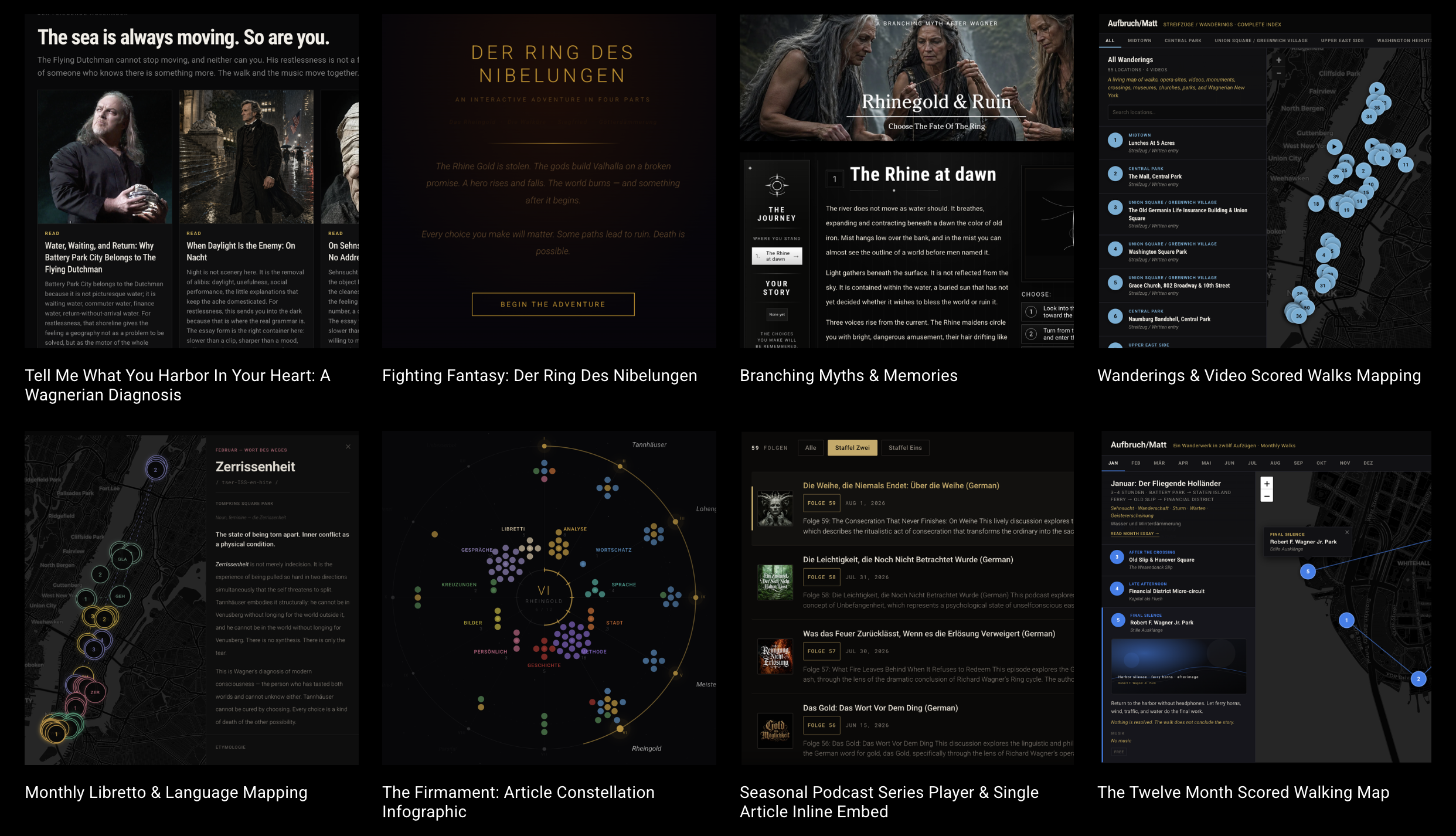
Twelve pieces, under the subtitle Ein Sonett im Gespräch zwischen Mensch und Maschine. A sonnet in conversation between human and machine.
| Interactive | What it is |
|---|---|
| Leitmotif Finder | Wagner’s motifs, synthesised live in the browser |
| Vocabulary Quiz | The year’s German words, tested |
| Das Spiel des Nibelungen | A Skat card game after the Ring |
| Playing Whist with Cosima at Wahnfried | A card game at Wagner’s home |
| Tell Me What You Harbor in Your Heart | A Wagnerian diagnosis |
| Fighting Fantasy: Der Ring | A branching gamebook through the Ring |
| Branching Myths and Memories | A branching narrative |
| Wanderings and Video Scored Walks Mapping | Every place and every film on one map |
| Monthly Libretto and Language Mapping | The libretto lines and words of each month |
| The Firmament Article Constellation | Every article as a star |
| Seasonal Podcast Player | Hören, by season |
| The Twelve Month Scored Walking Map | All twelve routes |
The games are research in another form. Whist at Wahnfried turns a card table into a way into Wagner's household. Skat, the German card game, turns the Ring's struggle for power into a hand of cards. The gamebook turns the tetralogy into a sequence of choices, each with a cost.
Deutsch Lernen: The Language Course
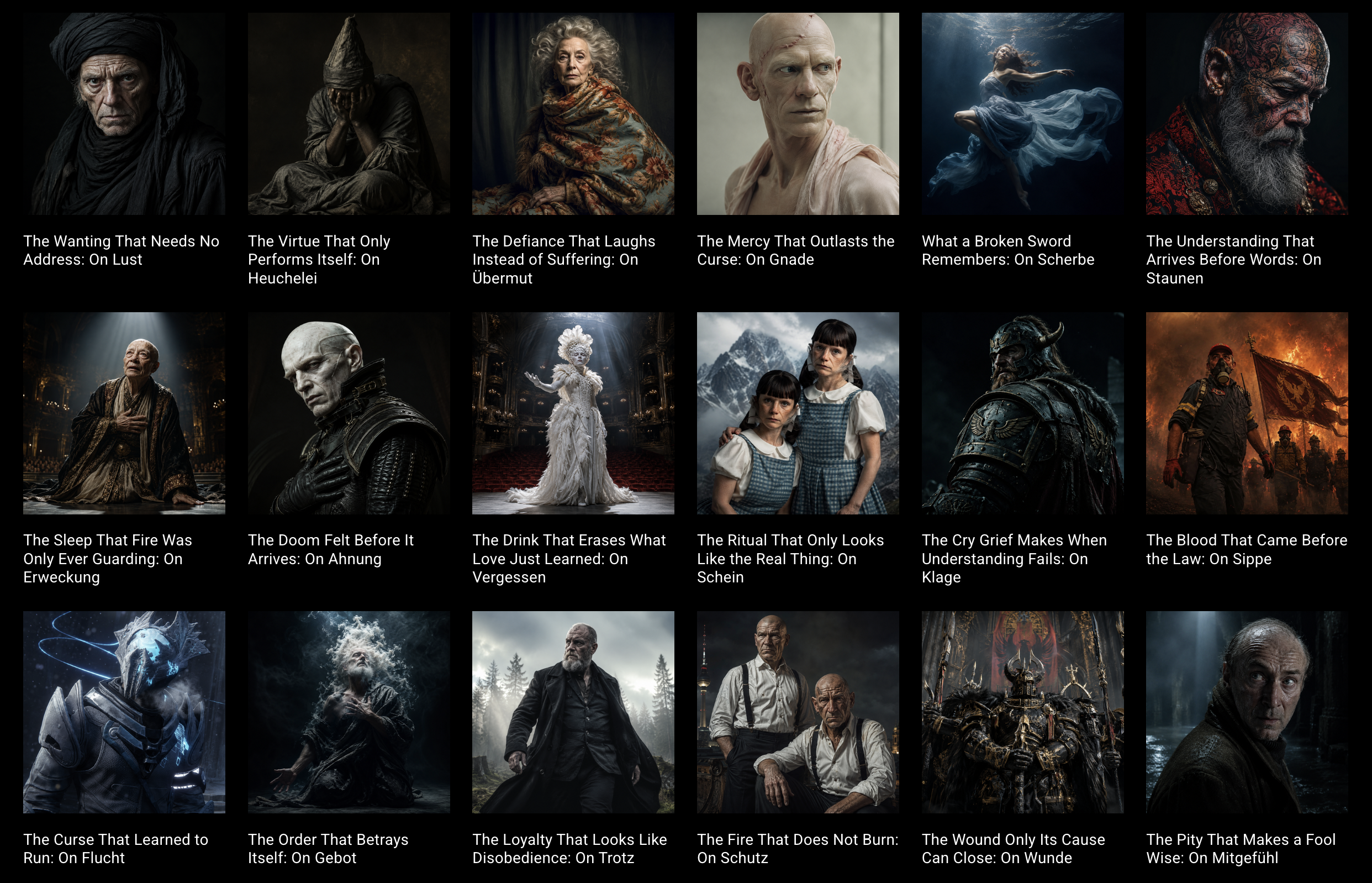
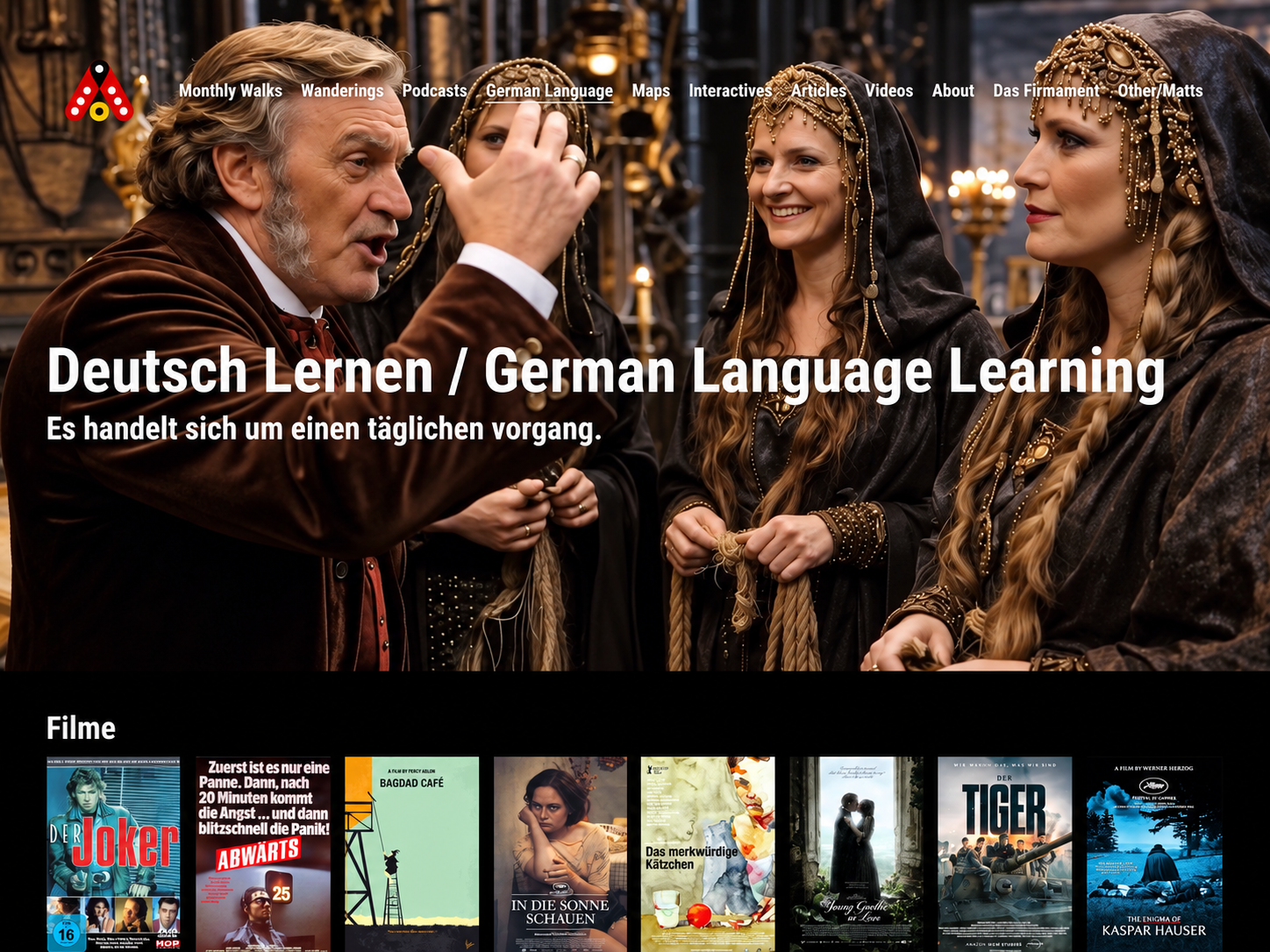
The page opens with one sentence. Es handelt sich um einen täglichen Vorgang. It is a daily process. It holds a Lexikon der Orte, a lexicon of places, month by month, with tabs for the words and the libretto lines. It lists about fifty German films, from Aguirre to Lola rennt to Sophie Scholl. It pulls in the latest episodes and essays automatically. The year becomes a course without anyone having to enroll.
Streifzüge: The Wanderings
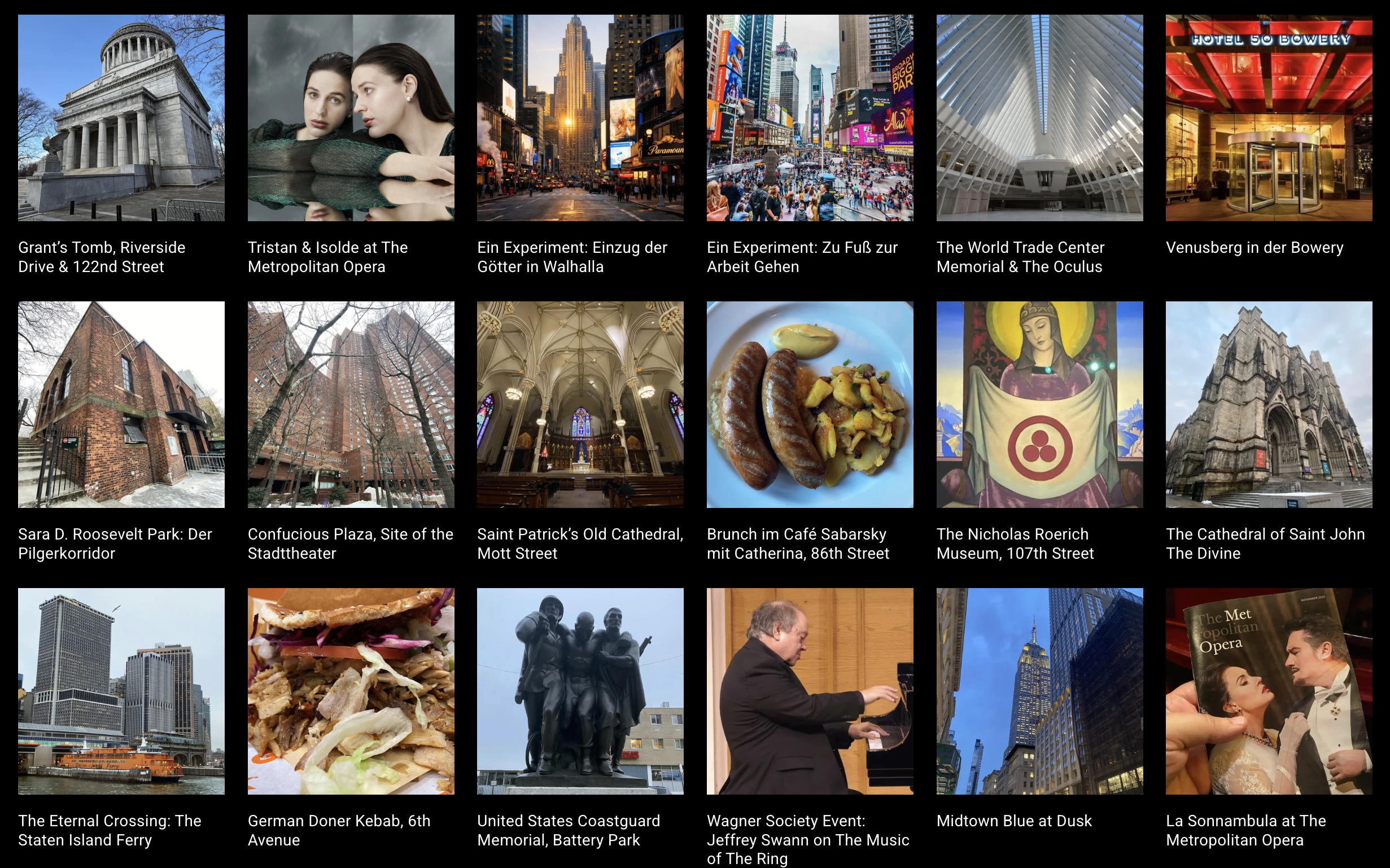
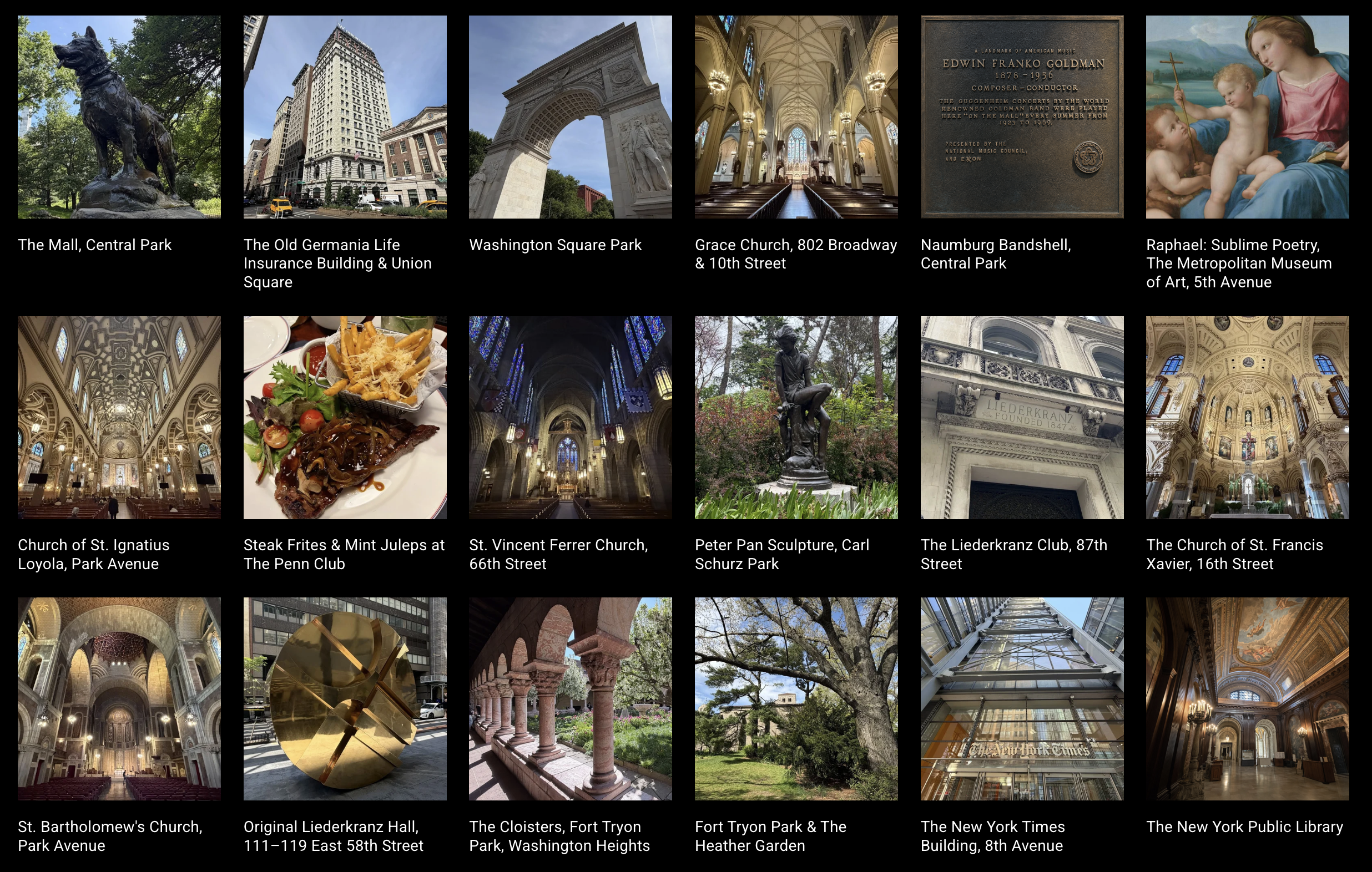
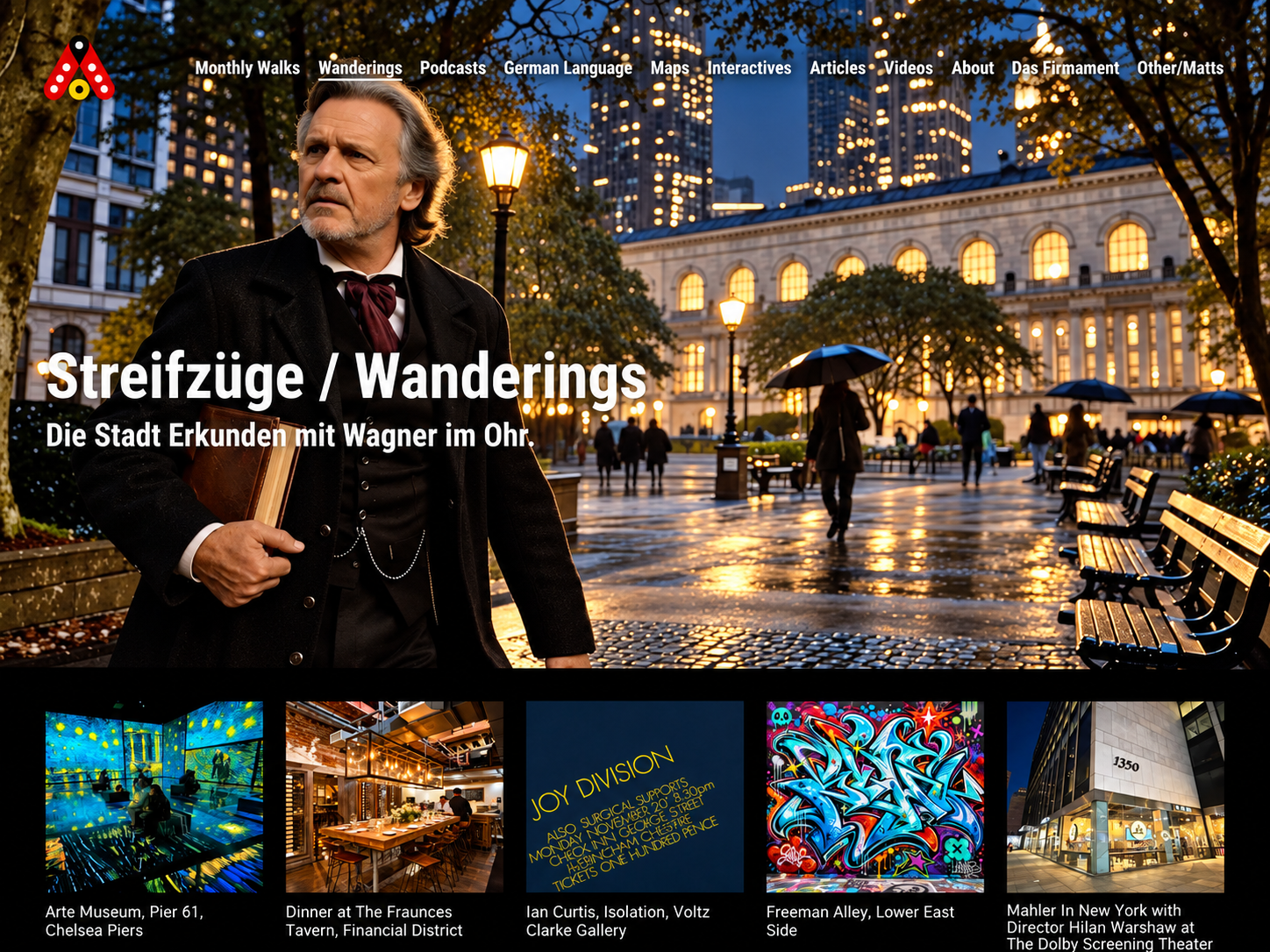
Die Stadt erkunden mit Wagner im Ohr. Exploring the city with Wagner in your ear. A living, searchable map of more than forty places: walks, opera sites, videos, monuments, crossings, museums, churches and parks. Grace Church. The Metropolitan Opera. Freeman Alley. St. John the Divine. Grant's Tomb. The Verrazzano. Mother Cabrini's paper boat. The Streifzüge are the places between walks, and a reason to leave the house on any day of the year.
One Day Experiments
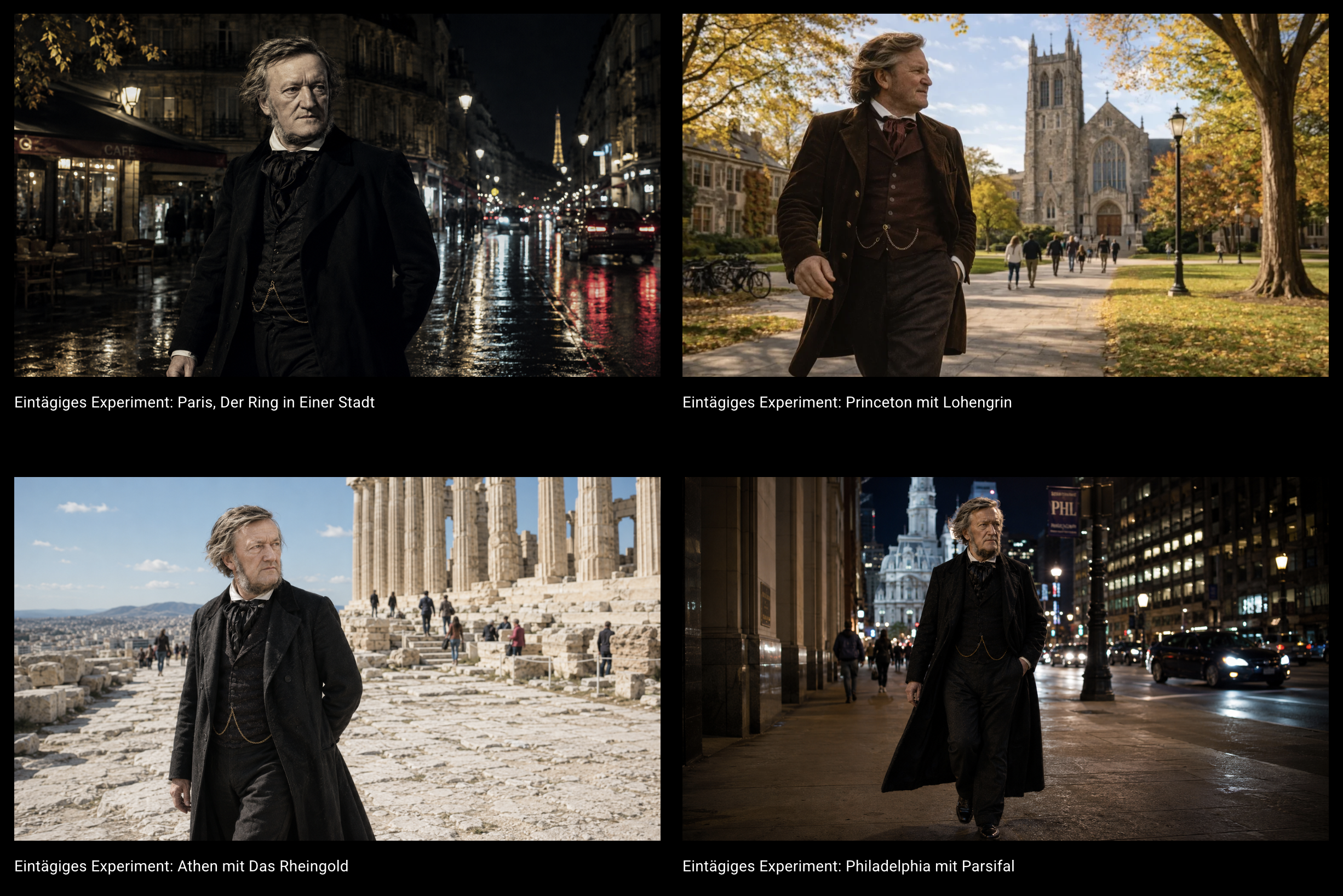
The method, taken out of New York for a single day. Paris, where the whole Ring is walked in one city. Princeton, with Lohengrin. Athens, with Rheingold. Philadelphia, with Parsifal. Walt Disney World, as a test of the Gesamtkunstwerk, the total work of art, against the most total built environment in America. Each one checks whether the method holds when the city changes.
Technical Architecture
Everything runs inside an ordinary Squarespace site. There is no separate app, no server of my own and no build pipeline. That constraint shaped every technical decision.
Code blocks as components. Each interactive is a self-contained fragment dropped into a Squarespace code block. No html, head or body tags. Every stylesheet is scoped under a unique prefix, so twelve interactives can share a site without breaking each other or the template. The maps use prefixes like .aufbruch-map and .aufbruch-intensity. The JavaScript builds its own DOM inside a self-invoking function, so nothing leaks into the page. Fonts are declared explicitly in each piece, so the type holds even when the template changes.
Sound without files. The Leitmotif Finder does not load a single audio file. Every motif is synthesised live in the browser with the Web Audio API. Each voice runs through its own gain node into a shared output bus. The motifs are written as data and played as sound.
Maps. The route maps and the Streifzüge are built on Leaflet. Controls are static buttons that call functions on the page, which keeps them working inside Squarespace's editor. The intensity charts are drawn from the five-dimension scores for each stop.
The Hören player. The player reads the podcast's RSS feed live, with paginated fetching and no caching, so a new episode appears the moment it is published. It groups episodes by season. It pins a sticky player to the bottom of the page. It remembers where you stopped, so a walk can be paused on one page and resumed on another. A single-episode version embeds inside any essay by changing one URL.
One design system. A near-black ground, #0a0a0b. One gold accent, #c9a84c. White text. Roboto for reading, Roboto Mono for labels, timecodes and data. Every interactive, map, chart and player uses the same tokens, so the whole site reads as one world.
Film pipelines. Two, kept separate. The walking films are shot on a GoPro in 4K and released in scored and clean versions on YouTube. The biography films are animated in Runway from generated stills, under the fixed-camera template.
Director, Not Engineer
The About page states the working model plainly. The technical execution, the maps, the players, the games and the constellation, is built in sustained conversation with AI. Director, not engineer.
In practice that division is exact. I decide what a piece is for, what it must feel like, what it must never do and when it is finished. I set the rules of the design system and the voice. I choose the music, the route, the words and the order. Claude writes and rewrites the code until it runs inside a Squarespace block, matches the tokens and survives a phone screen. Runway turns stills into motion under a template I fixed in advance.
Every piece crosses the same distance. A leitmotif starts as a line in a score and ends as synthesised sound. A card game starts as a scene from Wagner's household and ends as a playable hand. The intensity of a walk starts as a feeling on a street and ends as a chart with five dimensions and a page explaining its method. The direction is in the choices made along the way.
The project keeps these seams visible on purpose. The interactives page is titled as a sonnet between human and machine. The About page names the method. Nothing pretends to have been made by hand when it was not.
This is also why the scale is possible. One person could not hand-build twelve interactives, a podcast player, three map systems and a constellation while also scoring and walking twelve routes. One person can direct all of it.
What This Shows
Aufbruch/Matt is creative direction at the scale of a world. One idea, held for a year. A dozen formats, each with a job. A production loop that repeats every month without going stale. A design system that never breaks. A running order that builds from exile to collapse and then returns to the beginning.
That is the same work a studio does when it builds a franchise. The walk is the tentpole. The podcast, films, games and essays are the extensions, each designed to bring a different audience to the same centre. The Firmament is the canon map. The Kreuzungen essays are the crossovers. The One Day Experiments are the location tests.
It also shows a way of working with AI that studios are still figuring out. The direction stays human. The tools do the building. The seams stay visible. The output is large, specific and historically grounded, and it holds together.
Where this applies:
Location-based and audio-led experiences: walking tours, installations, AR routes, site-specific sound
Transmedia worldbuilding: one world carried across podcast, film, games, print and web
Game narrative and systems: gamebooks, card games and branching myth built on existing lore
Long-running content systems with a fixed voice, a fixed design system and a monthly cadence
Rapid prototyping of interactive pieces, with AI as the build team
The year is not finished. Götterdämmerung comes in October and the Ring burns. November returns to Rienzi. December ends with Das Liebesverbot, an opera Wagner wrote in his early twenties. The cycle closes on a beginning. Then it is January again, and the Dutchman is still waiting in the harbour.